

Blog
Why Drug Testing Frequency Matters for Safety


Balancing compliance with workplace safety means making careful choices about drug testing frequency. For Human Resources managers at American companies, federal guidelines set by the United States government provide the foundation for creating fair and effective drug screening programs. Understanding drug testing frequency helps you align with legal mandates, guard against operational risks, and support employee trust from pre-employment through ongoing risk management.
Table of Contents
- Defining Drug Testing Frequency In Workplaces
- Key Types Of Workplace Drug Testing Programs
- Legal Requirements And Regulatory Compliance Standards
- Impact Of Infrequent Or Excessive Drug Testing
- Best Practices For Balancing Safety And Fairness
Key Takeaways
| Point | Details |
|---|---|
| Strategic Testing Frequency | Drug testing frequency should be tailored to organizational needs, considering industry risks and employee privacy. |
| Types of Testing Methods | Implement different testing scenarios like pre-employment screenings and random tests to ensure a comprehensive approach to workplace safety. |
| Legal Compliance | Adhere to federal and state guidelines while maintaining confidentiality and ensuring non-discriminatory practices. |
| Balanced Approach | Develop a drug testing policy that promotes both safety and employee rights, fostering a respectful work environment. |
Defining Drug Testing Frequency in Workplaces
Workplace drug testing frequency represents a critical safety strategy that balances systematic screening with operational efficiency. Mandatory federal guidelines establish comprehensive frameworks for determining appropriate testing intervals across different workplace environments.
The frequency of drug testing depends on multiple strategic considerations that extend beyond simple compliance requirements. Key factors influencing testing frequency include:
- Industry risk profile
- Safety-sensitive job requirements
- Historical substance abuse trends
- Workplace accident rates
- Regulatory compliance mandates
Most organizations develop nuanced drug testing approaches that recognize the complex interplay between workplace safety and employee privacy. Drug testing frequency is not a one-size-fits-all strategy but a tailored approach designed to mitigate risks while maintaining a respectful work environment.
Safety research highlights that effective drug testing requires striking a delicate balance. Testing too frequently can create employee resentment, while infrequent testing may compromise workplace safety. Successful programs integrate testing into broader safety initiatives, using data-driven strategies to determine optimal screening intervals.
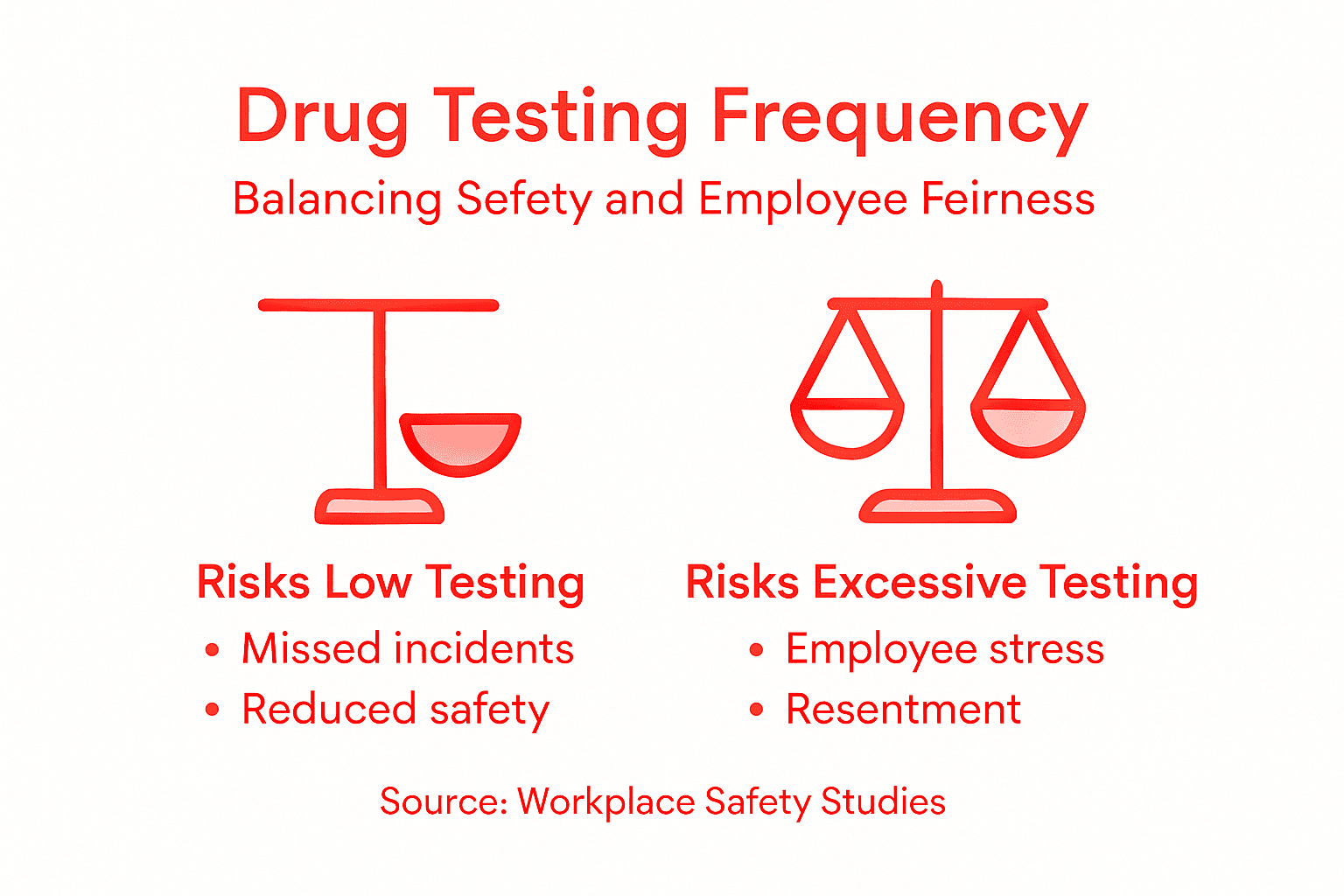
Typical drug testing scenarios include pre-employment screenings, random testing, post-accident evaluations, and reasonable suspicion assessments. Each scenario requires different testing frequency protocols aligned with specific risk management objectives.
Here’s a summary of typical workplace drug testing scenarios and their main business impacts:
| Testing Scenario | Primary Objective | Business Impact |
|---|---|---|
| Pre-employment | Screen candidates for suitability | Minimizes hiring risks |
| Random | Deter substance abuse | Enhances workplace safety |
| Post-accident | Assess incident causes | Reduces liability |
| Reasonable suspicion | Address observed impairment | Maintains performance standards |
| Return-to-duty | Verify employee sobriety | Protects long-term safety |
| Follow-up | Monitor past substance abuse cases | Supports employee recovery |
Pro tip: Develop a transparent drug testing policy that clearly communicates testing frequencies, procedures, and employee support resources to foster understanding and cooperation.
Key Types of Workplace Drug Testing Programs
Workplace drug testing programs encompass several strategic approaches designed to ensure safety and maintain organizational integrity. Federal guidelines outline multiple testing methodologies that address different workplace scenarios and risk management objectives.
The primary types of workplace drug testing include:
- Pre-employment screening: Conducted before hiring to assess candidate suitability
- Random testing: Unpredictable screenings to deter ongoing substance abuse
- Reasonable suspicion testing: Initiated when observable behavior suggests potential impairment
- Post-accident testing: Performed after workplace incidents to determine potential substance involvement
- Return-to-duty testing: Verification of sobriety for employees returning after substance abuse treatment
- Follow-up testing: Periodic screenings for employees with documented substance abuse history
Comprehensive research indicates that effective drug testing programs require a nuanced approach tailored to specific organizational risks. Each testing type serves a unique purpose, from prevention and early intervention to maintaining ongoing workplace safety standards.
The selection of appropriate testing methods depends on multiple factors, including industry regulations, workplace hazards, and organizational culture. Safety-sensitive industries like transportation, healthcare, and manufacturing typically require more rigorous testing protocols compared to less risk-intensive sectors.
Specimen collection methods play a crucial role in drug testing effectiveness. Urine and oral fluid remain the most common testing specimens, each offering distinct advantages in detection windows and ease of collection.
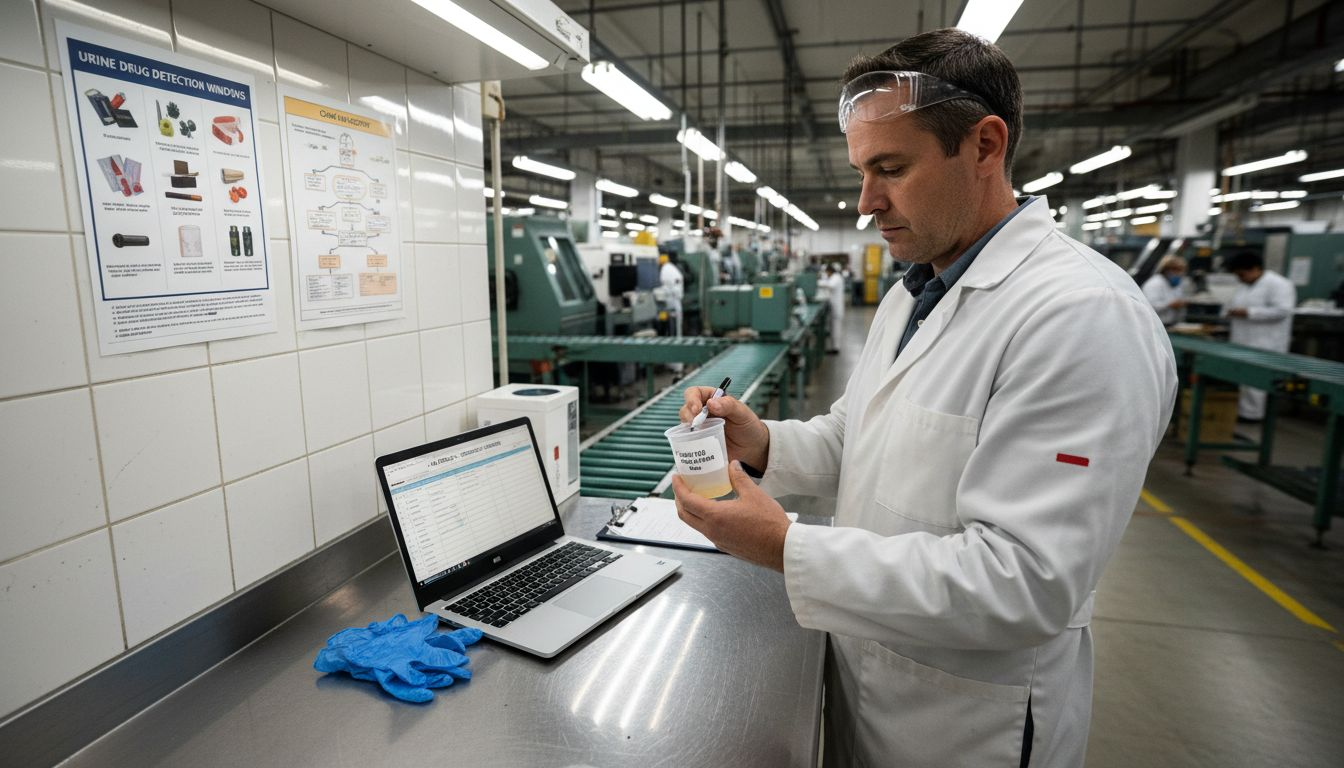
This comparison highlights the advantages and challenges of common specimen collection methods:
| Specimen Type | Detection Window | Ease of Collection | Notable Challenge |
|---|---|---|---|
| Urine | Longer, up to several days | Simple for most cases | Potential privacy concerns |
| Oral Fluid | Shorter, within 24-48 hours | Convenient | May miss low-level use |
Pro tip: Develop a comprehensive drug testing policy that clearly communicates the rationale, procedures, and support resources for each testing type to promote transparency and employee understanding.
Legal Requirements and Regulatory Compliance Standards
Federal drug testing guidelines establish comprehensive legal frameworks that define critical standards for workplace drug screening procedures. These regulations create a structured approach to ensuring workplace safety while protecting employee rights and maintaining consistent testing protocols.
Key legal requirements for workplace drug testing include:
- Compliance with federal laws: Including the Drug-Free Workplace Act
- Industry-specific regulations: Specific standards for safety-sensitive sectors
- Confidentiality protection: Maintaining employee privacy and test result security
- Non-discriminatory testing practices: Ensuring equal application of drug testing policies
- Medical review procedures: Standardized processes for evaluating test results
- Reasonable suspicion standards: Clear guidelines for initiating drug tests
Workplace legal standards demonstrate complex interactions between federal and state regulations. Different jurisdictions impose varying requirements, making it crucial for employers to understand nuanced legal landscapes across different regions and industries.
Safety-sensitive industries like transportation, healthcare, and manufacturing face more stringent regulatory compliance requirements. These sectors must adhere to additional Department of Transportation (DOT) regulations and specialized testing protocols that go beyond standard workplace drug testing guidelines.
The Americans with Disabilities Act (ADA) provides critical protections, requiring employers to consider medical conditions and prescribed medications during drug testing processes. This legal framework ensures that employees with legitimate medical needs are not unfairly disadvantaged by drug testing programs.
Pro tip: Consult with legal professionals specializing in employment law to develop comprehensive drug testing policies that balance organizational safety with employee rights.
Impact of Infrequent or Excessive Drug Testing
Workplace safety research demonstrates that drug testing frequency represents a delicate balance between detection effectiveness and organizational culture. Inappropriate testing strategies can significantly undermine workplace safety and employee morale.
The potential consequences of infrequent drug testing include:
- Reduced substance abuse deterrence
- Increased risk of workplace accidents
- Compromised employee and organizational safety
- Diminished ability to identify emerging substance abuse patterns
- Higher potential for productivity loss
- Greater likelihood of undetected impairment
Conversely, excessive drug testing can generate negative organizational outcomes that potentially outweigh its intended benefits. Overly aggressive testing protocols may:
- Decrease employee trust and morale
- Create perceptions of invasive surveillance
- Trigger increased workplace stress
- Potentially violate employee privacy expectations
- Damage organizational reputation
- Reduce overall workplace productivity
Optimal drug testing frequency requires a strategic approach that considers multiple factors, including industry risk profile, workforce composition, and organizational safety objectives. Employers must design testing programs that balance detection capabilities with respect for employee dignity and organizational culture.
The most effective drug testing strategies integrate multiple approaches, combining predictable testing intervals with randomized screenings to maintain a consistent deterrence environment. This nuanced methodology helps prevent substance abuse while minimizing potential negative psychological impacts on workforce morale.
Pro tip: Develop a transparent drug testing policy that clearly communicates testing rationale, frequency, and employee support resources to maintain trust and effectiveness.
Best Practices for Balancing Safety and Fairness
Workplace fairness principles emphasize creating drug testing strategies that protect both organizational safety and individual employee rights. Successful approaches require thoughtful, nuanced implementation that transcends traditional compliance frameworks.
Key components of balanced drug testing practices include:
- Transparent policy communication
- Consistent application across all employee levels
- Scientifically validated testing methodologies
- Robust confidentiality protections
- Clear appeal and review processes
- Non-discriminatory testing protocols
Effective drug testing programs must integrate multiple safeguards to maintain employee trust and organizational integrity. This involves developing comprehensive policies that:
- Provide clear rationales for testing requirements
- Offer supportive rehabilitation options
- Protect employee medical privacy
- Ensure procedural consistency
- Allow reasonable accommodations for medical conditions
- Maintain strict confidentiality standards
Supervisors play a critical role in implementing fair drug testing practices. They require specialized training to recognize potential substance abuse indicators, understand legal boundaries, and execute testing procedures with professionalism and respect.
Organizations must view drug testing as a holistic safety strategy rather than a punitive measure. This approach involves creating supportive environments that prioritize employee wellness, offering assistance programs, and maintaining open communication channels about substance abuse prevention and support.
Pro tip: Develop a comprehensive drug testing policy that clearly outlines procedures, protections, and support resources, ensuring transparency and employee understanding.
Enhance Workplace Safety with Reliable Drug Testing Solutions
Understanding the critical role of drug testing frequency in maintaining workplace safety is only one part of effective risk management. The article highlights challenges such as balancing rigorous testing schedules with respect for employee privacy and avoiding negative impacts on morale. Achieving this balance demands high-quality, reliable drug testing products designed to support various testing scenarios like pre-employment screenings, random testing, and post-accident assessments.
Explore our extensive selection of FDA-approved and CLIA-waived drug test cups, dip cards, and specimen collection supplies at RapidTestCup. Whether you need testing kits for safety-sensitive industries or support for rehabilitation monitoring, we offer affordable pricing, bulk discounts, and fast shipping to keep your testing program compliant and efficient. Start optimizing your testing frequency today by visiting our main product page and discover solutions designed to protect your workforce and uphold safety standards.
Make the smart move now to reinforce your drug testing strategy with trusted supplies from RapidTestCup. Your team’s safety and confidence depend on it.
Frequently Asked Questions
What determines the frequency of drug testing in the workplace?
The frequency of drug testing is influenced by factors such as industry risk profile, safety-sensitive job requirements, historical substance abuse trends, workplace accident rates, and regulatory compliance mandates.
Why is it important to have a balanced drug testing frequency?
A balanced drug testing frequency is essential to avoid creating employee resentment from excessive testing while ensuring workplace safety is not compromised due to infrequent testing.
What are the common types of drug testing scenarios used in workplaces?
Common types of drug testing scenarios include pre-employment screenings, random testing, post-accident evaluations, reasonable suspicion assessments, return-to-duty testing, and follow-up testing.
How can excessive drug testing negatively impact the workplace?
Excessive drug testing can lead to reduced employee trust and morale, perceptions of invasive surveillance, increased workplace stress, potential violations of employee privacy expectations, and can even damage the organization’s reputation.