Blog
What Is CLIA Waived and Why It Matters


Most American healthcare providers rely on CLIA waived tests for everyday diagnostics, yet nearly half of all errors stem from simple procedural mistakes. Accurate rapid testing matters for clinics, urgent care centers, and workplaces across the United States. By understanding the real benefits and common misconceptions of CLIA waived products, you can make better choices that safeguard results and reduce risk without unnecessary complexity.
Table of Contents
- Defining CLIA Waived Tests and Misconceptions
- Types of CLIA Waived Drug Testing Devices
- Eligibility and Requirements for CLIA Waiver Status
- Compliance Rules and Legal Responsibilities
- Benefits and Limitations of CLIA Waived Products
Key Takeaways
| Point | Details |
|---|---|
| CLIA Waived Tests | These tests are designed for simplicity and low error risk, enabling usage in various healthcare settings with minimal training. |
| Testing Devices | CLIA waived drug testing devices offer rapid screening options but require careful handling to ensure accuracy and reliability. |
| Waiver Eligibility | Manufacturers must provide extensive evidence of a test’s simplicity and reliability to obtain CLIA waiver status. |
| Compliance Requirements | Organizations must maintain strict documentation, personnel training, and quality control to ensure compliance with regulations for waived tests. |
Defining CLIA Waived Tests and Misconceptions
CLIA waived tests represent a critical category of laboratory examinations designed to be simple, low-risk, and accessible across various healthcare settings. The Centers for Disease Control and Prevention defines these tests as laboratory examinations with an insignificant risk of producing erroneous results when performed correctly. These tests are specifically categorized under the Clinical Laboratory Improvement Amendments (CLIA) regulations to ensure consistent quality and reliability in medical diagnostics.
Understanding the nuances of CLIA waived tests requires recognizing their fundamental characteristics. Unlike moderate or high-complexity tests, waived tests are intentionally straightforward and can be performed with minimal technical training. The Food and Drug Administration categorizes these tests based on their simplicity and low potential for error, emphasizing that while they are considered low-risk, proper procedure remains paramount. Common examples include pregnancy tests, rapid strep tests, and certain urine screening examinations that can be conducted outside traditional laboratory environments.
Despite their classification as low-complexity, CLIA waived tests are not immune to potential errors. Misconceptions often arise from the assumption that “waived” means “foolproof.” In reality, accurate results depend on strict adherence to manufacturer instructions, proper sample handling, and competent personnel. Factors such as expired testing materials, improper storage conditions, or inconsistent technique can significantly compromise test reliability. Healthcare professionals must remain vigilant and recognize that while these tests are designed for simplicity, they still require careful execution and professional oversight.
Pro Tip: Always verify the expiration date of testing materials and follow manufacturer instructions precisely to ensure the most accurate CLIA waived test results.
Here is a summary comparing CLIA Waived, Moderate Complexity, and High Complexity tests:
| Test Category | Training Required | Error Risk Level | Typical Usage Locations |
|---|---|---|---|
| CLIA Waived | Minimal | Low | Clinics, workplaces, urgent care |
| Moderate Complexity | Specialized technical | Moderate | Hospital labs, specialty clinics |
| High Complexity | Advanced technical, lab | High | Reference labs, hospitals, research |
Types of CLIA Waived Drug Testing Devices
CLIA waived drug testing devices encompass a diverse range of screening tools designed for straightforward, rapid substance detection across various professional and clinical environments. The Centers for Medicare and Medicaid Services catalogues multiple drug testing devices that have been granted waived status, representing critical tools for workplace safety, medical screening, and substance abuse monitoring. These devices typically include multi-panel test cups, dipsticks, and cassette-style tests capable of detecting multiple drug classes with minimal technical complexity.
The primary categories of CLIA waived drug testing devices include single-panel, multi-panel, and comprehensive screening tools. Single-panel tests focus on detecting a specific substance, such as THC or cocaine metabolites, while multi-panel tests can simultaneously screen for numerous drug types. Popular configurations range from 5-panel to 15-panel drug tests, with comprehensive devices like the CLIA Waived 15 Panel Drug Test Cup offering extensive screening capabilities. These devices are engineered to provide rapid, reliable results with minimal training requirements, making them accessible for various professional settings.
The design and functionality of CLIA waived drug testing devices prioritize user-friendliness and accuracy. Most devices utilize immunoassay technology, which detects the presence of drug metabolites through color-changing reactions or digital readouts. The Centers for Disease Control provides comprehensive documentation detailing the specific types of waived tests, emphasizing that while these devices are considered low-complexity, they still require proper handling and adherence to manufacturer instructions. Factors such as temperature, storage conditions, and expiration dates can significantly impact test reliability, underscoring the importance of careful management despite their straightforward design.
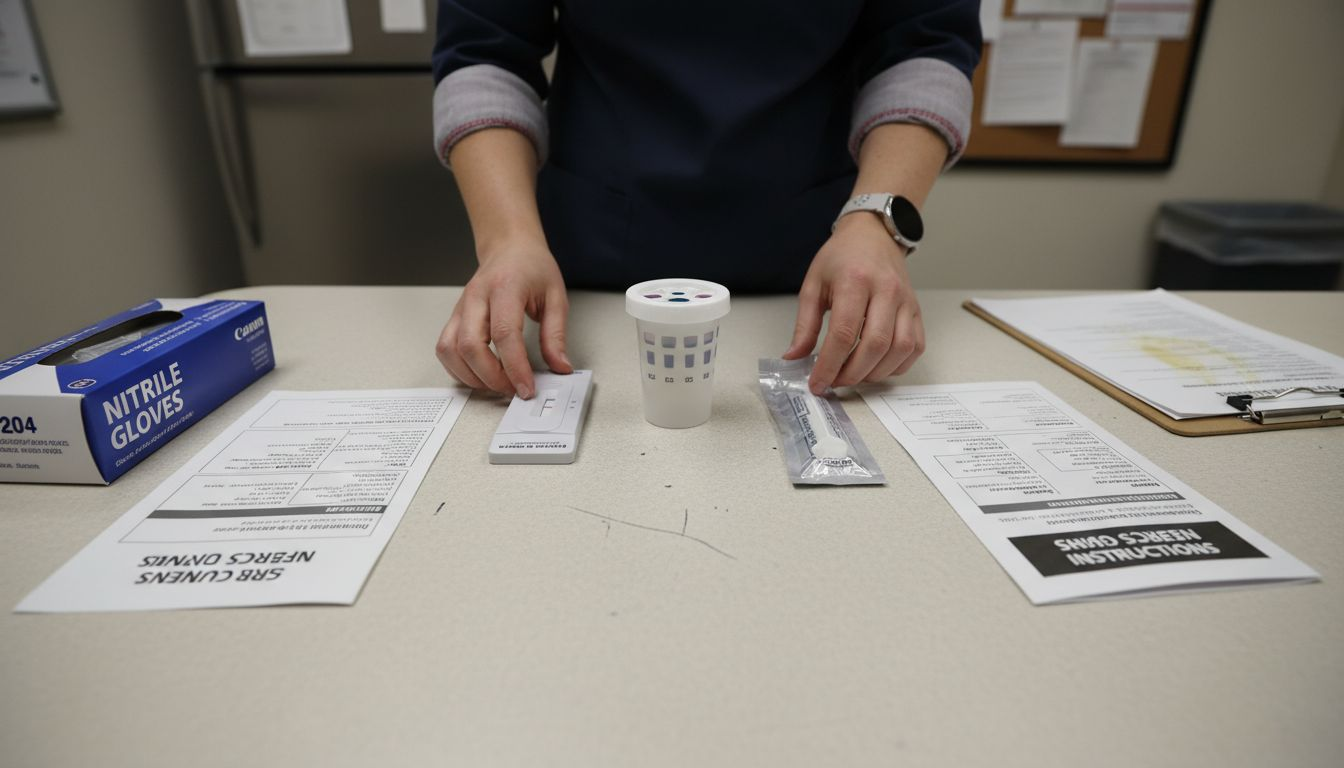
Pro Tip: Always store CLIA waived drug testing devices according to manufacturer specifications and check expiration dates before conducting any screening to ensure optimal test accuracy and reliability.
The table below highlights common types of CLIA waived drug testing devices and their key features:
| Device Type | Drugs Detected | Usability Focus |
|---|---|---|
| Single-panel | One substance (e.g., THC) | Fast, specific |
| Multi-panel (e.g., 5) | Multiple common drugs | Comprehensive, efficient |
| 15-panel cup | Extensive drug coverage | Broad utility, rapid results |
Eligibility and Requirements for CLIA Waiver Status
Obtaining CLIA waiver status involves a rigorous process of demonstrating a test’s simplicity, reliability, and minimal potential for error. The Food and Drug Administration outlines specific criteria for manufacturers seeking waiver classification, requiring comprehensive evidence that demonstrates the test’s low-complexity nature. Manufacturers must submit detailed documentation proving that their diagnostic tool meets stringent regulatory standards, including proof of minimal technical complexity and consistent accuracy across various testing environments.
The eligibility criteria for CLIA waiver status are multifaceted and demanding. The Centers for Disease Control provides a comprehensive framework for evaluating test complexity, focusing on several key assessment areas. These include the level of scientific knowledge required to perform the test, the training necessary for accurate implementation, the complexity of the testing methodology, and the potential for generating erroneous results. Key factors that influence waiver status include the test’s user-friendliness, the clarity of instructions, the potential for interpretation errors, and the device’s overall reliability in non-specialized clinical settings.
To qualify for CLIA waiver status, diagnostic devices must demonstrate exceptional reliability and user-friendliness. This involves proving that the test can be performed consistently by individuals with minimal scientific training, using straightforward procedures that minimize the risk of error. Manufacturers must provide extensive documentation, including detailed training protocols, user manuals, and empirical data demonstrating the test’s accuracy across diverse testing scenarios. The evaluation process is comprehensive, requiring manufacturers to submit multiple rounds of evidence, including performance data, user studies, and comparative analyses that validate the test’s low-complexity classification.

Pro Tip: Before submitting a CLIA waiver application, conduct thorough internal validation studies and compile comprehensive documentation that clearly demonstrates the test’s simplicity and reliability across multiple testing environments.
Compliance Rules and Legal Responsibilities
CLIA waived testing environments are governed by a complex framework of legal and regulatory requirements that demand meticulous attention to detail and strict adherence to established protocols. The American Academy of Family Physicians emphasizes the critical importance of maintaining comprehensive documentation and ensuring personnel are properly trained to perform tests accurately and consistently. These requirements extend beyond mere procedural compliance, encompassing a holistic approach to quality control, personnel management, and ongoing professional development.
The legal responsibilities associated with CLIA waived testing are multifaceted and potentially consequential. Organizations must implement robust systems that guarantee accurate test performance, proper documentation, and adherence to manufacturer’s instructions. This includes maintaining detailed records of test procedures, personnel qualifications, and quality control measures. The American Society for Clinical Laboratory Science recommends employing medical laboratory professionals as Technical Consultants to provide oversight and ensure compliance with complex regulatory standards, even for seemingly straightforward waived testing environments.
Comprehensive compliance involves multiple critical components, including personnel training, equipment maintenance, and rigorous documentation practices. Organizations must develop and maintain comprehensive training programs that ensure all personnel understand the precise protocols for test administration, result interpretation, and quality control. This includes regular skills assessments, ongoing education, and documented proof of competency. Additionally, facilities must maintain meticulous records of test performance, including calibration logs, maintenance records, and detailed documentation of any quality control procedures or potential irregularities.
Pro Tip: Develop a comprehensive compliance checklist that includes detailed training records, equipment maintenance logs, and regular internal audits to proactively address potential regulatory gaps and ensure consistent testing quality.
Benefits and Limitations of CLIA Waived Products
The Centers for Disease Control emphasizes that CLIA waived products offer significant advantages while simultaneously presenting unique challenges, representing a nuanced approach to diagnostic testing. These products provide unprecedented accessibility, enabling rapid testing across diverse professional environments with minimal technical expertise. Their primary benefit lies in their simplicity, allowing organizations to conduct essential screenings quickly and efficiently without requiring advanced laboratory infrastructure or extensive scientific training.
The key benefits of CLIA waived products include their cost-effectiveness, user-friendliness, and broad applicability. These testing solutions dramatically reduce barriers to entry for medical screening, workplace testing, and forensic applications. The American Academy of Family Physicians highlights that while these products offer significant advantages, they are not exempt from rigorous quality control standards. Organizations must still maintain meticulous documentation and adhere to specific regulatory guidelines, ensuring that the convenience of waived testing does not compromise overall testing integrity.
However, CLIA waived products are not without limitations. Their simplicity can paradoxically introduce potential risks if users do not strictly follow manufacturer instructions or lack proper understanding of the testing methodology. Critical factors such as storage conditions, handling procedures, and precise timing can significantly impact test accuracy. Potential limitations include sensitivity variations, limited detection ranges, and the possibility of user-induced errors. Professionals must approach these tests with a balanced perspective, recognizing their utility while simultaneously maintaining a high standard of procedural discipline and understanding the specific constraints of each testing device.
Pro Tip: Always cross-reference manufacturer instructions with your organization’s specific testing protocols and invest in comprehensive staff training to maximize the reliability of CLIA waived product testing.
Simplify Compliance with Trusted CLIA Waived Drug Testing Solutions
Understanding the critical importance of CLIA waived tests means recognizing the need for accurate, easy-to-use, and reliable drug testing products. The challenges of maintaining strict adherence to regulatory standards and ensuring test accuracy can feel overwhelming. That is why having access to high-quality, FDA-approved, CLIA waived drug testing kits is essential for laboratories, clinics, and professional programs aiming to avoid costly errors and legal pitfalls.
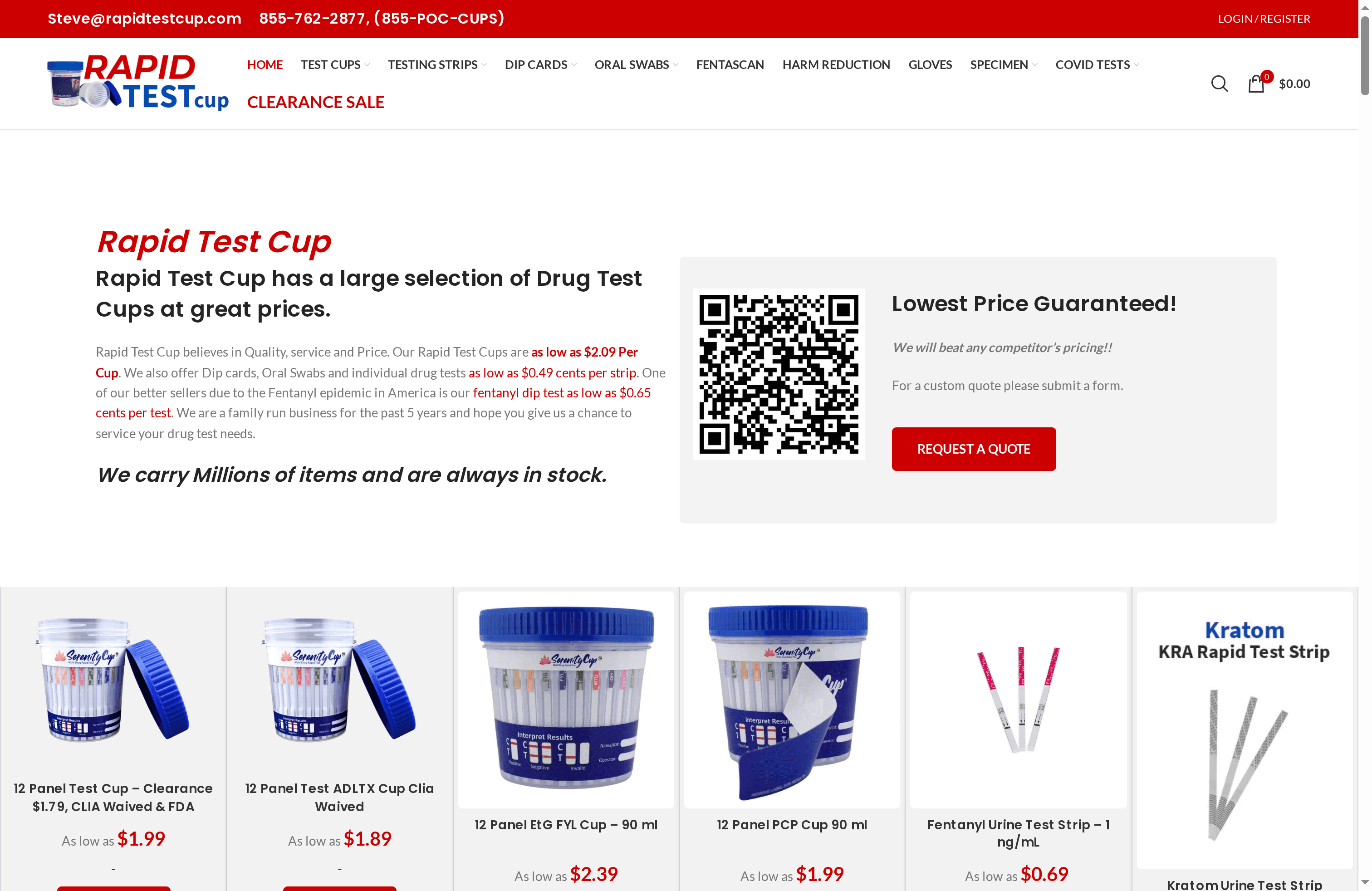
Discover how RapidTestCup removes the guesswork by offering an extensive range of drug test cups, dip cards, and specimen collection supplies designed specifically for professional use with built-in compliance and quality assurance. Act now to equip your facility with affordable, top-tier testing products that empower your staff to deliver fast, dependable results while meeting all regulatory demands. Visit RapidTestCup today and elevate your testing program with confidence and convenience.
Frequently Asked Questions
What are CLIA waived tests?
CLIA waived tests are simple, low-risk laboratory examinations that can be performed in various healthcare settings with minimal technical training, designed to produce reliable results when manufacturer instructions are followed.
Why are CLIA waived tests significant in healthcare?
CLIA waived tests enhance accessibility to essential diagnostic screenings, allowing healthcare providers to conduct rapid tests without needing advanced lab facilities, thereby improving patient care and workplace safety.
What types of devices fall under CLIA waived drug testing?
Common types of CLIA waived drug testing devices include single-panel tests, multi-panel tests, and comprehensive testing cups, capable of detecting multiple drug classes with minimal user complexity.
What are the key considerations for using CLIA waived tests?
Proper handling, strict adherence to manufacturer instructions, monitoring of expiration dates, and maintaining optimal storage conditions are crucial to ensure that CLIA waived tests deliver accurate and reliable results.