

Blog
How to Handle Positive Drug Tests: HR Compliance Guide


Every Human Resources leader knows that a single positive drug test result can raise tough questions about policy, safety, and employee well-being. With updated federal guidelines and increasing focus on workplace support, consistent procedures are more important than ever. This guide provides practical steps for building legally sound, compassionate drug testing policies that safeguard your organization while prioritizing both compliance and employee wellness.
Table of Contents
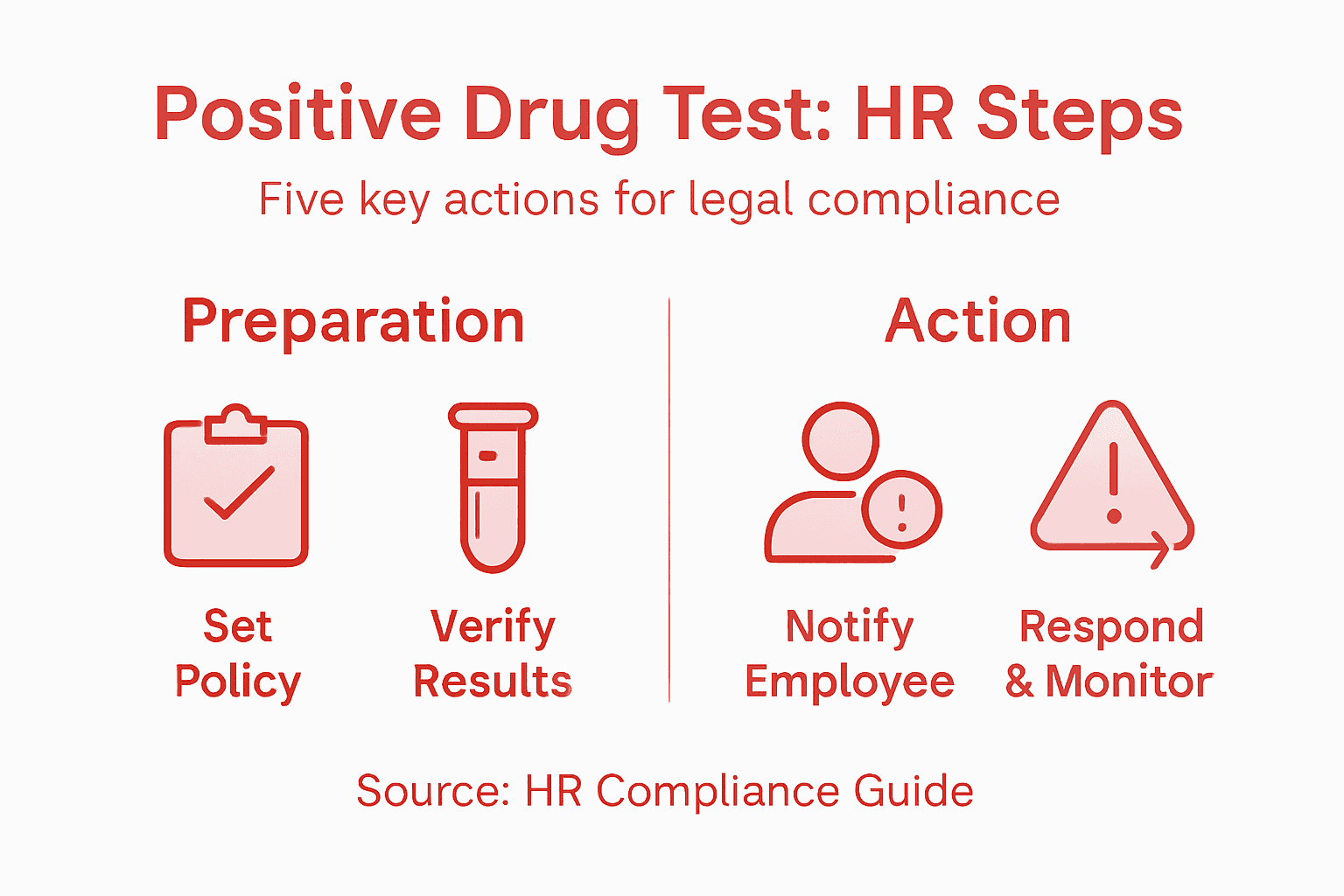
- Step 1: Establish Clear Drug Testing Policies
- Step 2: Verify Positive Test Results and Documentation
- Step 3: Notify The Employee Confidentially
- Step 4: Implement Response Procedures and Next Steps
- Step 5: Review Resolutions and Monitor Compliance
Quick Summary
| Key Point | Explanation |
|---|---|
| 1. Establish Clear Testing Policies | Develop comprehensive drug testing policies that comply with regulations and clearly outline the testing processes. |
| 2. Verify Test Results Thoroughly | Confirm positive test results through a structured verification process ensuring fairness and accuracy at every stage. |
| 3. Notify Employees Confidentially | Communicate positive test results to employees discreetly, respecting their privacy and following legal protocols. |
| 4. Implement Supportive Response Procedures | Offer rehabilitation support through Employee Assistance Programs while maintaining safety by removing employees from safety-sensitive roles. |
| 5. Monitor Compliance and Progress | Systematically track employee recovery and ensure adherence to return-to-work agreements for long-term success and workplace safety. |
Step 1: Establish clear drug testing policies
Creating comprehensive and legally compliant drug testing policies is the foundation of effective workplace substance management. Your policy serves as a critical roadmap for maintaining safety, productivity, and legal protection for both employees and the organization.
To develop a robust drug testing framework, start by clearly defining the scope and purpose of your testing program. The Mandatory Guidelines for Federal Workplace Drug Testing Programs provide an excellent reference for establishing standardized protocols. Key elements should include:
- Clearly defined testing scenarios (pre-employment, random, post-accident)
- Specific substances being tested
- Consequences of positive test results
- Employee rights and confidentiality protections
- Procedures for medical review and verification
Your policy must strike a balance between maintaining workplace safety and treating employees with respect. As recommended by the Department of Labor, approach positive drug tests as opportunities for support rather than purely punitive measures. Consider incorporating Employee Assistance Programs (EAPs) that provide rehabilitation and counseling resources.
A well-crafted drug testing policy communicates clear expectations while demonstrating organizational commitment to employee wellness.
Ensure your policy complies with federal and state regulations, including the Drug-Free Workplace Act of 1988. Consistency and fairness are paramount – the policy should apply equally across all levels of the organization.
Pro tip: Consult with legal counsel and HR professionals to review and validate your drug testing policy before implementation to ensure comprehensive coverage and legal compliance.
Step 2: Verify positive test results and documentation
Verifying positive drug test results is a critical process that requires meticulous attention to detail and adherence to legal standards. Your goal is to ensure accuracy, protect employee rights, and maintain workplace integrity through a thorough and fair verification procedure.
The transportation workplace drug testing procedures outline specific protocols for confirming positive test results. Medical Review Officers (MROs) play a crucial role in this process, acting as independent, licensed physicians who carefully evaluate laboratory findings. Key verification steps include:
- Obtaining the initial laboratory report
- Reviewing the complete toxicology screening documentation
- Conducting a confidential interview with the employee
- Investigating potential medical explanations for positive results
- Documenting all findings and communications
According to the HHS Mandatory Guidelines, MROs must follow a structured approach to verification. This involves confidentially contacting the employee to discuss the test results, allowing them to provide medical context or explanation for potentially positive findings.
A comprehensive verification process protects both the organization and the employee by ensuring fairness and accuracy in drug test result interpretation.
Documentation is paramount in this process. Maintain detailed records of all communication, test results, medical interviews, and final determinations. Each step should be carefully logged to demonstrate a transparent and thorough review process.
Here’s a summary of Medical Review Officer (MRO) roles and their impact during drug test result verification:
| Step in Verification Process | MRO Responsibility | Impact on Outcome |
|---|---|---|
| Review lab results | Confirm test validity | Reduces risk of errors |
| Confidential employee interview | Gather medical explanations | Ensures fair result interpretation |
| Document findings | Create detailed records | Enables legal and HR transparency |
| Final determination | Decide result status | Safeguards employee and employer |
Pro tip: Create a standardized verification checklist to ensure consistent and comprehensive review of all positive drug test results, minimizing potential errors or oversights.
Step 3: Notify the employee confidentially
Notifying an employee about a positive drug test requires extreme sensitivity, professionalism, and strict adherence to confidentiality protocols. Your approach must balance legal requirements with respect for the individual’s privacy and dignity.
The confidential drug test notification procedures mandate specific communication guidelines for employers and Medical Review Officers (MROs). These protocols ensure that sensitive information remains protected throughout the notification process. Key considerations for confidential notification include:
- Select a private communication channel
- Schedule the conversation at a discreet time
- Use a secure, one-on-one communication method
- Limit disclosure to only essential personnel
- Maintain written documentation of the notification
Medical Review Officers are typically responsible for direct employee communication. According to federal regulations, they must make reasonable efforts to contact the employee, which may involve multiple communication attempts at different times to ensure privacy.
Confidentiality is not just a legal requirement – it’s a fundamental respect for the employee’s personal information and professional reputation.
When initiating contact, choose a communication method that minimizes potential embarrassment or workplace disruption. This might mean scheduling a private phone call or a confidential in-person meeting outside of regular work hours.

Pro tip: Develop a standardized notification script that provides consistent, compassionate communication while protecting both organizational and employee interests.
Step 4: Implement response procedures and next steps
After confirming a positive drug test, your response strategy must balance legal compliance, workplace safety, and employee support. The goal is to create a pathway for rehabilitation while maintaining organizational standards and protecting workforce integrity.
Under federal guidelines, employers must take immediate safety-sensitive function removal actions. Key response procedures include:
- Remove employee from safety-critical roles
- Initiate Employee Assistance Program (EAP) referral
- Document all communication and actions
- Establish clear return-to-duty requirements
- Create a structured follow-up monitoring plan
The Department of Labor recommends treating positive tests as opportunities for support rather than purely punitive measures. This approach involves connecting employees with resources that address potential underlying issues and support their recovery journey.
A compassionate, structured response can transform a challenging situation into a genuine opportunity for employee growth and organizational resilience.
A comprehensive return-to-duty process typically requires a professional substance abuse evaluation, potential treatment recommendation, and a carefully designed return-to-work agreement that includes ongoing monitoring and support.
The following table highlights common return-to-work agreement components after a positive result:
| Component | Purpose | Organizational Benefit |
|---|---|---|
| Substance abuse evaluation | Assess recovery needs | Supports tailored rehabilitation |
| Ongoing monitoring | Track compliance and behavior | Maintains workplace safety |
| Treatment participation | Enable recovery support | Encourages employee improvement |
| Follow-up testing | Provide objective evidence | Promotes continued accountability |
Pro tip: Develop a standardized response workflow that ensures consistent, fair treatment while providing clear pathways for employee rehabilitation and potential workplace reintegration.
Step 5: Review resolutions and monitor compliance
The final stage of handling positive drug tests involves comprehensive review and ongoing monitoring to ensure workplace safety, employee recovery, and organizational policy adherence. This critical phase transforms initial interventions into sustainable, long-term solutions.
Mandatory workplace drug testing guidelines require systematic documentation and periodic review of drug testing outcomes. Key compliance monitoring activities include:
- Track employee treatment progress
- Document follow-up testing results
- Maintain confidential medical records
- Verify continued compliance with return-to-work agreements
- Schedule regular performance and behavioral assessments
Medical Review Officers play a crucial role in this process, conducting semiannual reporting and reviewing individual case resolutions. This ensures that each situation receives appropriate, individualized attention while maintaining overall program integrity.
Effective monitoring transforms a single intervention into a comprehensive strategy for workplace wellness and employee support.
The monitoring process should remain flexible yet structured, allowing for individual variation while maintaining clear organizational standards. Regular communication with the employee, treatment providers, and relevant HR personnel helps create a supportive, transparent environment.
Pro tip: Develop a standardized tracking system that balances confidentiality with thorough compliance documentation, enabling consistent and fair monitoring across all cases.
Take Control of Positive Drug Test Challenges with Trusted Testing Solutions
Handling positive drug tests requires strict attention to accuracy, confidentiality, and compliance. Your HR team needs reliable, easy-to-use testing products that support thorough verification and proper documentation at every step. With the right tools, you can uphold workplace safety while respecting employee rights and streamlining your response procedures.
Explore a wide selection of FDA-approved and CLIA waived drug test cups, dip cards, and specimen collection supplies at rapidtestcup.com. Our affordable, high-quality testing kits are designed to help you verify results with confidence, protect confidentiality during employee notification, and maintain compliance with federal guidelines. Act now to equip your organization with dependable testing solutions that make your drug testing process simple and effective.
Visit our site to browse products, request bulk discounts, or get customized support from professionals who understand your compliance needs. Take the next step to protect your workplace integrity confidently at RapidTestCup.
Frequently Asked Questions
What should be included in a drug testing policy?
A drug testing policy should include clearly defined testing scenarios, the substances being tested, the consequences of positive test results, employee rights, and procedures for medical review. To create a comprehensive policy, outline these elements to provide clear expectations for all employees.
How should I verify positive drug test results?
To verify positive drug test results, engage a Medical Review Officer (MRO) who will review laboratory findings, conduct a confidential interview with the employee, and document all findings. Ensure this process is thorough to protect both the organization and the employee’s rights.
What steps should I take to notify an employee of a positive drug test?
When notifying an employee of a positive drug test, use a private communication channel and ensure the conversation occurs in a discreet setting. Document the notification process to maintain clarity and confidentiality throughout the communication.
What response procedures should I implement after a positive drug test?
After confirming a positive drug test, remove the employee from safety-critical roles, refer them to an Employee Assistance Program (EAP), and document all actions taken. Establish a structured return-to-duty process to support the employee’s rehabilitation while ensuring workplace safety.
How can I monitor compliance after handling a positive drug test?
To monitor compliance, track employee treatment progress, document follow-up testing results, and verify adherence to return-to-work agreements. Schedule regular assessments to create a supportive and transparent environment for the employee’s recovery.
Why is confidentiality important during the notification process?
Confidentiality is essential because it protects the employee’s personal information and maintains their professional reputation. Prioritize confidentiality by limiting disclosure to only essential personnel and documenting the notification process securely.