Blog
Top innovations in drug testing 2026 for labs


Selecting the right drug testing method in 2026 means balancing accuracy, speed, and operational efficiency in ways that weren’t possible even two years ago. Healthcare professionals, laboratory managers, and law enforcement officials now face an expanding array of technologies, from rapid GC-MS systems that cut analysis time by 66% to nanomaterial sensors enabling portable, field-ready detection. This article provides a practical framework for evaluating these innovations and reviews the top options transforming drug testing workflows today.
Table of Contents
- How To Evaluate Innovations In Drug Testing Technologies
- Innovative Sensor Technologies Transforming Methamphetamine Detection
- Breakthroughs In Mass Spectrometry For Comprehensive Drug Analysis
- Comparing Top Innovations For Practical Drug Testing Applications
- Explore Rapid And Reliable Drug Test Solutions
- What Are The Main Benefits Of Rapid GC-MS In 2026?
- How Do Nanomaterial-Enhanced Sensors Improve Drug Testing?
- What Role Does AI Play In Modern Drug Testing Platforms?
- Which Innovation Offers The Best Cost-Effectiveness For Mid-Sized Labs?
Key takeaways
| Point | Details |
|---|---|
| Speed gains | Rapid GC-MS reduces forensic analysis from 30 to 10 minutes for timely decisions. |
| Enhanced sensitivity | Detection limits improved 50% for cocaine and heroin using optimized mass spectrometry. |
| Portable screening | Nanomaterial sensors deliver specific, on-site methamphetamine detection without lab infrastructure. |
| AI integration | Automated data processing reduces noise and uncovers subtle drug signatures for higher reliability. |
| Broader detection | Tandem MS enables precise molecular identification across complex drug panels. |
How to evaluate innovations in drug testing technologies
Sensitivity and specificity form the foundation of reliable drug testing. You need methods that detect low concentrations without triggering false positives. Mass spectrometry provides lower detection limits and increased specificity compared to immunoassays, but requires considering cost, sample preparation complexity, and lab infrastructure before adoption. Evaluate whether your facility has the technical expertise and budget to support advanced instrumentation or if portable alternatives better match your operational reality.
Turnaround time directly impacts clinical and law enforcement outcomes. Faster results enable timely treatment decisions in emergency departments and accelerate case processing for legal proceedings. When reviewing new technologies, compare analysis speed against your current workflow. Does a 20-minute reduction justify the investment? Will it eliminate bottlenecks during high-volume periods?
Cost extends beyond initial purchase price. Factor in consumables, maintenance contracts, staff training, and potential downtime. A lower-priced system that requires frequent calibration or expensive reagents may cost more over three years than a premium option with streamlined operation. Calculate total cost of ownership before committing.
Portability and ease of use matter especially for field testing scenarios. Law enforcement and workplace screening programs benefit from devices that deliver lab-quality results without sending samples offsite. Assess whether your team needs benchtop instruments for centralized testing or handheld units for distributed operations.
Integration with data processing and AI improves accuracy and workflow efficiency. Modern platforms automate result interpretation, flag anomalies, and maintain audit trails for compliance. Systems that connect with your existing laboratory information management software reduce manual data entry and transcription errors. Staying current with drug testing trends in 2026 helps you identify which innovations align with evolving regulatory and operational demands.
Pro Tip: Create a weighted scoring matrix for your top three evaluation criteria, then rate each technology option to identify the best fit for your specific operational context and budget constraints.
Innovative sensor technologies transforming methamphetamine detection
Colorimetric sensors detect methamphetamine presence through visible color changes when the drug binds to reactive compounds. You can read results without instrumentation, making them ideal for rapid field screening where laboratory access is limited. These sensors work well for initial yes/no determinations but lack the precision needed for quantitative analysis.
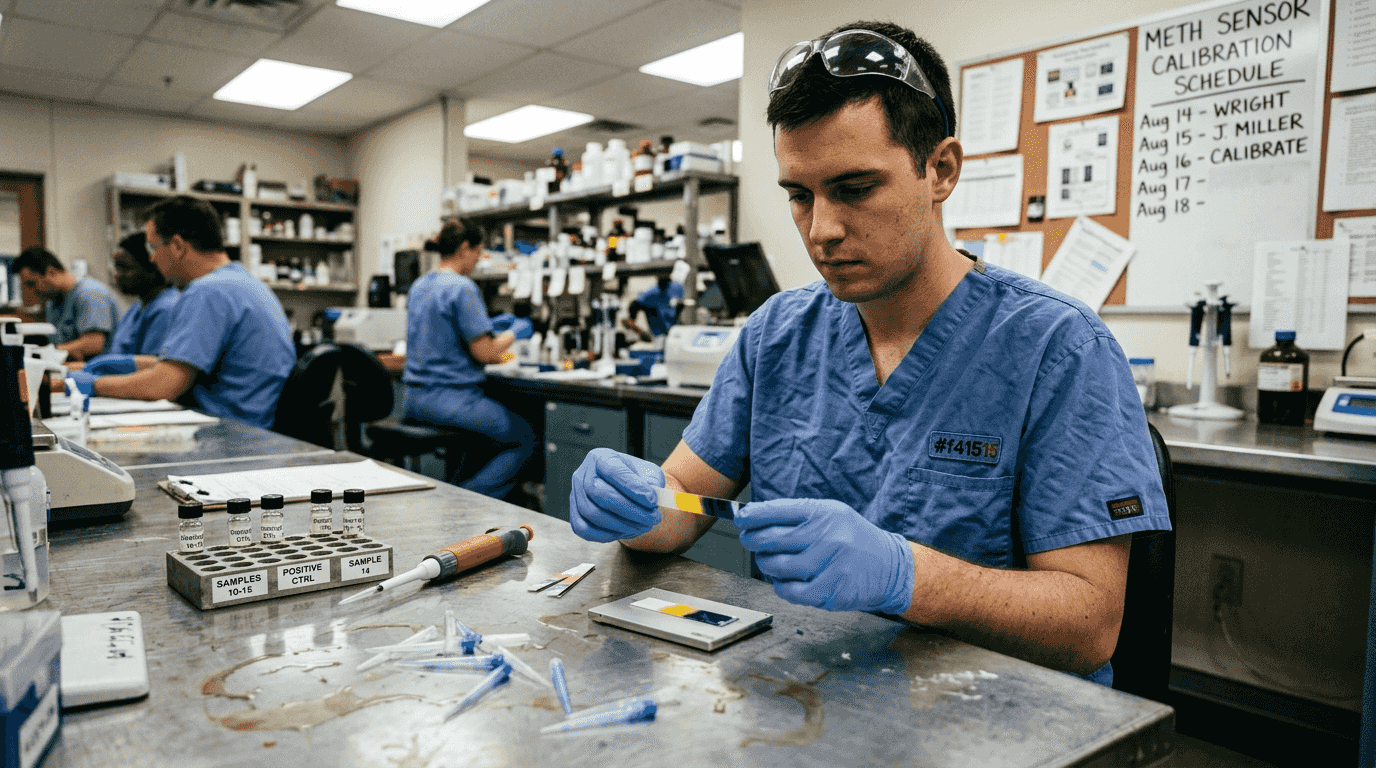
Fluorescent sensors offer enhanced sensitivity by emitting light at specific wavelengths when methamphetamine molecules interact with fluorophore-tagged receptors. The intensity of fluorescence correlates with drug concentration, enabling semi-quantitative measurements. These sensors detect lower concentrations than colorimetric alternatives while maintaining portability.
Surface-enhanced Raman sensors provide molecular fingerprinting at extremely low concentrations. When methamphetamine molecules adsorb onto nanostructured metal surfaces, their Raman signals amplify by factors of millions. You get chemical identification with near-laboratory specificity in a compact device suitable for roadside testing.
Electrochemical sensors convert chemical information to electrical signals for precise quantification. Methamphetamine detection sensors include electrochemical types that measure current or voltage changes as drugs undergo oxidation or reduction at electrode surfaces. These sensors integrate easily with digital readouts and smartphone apps for immediate result documentation.
Nanomaterials enable increased sensor performance through enhanced surface area, catalytic activity, and signal transduction. Gold nanoparticles, carbon nanotubes, and graphene sheets improve sensitivity while reducing device size. Smart integration with wireless connectivity allows real-time data transmission to central databases for trend analysis.
These sensor innovations support rapid, portable testing in the field without sacrificing reliability. Understanding how AI enhances drug testing accuracy helps you select sensors with intelligent data processing that compensates for environmental variables and operator technique differences.
- Colorimetric sensors provide visual yes/no screening without equipment
- Fluorescent sensors deliver semi-quantitative results with higher sensitivity
- Surface-enhanced Raman enables molecular identification in portable formats
- Electrochemical sensors offer precise quantification with digital integration
- Nanomaterial enhancement boosts performance across all sensor types
Breakthroughs in mass spectrometry for comprehensive drug analysis
Rapid GC-MS reduces analysis time from 30 to 10 minutes while improving detection limits significantly for drugs like cocaine and heroin. This 66% time reduction transforms forensic laboratory throughput, allowing you to process three times more samples per instrument per day. The optimized method maintains accuracy while eliminating lengthy sample preparation steps that previously delayed results.
Detection limit improvements reach 50% for key substances. You can now identify cocaine at 2.5 ng/mL instead of 5 ng/mL, catching low-level use that older methods missed. This enhanced sensitivity proves critical for workplace testing programs with zero-tolerance policies and for detecting drug-facilitated crimes where perpetrators use minimal doses.
Tandem mass spectrometry enhances sensitivity and specificity through multi-stage ion fragmentation and analysis. MS/MS instruments isolate target drug ions, fragment them into characteristic pieces, then analyze those fragments for definitive identification. This double-verification approach eliminates false positives from structurally similar compounds that confound single-stage methods.
New detector technologies including time-of-flight (TOF), Orbitrap, and ion trap systems enhance resolution and dynamic range. TOF detectors measure ion flight time with picosecond precision, resolving compounds with nearly identical masses. Orbitrap analyzers achieve mass accuracy within 1 part per million, enabling confident identification without reference standards for novel psychoactive substances.
Hybrid detectors combine multiple analyzer types in single instruments. A quadrupole-TOF hybrid performs targeted quantification and full-spectrum profiling simultaneously. You get confirmation testing and unknown screening in one analysis, maximizing information from limited sample volumes.
Integrated data processing reduces noise, improves reliability, and supports real-time analysis. Advanced algorithms subtract background signals, correct for matrix effects, and compare spectra against comprehensive drug libraries containing thousands of compounds. Automated peak integration eliminates subjective interpretation that varies between analysts. Exploring rapid screening methods helps you understand how these processing advances complement hardware improvements.
| Technology | Analysis Time | Detection Limit Improvement | Key Advantage |
| — | — | — |
| Rapid GC-MS | 10 minutes | 50% for cocaine/heroin | High-throughput forensic screening |
| Tandem MS/MS | 15-20 minutes | 75% via fragmentation | Definitive identification, eliminates false positives |
| TOF Detectors | 12 minutes | 60% via high resolution | Novel substance detection without standards |
| Hybrid Systems | 18 minutes | 70% combined | Simultaneous quantification and profiling |
Pro Tip: When evaluating mass spectrometry systems, request demonstration data using your actual sample matrices, not manufacturer-provided standards, to verify real-world performance in your specific testing environment.
- Rapid GC-MS cuts forensic turnaround by two-thirds
- Enhanced detectors resolve compounds with near-identical masses
- Tandem MS provides double-verification for zero false positives
- Hybrid systems deliver multiple analysis modes simultaneously
- Automated processing ensures consistent, objective results
Comparing top innovations for practical drug testing applications
Innovations vary widely in accuracy, throughput, cost, and portability characteristics that determine their optimal use cases. Rapid GC-MS excels in centralized forensic laboratories where you process hundreds of samples daily and need definitive quantification. The instrumentation requires dedicated space, climate control, and trained technicians, making it impractical for field deployment but unmatched for confirmatory testing.
Nanomaterial sensors provide portable, point-of-need solutions with moderate specificity suitable for preliminary screening. You can deploy these devices in patrol vehicles, workplace testing stations, or emergency departments for immediate yes/no determinations. While they lack the precision of laboratory methods, their speed and convenience enable rapid decision-making when you need results in minutes, not hours.
Tandem MS offers unmatched specificity suited for complex cases and confirmation testing where legal consequences demand absolute certainty. Conventional GC-MS methods require extensive preparation and analysis time, prompting innovation toward rapid approaches, but MS/MS remains the gold standard when you must differentiate methamphetamine from structurally similar compounds or detect designer drugs with unknown metabolites.
Integration with AI and advanced data processing enhances all platforms’ usability and reliability. Automated result interpretation reduces operator training requirements and eliminates subjective judgment calls. Predictive maintenance alerts prevent instrument downtime during critical periods. Cloud-based data management enables multi-site programs to standardize protocols and aggregate results for population-level trend analysis.
Selection depends on organizational priorities and testing scenarios. High-volume forensic labs prioritize throughput and definitive accuracy, justifying significant capital investment in rapid GC-MS or tandem MS systems. Law enforcement agencies conducting roadside screening need portable sensors that deliver immediate results despite lower specificity. Workplace programs balancing cost with reliability often adopt tiered approaches using rapid sensors for initial screening and laboratory confirmation for positives. Understanding why forensic drug testing matters helps you align technology choices with your program’s legal and operational requirements.
| Innovation | Speed | Accuracy | Portability | Best Application |
|---|---|---|---|---|
| Rapid GC-MS | 10 min | 98% sensitivity | Benchtop only | High-volume forensic labs |
| Nanomaterial Sensors | 2-5 min | 85-90% sensitivity | Handheld | Field screening, point-of-need |
| Tandem MS/MS | 15-20 min | 99.5% specificity | Benchtop only | Confirmatory testing, legal cases |
| AI-Enhanced Platforms | Variable | 95-99% depending on base tech | Varies by platform | Multi-site programs needing standardization |
- Rapid GC-MS maximizes laboratory throughput but requires infrastructure
- Portable sensors enable immediate field decisions with acceptable accuracy
- Tandem MS delivers courtroom-ready certainty for high-stakes cases
- AI integration standardizes interpretation across operators and sites
- Tiered testing strategies combine technologies for optimal cost-effectiveness
Explore rapid and reliable drug test solutions
After reviewing cutting-edge innovations in mass spectrometry, sensors, and AI-enhanced platforms, you need trusted suppliers that deliver practical testing solutions aligned with these technological advances. RapidTestCup specializes in advanced multi-panel drug test cups and strips designed for professional, forensic, and clinical applications where accuracy and speed matter most.
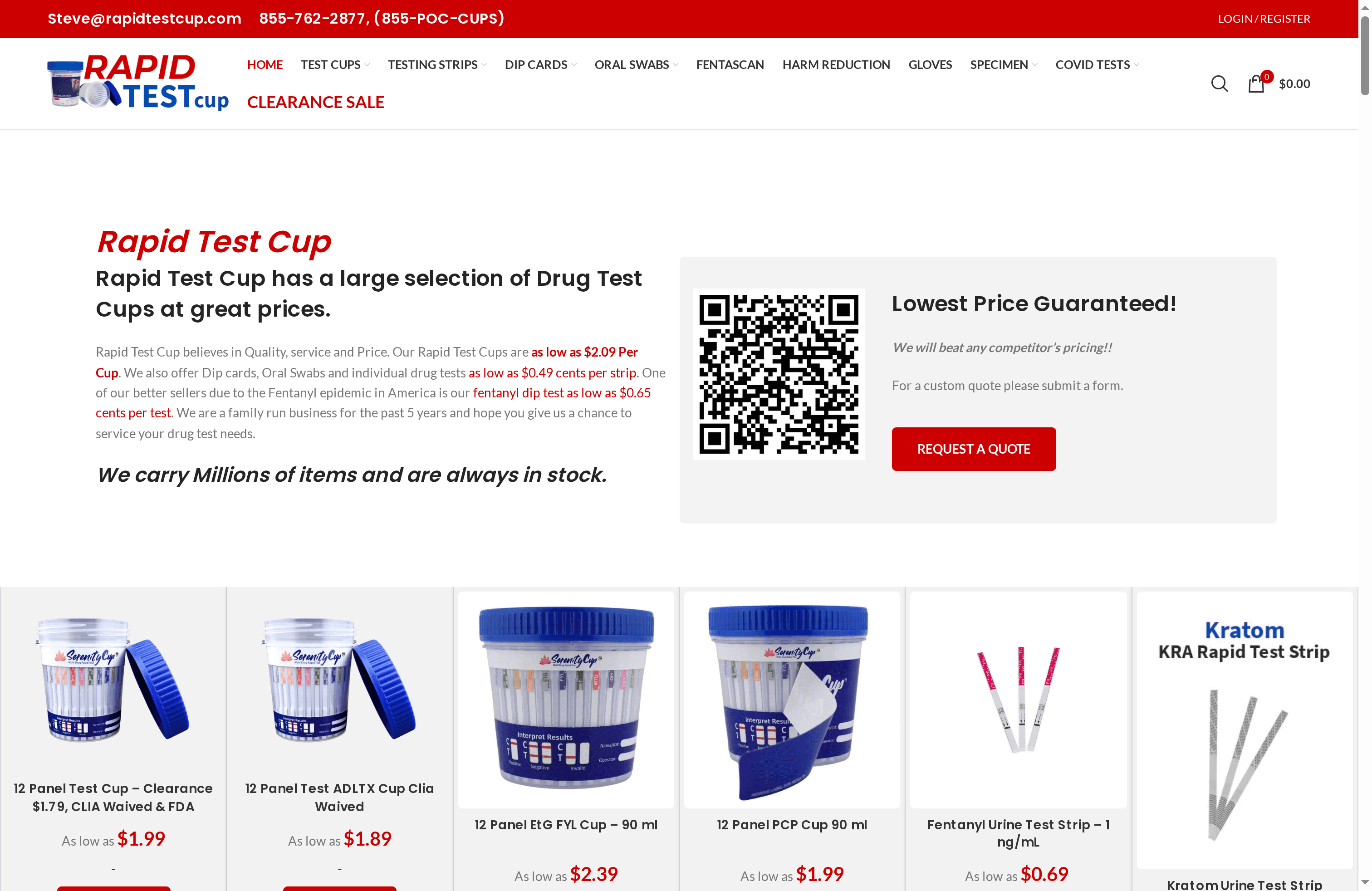
The 12 panel ADLTX cup provides comprehensive screening with integrated adulteration testing, catching sophisticated evasion attempts that compromise result integrity. For targeted methamphetamine detection, the MET drug test strip delivers reliable results in minutes at a fraction of laboratory testing costs. Stay ahead of evolving detection methods and regulatory requirements by exploring expert insights on drug testing trends shaping 2026 practice standards.
What are the main benefits of rapid GC-MS in 2026?
Rapid GC-MS reduces analysis time significantly while improving detection sensitivity and reproducibility compared to conventional methods. You can process forensic samples in 10 minutes instead of 30, enabling same-day turnaround for law enforcement investigations and emergency department cases. The improved detection limits catch low-level drug use that older methods miss, while enhanced reproducibility ensures consistent results across different analysts and testing sessions.
How do nanomaterial-enhanced sensors improve drug testing?
Nanomaterial enhancement boosts sensor sensitivity and integration capabilities for portable, specific drug detection in field environments. These sensors detect methamphetamine at concentrations 10 times lower than conventional immunoassays while maintaining compact form factors suitable for handheld devices. The increased surface area and catalytic properties of nanomaterials enable real-time measurements without sample preparation, delivering laboratory-quality screening at the point of need.
What role does AI play in modern drug testing platforms?
Integration of AI with detectors enhances data interpretation, reduces noise, and automates acquisition to uncover subtle molecular signatures that manual analysis might miss. AI algorithms learn from thousands of validated results to identify patterns indicating specific drugs or adulterants, even in complex biological matrices. Automated optimization adjusts instrument settings in real time for optimal performance across varying sample conditions, eliminating the trial-and-error calibration that consumes technician time and delays results.
Which innovation offers the best cost-effectiveness for mid-sized labs?
Rapid GC-MS systems provide the best cost-effectiveness for mid-sized laboratories processing 50-200 samples daily. The 66% reduction in analysis time means you can handle higher volumes without purchasing additional instruments or hiring more staff. While initial investment exceeds portable sensors, the per-sample cost drops significantly at moderate throughput levels, and the definitive results eliminate expensive confirmatory testing for most specimens. Calculate your break-even point by dividing the price difference by your daily sample volume multiplied by the cost savings per test.