

Blog
Understanding forensic drug testing importance in 2026


Many professionals assume that standard drug tests catch every substance and deliver absolute results, but the reality is far more nuanced. Forensic drug testing plays a critical role in law enforcement investigations, emergency medical responses, and substance abuse treatment programs, yet misconceptions about accuracy and methodology continue to compromise effective practice. Understanding the capabilities, limitations, and recent advances in forensic drug testing is essential for professionals who rely on these results to make high-stakes decisions. This guide clarifies the importance of forensic drug testing methods and explores how emerging technologies are reshaping detection capabilities in 2026.
Table of Contents
- What Is Forensic Drug Testing And Its Critical Role
- Testing Methods And Technologies: Strengths And Limitations
- Challenges And Advancements In Forensic Drug Testing For 2026
- Applying Forensic Drug Testing Insights To Enhance Practice And Outcomes
- Explore Rapid, Reliable Forensic Drug Testing Products
- Frequently Asked Questions
Key takeaways
| Point | Details |
|---|---|
| Critical detection tool | Forensic drug testing confirms drug use and guides clinical, legal, and treatment decisions across multiple professional settings. |
| Urine dominates testing | Urine remains the most common specimen, though oral fluid and other matrices are gaining acceptance for specific applications. |
| Mass spectrometry superiority | Confirmatory testing with mass spectrometry offers far greater specificity than immunoassays but demands advanced laboratory resources. |
| Technology advances detection | Federal funding and new technologies enable faster, more accurate identification of emerging street drugs in 2026. |
| Expert interpretation required | Complex results demand toxicology expertise to avoid false positives, false negatives, and ensure appropriate action. |
What is forensic drug testing and its critical role
Forensic drug testing refers to the analytical process that detects drugs or metabolites in biological specimens including urine, blood, saliva, and hair. These tests serve multiple functions across professional domains: confirming suspected drug use in law enforcement cases, monitoring therapy adherence in substance abuse treatment programs, and detecting toxicity or overdose in emergency departments. The shift from the term “drugs of abuse” to “drugs of misuse” reflects a move toward less stigmatizing language in healthcare and treatment contexts.
Urine remains the dominant specimen type due to its noninvasive collection, extended detection window for many substances, and established protocols. Blood testing provides information about current impairment levels but requires invasive collection and has shorter detection windows. Saliva offers a middle ground with noninvasive collection and detection of recent use, while hair analysis can reveal substance use patterns over months but cannot pinpoint exact timing.
The applications of forensic drug testing extend beyond criminal justice. Emergency departments rely on rapid testing to guide treatment decisions for patients presenting with altered mental status or suspected overdose. Substance abuse treatment programs use regular testing to monitor compliance and detect relapse. Workplace safety programs depend on accurate results to maintain safe environments. Understanding the forensic drug test legal impact helps professionals navigate the consequences of testing in various settings.
Each specimen type presents distinct advantages and limitations:
- Urine provides the longest detection window for most drugs and remains cost-effective for routine screening
- Blood offers the most accurate picture of current impairment but requires trained phlebotomists and has brief detection periods
- Oral fluid enables observed collection without privacy concerns and detects recent drug use effectively
- Hair analysis reveals long-term use patterns but cannot determine frequency or recency of use with precision
Professionals must select the appropriate specimen based on the testing objective, required detection window, available resources, and legal or regulatory requirements. The choice of specimen directly impacts the reliability and applicability of test results in clinical or forensic contexts.
Testing methods and technologies: strengths and limitations
Two primary methodologies dominate forensic drug testing: immunoassay-based screening and mass spectrometry confirmation. Immunoassays provide rapid results but suffer from cross-reactivity issues that produce false positives and negatives. These presumptive tests use antibodies that bind to drug molecules or their metabolites, triggering a color change or other signal. While convenient for initial screening, immunoassays often miss emerging synthetic drugs not included in standard panels.
Mass spectrometry techniques, particularly gas chromatography-mass spectrometry and liquid chromatography-tandem mass spectrometry, deliver superior specificity and detect broader drug ranges than immunoassays. These methods separate compounds based on physical properties and then identify them by molecular weight and fragmentation patterns. The precision eliminates most false positives but requires expensive equipment, specialized training, and longer turnaround times.
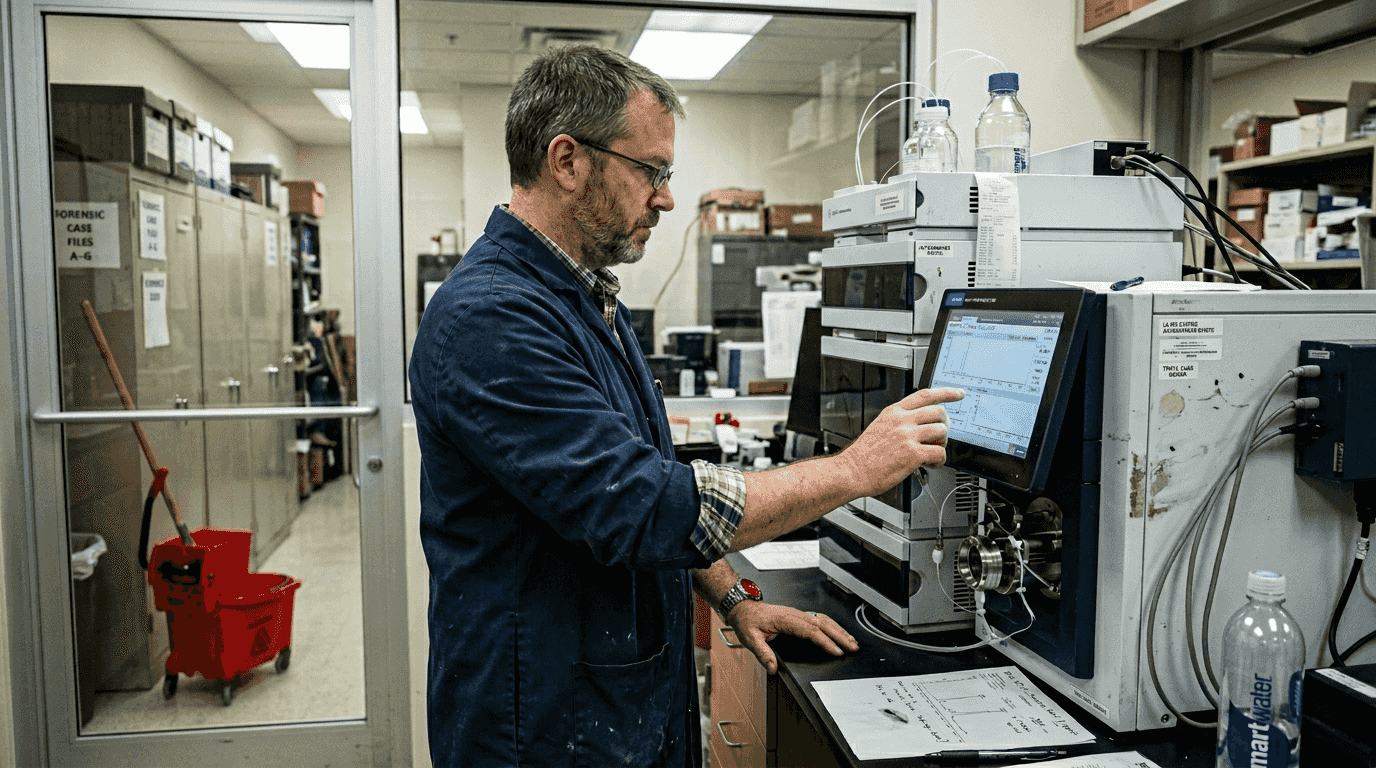
Research demonstrates that presumptive testing misses significant findings compared to definitive methods. Emergency departments relying solely on immunoassay panels may fail to detect synthetic opioids, novel psychoactive substances, or therapeutic drugs contributing to patient symptoms. This gap between presumptive and definitive testing capabilities has profound implications for patient care and forensic investigations. Understanding drug testing accuracy explained helps professionals interpret results appropriately.
Emerging specimen types and technologies offer new possibilities:
- Oral fluid testing provides noninvasive collection with direct observation, reducing adulteration risks
- Breath analysis for certain drugs promises real-time impairment detection similar to alcohol breathalyzers
- Point-of-care devices deliver faster results but typically sacrifice some accuracy compared to laboratory methods
- Dried blood spot testing enables simplified collection and shipping for remote or field applications
Pro Tip: Always confirm positive immunoassay results with mass spectrometry before making critical clinical or legal decisions, as cross-reactivity with over-the-counter medications and supplements frequently triggers false positives.
| Method | Advantages | Limitations |
|---|---|---|
| Immunoassay | Rapid results, low cost, minimal training | False positives/negatives, limited drug panels, misses novel substances |
| Mass Spectrometry | High specificity, broad detection, identifies unknowns | Expensive equipment, requires expertise, longer turnaround |
| Point-of-Care | Immediate results, field deployment | Reduced accuracy, limited panels, still requires confirmation |
The choice between presumptive and definitive testing involves balancing speed, cost, and accuracy requirements. High-stakes forensic cases and complex clinical presentations demand the certainty that only confirmatory testing provides. Professionals should recognize that why confirmatory drug testing matters extends beyond legal defensibility to encompass patient safety and treatment effectiveness.
Challenges and advancements in forensic drug testing for 2026
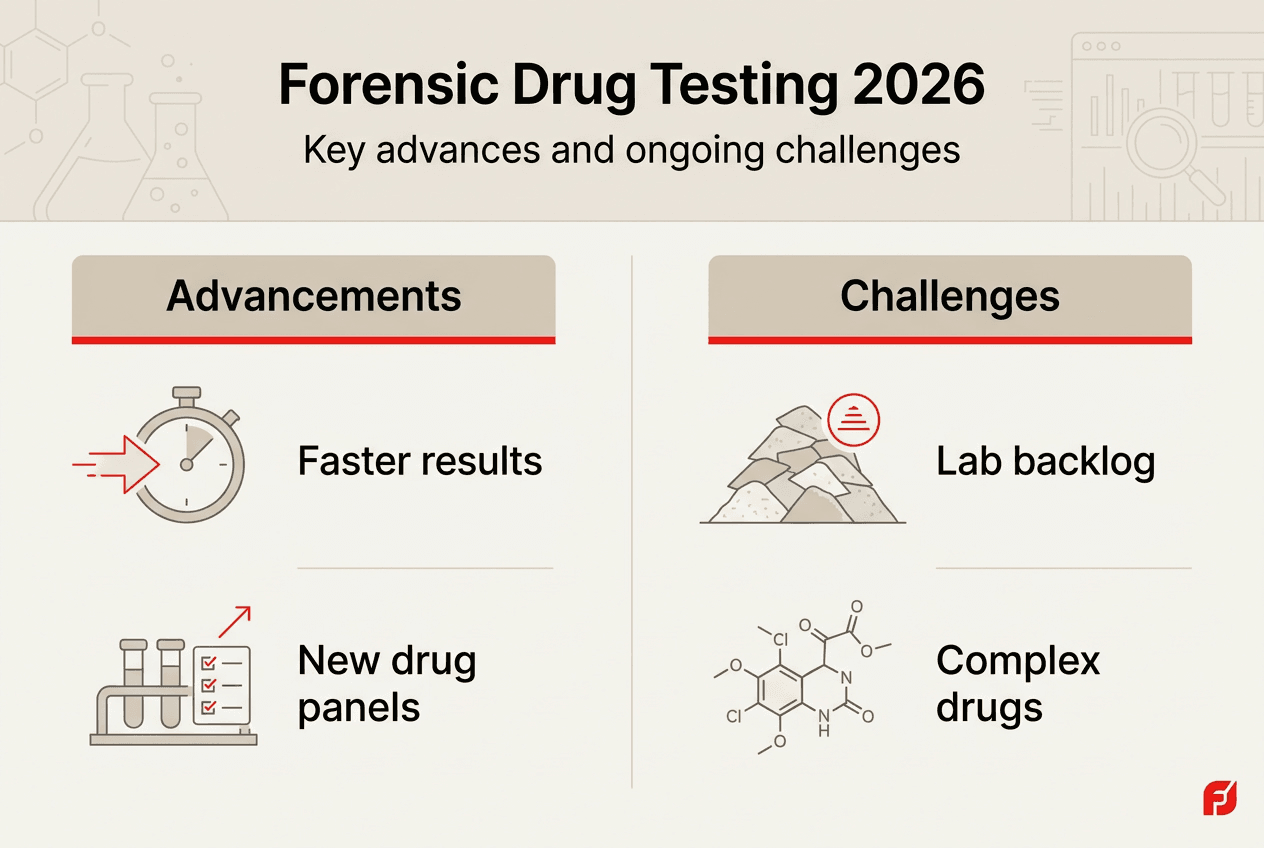
Forensic laboratories face significant operational challenges in 2026 that impact testing capabilities and turnaround times. Staffing shortages prevent labs from implementing new testing methods without disrupting routine casework. The specialized knowledge required for mass spectrometry and emerging technologies creates bottlenecks as experienced toxicologists retire faster than new professionals enter the field. Budget constraints compound these issues, forcing laboratories to prioritize cases and delay adoption of advanced methods.
Data sharing between law enforcement agencies, medical examiners, and hospitals remains inconsistent despite the critical need for comprehensive drug trend monitoring. State and local reporting requirements vary widely, creating gaps that obscure emerging drug threats. Without standardized data collection and sharing protocols, public health officials struggle to identify new synthetic drugs or shifting consumption patterns quickly enough to mount effective responses.
The complexity of result interpretation demands expertise that many clinicians lack. Pharmacokinetics, individual metabolism variations, drug interactions, and timing of use all influence test results. A negative result does not always mean absence of use, and a positive result requires context to determine clinical significance. Limited training in toxicology interpretation leads to misdiagnosis, inappropriate treatment decisions, and legal complications.
Despite these challenges, significant progress has occurred through targeted funding and innovation. Federal agencies awarded $12.5 million in grants from 2019 through 2024 to develop methods and technologies for detecting emerging street drugs. These investments have accelerated development of rapid screening tools for fentanyl analogs, synthetic cannabinoids, and novel stimulants that traditional panels miss entirely.
Key advancements reshaping forensic drug testing include:
- Artificial intelligence algorithms that analyze mass spectrometry data to identify unknown compounds faster than manual interpretation
- Enhanced oral fluid testing methods that match or exceed urine testing sensitivity for many drug classes
- Portable mass spectrometry devices that bring laboratory-quality analysis to field settings
- High-resolution mass spectrometry that detects substances at lower concentrations and distinguishes between closely related compounds
Pro Tip: Establish relationships with board-certified toxicologists who can provide expert consultation on complex cases, as their input often reveals critical information that standard result reports miss.
“The rapid evolution of synthetic drugs requires continuous method development and validation, but technology advances faster than most laboratories can implement new procedures without additional resources and training.”
The gap between technological capability and practical implementation remains substantial. While new methods exist to detect nearly any drug of interest, translating research protocols into routine casework demands validation studies, quality control procedures, and staff training. Laboratories must balance innovation with maintaining accreditation standards and ensuring legal defensibility of results. Exploring drug testing 2025 ai oral fluid boost accuracy reveals how emerging technologies are beginning to address these implementation challenges.
Regulatory frameworks have not kept pace with technological advances, creating uncertainty about admissibility of results from novel methods. Courts may question the reliability of new testing approaches that lack extensive peer-reviewed validation, even when the underlying science is sound. This conservative stance protects defendants’ rights but can exclude probative evidence from consideration.
Applying forensic drug testing insights to enhance practice and outcomes
Professionals can maximize the value of forensic drug testing by recognizing that multi-drug use is prevalent, with emergency department patients frequently combining illicit and therapeutic drugs in ways that create unrecognized interactions. Comprehensive testing panels that include both common drugs of misuse and therapeutic medications reveal the full picture necessary for appropriate clinical management or forensic interpretation.
Implementing effective forensic drug testing requires systematic approaches:
- Select testing panels based on local drug trends and specific case requirements rather than defaulting to standard panels that may miss relevant substances.
- Establish protocols that mandate confirmatory testing for all positive presumptive results before taking action that affects patient care or legal proceedings.
- Create consultation pathways with toxicology experts who can interpret complex results and advise on additional testing when initial results are ambiguous or unexpected.
- Maintain current knowledge of new psychoactive substances and ensure testing capabilities evolve to detect emerging threats in your jurisdiction.
- Document chain of custody meticulously and follow specimen collection protocols precisely to ensure legal defensibility and prevent challenges to result validity.
- Educate staff on limitations of different testing methods and the importance of clinical context when interpreting results.
The interpreting urine drug test results guide provides detailed frameworks for understanding what positive and negative results actually indicate. False negatives occur when drug concentrations fall below detection thresholds, when the detection window has passed, or when the substance is not included in the testing panel. False positives arise from cross-reactivity with structurally similar compounds, laboratory errors, or specimen adulteration that interferes with the assay.
Integrating forensic drug testing into clinical workflows requires balancing rapid decision-making needs with accuracy requirements. Emergency departments must often initiate treatment before confirmatory results return, making clinical judgment based on patient presentation essential. Substance abuse treatment programs can use regular testing as both a monitoring tool and a therapeutic intervention that reinforces accountability.
Law enforcement applications demand the highest standards of accuracy and documentation. Results may determine whether charges are filed, influence bail decisions, or serve as evidence at trial. Chain of custody documentation must be flawless, and confirmatory testing is typically mandatory before results can be introduced as evidence. Understanding the legal standards in your jurisdiction prevents wasted resources on inadmissible tests.
Ongoing education ensures that professionals stay current with evolving drug landscapes and testing capabilities. Attendance at forensic toxicology conferences, subscription to relevant journals, and participation in professional organizations provide access to emerging information. Regular case reviews that include toxicology consultation help identify patterns and improve interpretation skills over time.
Explore rapid, reliable forensic drug testing products
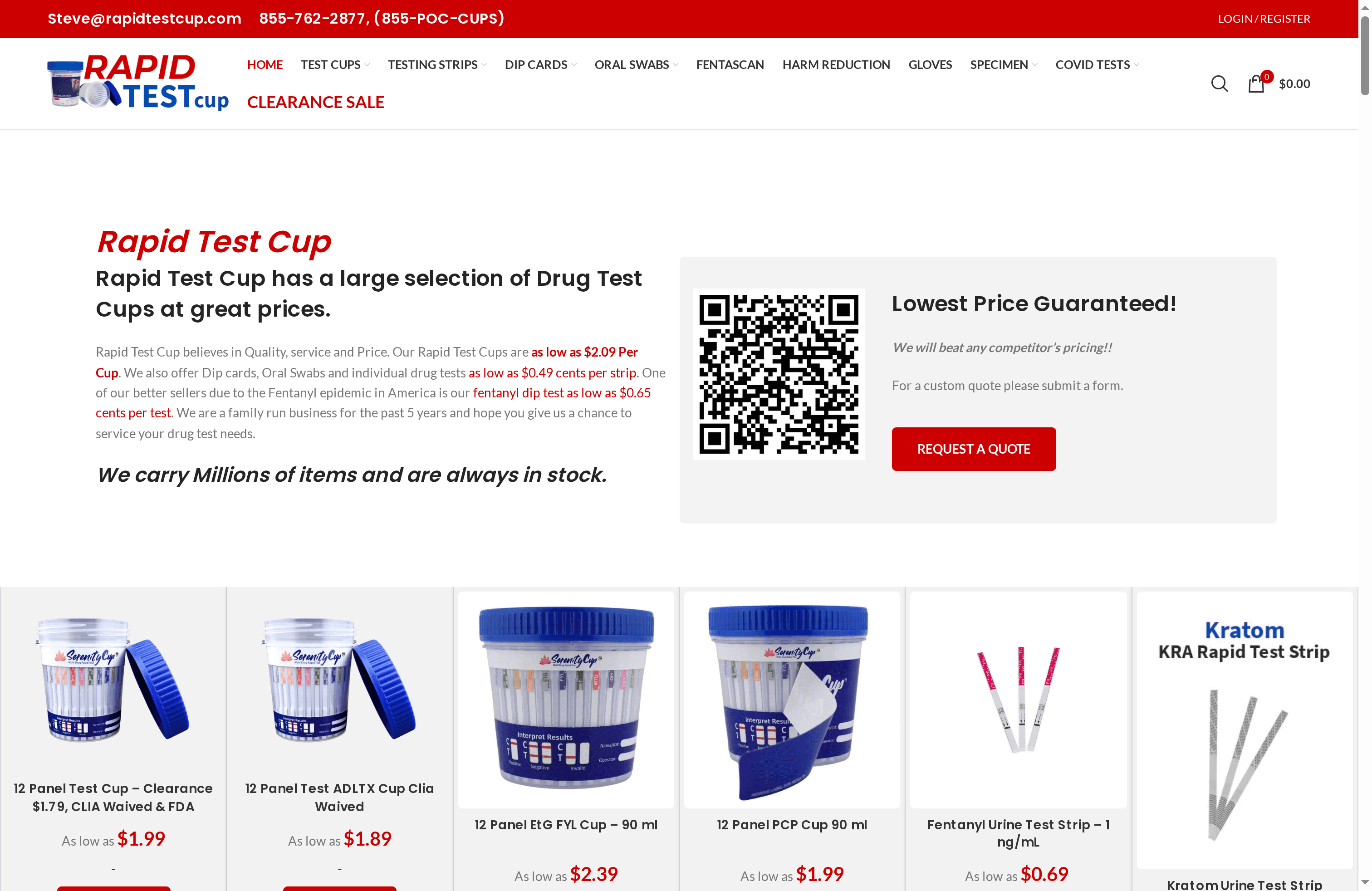
Professionals seeking dependable forensic drug testing solutions can access advanced multi-panel cups and strips designed for accuracy and ease of use. The 12 panel ADLTX cup combines comprehensive drug detection with integrated adulteration testing, providing confidence that results reflect actual drug use rather than specimen tampering. For targeted screening, the MET drug test strip delivers rapid methamphetamine detection with high sensitivity.
Implementing effective forensic drug testing requires attention to protocol and quality. Following a structured forensic drug testing checklist ensures consistent specimen collection, proper handling, and accurate documentation. These systematic approaches minimize errors and support defensible results whether applied in clinical, treatment, or law enforcement settings.
Frequently asked questions
What specimens are most reliable for forensic drug testing?
Urine remains the most widely used and reliable specimen for forensic drug testing due to its noninvasive collection, extended detection window, and well-established cutoff concentrations for most drugs. Blood provides the most accurate assessment of current impairment but requires invasive collection and has shorter detection periods. The choice depends on whether you need to detect recent use, establish impairment, or identify patterns over time.
How can false positives and negatives be minimized in forensic drug testing?
Confirmatory testing with mass spectrometry after positive immunoassay screens virtually eliminates false positives by providing definitive chemical identification. Never rely solely on presumptive tests for consequential decisions. Consulting board-certified toxicologists helps interpret ambiguous results and identify potential interfering substances. Awareness of cross-reactivity patterns, such as certain cold medications triggering amphetamine screens, prevents misinterpretation.
What recent advancements improve detection of new or emerging drugs?
Federal grants totaling millions of dollars have accelerated development of methods targeting synthetic opioids, novel psychoactive substances, and designer drugs that evade traditional panels. Artificial intelligence algorithms now assist in identifying unknown compounds from mass spectrometry data, dramatically reducing analysis time. Enhanced oral fluid testing methods offer noninvasive alternatives that detect recent use with improving sensitivity. Continuous method development allows laboratories to adapt faster than technology deployment cycles, though implementation still lags behind capability.
Why does comprehensive testing matter more than standard panels?
Standard drug panels typically cover 5 to 12 common substances but miss the therapeutic medications, synthetic drugs, and novel psychoactive substances that increasingly contribute to overdoses and impairment. Emergency department patients often use multiple drugs simultaneously, creating dangerous interactions that standard panels fail to reveal. Comprehensive testing provides the complete picture necessary for appropriate clinical management, accurate forensic interpretation, and effective treatment planning.
How do detection windows vary across different specimens?
Urine typically detects most drugs for 1 to 3 days after use, though some substances like marijuana remain detectable for weeks in chronic users. Blood reveals current impairment but most drugs clear within hours to a day. Oral fluid generally detects substances for 24 to 48 hours after use. Hair analysis can identify drug use over months but cannot pinpoint when use occurred or distinguish between single and repeated exposures. Understanding these windows is essential for selecting the appropriate specimen for your testing objective.