
Blog
Drug Testing in Probation: A Guide for Officers

TL;DR:
- Drug testing in probation primarily functions as a compliance documentation tool to support court decisions. Confirmatory testing with GC-MS or LC-MS/MS is necessary, as screen results alone are not legally sufficient for revocation. Prompt documentation, treatment referrals, and increased supervision after positive tests improve long-term outcomes.
Drug testing in probation is defined as the systematic collection and analysis of biological specimens to document whether a probationer is complying with court-ordered substance restrictions. This practice, governed by standards from the Substance Abuse and Mental Health Services Administration (SAMHSA) and enforced through individual jurisdiction protocols, functions primarily as a compliance documentation tool rather than a clinical treatment method. The role of drug testing in probation spans everything from determining supervision intensity to triggering graduated sanctions. Common screening formats include 5-panel and 10-panel urine drug screens, with urine testing remaining the most widely used method across U.S. probation departments. Understanding how these tests work, what they prove legally, and how to act on results separates effective supervision from procedural exposure.
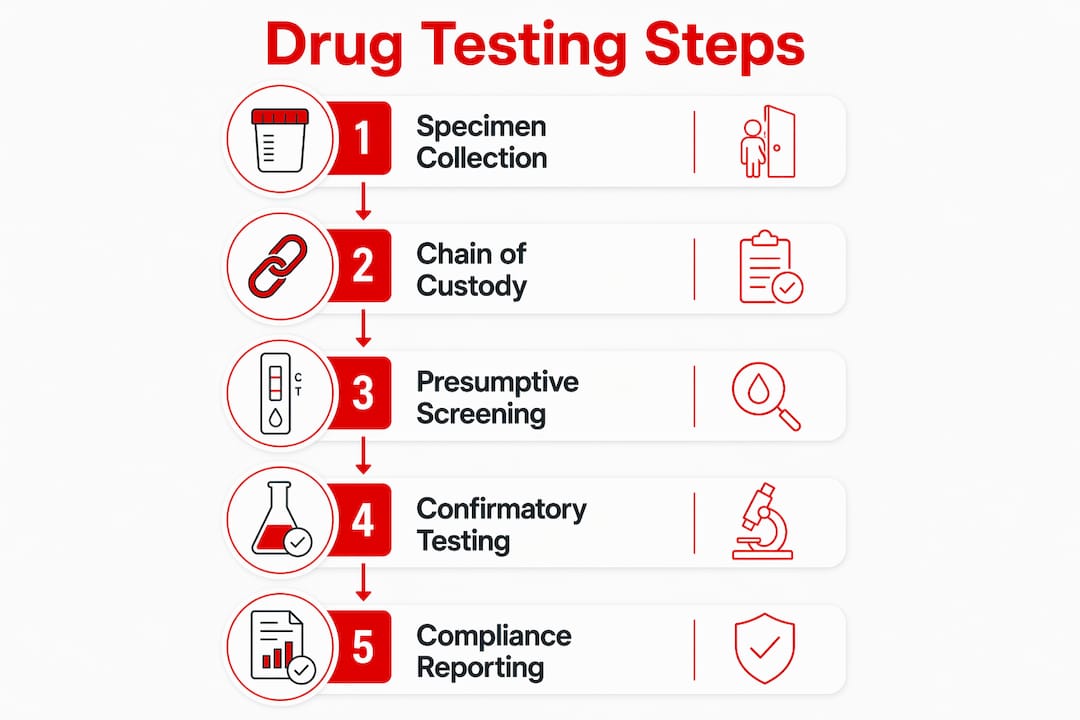
What are the standard drug testing procedures in probation?
Testing frequency is not standardized across jurisdictions. Most programs test weekly or biweekly during early supervision, then reduce frequency as a probationer builds a clean history. Higher-risk cases, including those with prior substance abuse convictions or active treatment requirements, are tested more often. Risk assessment scores from tools like the LSI-R (Level of Service Inventory-Revised) directly drive how often a probationer reports for testing.
Random testing is the operational standard in most jurisdictions. Many programs use a color code system requiring daily call-ins, where each probationer is assigned a color and must report for testing whenever that color is called. Missing the call is recorded as a failed test. This mechanism removes predictability and closes the window for planned abstinence before a scheduled test.
The most common specimen types used in probation drug screening are:
- Urine: The most frequent method. Detects most substances within a 1–7 day window, depending on the drug and frequency of use.
- Oral fluid (saliva): Shorter detection window (24–48 hours) but harder to adulterate. Useful for detecting very recent use.
- Hair follicle: Detects use over a 90-day window. Less common due to cost but valuable for long-term pattern detection.
- Blood: Rarely used in routine probation due to cost and invasiveness. Reserved for specific legal or medical situations.
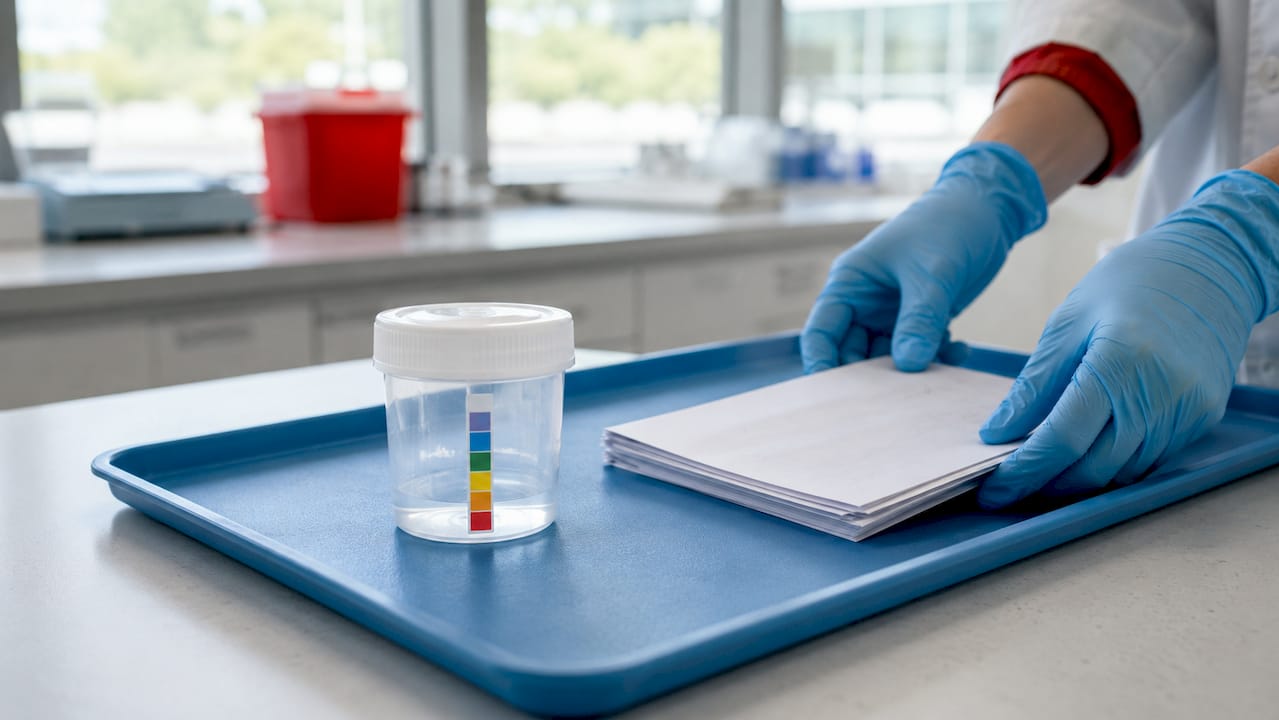
Chain of custody is non-negotiable from the moment a specimen is collected. Every handoff, from collection cup to lab, must be documented with signatures, timestamps, and sealed packaging. A broken chain of custody can invalidate a positive result in court.
Pro Tip: Use specimen cups with integrated temperature strips to verify sample validity at the point of collection. A urine sample outside the 90°F–100°F range is a red flag for substitution and should be flagged immediately.
How does drug testing impact probation compliance outcomes?
Drug testing results populate compliance files for courts and supervising officers. They do not initiate therapeutic conversations. This distinction matters because it clarifies what the test actually does: it creates a documented record that supports or challenges a probationer’s standing before the court.
The graduated sanction model governs most first-time positive responses. A first failed drug test typically results in a formal warning, increased testing frequency, or a referral to a substance abuse treatment program. Immediate incarceration is rarely the outcome at this stage. That discretion belongs to the supervising officer and the judge, and outcomes vary significantly by jurisdiction.
The sequence of consequences for repeated positives generally follows this pattern:
- First positive: Written warning, increased supervision, possible treatment referral.
- Second positive: Formal violation notice, mandatory treatment enrollment, or short-term custody.
- Third or subsequent positive: Violation hearing, potential revocation of probation, and incarceration.
- Refused or missed test: Recorded as a positive result. Triggers the same escalation path.
“A positive drug test outcome largely hinges on offender actions during the violation hearing window, emphasizing proactive compliance.” — Second Chance Guide
Testing also functions as a deterrent. Probationers who know they face random, unannounced testing are statistically less likely to use substances during supervision. The accountability structure the testing creates is itself a behavioral intervention, even without formal treatment. That said, effective drug testing programs combine strict compliance enforcement with timely intervention and support to produce the best supervision outcomes.
What legal nuances should officers know about test results?
The most consequential distinction in probation drug testing is the difference between a presumptive screen and a confirmed result. A presumptive screen, such as a standard immunoassay cup test, identifies the likely presence of a substance. It is not legally sufficient on its own to support revocation. Positive screens require confirmatory testing via gas chromatography-mass spectrometry (GC-MS) or liquid chromatography-tandem mass spectrometry (LC-MS/MS) to establish legal reliability. An unconfirmed screen is subject to challenge and cannot alone justify a revocation hearing.
| Test Type | Method | Legal Weight | Typical Use |
|---|---|---|---|
| Presumptive Screen | Immunoassay (cup or strip) | Low (challengeable) | Initial field screening |
| Confirmatory Test | GC-MS or LC-MS/MS | High (court-admissible) | Legal proceedings, revocation |
| Oral Fluid Screen | Lateral flow immunoassay | Moderate | Recent use detection |
| Hair Follicle Test | Enzyme immunoassay + confirmation | High | Long-term use history |
Prescription medications create one of the most common procedural traps in probation drug testing. Medications must be pre-disclosed with documentation before the test occurs. Retroactive explanations, meaning a probationer claiming a prescription after a positive result, are frequently rejected by courts. Officers should require probationers to submit a current medication list and supporting pharmacy documentation at the start of supervision and update it whenever prescriptions change.
Tampering with drug test samples can lead to immediate revocation and separate criminal charges in many states. Laws targeting adulterants and synthetic urine products carry severe penalties. Officers should use adulteration-detecting test cups that check for creatinine levels, pH, specific gravity, and oxidants to identify tampered specimens at the point of collection.
Pro Tip: Document every procedural step in writing at the time of collection, not after the fact. Courts scrutinize the timing of documentation entries, and retroactive notes weaken chain of custody arguments significantly.
For a deeper look at forensic drug testing methods and how confirmatory analysis fits into legal proceedings, Rapidtestcup’s 2026 guide covers the full spectrum of specimen analysis techniques used in professional settings.
What are best practices after a positive drug test?
The first 24–48 hours after a positive result are the most operationally critical. Immediate documentation, supervisor notification, and a formal written record of the result protect the officer and the integrity of the supervision file. Delay in documentation creates gaps that defense attorneys exploit.
The following practices define a strong response protocol:
- Document immediately. Record the test result, collection time, specimen temperature, and any observed behavior at the time of collection.
- Notify the supervising court or prosecutor according to your jurisdiction’s reporting timeline. Most require notification within 24–72 hours of a confirmed positive.
- Refer to treatment promptly. A referral to a licensed substance abuse counselor or treatment program, made before the violation hearing, signals good faith and often influences judicial outcomes favorably.
- Increase testing frequency. Move the probationer to a more intensive testing schedule immediately. This creates a documented record of compliance or continued use during the hearing window.
- Communicate expectations clearly. Probationers who understand exactly what is required of them during the violation window are more likely to comply. Ambiguity increases the risk of additional violations.
A second positive test during the violation hearing window often triggers incarceration or revocation, ending chances for leniency. Sustained sobriety and active treatment enrollment between the first positive and the hearing are the two factors most likely to preserve a probationer’s community supervision status. Officers who facilitate rapid treatment access directly improve the odds of a successful outcome.
Balancing enforcement with support is not a contradiction. Accountability and rehabilitation reinforce each other when the response to a positive test is swift, documented, and connected to a clear path forward. For guidance on handling positive test outcomes within a compliance framework, Rapidtestcup’s resource library offers practical protocols built for professional settings.
Key takeaways
Drug testing in probation is a compliance documentation tool, and its legal and operational value depends entirely on procedural accuracy, timely response, and proper confirmatory testing.
| Point | Details |
|---|---|
| Testing is documentation, not treatment | Results build compliance files for courts; they do not replace clinical substance abuse intervention. |
| Frequency follows risk level | Higher-risk probationers face weekly or biweekly testing; clean history reduces frequency over time. |
| Screens require confirmation | Presumptive cup tests cannot support revocation alone; GC-MS or LC-MS/MS confirmation is required for legal proceedings. |
| Pre-disclosure protects probationers | Prescription medications must be documented before testing; retroactive claims are routinely rejected by courts. |
| Response speed determines outcomes | Immediate documentation, treatment referral, and increased testing after a positive result directly affect hearing outcomes. |
Where drug testing in probation gets complicated
I have spent years working alongside professionals who manage probation drug testing programs, and the gap between how these programs are designed and how they operate in practice is significant. The biggest recurring problem is not the testing itself. It is the assumption that a positive result is self-explanatory.
Officers sometimes treat a cup screen result as a closed case. It is not. A presumptive positive is the beginning of a process, not the end of one. I have seen revocation hearings collapse because the confirmatory step was skipped or the chain of custody documentation had a single unsigned handoff. Defense attorneys know exactly where to look, and procedural shortcuts are expensive.
The tension between enforcement and rehabilitation is real, but I think it is often framed incorrectly. Testing does not have to choose a side. When an officer responds to a positive result with immediate documentation, a treatment referral, and increased supervision, that response does both jobs at once. It enforces accountability and creates a structure that supports recovery. The officers who get the best long-term outcomes from their caseloads are the ones who treat the post-positive window as an opportunity, not just a liability.
Technology is also changing what is detectable. Fentanyl, synthetic cannabinoids like K2, and novel psychoactive substances now require expanded panels that standard 5-panel or 10-panel cups do not cover. Programs that have not updated their panel selection in the last two years are likely missing use patterns that matter. Reviewing your panel selection annually against current substance trends in your jurisdiction is not optional anymore. It is basic due diligence.
— Justin
Professional drug testing products for probation programs
Probation programs require testing products that hold up under legal scrutiny, not just products that produce a result. Rapidtestcup supplies CLIA waived, FDA-approved testing kits built for professional and forensic applications.
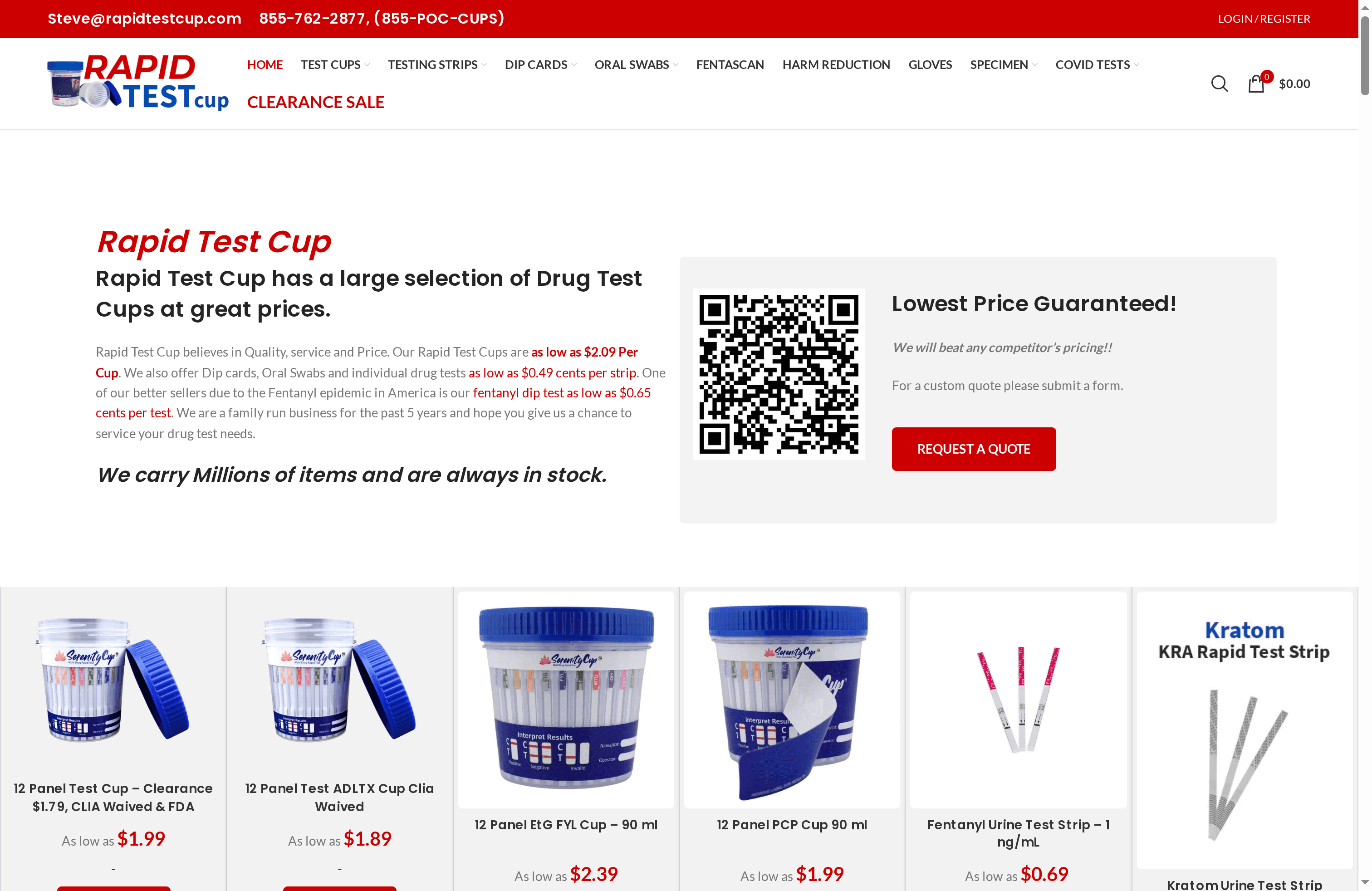
For programs that need broad detection coverage, the 22-panel drug test with adulterants detects fentanyl, Zaza, xylazine, and common adulterants in a single cup, making it one of the most complete screening tools available for high-risk supervision cases. For standard multi-panel screening, the 12-panel ADLTX cup covers the most commonly monitored substances with built-in adulteration checks. Rapidtestcup also offers bulk pricing and fast shipping, which matters when you are managing a high-volume caseload. Browse the full top drug testing products lineup to find the right fit for your program’s panel requirements and budget.
FAQ
What is the primary role of drug testing in probation?
Drug testing in probation serves as a compliance documentation tool. Results are recorded in official supervision files and used by courts and officers to make informed decisions about sanctions, treatment referrals, and supervision intensity.
Can a cup screen alone result in probation revocation?
No. A presumptive screen from a cup test is not legally sufficient to support revocation on its own. Confirmatory testing via GC-MS or LC-MS/MS is required to establish the legal reliability needed for revocation proceedings.
What happens if a probationer misses a scheduled drug test?
A missed or refused test is recorded as a failed test in most jurisdictions. It triggers the same escalation path as a positive result, including increased supervision, formal violation notices, or a revocation hearing.
How should prescription medications be handled before a drug test?
Probationers must disclose all prescription medications with supporting pharmacy documentation before testing occurs. Retroactive claims made after a positive result are routinely rejected by courts and do not prevent sanctions.
How often are probationers drug tested?
Testing frequency depends on risk level and supervision phase. High-risk probationers are typically tested weekly or biweekly early in supervision, with frequency decreasing as a clean compliance history is established.