Blog
Can Kratom Be Detected in Urine? Labs, Tests, and Windows


Yes, kratom can be detected in urine, but only when a lab specifically tests for it. Standard 5-panel and 10-panel workplace urine screens do not include kratom alkaloids, so a routine employment test will not flag kratom use. Detection requires a targeted assay, typically an immunoassay screen reflexed to confirmatory LC-MS/MS for mitragynine and related alkaloids.
Here is the short version:
- Does a standard 5- or 10-panel test detect kratom? No. Those panels lack the chemistry to target mitragynine or any kratom alkaloid.
- Which test does detect it? A specialized lab assay, usually immunoassay screening at roughly 5.0 ng/mL followed by LC-MS/MS confirmation at roughly 1.0 ng/mL, as used by labs like LabCorp.
- Typical urine detection windows: Occasional users approximately 1–3 days; daily users approximately 5–9 days; heavy chronic users potentially 10 or more days, with significant individual variability.
Table of Contents
- Can kratom be detected in urine with standard drug tests?
- How long does kratom stay detectable in urine?
- What factors change how long kratom stays detectable?
- Will kratom show up as an opioid on a urine test?
- Rapid kratom test kits vs. laboratory services: which do you need?
- What should you do if you face a urine drug test?
- Key Takeaways
- The part most people get wrong about kratom testing
- Kratom screening supplies from Rapidtestcup
- Useful sources and further reading
Can kratom be detected in urine with standard drug tests?
Standard multi-panel cups physically lack the reagents to react with mitragynine or other kratom alkaloids. That is not a loophole — it is a chemistry limitation. Labs like LabCorp provide kratom screening as a distinct orderable test apart from routine panels, meaning clinics and employers must specifically request it, as detailed in how clinical labs launch PGx reporting.
When a lab does test for kratom, the workflow runs in two steps:
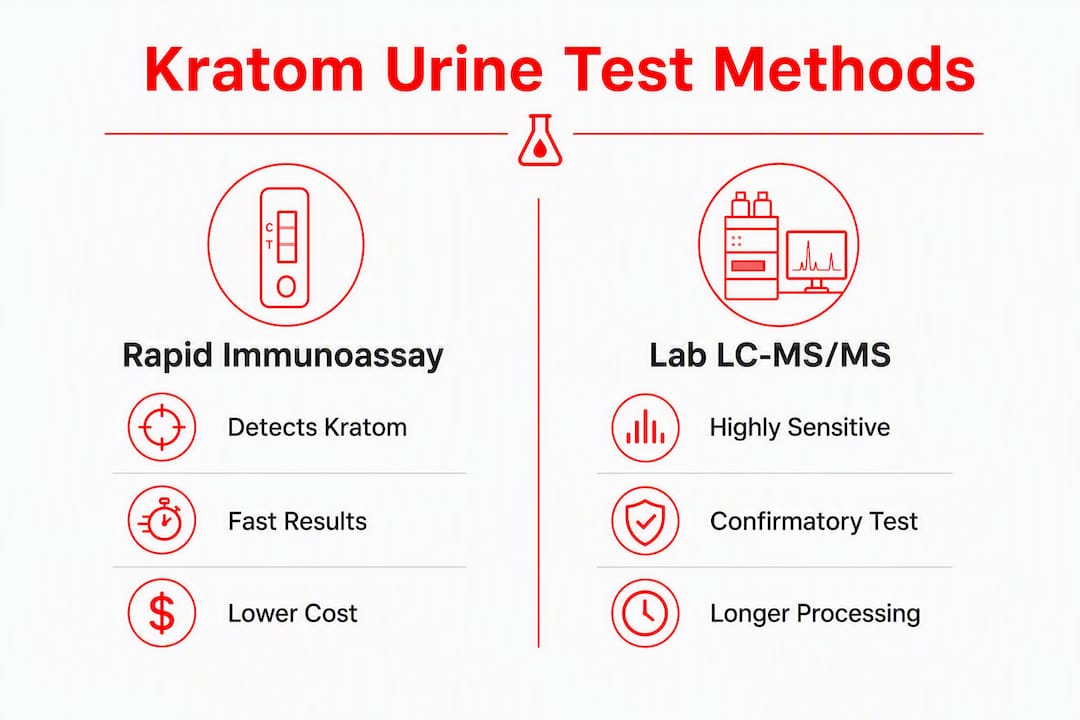
- Presumptive immunoassay screen: targets mitragynine at approximately 5.0 ng/mL. Fast and inexpensive, but prone to cross-reactivity.
- Confirmatory LC-MS/MS: cuts the threshold to approximately 1.0 ng/mL and identifies specific alkaloids. This is the accepted standard for any result that carries legal or employment consequences.
Some labs skip the immunoassay entirely and run LC-MS/MS directly when kratom is the specific concern. Research also shows that multiple diastereomers — speciociliatine, speciogynine, paynantheine, and 7-hydroxymitragynine alongside mitragynine — appear in urine samples, and a lab targeting only mitragynine can miss or misclassify exposure. There is also no nationally agreed cutoff for kratom in drug testing, so thresholds vary across labs and jurisdictions.
| Dimension | Rapid Immunoassay | Lab LC-MS/MS Confirmation |
|---|---|---|
| Detects kratom directly | Yes (if kratom-specific) | Yes |
| Test type | Presumptive screen | Confirmatory |
| Approximate sensitivity | ~5.0 ng/mL | ~1.0 ng/mL |
| Typical turnaround | Minutes to hours | 1–3 business days |
| Relative cost | Lower | Higher |
How long does kratom stay detectable in urine?
Urine is the most practical matrix for kratom detection because metabolites concentrate there and persist longer than the parent compound in blood. Based on available lab reports and clinical literature, the windows break down roughly as follows:
- Occasional use (once or a few times): approximately 1–3 days
- Regular or daily use: approximately 5–9 days
- Heavy or chronic use: potentially 10 or more days in conservative lab estimates
Blood and saliva windows are shorter, typically hours to a couple of days for mitragynine in plasma. Hair testing can extend the detection window to weeks or months, but kratom hair assays are not widely standardized or commercially available in routine settings. For most practical purposes, urine is the matrix labs use. The role of drug metabolites in urine testing is exactly why urine outlasts blood: the body excretes metabolites through the kidneys over time, not all at once.
Key uncertainty: These windows are population-level estimates, not guarantees. Individual metabolism, body composition, formulation used, and the specific lab cutoff all shift the result. Always ask the administering lab which analytes and cutoffs they apply — the answer changes your actual risk window.
What factors change how long kratom stays detectable?
Detection time is not a fixed number. Several variables push it earlier or later, and understanding them helps you assess your own situation honestly.
Biological and user factors:
- Dose size: higher doses mean more alkaloid load to clear.
- Frequency: daily use drives mitragynine to a steady state where the apparent terminal half-life increases and elimination takes longer than after a single dose.
- Age, body mass, liver function, and kidney function all affect clearance rate.
- Genetic differences in CYP enzyme activity alter how quickly mitragynine is metabolized.
Product and formulation factors:
- Raw leaf and tea produce lower alkaloid concentrations than concentrated extracts or powders.
- Products high in 7-hydroxymitragynine, which StatPearls identifies as a more potent opioid receptor agonist than mitragynine, may shift the metabolite profile and affect which assay markers appear in urine.
- Speciociliatine and speciogynine can exceed mitragynine concentrations in some urine samples, meaning the dominant biomarker varies by product.
Lab and assay factors:
- Whether the lab targets mitragynine alone or a full panel of diastereomers.
- The specific cutoff value the lab applies (no national standard exists).
- Whether LC-MS/MS confirmation is used or only an immunoassay screen.
Pro Tip: If you use kratom daily, do not estimate your clearance window based on how you feel. Felt effects fade well before metabolites clear. Assume the conservative end of the range and confirm with the lab which analytes they measure.
Will kratom show up as an opioid on a urine test?
Standard opioid immunoassays usually do not detect kratom. Mitragynine’s chemical structure is different enough from classical opiates that most opiate/opioid panels do not cross-react with it. But “usually” is doing real work in that sentence.
Published case reports document kratom metabolites producing false positive results on methadone (EDDP) immunoassays. In those cases, reflex mass spectrometry confirmed the positives were kratom, not methadone. That is a meaningful risk for anyone in a treatment program or legal monitoring situation where a methadone positive carries serious consequences.
If you receive an unexpected opioid or methadone positive and you use kratom, take these steps:
- Request confirmatory LC-MS/MS testing before any adverse action is taken.
- Ask the lab specifically which immunoassay they used and what the cross-reactivity profile is.
- Disclose kratom use to your clinician or the medical review officer so they can interpret the result correctly.
- Do not accept a presumptive immunoassay result as final for employment or legal purposes.
Rapid kratom test kits vs. laboratory services: which do you need?
The right tool depends on what the result is for. On-site rapid kratom strips and cartridges give you an answer in minutes at a fraction of the cost of a lab send-out. A kratom urine test strip or kratom cartridge kit from Rapidtestcup works well for pre-test screening, workplace monitoring programs, or substance abuse treatment settings where speed matters and a presumptive result is sufficient.
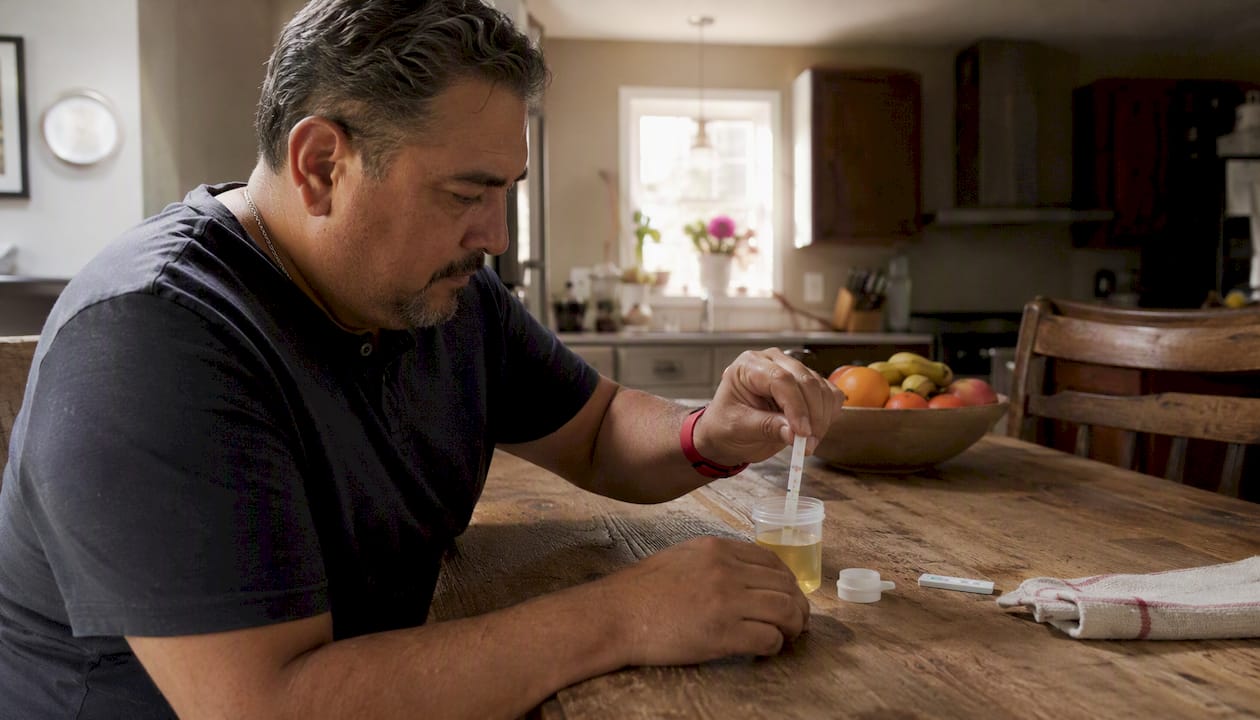
Lab-based LC-MS/MS is the right call when the result affects employment, legal standing, or clinical care. Labs like ACS Laboratory offer kratom screen plus confirmation as a discrete service, identifying mitragynine and 7-hydroxymitragynine with mass-spec precision.
| Dimension | Rapid On-Site Strip/Cartridge | Lab LC-MS/MS Service |
|---|---|---|
| Detects kratom directly | Yes | Yes |
| Test type | Rapid immunoassay | Confirmatory mass spectrometry |
| Detection window | Mirrors immunoassay threshold | Mirrors LC-MS/MS threshold (~1.0 ng/mL) |
| Sensitivity/method | Immunoassay | LC-MS/MS or GC-MS |
| Typical cost/turnaround | Lower cost, minutes | Higher cost, 1–3 business days |
For programs that need both speed and documentation, a two-step approach works: screen on-site with a rapid kit, then send any presumptive positive to a CLIA-certified lab for LC-MS/MS confirmation. The 18-panel drug test with adulterants from Rapidtestcup includes a kratom panel alongside fentanyl and other analytes, which suits programs that need broader coverage in a single cup.
What should you do if you face a urine drug test?
Knowing the test is coming gives you options. Here is a practical sequence:
- Ask which panel and analytes are being tested. Most standard workplace panels do not include kratom, but confirm this directly with the testing administrator or the contracted lab.
- If kratom is a concern, request a kratom-specific assay. Ask whether the lab runs an immunoassay screen, LC-MS/MS, or both, and what cutoff values they apply.
- If a presumptive positive occurs, insist on confirmatory LC-MS/MS before any adverse action. A presumptive immunoassay result is not a final determination.
- Maintain chain-of-custody documentation. Keep copies of the collection receipt, the lab order, and any result reports.
- Get the lab’s method and cutoff in writing. For employment or legal use, you need documentation of the CLIA status of the lab, the confirmatory method used, and the specific cutoff applied.
On cost and turnaround: Confirmatory LC-MS/MS testing costs more than a rapid screen and typically takes 1–3 business days. If a positive result would carry real consequences, budget for confirmation upfront rather than scrambling after a presumptive positive.
Before a formal test, ordering a rapid kratom strip from Rapidtestcup lets you run a private screen at home and go into the formal test knowing what to expect. That information helps you decide whether to disclose kratom use to the medical review officer and what questions to ask the lab.
Key Takeaways
Kratom is detectable in urine only through specialized lab assays, not standard workplace panels, and detection windows vary substantially with use pattern and lab method.
| Point | Details |
|---|---|
| Standard panels miss kratom | 5- and 10-panel urine screens lack reagents for mitragynine; a kratom-specific assay must be ordered separately. |
| LC-MS/MS is the gold standard | Confirmatory mass spectrometry at ~1.0 ng/mL resolves presumptive positives and is required for employment or legal use. |
| Detection windows vary | Occasional users approximately 1–3 days; daily users approximately 5–9 days; chronic heavy users potentially 10 or more days. |
| No national cutoff exists | Labs set their own thresholds; always ask which analytes and cutoffs the specific lab applies. |
| Rapidtestcup for on-site screening | Kratom urine strips and cartridge kits provide fast presumptive results; pair with CLIA-lab confirmation for consequential decisions. |
The part most people get wrong about kratom testing
The most common mistake is assuming that passing a standard drug test means kratom is undetectable. It is not. It just means the test was not looking for it. Those are very different things, and the distinction matters the moment an employer, court, or treatment program specifically orders a kratom screen.
The second mistake is trusting how you feel as a clearance guide. Mitragynine accumulates with daily use, and the terminal half-life lengthens at steady state. You can feel completely normal and still have detectable metabolite levels, particularly if you use extracts or concentrated powders rather than plain leaf. The pharmacokinetics do not care about subjective experience.
What I see suppliers and clinics get wrong most often is the confirmation step. Many facilities run an immunoassay and treat a negative as definitive, without knowing whether their contracted lab even has a kratom-specific reagent. And when an unexpected positive appears on a methadone screen, they act on it before confirming. That is a procedural failure with real consequences for the person being tested.
The practical answer is straightforward: use an on-site kratom cartridge or strip for quick screening, and route any result that matters to a CLIA-certified lab for LC-MS/MS confirmation. Rapidtestcup carries both the rapid screening options and the multi-panel cups that include kratom detection, which gives programs a starting point before they decide whether to escalate to a reference lab.
Kratom screening supplies from Rapidtestcup
Kratom testing does not have to mean waiting days for a lab result every time you need an answer.
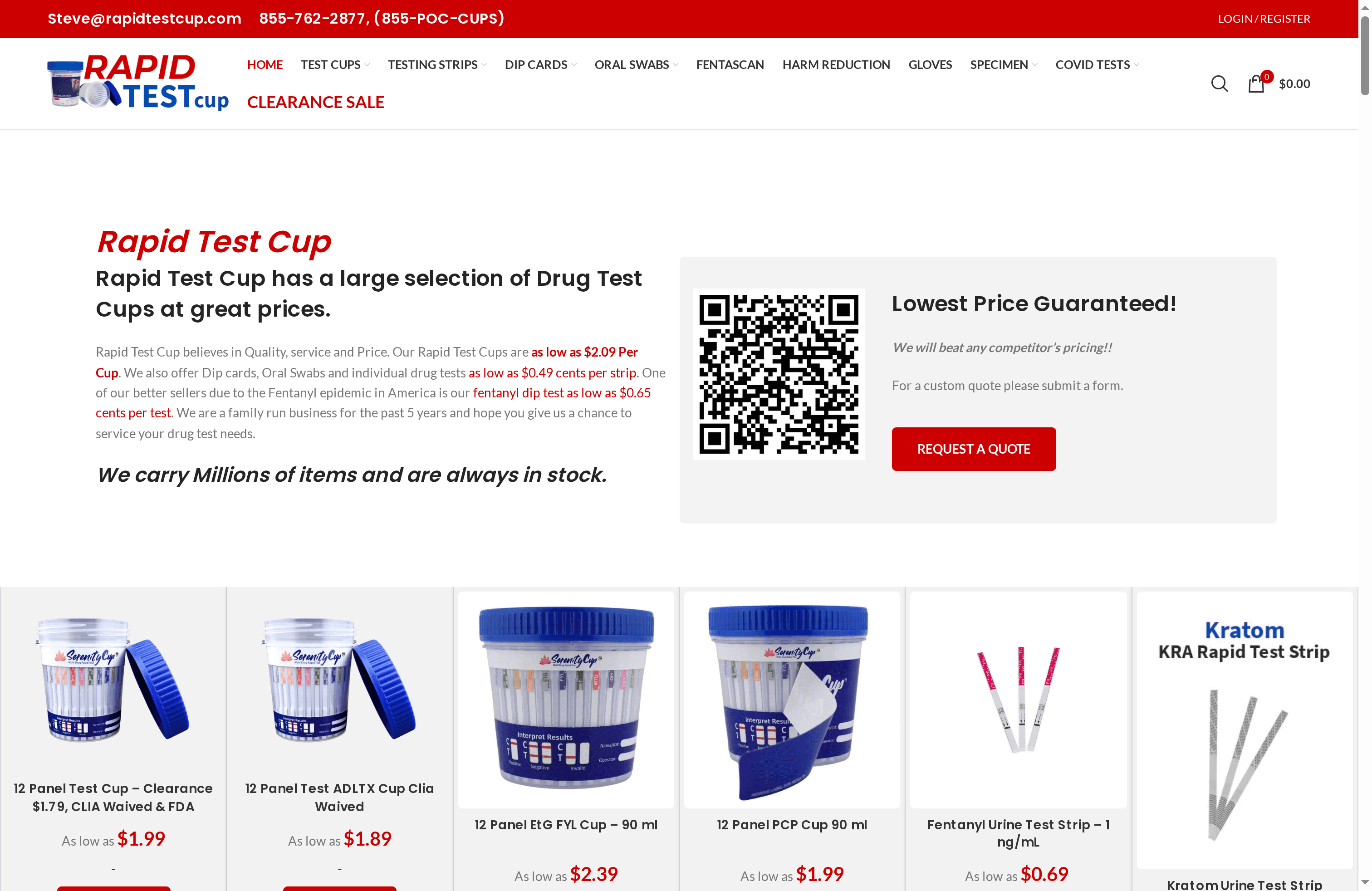
Rapidtestcup offers kratom urine test strips and kratom cartridge kits for fast on-site screening, with CLIA-waived options available for clinical and workplace settings. For programs that need broader coverage, the 18-panel cup with kratom and adulterants screens for kratom alongside fentanyl, ketamine, and other analytes in a single collection. Bulk pricing and custom quotes are available for labs, treatment centers, and employers. Use rapid kits for preliminary screening and pre-test checks; send any presumptive positive to a CLIA-certified lab for LC-MS/MS confirmation before acting on the result. Browse the full range of lab-grade drug testing products or contact Rapidtestcup directly for a custom quote.
This article is general information, not medical or legal advice. Confirm current testing requirements and cutoffs with your lab or a qualified professional.
Useful sources and further reading
- PMC: Drug testing for mitragynine and kratom — Analytical challenges and medico-legal considerations — Covers the absence of a national cutoff, diastereomer variability, and why multi-analyte methods matter.
- PubMed: Clinical Pharmacokinetic Assessment of Kratom — Peer-reviewed pharmacokinetic data on mitragynine in healthy participants.
- PubMed: Pharmacokinetics and accumulation of mitragynine — Documents steady-state accumulation and longer terminal half-life with chronic dosing.
- StatPearls: Kratom — Clinical overview of pharmacology, dose-dependent effects, and 7-hydroxymitragynine potency.
- AJCP: A Kratom Metabolite Causes False Positive Urine Drug Screening Results for Methadone — Case series documenting EDDP immunoassay false positives from kratom and the role of mass-spec confirmation.
- ScienceDirect: Identification of metabolites and potential biomarkers of kratom in urine — Identifies mitragynine, speciociliatine, speciogynine, and other alkaloids in urine using LC-MS/MS; recommends targeted chromatographic methods.
- NIDA: Kratom — National Institute on Drug Abuse overview of kratom’s pharmacology and regulatory status.