

Blog
What Is a Forensic Drug Test and Its Legal Impact


When legal outcomes hinge on the reliability of drug evidence, the pressure on forensic laboratory professionals and law enforcement officials rises to an entirely new level. Accurate identification of controlled substances forms the backbone of court-admissible evidence, making forensic drug testing procedures a critical area of focus. This guide brings clarity to the evolving techniques, legal standards, and operational challenges at the heart of forensic analysis, helping you make informed choices for every investigation.
Table of Contents
- Defining Forensic Drug Testing Methods
- Types Of Forensic Drug Tests Explained
- Legal Standards And Chain Of Custody
- How Forensic Labs Analyze Specimens
- Risks, Errors, And Compliance Challenges
Key Takeaways
| Point | Details |
|---|---|
| Forensic Drug Testing Methods | Various methodologies exist, such as Immunoassay Screening for initial detection and GC/MS for definitive identification, each chosen based on specific needs. |
| Legal Standards and Chain of Custody | Adherence to meticulous documentation and specimen tracking is crucial for maintaining the integrity and legal admissibility of forensic evidence. |
| Analytical Techniques | Advanced techniques like Liquid Chromatography and Mass Spectrometry enable precise identification of substances, essential in criminal investigations. |
| Risks and Compliance Challenges | Laboratories must mitigate risks such as false results and sample contamination through rigorous quality management systems and ongoing personnel training. |
Defining forensic drug testing methods
Forensic drug testing represents a sophisticated scientific process used to identify and analyze controlled substances in legal and investigative contexts. These methods provide critical evidence for law enforcement, legal proceedings, and public safety protocols. Comprehensive drug testing techniques have evolved dramatically, offering increasingly precise mechanisms for substance identification.
Multiple forensic drug testing methodologies exist, each with unique capabilities and applications:
- Immunoassay Screening: Rapid initial detection of drug classes
- Gas Chromatography/Mass Spectrometry (GC/MS): Gold standard for definitive substance identification
- Liquid Chromatography/Tandem Mass Spectrometry: Advanced technique for complex substance analysis
- Ion Mobility Spectrometry: Quick field-based detection method
- Raman Spectroscopy: Non-destructive molecular identification technique
These techniques differ significantly in their detection capabilities, speed, and precision. Mass spectrometry remains the most scientifically rigorous method, providing unparalleled accuracy in substance confirmation. Laboratory professionals carefully select testing methods based on specific investigative requirements, legal standards, and available resources.
Here’s how major forensic drug testing methods stack up for legal and investigative needs:
| Method | Typical Use | Detection Accuracy | Practical Considerations |
|---|---|---|---|
| Immunoassay Screening | Initial rapid assessment | Moderate; detects classes | Low cost, quick, risk of false positive |
| GC/MS | Definitive substance ID | Very high | Labor-intensive, lab needed |
| Liquid Chromatography/MS | Complex compound analysis | Extremely high | High skill, advanced instrumentation |
| Ion Mobility Spectrometry | On-site detection | Moderate | Portable, limited specificity |
| Raman Spectroscopy | Molecular ID, non-destructive | High | No sample prep, requires calibration |
The United Nations Office on Drugs and Crime emphasizes standardized protocols to ensure reliable drug identification practices. Forensic laboratories must maintain stringent quality control measures, including calibration of instruments, proper sample handling, and documentation of testing procedures.
Pro tip: Always verify the forensic drug testing laboratory’s accreditation and adherence to national testing standards to ensure legal admissibility of results.
Types of forensic drug tests explained
Forensic drug testing encompasses a diverse range of sophisticated analytical techniques designed to identify and quantify controlled substances with precision and legal reliability. Advanced narcotics analysis methods have revolutionized how law enforcement and legal professionals approach substance identification and evidence collection.
The primary categories of forensic drug tests include:
- Immunoassay Screening: Quick initial detection method
- Chromatographic Methods: High-precision substance separation techniques
- Spectroscopic Analysis: Molecular identification through light interaction
- Color/Spot Tests: Rapid preliminary substance screening
- Mass Spectrometry: Definitive substance confirmation technique
Each testing methodology offers unique advantages depending on investigative requirements. Chromatographic techniques like Gas Chromatography/Mass Spectrometry (GC/MS) provide exceptional accuracy, allowing forensic experts to distinguish between similar molecular structures with remarkable detail. Comprehensive drug testing approaches enable investigators to analyze traditional controlled substances and emerging synthetic compounds.
The complexity of forensic drug testing demands rigorous scientific protocols. Laboratories must validate their testing methods, calibrate sophisticated instruments, and maintain strict chain-of-custody documentation to ensure legal admissibility. Advanced techniques can detect minute quantities of substances, providing critical evidence in criminal investigations and legal proceedings.
Pro tip: Always request comprehensive testing that includes both screening and confirmatory methods to ensure the highest level of forensic accuracy and legal defensibility.
Legal standards and chain of custody
Forensic drug testing demands meticulous adherence to legal standards that ensure evidence integrity and admissibility in court proceedings. Forensic science priorities establish comprehensive protocols designed to protect the scientific validity and legal credibility of drug test results.
The critical components of maintaining legal standards include:
- Documentation Tracking: Recording every step of evidence handling
- Specimen Identification: Unique labeling and tracking of samples
- Personnel Credentials: Verifying qualifications of testing personnel
- Equipment Calibration: Regular maintenance of testing instruments
- Secure Storage: Controlled access and environmental preservation of evidence
Chain of custody represents a critical legal mechanism that documents the movement and handling of forensic evidence from collection through analysis. DEA forensic laboratory protocols mandate detailed documentation that tracks each individual who handles the evidence, ensuring transparency and preventing potential contamination or tampering.

Legal admissibility hinges on strict procedural compliance. Forensic laboratories must maintain comprehensive records demonstrating that every sample has been collected, transported, stored, and analyzed following rigorous scientific and legal standards. This includes maintaining detailed logs, implementing secure storage protocols, and ensuring that all personnel involved in the testing process are properly trained and certified.
Summarizing key elements of legal evidence management for forensic drug testing:
| Chain of Custody Step | Purpose | Impact on Legal Outcomes |
|---|---|---|
| Documentation Tracking | Logs evidence handling history | Ensures court admissibility |
| Specimen Identification | Unique sample labeling | Prevents misidentification |
| Equipment Calibration | Maintains instrument accuracy | Eliminates measurement errors |
| Secure Storage | Preserves evidence integrity | Prevents tampering & loss |
Pro tip: Maintain comprehensive, timestamped documentation for each piece of forensic evidence to guarantee its legal defensibility and scientific credibility.
How forensic labs analyze specimens
Advanced drug screening methods represent the cutting edge of forensic scientific analysis, enabling precise identification of substances across complex biological specimens. Forensic laboratories employ sophisticated technological approaches to extract, isolate, and definitively characterize drug compounds with unparalleled accuracy.
The primary specimen analysis techniques include:
- Liquid Chromatography: Separating complex molecular mixtures
- Tandem Mass Spectrometry: Precise molecular weight identification
- Gas Chromatography: Analyzing volatile substance compositions
- Immunoassay Screening: Rapid initial substance detection
- Molecular Structure Profiling: Comprehensive chemical fingerprinting
Analytical workflows typically involve multiple sophisticated stages designed to ensure maximum precision. Forensic molecular analysis technologies enable laboratories to identify and quantify over 200 different illicit substances with remarkable sensitivity, breaking down complex chemical structures into definitive molecular signatures.
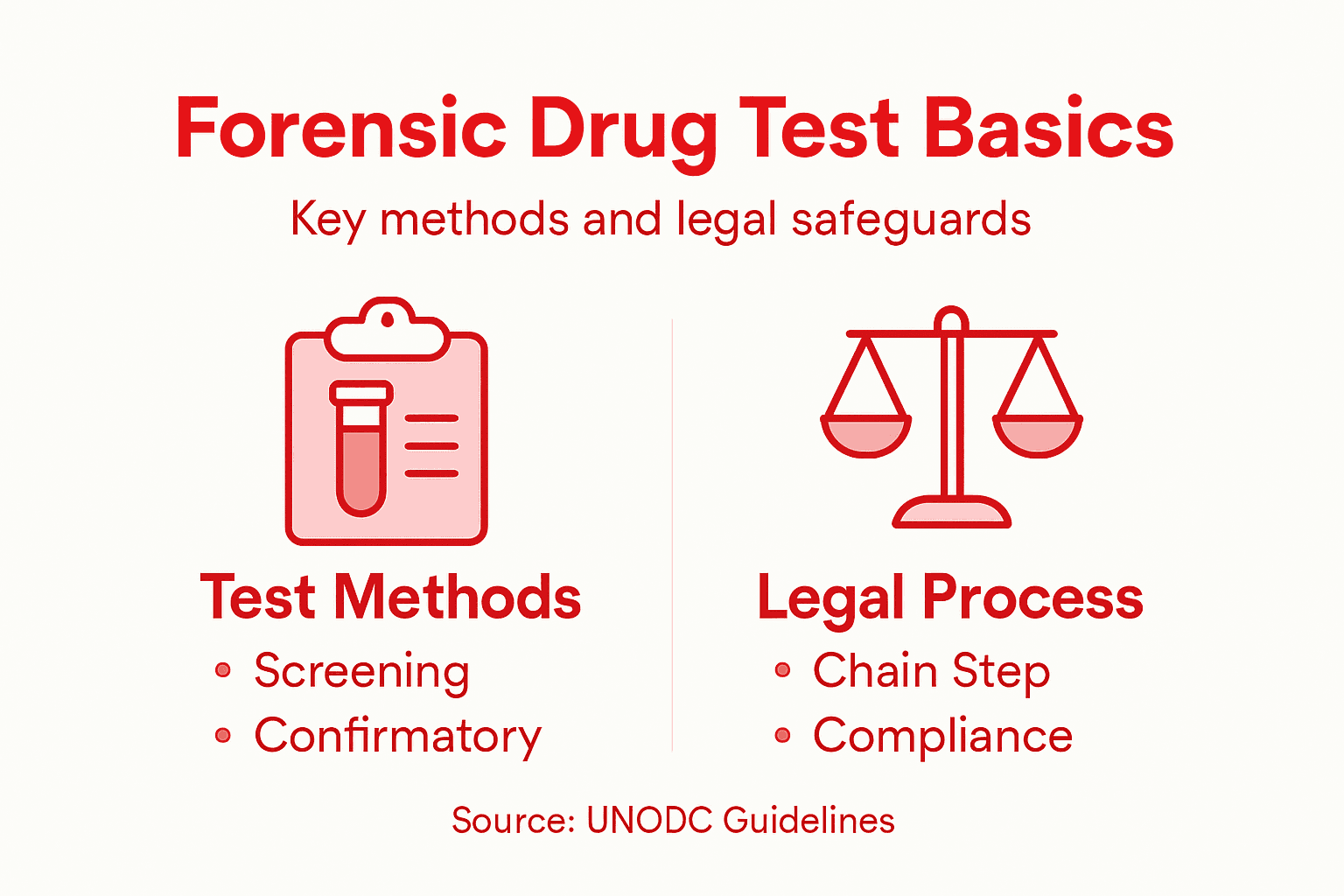
Forensic laboratories utilize advanced instrumentation that can detect extremely minute quantities of substances, often measuring concentrations as low as nanograms. These techniques require highly trained specialists who understand complex chemical interactions, instrument calibration, and rigorous scientific protocols to guarantee the reliability of their analytical results.
Pro tip: Invest in continuous professional development and cutting-edge technological training to maintain forensic laboratory analytical precision and effectiveness.
Risks, errors, and compliance challenges
Forensic toxicology compliance challenges represent complex scientific and legal obstacles that can significantly impact the reliability of drug testing evidence. These challenges range from technological limitations to human error, creating potential risks in legal and investigative processes.
Key risks and compliance challenges include:
- False Positive/Negative Results: Inaccurate screening outcomes
- Sample Contamination: Compromised specimen integrity
- Instrument Calibration Errors: Unreliable measurement techniques
- Personnel Training Gaps: Insufficient technical expertise
- Documentation Inconsistencies: Compromised chain of custody
Technical vulnerabilities can undermine the entire forensic testing process. Forensic science reliability standards demand rigorous quality management systems that address potential sources of error, ensuring that scientific evidence maintains its legal and scientific credibility.
Forensic laboratories must implement comprehensive risk mitigation strategies, including regular instrument calibration, ongoing personnel training, and strict adherence to standardized testing protocols. These measures help minimize the potential for errors that could compromise legal proceedings or scientific investigations. Continuous quality improvement and external accreditation processes are essential for maintaining the highest levels of forensic testing reliability.
Pro tip: Develop and maintain a robust quality management system with regular internal audits and external accreditation to minimize forensic testing risks and errors.
Ensure Accurate Forensic Drug Testing with Trusted Supplies
The article highlights the critical challenges in forensic drug testing such as maintaining legal admissibility, preventing sample contamination, and achieving the highest testing precision through validated methods like GC/MS and immunoassay screening. If you are involved in forensic labs, law enforcement, or substance abuse programs, having access to high-quality, FDA-approved test kits and specimen collection supplies is essential to overcome these challenges and safeguard the integrity of your results.
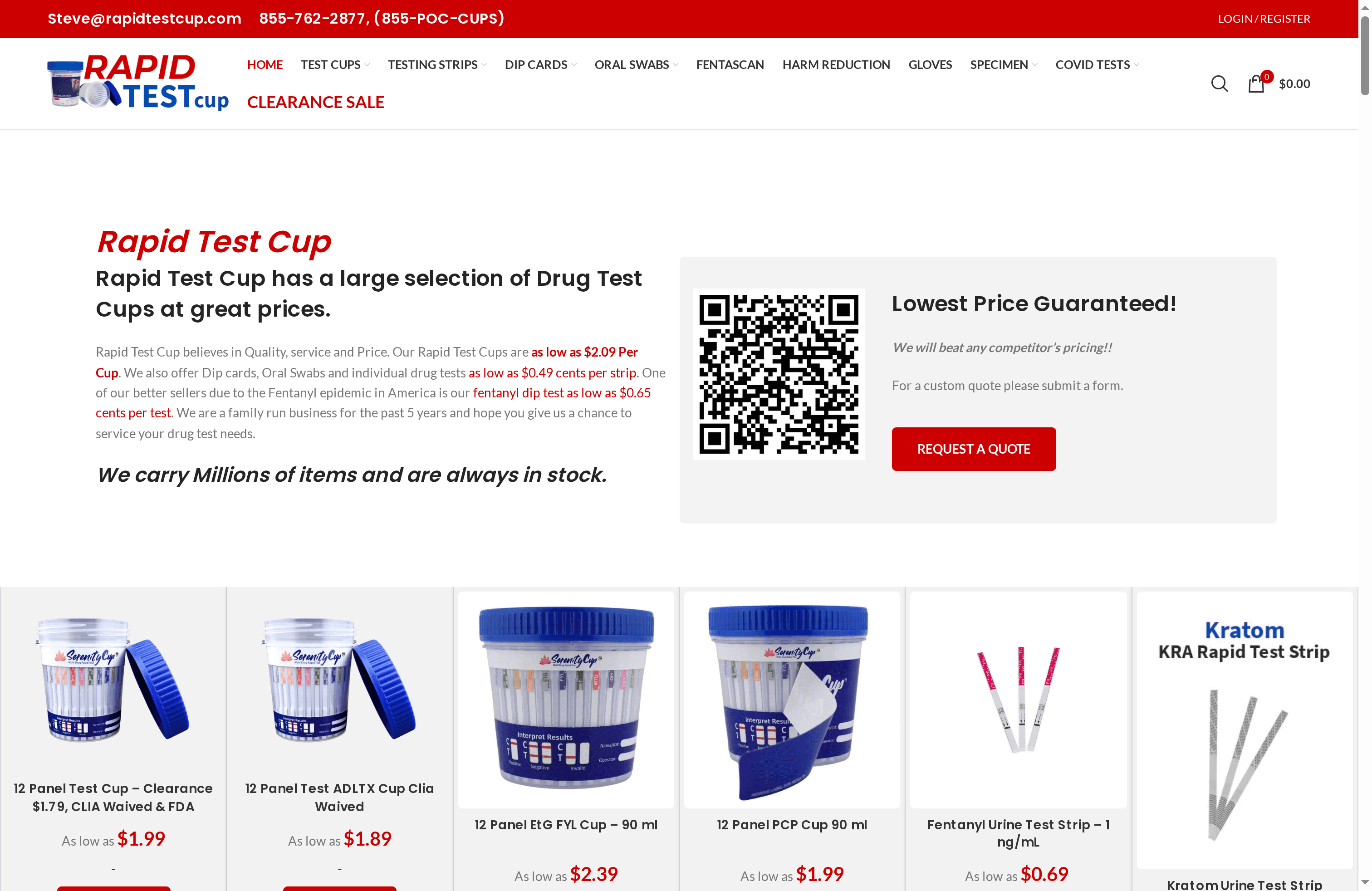
Discover a comprehensive selection of professional forensic drug testing products at RapidTestCup. From durable drug test cups to precise urine test strips and adulteration detection kits, our solutions support strict chain of custody protocols and help minimize errors during specimen analysis. Act now to equip your team with affordable and CLIA waived testing kits that deliver dependable outcomes every time. Explore our inventory today and take the first step to fortify your forensic drug screening process with reliable tools designed for accuracy and compliance.
Frequently Asked Questions
What is a forensic drug test?
Forensic drug testing is a scientific process used to identify and analyze controlled substances in legal contexts, providing critical evidence for law enforcement and legal proceedings.
How do different types of forensic drug tests compare in accuracy?
The accuracy of forensic drug tests varies by method. Mass spectrometry offers extremely high accuracy for definitive substance identification, while immunoassay screening provides moderate accuracy for initial assessments, possibly resulting in false positives.
What are the legal implications of forensic drug testing?
Forensic drug test results can significantly impact legal proceedings, as they must adhere to strict standards of documentation, chain of custody, and method validation to ensure admissibility in court.
What risks are associated with forensic drug testing?
Risks include false positive or negative results, sample contamination, instrument calibration errors, and insufficient personnel training, all of which can compromise the integrity of the evidence and its legal validity.