Blog
Instant vs lab drug tests: guide for health professionals


Choosing between instant and lab drug tests creates confusion for many health professionals and employers managing workplace safety programs. Each method serves distinct purposes, from rapid preliminary screening to confirmatory forensic analysis. Understanding these differences ensures compliance with regulatory standards while protecting your organization from legal risks. This guide clarifies when to use each testing approach, compares accuracy and turnaround times, and helps you build effective drug testing strategies that balance speed with reliability for clinical and workplace applications.
Table of Contents
- Key takeaways
- Understanding instant drug tests: purpose, process, and scenarios
- Laboratory drug tests: accuracy, procedures, and applications
- Comparing instant and lab drug tests: pros, cons, and practical differences
- Implementing drug testing strategy: choosing the right test for health and workplace compliance
- Explore rapid and laboratory drug testing solutions
- FAQ
Key Takeaways
| Point | Details |
|---|---|
| Instant vs lab | Instant tests provide rapid preliminary screening while laboratory analysis offers confirmatory accuracy for legal and regulatory purposes. |
| Turnaround and cost | Lab tests are more reliable but require longer turnaround times and higher costs. |
| Context matters | The choice depends on clinical urgency, regulatory requirements, and accuracy needs. |
| Two step protocol | A two step testing approach uses instant tests first and requires laboratory confirmation before any action. |
Understanding instant drug tests: purpose, process, and scenarios
Instant drug tests, also called rapid tests, deliver preliminary screening results within minutes at the point of collection. These devices use immunoassay technology to detect drug metabolites in urine, saliva, or other specimens through antibody reactions that produce visible color changes. Common formats include test cups with built-in panels, dip cards for multiple substances, and individual test strips for targeted screening.
Typical instant test panels screen for amphetamines, cocaine, marijuana metabolites, opiates, phencyclidine, benzodiazepines, barbiturates, and methamphetamine. Extended panels may include synthetic cannabinoids, fentanyl analogs, and designer drugs. Results appear as colored lines within 5 to 10 minutes, allowing immediate preliminary assessment without laboratory equipment or specialized training.
The primary advantages center on speed and convenience. Instant tests deliver quick preliminary results useful for immediate decision-making in clinical intake assessments, workplace accident investigations, and probation monitoring. Organizations benefit from onsite testing capabilities that eliminate specimen shipping delays and reduce administrative burden. Cost per test remains significantly lower than laboratory analysis, making instant tests economically viable for high-volume screening programs.
However, limitations exist. Instant tests use cutoff concentrations that may miss low-level drug use or produce false negatives when substances fall below detection thresholds. Cross-reactivity with legal medications creates false positive risks, requiring confirmatory testing before adverse employment actions. Operator error during specimen handling or result interpretation can compromise accuracy.
Common scenarios favoring instant tests:
- Pre-employment screening requiring same-day hiring decisions
- Reasonable suspicion testing during workplace incidents
- Clinical intake assessments for substance abuse treatment programs
- Probation and parole compliance monitoring with immediate feedback
- Sports and athletic screening for preliminary detection
Pro Tip: Always implement a two-step testing protocol where positive instant results trigger automatic laboratory confirmation before taking disciplinary action. This approach protects your organization from wrongful termination claims while maintaining testing efficiency.
Instant tests excel when speed outweighs the need for absolute precision. They serve as gatekeepers, identifying specimens requiring further analysis while clearing negative cases immediately. For health professionals managing patient intake or employers conducting reasonable suspicion testing, instant methods provide actionable intelligence within minutes rather than days.
Laboratory drug tests: accuracy, procedures, and applications
Laboratory drug testing employs sophisticated analytical methods, primarily gas chromatography-mass spectrometry and liquid chromatography-mass spectrometry, to identify and quantify specific drug compounds with exceptional precision. These techniques separate specimen components chemically, then measure molecular signatures that definitively identify target substances and their metabolites. Unlike instant immunoassays that detect drug classes, lab tests provide confirmatory, precise results essential for legal and compliance purposes.
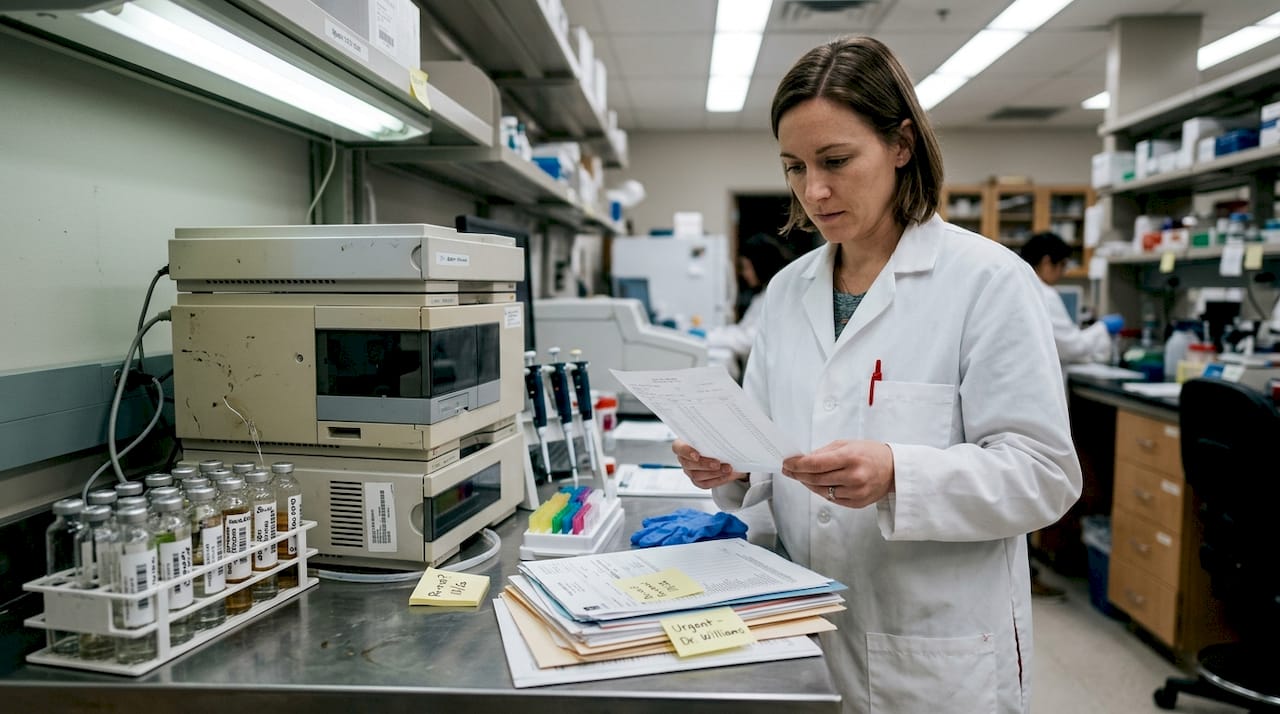
The laboratory process begins when specimens arrive at certified facilities following strict chain of custody protocols. Technicians perform initial screening using automated immunoassay platforms. Presumptive positive specimens undergo confirmatory testing via GC-MS or LC-MS, which provides sensitivity levels measured in nanograms per milliliter. This two-tier approach ensures that only true positives receive confirmatory analysis, managing costs while maintaining accuracy standards.
Processing times vary based on test complexity and laboratory workload. Standard confirmation panels typically require 24 to 72 hours from specimen receipt to final report. Expanded panels testing for synthetic drugs, designer substances, or specific metabolite ratios may extend turnaround to five business days. Stat testing options exist for urgent clinical or forensic cases, delivering results within hours at premium pricing.
Laboratory results carry legal weight that instant tests cannot match. Courts accept certified laboratory reports as evidence in criminal proceedings, custody disputes, and employment litigation. Medical review officers interpret positive results, considering legitimate medication use and medical conditions before reporting outcomes. This professional review layer protects individuals from false accusations while ensuring accurate reporting.
Laboratory testing applications include:
- Confirmatory analysis following positive instant test results
- Pre-employment screening for safety-sensitive positions requiring DOT compliance
- Forensic toxicology for criminal investigations and autopsy analysis
- Pain management monitoring ensuring patient medication compliance
- Professional licensing board investigations requiring court-admissible evidence
- Workers’ compensation claims requiring definitive substance identification
Pro Tip: Request split specimen collection for high-stakes testing situations. This protocol provides a second sample that subjects can have independently tested if they dispute initial positive results, strengthening your legal defensibility.
Laboratory methods detect lower drug concentrations than instant tests, identifying occasional users who might pass rapid screening. Expanded panels access hundreds of analytes, including emerging synthetic compounds that instant tests miss entirely. The trade-off involves higher per-test costs, typically ranging from $30 to $150 depending on panel complexity, compared to $5 to $25 for instant devices.
Comparing instant and lab drug tests: pros, cons, and practical differences
Accuracy represents the most critical distinction between testing methods. Instant tests offer speed but less accuracy, with sensitivity and specificity rates around 95% for most drug classes. Laboratory confirmation achieves 99% accuracy through molecular identification that eliminates cross-reactivity issues. This precision difference becomes crucial when testing results carry legal or employment consequences.
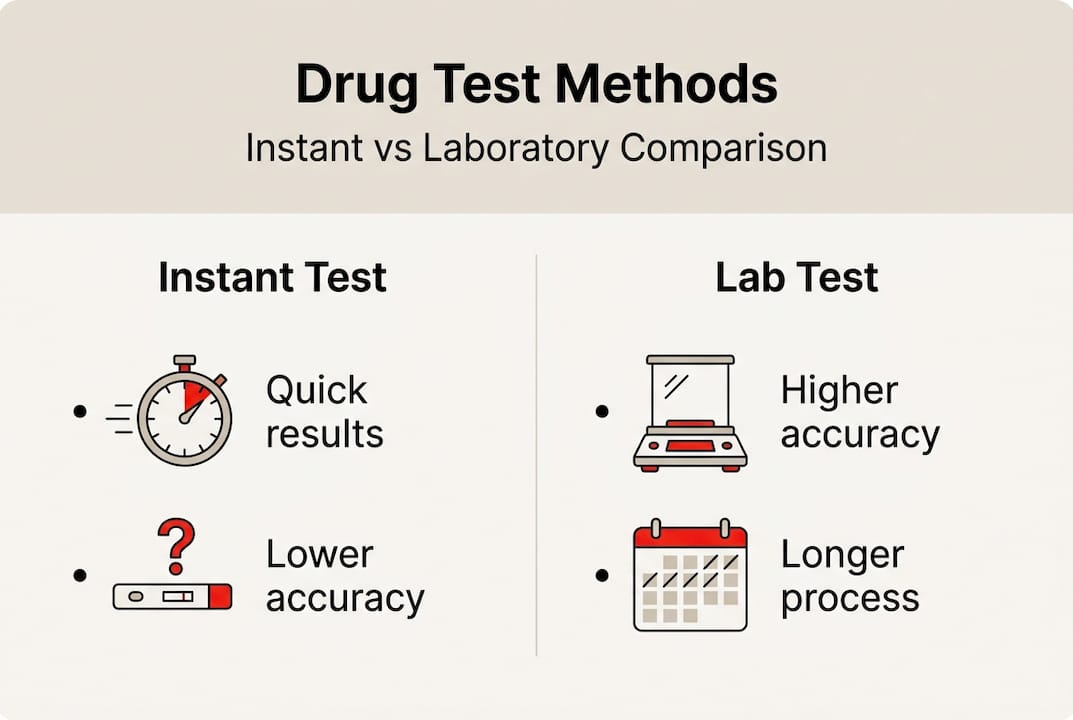
Turnaround time creates the inverse relationship. Instant tests deliver preliminary answers within 10 minutes at the collection site. Laboratory analysis requires specimen transportation, processing queues, and analytical procedures spanning one to five days. For organizations needing immediate screening decisions, this timing gap proves decisive. However, rushing to judgment based on unconfirmed instant results exposes employers to wrongful termination liability.
Cost considerations extend beyond per-test pricing. Instant tests minimize administrative overhead by eliminating specimen shipping, chain of custody documentation, and medical review officer fees. Total program costs for instant testing typically run $15 to $35 per screen including supplies and staff time. Laboratory testing programs cost $50 to $200 per confirmed result when including collection, shipping, analysis, and MRO review.
| Comparison Factor | Instant Tests | Laboratory Tests |
|---|---|---|
| Accuracy Rate | ~95% (preliminary) | ~99% (confirmatory) |
| Result Time | 5-10 minutes | 1-5 days |
| Cost per Test | $5-$25 | $30-$150 |
| Legal Admissibility | Requires confirmation | Court accepted |
| Detection Sensitivity | Higher cutoffs | Nanogram precision |
| Onsite Capability | Yes | No |
| MRO Review | Not included | Standard practice |
| False Positive Risk | Moderate | Minimal |
False positives occur when instant tests react to legal substances sharing chemical similarities with illicit drugs. Common examples include poppy seed consumption triggering opiate detection, certain cold medications causing amphetamine positives, and hemp products producing THC results. Laboratory confirmation eliminates these false positives by identifying specific molecular structures rather than antibody reactions.
False negatives happen when drug concentrations fall below instant test cutoff levels or when specimens undergo dilution or adulteration. Sophisticated users exploit these limitations through excessive hydration or adulterant chemicals. Laboratory testing detects these manipulation attempts through specific gravity, creatinine, and pH measurements that instant devices cannot perform.
Practical decision factors:
- Regulatory requirements: DOT and federal programs mandate laboratory confirmation
- Consequence severity: Employment termination requires confirmed results
- Budget constraints: High-volume screening favors instant methods with selective confirmation
- Turnaround urgency: Same-day hiring decisions necessitate instant testing
- Legal exposure: Litigation-prone environments demand laboratory accuracy
Pro Tip: Implement risk-based testing protocols where safety-sensitive positions receive automatic laboratory confirmation while lower-risk roles use instant testing with confirmation only for positives. This tiered approach optimizes accuracy where it matters most while controlling overall program costs.
Choosing the right test depends on balancing these competing factors within your specific operational context. Organizations handling federal contracts or DOT-regulated employees must follow prescribed laboratory protocols. Private employers gain flexibility to design programs matching their risk tolerance and budget realities.
Real-world examples illustrate these trade-offs. A construction company conducting post-accident testing needs instant results to determine whether the injured worker can return to the site. However, any positive result triggering workers’ compensation denial requires laboratory confirmation to withstand legal challenge. A substance abuse treatment program uses instant testing for daily patient monitoring but confirms unexpected positives before adjusting treatment plans.
Implementing drug testing strategy: choosing the right test for health and workplace compliance
Building effective drug testing programs requires systematic evaluation of organizational needs, regulatory obligations, and operational constraints. Appropriate test selection reduces legal risks and improves workplace safety by matching testing methods to specific scenarios and consequences.
1. Assess your regulatory environment and compliance obligations
Determine whether federal regulations govern your testing program. Department of Transportation rules mandate specific laboratory procedures, cutoff levels, and medical review officer involvement for safety-sensitive positions. Federal contractors following Drug-Free Workplace Act requirements must implement laboratory-based testing. State laws may impose additional requirements or restrict testing practices. Document applicable regulations before designing your program.
2. Define testing scenarios and consequence severity
Categorize testing situations by urgency and potential consequences. Pre-employment screening allows time for laboratory confirmation before hiring decisions. Reasonable suspicion and post-accident testing may require immediate preliminary results with subsequent confirmation. Random testing programs can utilize either method depending on budget and turnaround requirements. Match testing methods to consequence severity, reserving laboratory confirmation for decisions affecting employment status.
3. Calculate total program costs including hidden expenses
Compare comprehensive costs beyond per-test pricing. Instant testing programs require upfront equipment purchases, staff training, quality control supplies, and result documentation systems. Laboratory programs involve specimen collection supplies, shipping costs, MRO fees, and administrative time managing specimen chains of custody. Factor in confirmation testing costs for instant test positives, typically affecting 2% to 5% of specimens. Model annual costs across different testing volumes to identify break-even points.
4. Establish confirmation protocols protecting legal defensibility
Create written policies mandating laboratory confirmation before adverse employment actions based on positive drug tests. Specify turnaround expectations, employee rights during the confirmation period, and procedures for disputing results. Partner with certified laboratories offering appropriate accreditation, such as SAMHSA certification for federal programs or CAP/CLIA certification for clinical applications. Ensure medical review officer involvement for all confirmed positives to address legitimate medication use.
5. Train staff on proper collection, handling, and interpretation procedures
Implement comprehensive training covering specimen collection techniques, chain of custody documentation, quality control verification, result interpretation, and confidentiality requirements. Instant test operators must understand how to read results correctly, recognize invalid tests, and identify adulteration attempts. Laboratory program staff need expertise in proper specimen handling, temperature monitoring, and shipping procedures. Annual refresher training maintains competency and updates staff on emerging drug trends.
6. Monitor program effectiveness through ongoing quality assurance
Track key performance indicators including testing volumes, positive rates by testing reason, confirmation ratios, turnaround times, and cost per test. Analyze trends identifying potential issues such as rising false positive rates suggesting operator error or declining positive rates indicating inadequate deterrence. Conduct periodic blind proficiency testing where known positive and negative samples verify staff competency. Review and update testing panels annually to address emerging drug threats in your region.
Pro Tip: Create decision trees guiding supervisors through testing method selection based on specific scenarios. Simple flowcharts asking “Is this DOT regulated?” and “Does this decision affect employment status?” help non-experts choose appropriate testing approaches consistently.
Integrating these elements produces comprehensive programs balancing compliance requirements with operational efficiency. Health professionals gain confidence that testing results support clinical decisions. Employers protect their organizations from legal challenges while maintaining safe work environments. The investment in proper program design pays dividends through reduced liability exposure and improved testing credibility.
Rapid screening methods continue evolving with new technologies improving accuracy and expanding detectable substances. Staying current with testing capabilities ensures your program addresses emerging drug threats effectively.
Explore rapid and laboratory drug testing solutions
RapidTestCup provides comprehensive drug testing products supporting both instant screening and laboratory confirmation workflows. Our 12 panel ADLTX cup combines multi-drug detection with integrated adulterant testing, identifying specimen manipulation attempts that compromise result validity. For expanded coverage, the 22 panel drug test with adulterants and ZAZA detects emerging synthetic substances alongside traditional drug classes.
All products feature CLIA waived, FDA-approved designs ensuring regulatory compliance for professional applications. Bulk pricing accommodates high-volume testing programs while maintaining per-test affordability. Our guide to selecting drug test kits helps you match product specifications to your specific testing requirements, whether conducting preliminary workplace screening or collecting specimens for laboratory confirmation.
FAQ
What factors cause false positives in instant drug tests?
Certain medications and cross-reactivity can cause false positives in rapid tests, including over-the-counter cold medicines containing pseudoephedrine showing as amphetamines, prescription pain medications triggering opiate detection, and poppy seed consumption producing morphine results. Immunoassay technology used in instant tests detects chemical structures similar to target drugs rather than specific compounds. Laboratory confirmation using mass spectrometry eliminates these false positives by identifying exact molecular signatures, which is why positive instant results should never trigger employment consequences without confirmatory testing.
How long does it typically take to get results from a laboratory drug test?
Laboratory turnaround times range from 24 hours to five business days depending on test complexity and laboratory workload. Standard confirmation testing for common drug classes typically completes within 48 to 72 hours from specimen receipt at the laboratory. Expanded panels testing for synthetic cannabinoids, designer drugs, or specific metabolite ratios may require up to five days due to additional analytical procedures. Stat testing services deliver results within 24 hours at premium pricing for urgent clinical or forensic situations requiring expedited analysis.
Can instant drug tests be used alone for legal or workplace compliance?
Instant tests serve as preliminary screening tools but require laboratory confirmation before adverse employment actions or legal proceedings. Federal regulations governing DOT testing and most state drug-free workplace programs mandate laboratory confirmation for all positive results. Employers terminating workers based solely on unconfirmed instant test results face significant liability for wrongful discharge claims. Best practice involves using instant tests for immediate screening decisions while automatically sending positive specimens for laboratory confirmation before finalizing consequences affecting employment status or legal rights.
What drug detection windows differ between instant and laboratory testing methods?
Detection windows depend on drug metabolism and specimen type rather than testing method, though laboratory tests detect lower concentrations extending effective windows. Most drugs remain detectable in urine for two to four days after use, with marijuana extending to 30 days for chronic users due to fat storage. Laboratory testing identifies drug presence at lower cutoff concentrations than instant tests, potentially detecting use that instant screening misses. Both methods access the same detection windows when using identical cutoff levels, but laboratories typically employ more sensitive thresholds that effectively extend detection capabilities for occasional users.
How do medical review officers contribute to laboratory drug testing accuracy?
Medical review officers are licensed physicians trained in drug testing interpretation who review all laboratory-confirmed positive results before reporting to employers. They contact individuals with positive tests to discuss legitimate medical explanations, including prescription medications, over-the-counter drugs, and medical conditions that might explain results. This professional review prevents false accusations when legal substance use produces positive tests. MROs verify prescription validity through pharmacy records and physician documentation, then determine whether positive results represent prohibited drug use or legitimate medical treatment, significantly improving testing program accuracy and legal defensibility.