
Blog
Benefits of Workplace Drug Testing for HR Managers


Protecting workplace safety often comes down to the decisions HR managers make every day. For mid-sized American and Canadian companies, finding cost-effective drug testing solutions is not just a compliance issue. It is a powerful tool to support employee wellness and prevent accidents. This guide tackles common myths about workplace drug testing and outlines practical screening methods, helping you build safer, more productive teams while respecting employee privacy and legal requirements.
Table of Contents
- Defining Workplace Drug Testing And Common Myths
- Types Of Drug Testing Methods And Panels
- Legal Requirements And Compliance Standards
- Enhancing Safety, Productivity, And Cost Savings
- Balancing Employee Rights And Privacy Concerns
- Avoiding Mistakes And Addressing Tampering Risks
Key Takeaways
| Point | Details |
|---|---|
| Importance of Workplace Drug Testing | Drug testing is crucial for maintaining safety, productivity, and employee wellness in the workplace. Its primary purposes include preventing accidents and protecting both employees and customers. |
| Consent and Privacy | Organizations must prioritize explicit consent and uphold strict privacy standards in their testing protocols to protect employee rights. |
| Variety of Testing Methods | Different drug testing methodologies offer varying degrees of invasiveness and detection capabilities, allowing organizations to tailor their approach to their specific needs. |
| Balancing Rights and Safety | Effective drug testing policies must balance organizational safety requirements with respect for employee dignity and rights, fostering a supportive work environment. |
Defining Workplace Drug Testing and Common Myths
Workplace drug testing is a critical strategy for maintaining safety and productivity in professional environments. Workplace drug testing (WDT) involves systematic screening of employees to detect potential substance abuse that could compromise workplace performance and safety. Testing methods and challenges vary across different organizational contexts and industries.
Drug testing serves multiple essential purposes for HR managers and organizational leadership:
- Preventing workplace accidents
- Protecting employee and customer safety
- Maintaining professional work standards
- Reducing potential liability risks
- Supporting employee wellness initiatives
Contrary to popular misconceptions, workplace drug testing is not about punishing employees but creating a safe, supportive work environment. Drug testing approaches typically include several standardized methods:
- Pre-employment screening
- Random periodic testing
- Post-incident investigation
- Reasonable suspicion evaluation
- Return-to-work confirmation
Common myths about workplace drug testing often stem from misunderstandings about privacy, effectiveness, and implementation. Many employees believe drug tests are inherently invasive or unreliable, but modern testing protocols prioritize accuracy, consent, and employee dignity.
Drug testing is a collaborative process designed to support workplace safety, not to criminalize individual behavior.
Consent and privacy are fundamental principles in professional drug testing. Employers must obtain explicit written permission and follow strict legal guidelines to protect employee rights. Comprehensive testing programs utilize multiple confirmation steps to ensure fairness and accuracy.
Pro tip: Develop a transparent drug testing policy that clearly communicates procedures, expectations, and support resources for employees struggling with substance-related challenges.
Types of Drug Testing Methods and Panels
Workplace drug testing involves multiple sophisticated screening approaches designed to detect substance use effectively and accurately. Drug testing methods range from traditional techniques to cutting-edge technological solutions, each with unique capabilities and applications. Advanced screening technologies have dramatically improved the precision and reliability of workplace substance screening.
Primary drug testing methodologies include:
- Urine testing (most common)
- Blood screening
- Hair follicle analysis
- Oral fluid (saliva) testing
- Breath alcohol testing
- Sweat patch monitoring
Each testing method offers distinct advantages and limitations. Comparative drug screening approaches reveal important considerations for HR managers when selecting appropriate testing protocols:
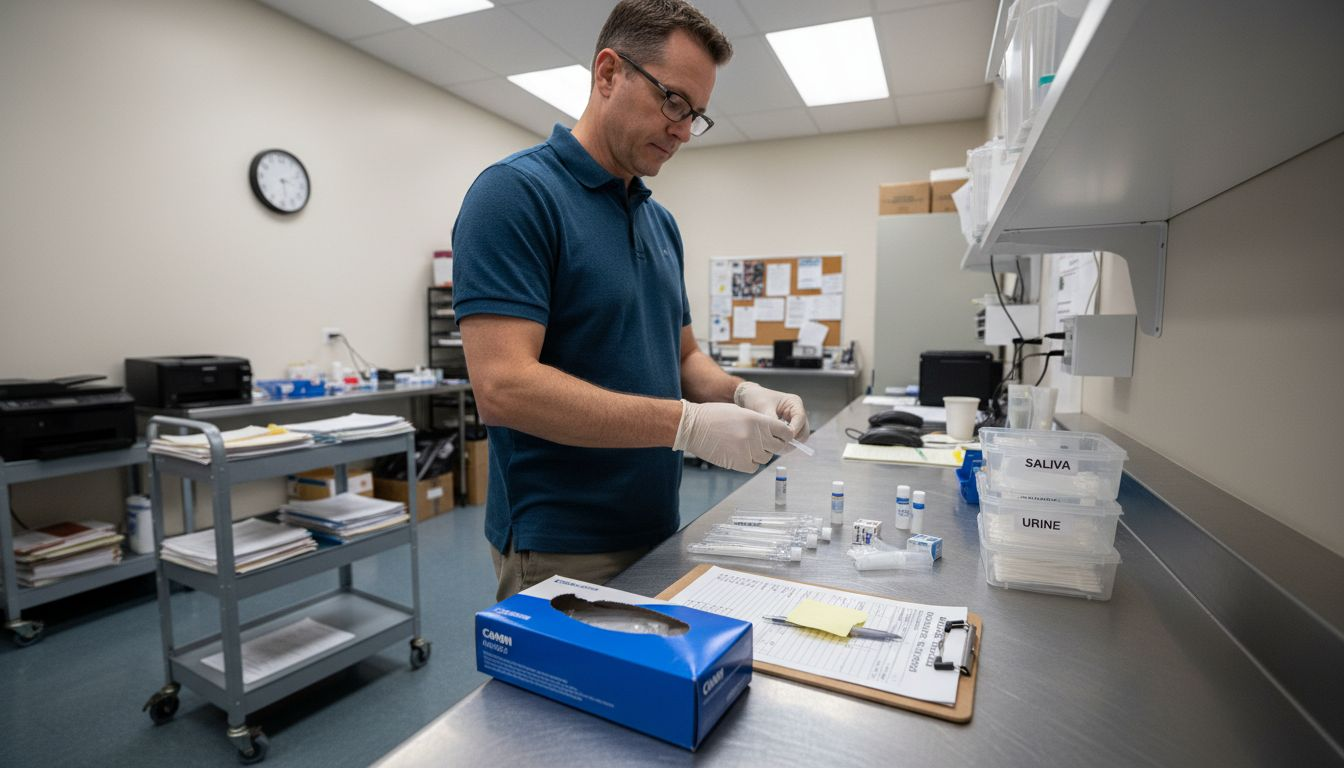
Here’s a side-by-side comparison of common workplace drug testing methods and their practical features:
| Testing Method | Collection Invasiveness | Detection Duration | Typical Business Use |
|---|---|---|---|
| Urine Testing | Moderate | 1–5 days | Pre-employment, random checks |
| Blood Screening | High | Hours–days | Post-incident, suspicion-based |
| Hair Follicle | Low | Up to 90 days | Long-term history screening |
| Oral Fluid (Saliva) | Low | 1–2 days | Random, post-incident |
| Breath Alcohol | Very Low | Real-time | On-site alcohol checks |
| Sweat Patch | Low | 7–14 days | Extended monitoring |
- Invasiveness of collection method
- Detection window duration
- Cost of testing
- Accuracy of results
- Potential for sample tampering
Test panel configurations allow organizations to customize screening for specific substances. Common panels range from basic 5-drug screenings to comprehensive 10-panel tests that detect multiple substance classes.
Effective drug testing balances scientific accuracy with employee privacy and dignity.
Technological innovations continue to transform drug testing methodologies. Emerging techniques like infrared spectroscopy and fingerprint screening offer non-invasive alternatives to traditional testing methods, providing faster and more hygienic screening options for progressive organizations.
Pro tip: Consult with occupational health professionals to develop a tailored drug testing strategy that meets your organization’s specific safety and compliance requirements.
Legal Requirements and Compliance Standards
Workplace drug testing navigates a complex legal landscape that demands careful consideration of federal, state, and local regulations. Legal compliance requires HR managers to understand nuanced requirements that balance employee rights with organizational safety needs. International workplace testing regulations reveal significant variations in legal approaches across different jurisdictions.
Key legal considerations for drug testing include:
- Obtaining explicit employee consent
- Maintaining strict confidentiality
- Implementing non-discriminatory testing protocols
- Following industry-specific regulatory guidelines
- Protecting employee privacy rights
- Documenting testing procedures
Workplace drug testing regulations vary significantly across different contexts and industries. Federal laws like the Drug-Free Workplace Act establish baseline requirements for organizations, particularly in safety-sensitive sectors:
- Transportation industry testing mandates
- Federal contractor screening requirements
- Department of Transportation regulations
- Safety-sensitive position guidelines
- Medical review officer involvement
Compliance strategies must account for the intricate legal framework governing workplace drug screening. Employers need to develop comprehensive policies that address both organizational safety and individual employee rights.
Effective drug testing policies balance legal compliance with respect for employee dignity.
State-level variations add additional complexity to drug testing requirements. Some states impose strict limitations on testing procedures, while others provide more flexible guidelines. HR managers must stay informed about local regulations and update their policies accordingly to maintain legal and ethical standards.
Pro tip: Consult with legal counsel specializing in employment law to develop a drug testing policy that meets both federal and state regulatory requirements.
Enhancing Safety, Productivity, and Cost Savings
Workplace drug testing serves as a powerful strategy for organizations seeking to protect their most valuable asset: their workforce. Comprehensive drug screening goes far beyond simple compliance, delivering tangible benefits that directly impact organizational performance and employee well-being. Safety-critical workplace interventions demonstrate how strategic testing can prevent accidents and support employee health.
Key organizational benefits include:
- Reducing workplace accident rates
- Minimizing potential liability risks
- Improving overall workforce productivity
- Decreasing employee turnover
- Lowering healthcare and insurance costs
- Enhancing workplace morale and safety culture
Economic implications of effective drug testing are substantial and multifaceted:
- Direct cost savings from reduced workplace incidents
- Lower workers’ compensation claims
- Decreased absenteeism and performance disruptions
- Improved operational efficiency
- Enhanced organizational reputation
Productivity impact extends beyond immediate financial considerations. Substance use can significantly impair workplace performance, leading to decreased concentration, increased errors, and potential safety risks.
Drug testing is an investment in workforce health, safety, and organizational performance.
Preventative approaches that combine testing with employee support programs can create meaningful cultural transformations. By positioning drug testing as a supportive mechanism rather than a punitive measure, organizations can foster environments of trust, accountability, and continuous improvement.
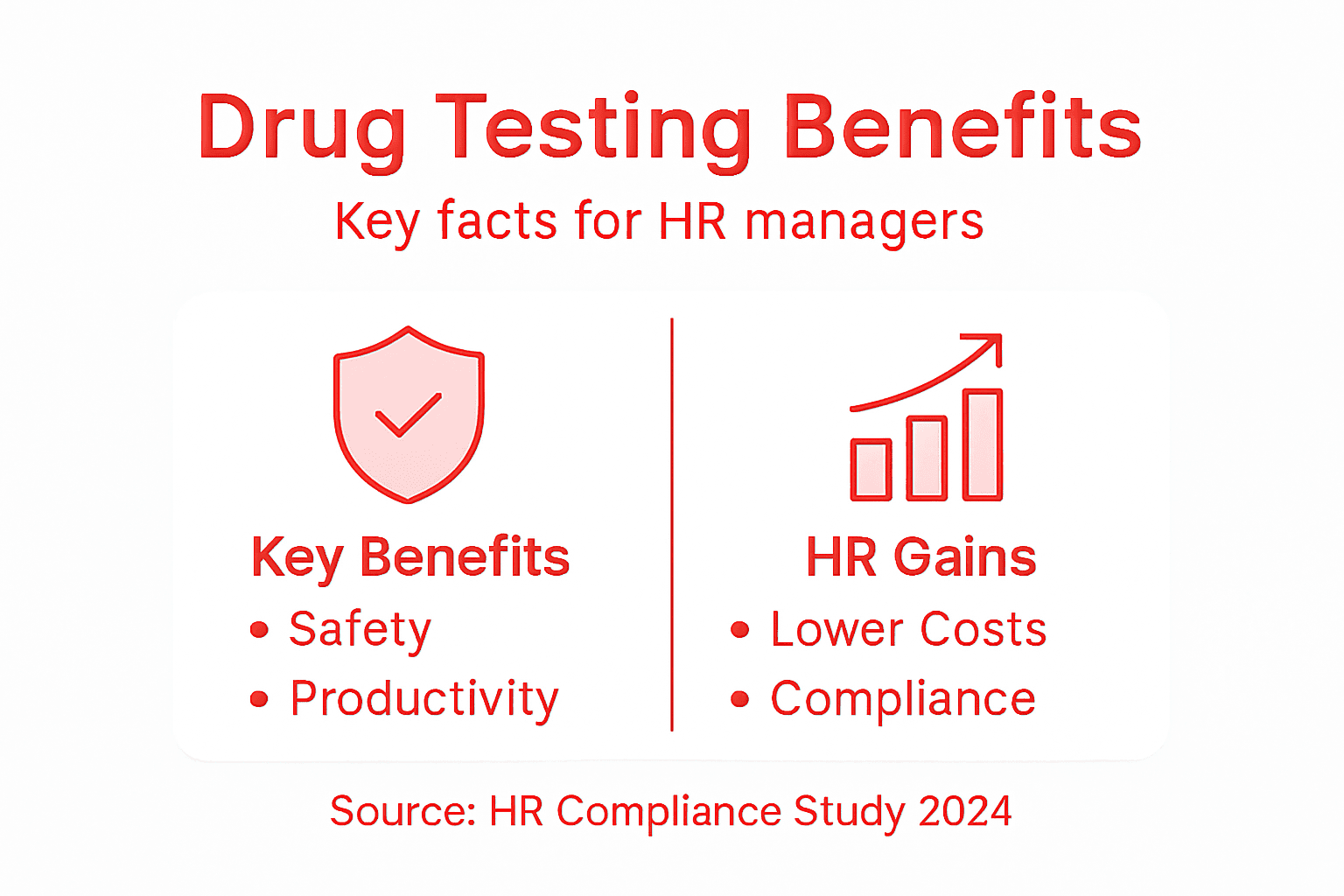
This summary highlights the main business benefits delivered by effective workplace drug testing:
| Benefit | Description | Impact on Workforce |
|---|---|---|
| Accident Reduction | Fewer workplace incidents and injuries | Improved safety, productivity |
| Liability Mitigation | Reduced legal and financial risks | Stabilized operations |
| Productivity Boost | Increased employee performance | Enhanced output |
| Turnover Reduction | Lower rates of employee exits | Better team retention |
| Healthcare Cost Savings | Decreased insurance and medical expenses | Organizational savings |
Pro tip: Develop a holistic drug testing program that integrates screening with comprehensive employee assistance resources to maximize both safety and supportive workplace culture.
Balancing Employee Rights and Privacy Concerns
Workplace drug testing demands a delicate balance between organizational safety and individual employee rights. Privacy protection stands as a critical consideration for HR managers implementing screening programs. Workplace drug testing regulations emphasize the importance of maintaining employee dignity and confidentiality throughout the testing process.
Key principles for protecting employee rights include:
- Obtaining explicit informed consent
- Ensuring strict confidentiality of test results
- Implementing non-discriminatory testing protocols
- Providing clear communication about testing procedures
- Offering opportunities for explanation or dispute
- Protecting against potential workplace stigmatization
The legal framework surrounding drug testing requires comprehensive considerations:
- Developing transparent testing policies
- Establishing clear notification procedures
- Limiting access to test results
- Creating appeal mechanisms
- Protecting against potential discrimination
Privacy protection extends beyond mere legal compliance. Organizations must cultivate an environment of trust and respect that views drug testing as a supportive measure rather than a punitive action.
Effective drug testing balances organizational safety with individual employee dignity and privacy rights.
Modern drug testing approaches recognize the nuanced nature of personal health information. Employers must implement robust safeguards that protect sensitive medical data while maintaining the integrity of workplace safety protocols.
Pro tip: Develop a comprehensive privacy policy that explicitly outlines how drug test information will be collected, stored, and protected, ensuring transparency and building employee trust.
Avoiding Mistakes and Addressing Tampering Risks
Workplace drug testing requires sophisticated strategies to prevent potential manipulation and ensure reliable results. Testing integrity demands comprehensive approaches that anticipate and counteract potential tampering attempts. Robust testing protocols are essential for maintaining the credibility of workplace screening programs.
Common tampering methods include:
- Diluting urine samples
- Substituting specimens
- Using masking agents
- Providing synthetic urine
- Timing tests to avoid detection
- Exploiting collection process weaknesses
Strategies for preventing test manipulation:
- Implementing direct observation collection procedures
- Using advanced specimen validity testing
- Randomizing test scheduling
- Conducting surprise screenings
- Training collection staff extensively
Detection technologies have evolved significantly to address sophisticated tampering techniques. Modern screening methods incorporate multiple validation steps to identify potential sample alterations.
Effective drug testing programs anticipate and neutralize potential manipulation attempts.
Workplace testing compliance requires ongoing education and clear communication about consequences of test interference. Organizations must develop comprehensive policies that outline specific penalties for tampering attempts.
Pro tip: Develop a multi-layered testing strategy that combines advanced detection technologies, rigorous collection procedures, and clear disciplinary guidelines to minimize tampering risks.
Ensure Safety and Compliance with Trusted Drug Testing Solutions
Maintaining a safe and productive workplace starts with reliable drug testing that respects employee privacy and meets strict legal standards. The article highlights the challenges HR managers face such as selecting accurate drug testing methods, preventing tampering, and balancing employee rights while reducing liability risks. Rapidtestcup.com offers FDA-approved, CLIA-waived drug test cups, urine test strips, and specimen collection supplies designed to simplify your workplace screening program and ensure compliance with all applicable regulations.
Discover affordable, high-quality testing products tailored for professional and forensic needs. Whether you require pre-employment screening kits or extended-panel testing solutions, our extensive catalog supports your goals to enhance workplace safety, reduce accidents, and improve overall productivity.
Take control of your drug testing program today. Visit Rapidtestcup.com to explore our full range of drug screening products and find customized solutions that fit your organization’s unique needs. Empower your HR team with trusted supplies and fast shipping for efficient and legally compliant workplace drug testing.
Frequently Asked Questions
What are the main benefits of workplace drug testing for HR managers?
Workplace drug testing helps HR managers by reducing workplace accidents, minimizing liability risks, enhancing productivity, decreasing employee turnover, and lowering healthcare costs. It contributes to a safer work environment and supports overall employee wellness.
How does workplace drug testing improve employee safety?
By systematically screening employees for substance use, workplace drug testing helps prevent accidents and injuries that can arise from impaired performance, ensuring a safer workplace for everyone.
What types of drug testing methods can organizations use?
Organizations can utilize various drug testing methods, including urine testing, blood screening, hair follicle analysis, oral fluid testing, breath alcohol testing, and sweat patch monitoring. Each method has its benefits and suitability depending on the context.
How can employers ensure compliance with legal requirements for drug testing?
Employers must understand federal, state, and local regulations related to drug testing, obtain explicit employee consent, maintain confidentiality, implement non-discriminatory protocols, and document testing procedures to protect employee rights while ensuring organizational safety.