

Blog
What Are Adulterants in Drug Tests – Impact on Accuracy


Every forensic lab professional knows the challenge of staying ahead as new substances are introduced to drug samples worldwide. The presence of adulterants intentionally or accidentally alters drug compositions, complicating accurate detection and adding layers of legal risk. As research from organizations like CFSRE shows, the range of toxic adulterants and their effects is broad, often undermining the reliability of drug testing processes. Understanding these dynamics is vital for maintaining both testing accuracy and global compliance standards.
Table of Contents
- Defining Adulterants And Their Role
- Types Of Adulterants In Drug Testing
- How Adulterants Affect Test Accuracy
- Detection Methods For Adulterant Use
- Legal Consequences And Compliance Risks
Key Takeaways
| Point | Details |
|---|---|
| Adulterants Impact Drug Testing | Adulterants can alter the composition and reliability of drug tests, leading to inaccurate results. Understanding their types and mechanisms is crucial for effective detection. |
| Advanced Detection Methods Are Essential | Utilizing multi-stage testing and advanced detection techniques can help identify adulterated samples more accurately. Incorporating methods like specimen validity testing enhances overall test integrity. |
| Legal Risks Associated with Adulteration | Attempting to adulterate drug test specimens can result in severe legal consequences, including job termination and criminal charges. Organizations should implement clear policies to deter such behavior. |
| Proactive Testing Policies Recommended | Developing comprehensive drug testing policies that clearly outline consequences for adulteration can promote compliance and transparency within organizations. |
Defining Adulterants and Their Role
In drug testing and forensic science, adulterants represent substances intentionally or unintentionally introduced to modify the composition, characteristics, or analytical results of a drug sample. Toxic substance patterns reveal complex interactions that challenge traditional detection methods and pose significant health risks.
Adulterants can be categorized into several distinct groups based on their purpose and origin. Some are added deliberately to enhance drug effects, increase bulk volume, or manipulate testing outcomes. Others emerge accidentally through poor manufacturing processes or contamination during production. Common adulterants include substances like caffeine, procaine, paracetamol, and various sugars, which can modify the drug’s pharmacological profile or physical properties.
Forensic researchers have developed sophisticated detection techniques to identify these substances. Empirical evidence suggests that adulterants can range from relatively benign compounds to potentially dangerous chemical agents. High-resolution mass spectrometry now allows scientists to map complex adulterant patterns, providing critical insights for criminal investigations and public health monitoring.
Pro tip: Invest in advanced multi panel drug testing methods that can detect a wide range of potential adulterants to ensure comprehensive and accurate screening results.
Types of Adulterants in Drug Testing
Drug testing adulterants can be broadly classified into several distinct categories, each with unique characteristics and potential detection challenges. Toxic adulterant profiles vary significantly across different geographical regions, making comprehensive identification crucial for accurate testing.
The primary types of adulterants include chemical masking agents, biological contaminants, and synthetic additives. Chemical masking agents are substances deliberately added to interfere with drug test results, such as nitrites, chromates, and oxidizing agents that can alter sample chemistry. Biological contaminants like bacteria (including Bacillus and Clostridium species) can inadvertently introduce additional complexity to drug samples. Synthetic additives range from common substances like caffeine and paracetamol to more sophisticated chemical compounds designed to manipulate test outcomes.
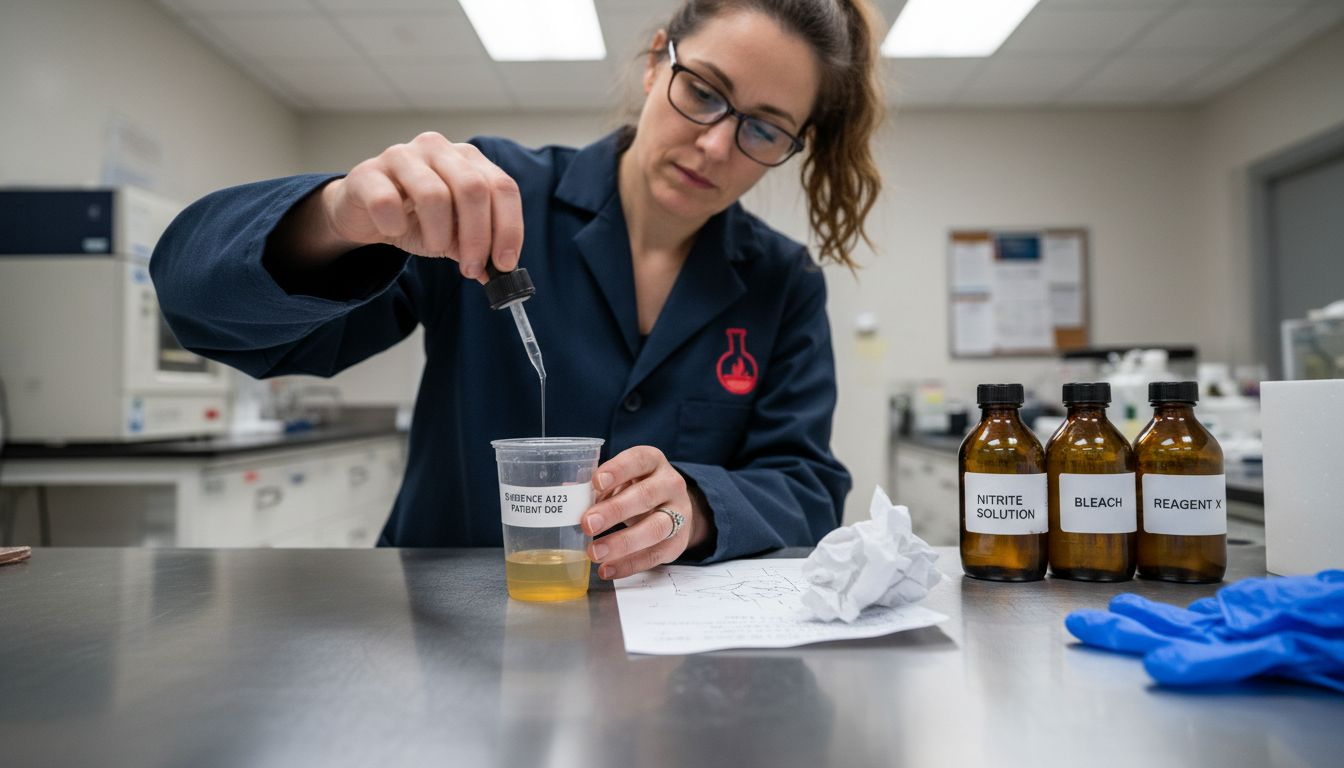
Empirical research on drug adulterants reveals a complex landscape of intentional and unintentional substance modifications. These adulterants can be categorized into subcategories including diluting agents, substitution chemicals, and metabolic blockers. Diluting agents aim to reduce drug concentration, substitution chemicals attempt to replace the original sample, and metabolic blockers interfere with the detection of specific drug metabolites.
Pro tip: Implement comprehensive multi-stage testing protocols that include initial screening and confirmatory tests to effectively detect and counteract various types of adulterants.
How Adulterants Affect Test Accuracy
Immunochromatographic drug testing devices are particularly vulnerable to chemical interference, with adulterants capable of dramatically compromising test result reliability. These substances can manipulate test outcomes through multiple mechanisms, including chemical degradation, metabolite masking, and sample dilution.
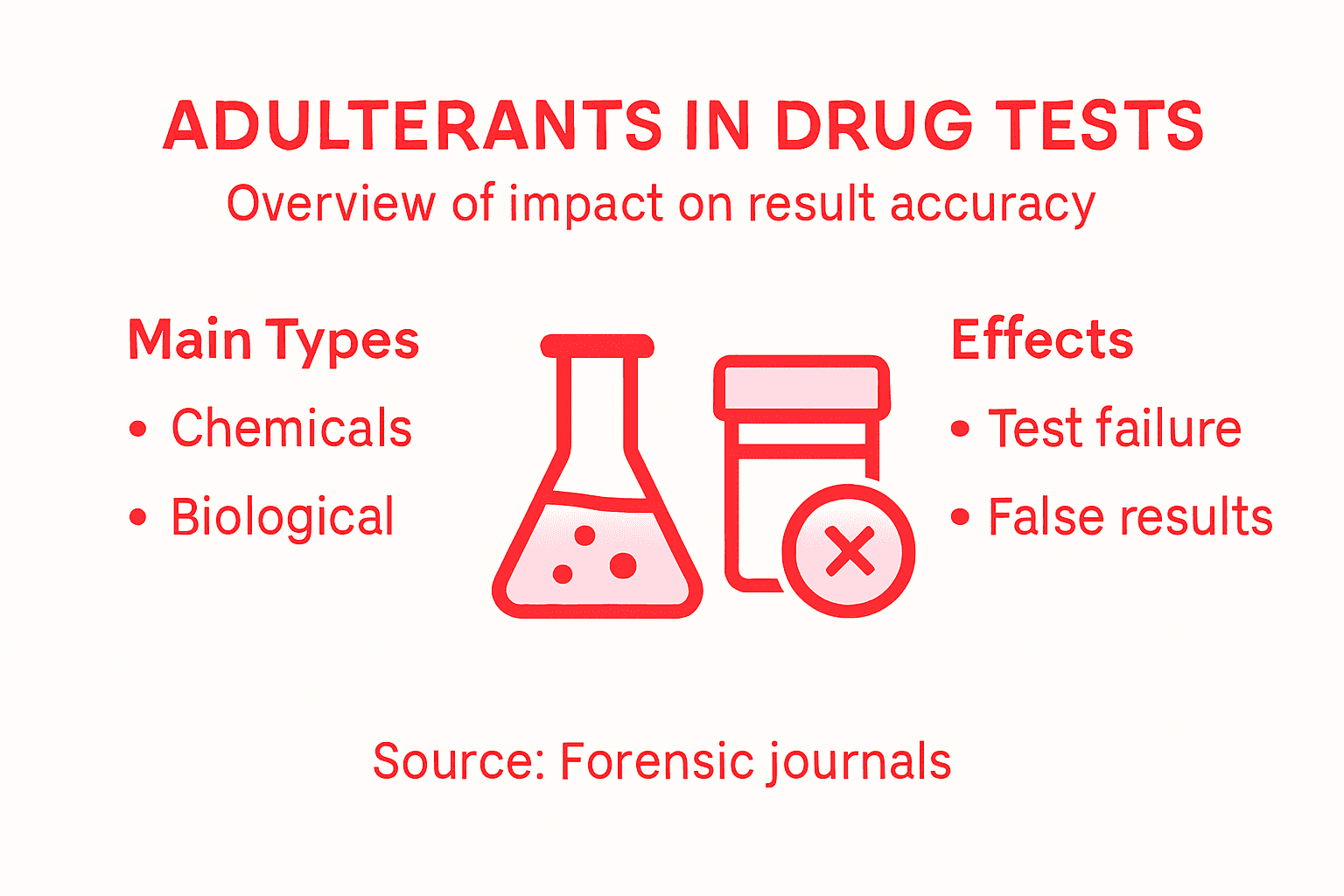
Adulterants introduce significant challenges by disrupting the fundamental chemical reactions that enable accurate drug detection. Household chemicals like bleach, vinegar, and ethanol can cause false negative results by oxidizing drug metabolites or altering sample pH. Some adulterants physically modify sample characteristics, changing specific gravity, creatinine levels, and even sample appearance or odor to circumvent standard detection protocols.
Drug test adulteration strategies demonstrate sophisticated approaches to invalidating test results. Oxidants, acids, bases, and chemical agents can interfere with immunoassay reactions, effectively destroying or masking drug metabolites. These interventions create complex forensic challenges, requiring increasingly advanced detection methodologies to maintain test integrity and overcome deliberate sample manipulation attempts.
Here’s a summary of how key adulterant types impact drug test accuracy:
| Adulterant Type | Typical Example | Mechanism of Interference | Potential Detection Challenge |
|---|---|---|---|
| Chemical Masking Agent | Nitrites | Alters sample chemistry | Difficult to detect in low quantities |
| Biological Contaminant | Bacillus species | Adds unexpected biomarkers | Complicates biological analysis |
| Synthetic Additive | Paracetamol | Masks drug metabolites | May evade basic screening methods |
| Household Chemical | Bleach | Oxidizes drug molecules | Can alter test reliability |
Pro tip: Implement multi-stage validation protocols that include visual inspection, chemical screening, and confirmatory testing to detect and neutralize potential adulterant interference.
Detection Methods for Adulterant Use
Urine adulterant detection techniques have evolved significantly, incorporating sophisticated screening protocols to identify sample manipulation. Modern forensic toxicology relies on multiple layers of analysis, including physical and chemical examination of specimen characteristics to expose potential tampering.
Specimen validity testing (SVT) represents a critical advancement in adulterant detection. This comprehensive approach measures key indicators such as specific gravity, creatinine levels, pH balance, and oxidant presence. Immunoassay screening and chromatographic confirmatory analyses provide additional layers of validation, allowing forensic professionals to distinguish between genuine and intentionally modified biological samples.
Emerging assay technologies continue to enhance detection capabilities by developing more sensitive biomarker panels and advanced screening methodologies. Positive oxidant screens, endogenous urine marker measurements, and sophisticated chemical analysis techniques enable increasingly precise identification of adulterated specimens, making it progressively more challenging for individuals to successfully manipulate drug test results.
Below is a reference guide to specimen validity indicators used in advanced adulterant detection:
| Indicator | What It Reveals | Typical Testing Method |
|---|---|---|
| Specific Gravity | Sample dilution/fraud | Refractometry or dipstick |
| Creatinine Level | Dehydration, dilution | Colorimetric assay |
| pH Balance | Chemical adulteration | pH test strips |
| Oxidant Presence | Chemical masking attempts | Chemical screening |
Pro tip: Develop a standardized multi-stage validation protocol that combines visual inspection, chemical screening, and advanced confirmatory testing to comprehensively detect potential adulterant interference.
Legal Consequences and Compliance Risks
Drug test adulteration penalties encompass a broad spectrum of potential legal and professional ramifications that extend far beyond simple test invalidation. Individuals who attempt to manipulate drug testing specimens can face severe consequences, including immediate termination of employment, loss of professional credentials, and potential criminal prosecution.
The legal landscape surrounding drug test adulteration is complex and multifaceted. Workplace policies typically include explicit provisions that categorize specimen tampering as a direct violation of employment agreements, allowing organizations to take immediate disciplinary action. Criminal justice systems may also pursue charges related to fraud, obstruction, or intent to deceive, which can result in fines, probation, or even imprisonment depending on the jurisdiction and specific circumstances.
Policy reforms in drug testing compliance continue to evolve, reflecting a nuanced approach that balances punitive measures with harm reduction strategies. These emerging frameworks seek to address underlying issues by creating supportive environments that encourage transparency and rehabilitation rather than solely relying on punitive responses. Organizations are increasingly adopting comprehensive approaches that provide resources, support, and clear pathways for individuals struggling with substance abuse.
Pro tip: Develop clear, comprehensive drug testing policies that outline specific consequences for adulteration, and ensure consistent, transparent enforcement across all organizational levels.
Ensure Reliable Drug Testing with Advanced Adulterant Detection Solutions
Dealing with adulterants in drug tests poses a serious challenge that can compromise accuracy and reliability. This article highlights common problems like chemical masking agents and biological contaminants that interfere with test results and expose you to compliance risks. If you aim to protect your workplace, laboratory, or program from invalidated tests and legal consequences, you need trustworthy testing products designed to detect and counteract adulteration.
Discover high-quality, FDA-approved drug test cups and specimen collection supplies tailored for professional and forensic use at RapidTestCup. Their collection includes options with sophisticated adulterant screening built in to help eliminate false negatives and ensure valid results every time. Take control of your testing process and reduce costly errors. Start browsing now at RapidTestCup to find the right products for your needs and benefit from affordable prices and quick shipping.
Frequently Asked Questions
What are adulterants in drug tests?
Adulterants are substances added to drug samples either intentionally or unintentionally to alter their composition or the results of drug testing. They can change the sample’s chemical properties, affect test accuracy, and even pose health risks.
How do adulterants impact the accuracy of drug tests?
Adulterants can compromise the reliability of drug tests by interfering with the chemical reactions necessary for accurate detection. For example, they can cause false negatives by oxidizing drug metabolites or altering the sample’s pH balance and specific gravity.
What types of adulterants are commonly found in drug testing?
Common types of adulterants include chemical masking agents (like nitrites), biological contaminants (such as bacteria), and synthetic additives (like caffeine and paracetamol). Each type can have unique mechanisms for manipulating test outcomes.
What methods are used to detect adulterants in drug tests?
Detection of adulterants involves specimen validity testing, which measures indicators such as specific gravity, pH balance, and creatinine levels. Advanced techniques like immunoassay screening and chromatographic analysis further enhance the detection of potential sample manipulation.