

Blog
How Drug Test Strips Work in Professional Settings


Most American workplaces rely on rapid drug test strips, yet over half of the public still believes myths about their reliability and accuracy. Choosing the right testing method matters for employers, clinics, and even families seeking peace of mind. By clearing up widespread confusion and sharing expert knowledge, this guide helps readers separate fact from fiction while understanding what truly makes these portable tools essential for modern screening.
Table of Contents
- Drug Test Strips Defined And Common Myths
- Key Types Of Drug Test Strips Explained
- Step-By-Step Breakdown: How Drug Test Strips Work
- Detection Times, Accuracy, And False Positives
- Professional, Legal, And At-Home Use Cases
- Risks, Compliance, And Misuse To Avoid
Key Takeaways
| Point | Details |
|---|---|
| Rapid Screening Capability | Drug test strips provide rapid results, typically within 3-5 minutes, making them efficient tools for initial drug detection. |
| Screening, Not Diagnosis | It is crucial to understand that these strips are preliminary screening tools and confirmatory laboratory testing is necessary for definitive diagnosis. |
| Potential for False Positives | False positives can occur due to cross-reactivity, so careful interpretation and confirmatory tests are essential in high-stakes environments. |
| Diverse Applications | Drug test strips are used in various settings, including workplaces, healthcare, law enforcement, and personal monitoring, highlighting their versatility. |
Drug Test Strips Defined and Common Myths
Drug test strips are compact, portable diagnostic tools designed to detect the presence of specific drugs or their metabolites in biological specimens like urine. These precision instruments provide rapid screening capabilities across professional settings, from workplace safety programs to medical clinics and forensic investigations.
Understanding the nuanced mechanics of these testing tools requires dispelling several pervasive myths. Certain misconceptions about drug screening can lead to misunderstandings about their accuracy and effectiveness. For instance, many individuals incorrectly believe that simple masking agents or dilution techniques can consistently circumvent detection. However, modern drug test strips employ sophisticated chemical reactions that are remarkably difficult to manipulate.
Key characteristics of professional drug test strips include:
- Rapid result turnaround (typically 3-5 minutes)
- High sensitivity to specific drug metabolites
- Ability to detect multiple substance classes simultaneously
- Minimal technical expertise required for administration
Particularly with specialized testing like fentanyl test strips, understanding proper usage is critical. These strips require precise handling techniques, specific dilution protocols, and careful interpretation to ensure accurate results. Professionals must recognize that while these tools are powerful screening mechanisms, they represent initial detection methods rather than definitive diagnostic procedures.
Most drug test strips operate through immunoassay technology, which uses antibodies to identify specific drug molecules. When a specimen contacts the strip, these antibodies trigger color-changing reactions that indicate the presence or absence of targeted substances. False positives can occur, underscoring the importance of confirmatory testing in high-stakes professional environments like workplace screening or legal proceedings.
Professional users should remain aware that drug test strips are screening tools, not infallible verdict mechanisms. They provide rapid, preliminary insights that guide subsequent comprehensive testing and professional judgment. Proper training, careful administration, and understanding technological limitations remain essential for meaningful and ethical drug screening practices.
Key Types of Drug Test Strips Explained
Drug test strips are specialized screening tools designed to detect various substances through targeted chemical analysis. Comprehensive research on urine immunoassay test strips reveals multiple categories of detection mechanisms tailored to specific professional and clinical needs.
Key types of drug test strips include:
- Amphetamine Test Strips: Detect stimulant-class drugs like methamphetamine and ecstasy
- Benzodiazepine Test Strips: Screen for anti-anxiety and sedative medications
- Cocaine Test Strips: Identify cocaine and its primary metabolites
- Opioid Test Strips: Detect various opiate and synthetic opioid substances
Professional drug testing often requires multiple panel test configurations that can simultaneously screen for several substance classes. These multi-panel strips offer efficiency and comprehensive screening capabilities across workplace, medical, and forensic environments.
The scientific foundation of drug test strips relies on immunoassay technology, which uses antibody-antigen interactions to identify specific molecular structures. Research investigating test strip performance demonstrates remarkable sensitivity in detecting substances like methamphetamine, nitazenes, and xylazine with high reproducibility and precise cross-reactivity metrics.
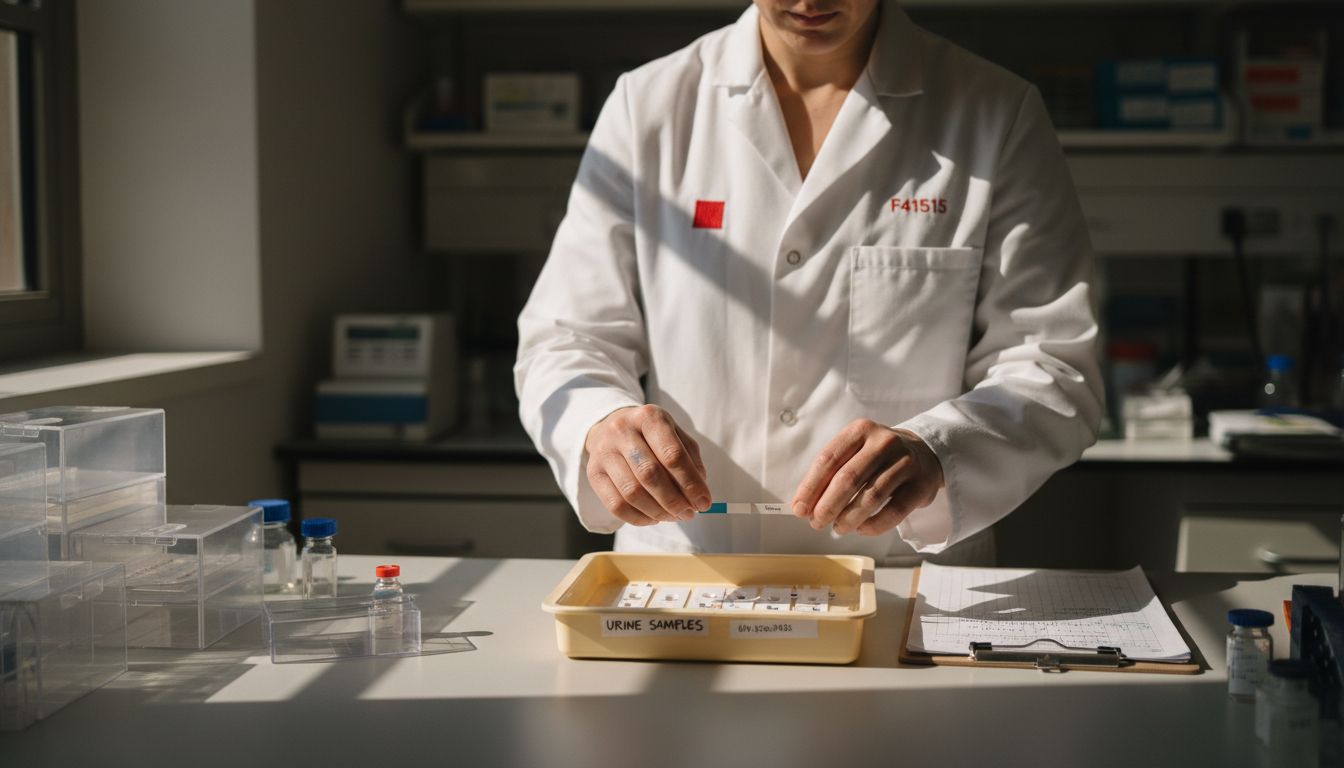
Each drug test strip type employs unique chemical reactants calibrated to recognize specific molecular signatures. Professionals must understand that while these strips provide rapid screening, they represent initial detection methods requiring confirmation through more advanced laboratory testing. Proper interpretation, understanding technological limitations, and recognizing potential cross-reactivity remain crucial for meaningful drug screening practices.
Step-by-Step Breakdown: How Drug Test Strips Work
Drug test strips represent precision diagnostic tools that utilize complex biochemical mechanisms to detect specific substances. Detailed analysis of urine immunoassay test strips reveals a sophisticated process of molecular identification that transforms simple chemical reactions into actionable diagnostic insights.
The operational sequence for drug test strips typically follows these critical stages:
- Sample Collection: Obtain an appropriate biological specimen (usually urine)
- Strip Preparation: Remove test strip from protective packaging
- Specimen Application: Immerse strip into sample or apply sample directly
- Chemical Reaction: Wait for designated time period (usually 2-5 minutes)
- Result Interpretation: Analyze color changes or marker indicators
Professional drug testing workflows depend on understanding the intricate immunoassay technology underlying these strips. The core mechanism involves specialized antibodies engineered to recognize specific drug molecular structures. When a target substance is present, these antibodies trigger a precise color change or marker reaction on the test strip, indicating potential drug presence.

The sensitivity and specificity of drug test strips depend on multiple factors. Research investigating test strip performance demonstrates that molecular interactions, antibody quality, and precise calibration significantly impact detection accuracy. Professionals must recognize that these strips provide screening, not definitive diagnosis, requiring confirmation through additional laboratory testing.
Each drug test strip contains carefully designed reactive zones containing immobilized antibodies matched to specific drug metabolites. When a biological sample contacts these zones, molecular interactions produce visual indicators revealing potential substance presence. Understanding these nuanced chemical processes allows healthcare providers, employers, and researchers to make informed decisions based on rapid, preliminary screening results.
Detection Times, Accuracy, and False Positives
Drug test accuracy involves a complex interplay of scientific precision and potential variability. Research examining urine adulterants reveals significant challenges in maintaining consistent screening reliability, with external substances potentially compromising test outcomes.
Detection times vary substantially across different substances:
- Marijuana: 3-30 days
- Cocaine: 2-10 days
- Amphetamines: 2-5 days
- Opioids: 2-4 days
- Alcohol: 12-48 hours
Common misconceptions about drug screening highlight the critical need for understanding potential sources of inaccuracy. False positives can emerge from multiple factors, including:
- Cross-reactivity with prescription medications
- Genetic variations in metabolic processing
- Contamination during sample collection
- Improper testing procedures
Professional drug testing protocols recognize that initial screening results represent preliminary indicators, not definitive conclusions. Confirmatory testing through advanced laboratory techniques remains essential for establishing absolute substance presence. The sensitivity of drug test strips typically ranges between 85-99%, depending on specific substance and testing methodology.
Understanding the nuanced landscape of drug test accuracy requires acknowledging inherent limitations. Factors like hydration levels, individual metabolism, and specific drug metabolites can significantly influence test results. Professionals must approach drug screening with a comprehensive perspective, recognizing that these tools provide valuable insights while simultaneously understanding their potential for variability and the critical importance of comprehensive evaluation.
Professional, Legal, and At-Home Use Cases
Drug test strips serve diverse applications across multiple domains, from professional screening environments to personal health management. Research on fentanyl test strips demonstrates their critical role in harm reduction strategies, highlighting the multifaceted nature of these diagnostic tools.
Professional use cases encompass several critical sectors:
- Workplace Drug Screening: Ensuring employee safety and productivity
- Healthcare Monitoring: Patient treatment compliance and substance abuse intervention
- Law Enforcement: Preliminary substance detection during investigations
- Forensic Investigations: Evidence collection and analysis
- Rehabilitation Centers: Client progress tracking and treatment support
Home drug testing strategies have emerged as a powerful tool for personal and family health management. These at-home screening methods enable individuals to proactively monitor potential substance use risks, providing an early intervention mechanism for concerned family members and personal health advocates.
Comprehensive evaluation of test strip effectiveness reveals nuanced applications across different environments. Legal considerations vary significantly, with workplace testing subject to strict regulatory frameworks, while personal testing operates under more flexible guidelines. Professionals must navigate complex legal landscapes, ensuring compliance with privacy regulations, consent requirements, and established testing protocols.
The evolving landscape of drug test strips reflects a broader commitment to public health, safety, and individual well-being. Whether deployed in professional settings or personal environments, these diagnostic tools represent a critical intersection of medical technology, harm reduction, and proactive health management. Understanding their appropriate use, limitations, and potential impacts remains essential for responsible implementation across diverse contexts.
Risks, Compliance, and Misuse to Avoid
Drug test integrity represents a critical professional and legal challenge requiring meticulous attention to potential vulnerabilities. Research on urine adulteration reveals sophisticated methods individuals might employ to circumvent standard screening protocols, underscoring the necessity for comprehensive detection strategies.
Common risks and potential misuse tactics include:
- Diluting biological specimens
- Introducing masking chemical agents
- Substituting sample materials
- Attempting temperature manipulation
- Using commercially available adulterant products
Consequences of drug testing deception can be severe and multifaceted, potentially resulting in:
- Immediate employment termination
- Legal prosecution
- Professional credential suspension
- Loss of custody rights
- Criminal investigation
Professional drug testing environments must implement robust verification protocols to mitigate potential manipulation attempts. These strategies include supervised collection procedures, temperature validation, visual specimen inspection, and advanced chemical screening for adulteration indicators. Laboratories and testing facilities should develop comprehensive detection mechanisms that anticipate and neutralize potential tampering techniques.
Ethical and legal compliance demands a holistic approach to drug screening. Organizations must balance rigorous testing procedures with individual privacy protections, ensuring that screening processes remain scientifically valid, legally defensible, and fundamentally respectful of human dignity. Training personnel, maintaining updated detection technologies, and establishing clear communication about testing expectations are essential components of a responsible drug screening framework.
Enhance Your Professional Drug Screening with Reliable Test Strips
Understanding how drug test strips work highlights the importance of accuracy, rapid results, and compliance in professional settings. Challenges like preventing sample adulteration and interpreting preliminary results require trusted tools designed for precision and ease of use. If you encounter difficulties selecting high-quality testing supplies that meet these standards, RapidTestCup offers an extensive range of FDA-approved, CLIA waived drug test cups, dip cards, and urine test strips tailor-made for healthcare providers, law enforcement, and substance abuse programs.
Take control of your drug screening process today with proven products that support reliable immunoassay technology, minimize false positives, and withstand tampering attempts. Visit RapidTestCup now to explore detailed product information, accessible pricing, and bulk options. Equip your team with the best drug screening solutions available and stay confident in every test result.
Frequently Asked Questions
How do drug test strips work?
Drug test strips work by utilizing immunoassay technology, where antibodies react with specific drug metabolites in a biological sample, typically urine. When a target substance is present, it triggers a visible color change or marker indication on the strip to signal a positive result.
What are the key benefits of using drug test strips in professional settings?
Drug test strips provide rapid results (typically within 3-5 minutes), high sensitivity to specific metabolites, the ability to detect multiple drugs simultaneously, and require minimal technical expertise for administration. This makes them practical and efficient for screenings in workplaces, clinics, and law enforcement.
What types of drugs can be detected with drug test strips?
Different types of drug test strips can detect various substances, such as amphetamines, benzodiazepines, cocaine, opioids, and more. Multi-panel test strips can simultaneously screen for several drug classes, making them versatile for comprehensive testing.
Are drug test strips accurate, and what can cause false positives?
Drug test strips typically exhibit a sensitivity range of 85-99%. However, false positives can occur due to cross-reactivity with prescription medications, contamination during sample collection, or improper testing procedures. Confirmatory testing is recommended for definitive diagnosis.