

Blog
How to Manage Drug Test Results in the Workplace


Balancing workplace safety and employee privacy can feel challenging for Human Resources managers in United States corporations. Drug test results carry significant weight, demanding careful attention to confidentiality and regulatory compliance at every step. With regulations guiding secure result handling and documentation, understanding the key elements of secure result management empowers you to uphold legal standards while supporting the health and well-being of your workforce.
Table of Contents
- Step 1: Set up Secure Drug Test Result Handling Protocols
- Step 2: Collect and Document Drug Test Information Accurately
- Step 3: Interpret Drug Test Results Using Standard Guidelines
- Step 4: Notify Stakeholders and Maintain Confidentiality
- Step 5: Verify Compliance and Address Test Discrepancies
Quick Summary
| Key Point | Explanation |
|---|---|
| 1. Secure handling protocols | Designate authorized personnel and ensure confidential data storage to protect employee privacy. |
| 2. Accurate documentation | Follow systematic procedures to accurately record drug test details, ensuring integrity and compliance. |
| 3. Standardized result interpretation | Use established guidelines and a thorough process to interpret test results and protect rights. |
| 4. Confidential stakeholder notification | Communicate results strictly on a need-to-know basis while maintaining employee privacy and legal compliance. |
| 5. Compliance and discrepancy resolution | Systematically address any test irregularities to maintain workplace safety and accountability. |
Step 1: Set up secure drug test result handling protocols
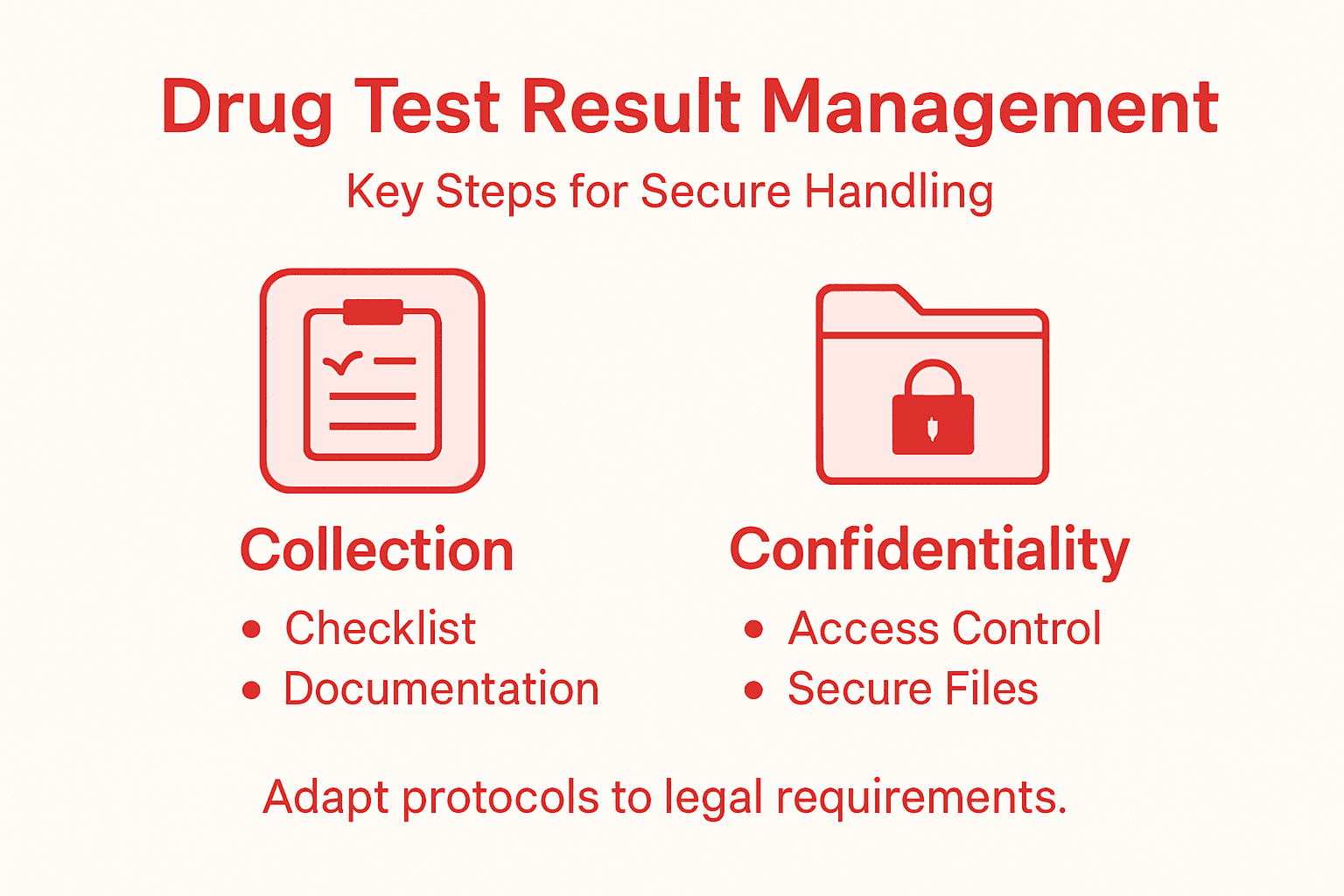
Securing drug test results requires a strategic approach to protecting employee privacy and maintaining workplace integrity. When managing sensitive medical information, your protocols must balance confidentiality with legal compliance.
Establishing robust handling procedures involves multiple critical components. Key elements of secure result management include:
- Designating a limited group of authorized personnel for result access
- Creating secure, restricted storage systems for physical and digital documents
- Implementing encrypted digital transmission methods
- Developing clear chain of custody documentation
Accurate drug testing workflow procedures demand meticulous attention to detail. Your protocol should specify exactly who can access results, how they are stored, and the precise steps for maintaining confidentiality. This means creating a comprehensive document that outlines every stage of result management, from initial collection to final reporting.
Workplace drug testing requires stringent security measures. Electronic records must be password protected, physical documents locked in secure filing systems, and access logs maintained to track every interaction with sensitive medical information.
Here is a summary of common risks and controls for secure drug test result handling:
| Risk Area | Potential Impact | Recommended Control |
|---|---|---|
| Unauthorized access | Employee privacy breach | Limit access to key staff |
| Data transmission errors | Loss or exposure of information | Use encrypted methods |
| Incomplete documentation | Legal non-compliance | Enforce audits regularly |
| Poor chain of custody | Result tampering risk | Track all interactions |
Strict confidentiality isn’t just best practice—it’s a legal requirement for protecting employee privacy.
Pro tip: Conduct periodic security audits of your drug test result handling procedures to identify and address potential vulnerabilities before they become systemic risks.
Step 2: Collect and document drug test information accurately
Accurate collection and documentation of drug test information is crucial for maintaining workplace safety and legal compliance. Your approach must be systematic, detailed, and designed to preserve the integrity of the testing process.
Key documentation requirements include carefully capturing all necessary details during specimen collection. Comprehensive collection procedures demand meticulous attention to several critical steps:
- Verify donor identity with government-issued photo identification
- Complete Federal Drug Testing Custody and Control forms precisely
- Record all relevant details about specimen collection conditions
- Ensure chain of custody documentation is thoroughly and accurately maintained
The collection process requires strict adherence to standardized protocols. This means implementing a systematic documentation workflow that leaves no room for errors or ambiguity. Each step must be carefully logged, with specific attention to:
- Donor identification verification
- Specimen collection method
- Any observations during collection
- Packaging and labeling of specimens
Accurate documentation is not just a bureaucratic requirement—it’s a critical safeguard for both employer and employee.
Workplace drug testing demands precision. Electronic and physical records must be completed with extreme care, capturing every relevant detail while maintaining the confidentiality of sensitive medical information.
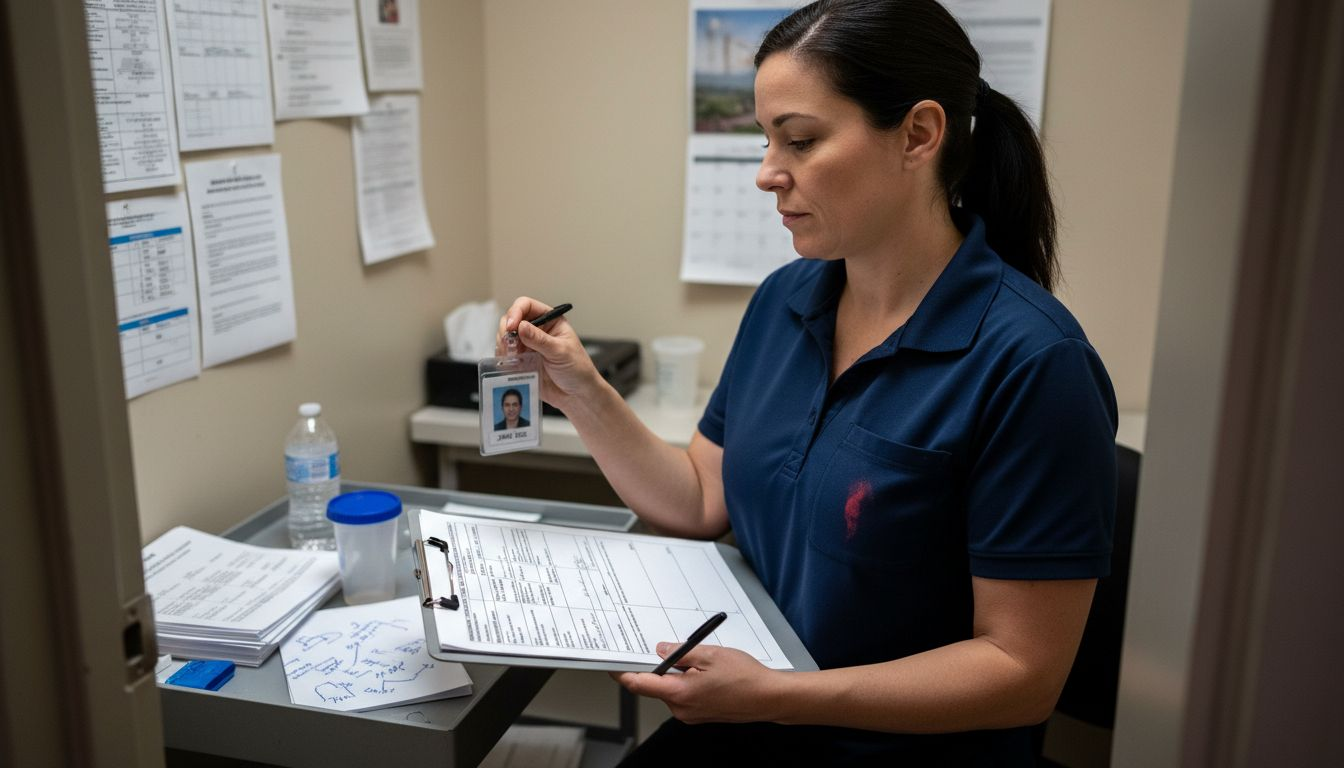
Pro tip: Develop a standardized checklist that guides collectors through each documentation step to minimize human error and ensure consistent, comprehensive record-keeping.
Step 3: Interpret drug test results using standard guidelines
Interpreting drug test results requires a precise and standardized approach that balances scientific accuracy with legal and workplace compliance. Your interpretation must be thorough, systematic, and aligned with established professional guidelines.
Medical review officer guidelines provide a comprehensive framework for evaluating workplace drug test outcomes. Key interpretation principles include:
- Distinguish between confirmed and initial screening results
- Verify positive results through comprehensive laboratory analysis
- Consider legitimate medical prescriptions and potential explanations
- Assess results within the context of specific workplace testing protocols
The interpretation process involves multiple critical steps that ensure accuracy and fairness:
Use this quick guide to differentiate types of drug test results and recommended actions:
| Result Type | Meaning | Next Step |
|---|---|---|
| Initial screen | Preliminary, not confirmed | Send for lab analysis |
| Confirmed positive | Verified presence of prohibited substance | Consult Medical Review Officer |
| Negative | No prohibited substances detected | Report to stakeholders |
| Inconclusive | Test cannot determine clear outcome | Re-test specimen |
- Review initial screening test results
- Confirm positive findings through secondary testing
- Consult with Medical Review Officer (MRO)
- Evaluate potential medical explanations
- Make final determination on test result status
Precise result interpretation protects both employee rights and workplace safety standards.
Workplace drug testing demands nuanced understanding. Important considerations include recognizing the difference between detected substances and actual impairment, understanding potential false positives, and maintaining strict confidentiality throughout the review process.
Pro tip: Always consult with a certified Medical Review Officer to ensure comprehensive and legally defensible interpretation of drug test results.
Step 4: Notify stakeholders and maintain confidentiality
Navigating the delicate process of communicating drug test results requires a careful balance between transparency and protecting individual privacy. Your approach must prioritize discretion, legal compliance, and professional respect for all parties involved.
Federal regulations mandate secure record retention and limit access to sensitive testing information. Key notification principles include:
- Communicate only with authorized personnel
- Share results on a strict need-to-know basis
- Protect employee medical privacy
- Follow established organizational protocols
The notification process involves several critical steps:
- Identify authorized stakeholders
- Determine appropriate communication channels
- Prepare confidential written communication
- Document all interactions and disclosures
- Securely store communication records
Confidentiality isn’t just a policy—it’s a fundamental right of every employee.
Confidential communication strategies require careful consideration of who receives information, how it’s transmitted, and what specific details are shared. Electronic communications must be encrypted, physical documents locked, and verbal discussions conducted in private settings.
Pro tip: Create a standardized communication template that ensures consistent, legally compliant messaging while protecting individual privacy.
Step 5: Verify compliance and address test discrepancies
Ensuring the integrity of your drug testing program requires a systematic approach to identifying and resolving potential irregularities. Your goal is to maintain rigorous standards while providing a fair and transparent process for all parties involved.
Drug testing compliance procedures provide a comprehensive framework for addressing unexpected test results. Key compliance verification steps include:
- Investigate any unusual or inconsistent test outcomes
- Verify the integrity of specimen collection procedures
- Review potential medical explanations for unexpected results
- Consult with Medical Review Officers for definitive interpretations
- Document all investigation processes thoroughly
The discrepancy resolution process involves several critical actions:
- Identify the specific nature of the test irregularity
- Gather all relevant documentation
- Conduct a comprehensive internal review
- Engage Medical Review Officer for expert assessment
- Determine appropriate follow-up actions
Compliance is not about punishment—it’s about maintaining workplace safety and individual accountability.
Addressing test discrepancies requires a nuanced approach that balances scientific precision with human understanding. This means looking beyond simple positive or negative results and considering the full context of each unique situation.
Pro tip: Create a standardized discrepancy investigation checklist that ensures consistent, objective, and legally defensible handling of unusual drug test results.
Secure Your Workplace Drug Testing Process with Trusted Supplies
Managing drug test results in the workplace requires precision, confidentiality, and compliance. This article highlights critical challenges such as secure result handling, accurate documentation, and reliable interpretation to protect both employees and employers. If you are looking to build strong protocols that minimize risks like unauthorized access or data transmission errors, having the right drug testing supplies tailored to your needs is essential.
Discover a comprehensive selection of high-quality, FDA-approved drug test cups, specimen collection kits, and adulterant detection tools at RapidTestCup. Our affordable, CLIA waived products support your efforts to maintain strict chain of custody and ensure accurate compliance from collection through reporting. Visit RapidTestCup today and equip your workplace with trusted solutions that help you confidently navigate drug testing results management while prioritizing employee privacy and legal standards.
Frequently Asked Questions
How should I set up protocols for secure drug test result handling?
Establish protocols by designating a limited group of authorized personnel who can access drug test results. Implement secure storage solutions for physical and digital documents and ensure that you use encrypted methods for digital transmission. Conduct periodic security audits to identify and address any potential vulnerabilities.
What key information should I document during the drug test collection process?
During the specimen collection process, capture essential details such as the donor’s identity using government-issued photo identification, and complete the necessary custody and control forms accurately. Ensure that you document all relevant observations and maintain a thorough chain of custody to safeguard against discrepancies later on.
How can I accurately interpret drug test results?
To interpret drug test results accurately, differentiate between confirmed and initial screening results, and consult a Medical Review Officer for verification of positive results. Document each step of the interpretation process, ensuring that you consider any legitimate medical explanations for positive results to maintain fairness and compliance within the workplace.
What should I do to maintain confidentiality when notifying stakeholders about test results?
When notifying stakeholders, communicate only with authorized personnel and share results on a strict need-to-know basis. Use confidential written communication and document all interactions regarding drug test results to ensure compliance with privacy regulations and protect employee rights.
How do I handle discrepancies in drug test results?
To handle discrepancies, start by identifying the nature of the irregularity, then gather all relevant documentation for an internal review. Consult with a Medical Review Officer for expert assessment and take necessary follow-up actions based on the comprehensive findings to ensure workplace safety and accountability.