

Blog
Drug Testing Accuracy: What Labs Must Know


Choosing accurate drug testing methods can feel risky when a single false result might impact patient care or legal decisions. The difference between screening and confirmatory tests shapes outcomes in every laboratory across the United States and Canada. This article breaks down the science behind testing accuracy, explains common sources of error, and guides you in building reliable, compliant protocols for clinical and forensic drug testing.
Table of Contents
- Drug Testing Accuracy Defined and Debunked
- What Accuracy Actually Means in Laboratory Testing
- Why Screening Tests Fall Short
- The Adulterant Problem That Labs Can’t Ignore
- Screening vs. Confirmation: Key Differences
- How Screening Tests Work
- What Confirmatory Testing Actually Proves
- The Workflow That Matters
- Biological Sample Types and Their Impact
- Understanding Each Sample Type
- Choosing the Right Sample for Your Context
- Matrix-Specific Accuracy Considerations
- Common Sources of Error and False Results
- Ensuring Quality Control and Regulatory Compliance
Key Takeaways
| Point | Details |
|---|---|
| Understanding Accuracy | Drug testing accuracy involves precise and sensitive identification of substances, requiring a two-step process of screening and confirmation to avoid false results. |
| Screening vs. Confirmation | Screening tests are fast and cost-effective but may produce false positives; confirmatory testing is essential for definitive results and legal defensibility. |
| Sample Type Selection | Choosing the appropriate biological sample type is critical for accurate results, as different matrices provide different detection windows and reliability. |
| Quality Control Importance | Robust quality control systems are essential to detect errors, maintain accuracy, and ensure compliance with regulatory standards. |
Drug Testing Accuracy Defined and Debunked
Accuracy in drug testing means getting reliable, defensible results that correctly identify whether a substance is present or absent in a specimen. But accuracy isn’t a simple yes-or-no proposition. Your lab must understand what accuracy actually measures, why different testing methods produce different results, and what can go wrong at every stage. The stakes are high in clinical and forensic settings, where a single error can affect patient treatment decisions, employment outcomes, or even criminal proceedings.
When people talk about drug testing accuracy, they’re usually conflating two different things: screening tests and confirmatory tests. Screening tests like immunoassays cast a wide net, looking for drug metabolites quickly and affordably. Confirmatory tests like gas chromatography-mass spectrometry provide definitive identification with minimal false positives. The problem? Many labs and enforcement agencies treat preliminary screening results as conclusive evidence without confirmation, which is where accuracy breaks down.
Here’s where the real confusion happens: presumptive field tests used in law enforcement settings carry significant accuracy concerns. Presumptive field drug tests are designed only as preliminary indicators, yet they frequently drive major decisions without confirmatory laboratory verification. These tests generate false positives that implicate innocent people and contribute to wrongful arrests and convictions, perpetuating serious miscarriages of justice.
Your laboratory’s responsibility is different. You control the testing methodology, the quality assurance protocols, and the tiered approach that separates screening from confirmation. Understanding the distinction between these methods shapes how you interpret results and communicate findings.
What Accuracy Actually Means in Laboratory Testing
Accuracy refers to how closely a test result matches the true state of the specimen. A test can be precise (producing consistent results) while being inaccurate (consistently wrong), or it can be accurate but imprecise. Your lab needs both.
Key accuracy metrics you should track:
- Sensitivity: The percentage of truly positive specimens your test correctly identifies. Missing real positives is expensive and dangerous in clinical settings.
- Specificity: The percentage of truly negative specimens your test correctly identifies. False positives damage patient trust and create unnecessary interventions.
- Positive predictive value: The likelihood that a positive result actually indicates drug presence. This is what clinicians and employers actually care about.
- Negative predictive value: The likelihood that a negative result truly means the drug is absent.
These metrics aren’t constant across different drug classes, concentrations, or specimen types. A test might perform excellently for detecting cocaine at typical levels but struggle with synthetic opioids or novel compounds.
Accuracy without proper confirmatory testing is a dangerous illusion. Two-step testing—screening followed by confirmation—is what separates reliable results from potentially destructive false conclusions.
Why Screening Tests Fall Short
Immunoassay screening tests use antibodies to detect drugs or their metabolites. They’re fast, relatively inexpensive, and suitable for high-volume facilities. But immunoassays have blind spots. Cross-reactivity occurs when structurally similar compounds trigger positive results for drugs that aren’t actually present. A screening test for benzodiazepines might cross-react with certain over-the-counter cold medications. A barbiturate screening could flag compounds that aren’t barbiturates at all.
False positives in screening represent one category of inaccuracy. False negatives represent another, though they’re less frequently discussed. Some drug metabolites appear in urine at concentrations below your test’s detection threshold, particularly if the specimen is diluted or time has elapsed since drug use.
This is why screening accuracy depends critically on your cutoff concentrations. Higher cutoffs reduce false positives but miss some true positives. Lower cutoffs catch more actual drug use but increase false positives. Laboratories must balance these competing pressures based on your specific use case.
- Workplace testing often uses higher cutoffs to reduce false positives and defend against litigation
- Pain management clinics frequently use lower cutoffs to detect medication misuse more sensitively
- Forensic settings require ultra-specificity because the consequences of errors are profound
The Adulterant Problem That Labs Can’t Ignore
One of the most underestimated accuracy threats is specimen adulteration. Sophisticated adulterants designed to interfere with drug testing have become increasingly common. Some mask the presence of drugs. Others attempt to destroy drug metabolites chemically. Still others trick immunoassays into producing false negatives.
Detecting adulterants accurately requires testing your specimens with tests designed to identify adulterants and contaminants. Standard immunoassay screening doesn’t catch many adulterants. You need dedicated testing for common interferents like:
- Oxidizing agents that destroy drug metabolites
- pH modifiers that denature immunoassay reagents
- Nitrite-containing products marketed specifically as “masking” agents
- Synthetic urine products that increasingly mimic real specimens
Accuracy in modern drug testing absolutely demands a multi-tiered approach. Immunoassay screening catches the basics. Confirmatory testing like gas chromatography-mass spectrometry provides definitive answers. Adulterant testing ensures the specimen itself is legitimate. Skip any tier, and your accuracy becomes compromised.
Adulterants are evolving faster than many labs’ detection methods. Regular validation and updates to your adulterant testing panel aren’t optional—they’re foundational to maintaining accuracy.
Pro tip: Establish a three-part testing protocol for all specimens: immunoassay screening, confirmatory testing for positives, and adulterant screening on every sample. This tiered approach catches the majority of accuracy issues before results reach your clients.
Screening vs. Confirmation: Key Differences
Screening and confirmation testing serve fundamentally different purposes, yet many labs and clinicians treat them as interchangeable. They’re not. Screening tests cast a wide net, prioritizing speed and sensitivity to catch anything that might be a drug. Confirmatory tests narrow the focus, prioritizing specificity and accuracy to definitively identify what’s actually present. Understanding when to use each method, and why you absolutely cannot skip the second step, is critical to accurate drug testing.
The two-tiered approach exists for a reason. Screening tests are designed to be highly sensitive but deliberately sacrifice specificity to minimize missed positives. Presumptive testing methods use quick colorimetric reactions or immunoassays that flag any specimen potentially containing a target drug. These preliminary tests are inexpensive, fast, and suitable for high-volume settings where you need to process hundreds of samples daily. But they come with a cost: false positives occur regularly, meaning innocent people or compliant patients test positive for drugs they never used.
Confirmatory testing flips the priority. Advanced instrumental techniques like gas chromatography-mass spectrometry (GC-MS) and Fourier transform infrared spectroscopy (FTIR) provide definitive drug identification with minimal false positives. These methods don’t just detect the presence of a substance—they identify its exact chemical structure, distinguish between closely related compounds, and provide evidence admissible in court. But they’re more expensive, take longer, and require skilled technicians to operate and interpret. You can’t screen every sample this way. Instead, you confirm the positives from your screening phase.
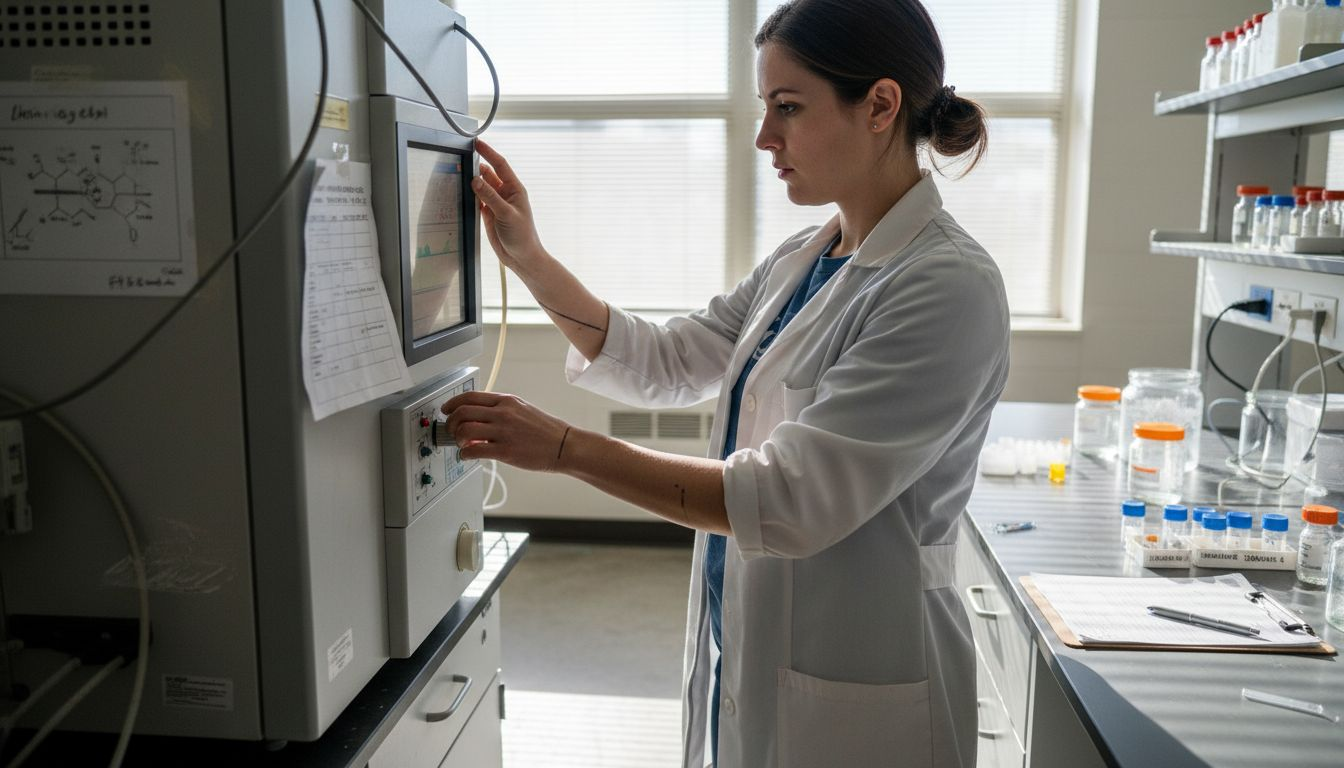
This two-step workflow solves a real problem. If you only screen, you’ll report false positives that damage patient care and create liability. If you only confirm, your lab becomes a bottleneck and costs explode. The balanced approach screens everything affordably, then confirms the positives definitively.
How Screening Tests Work
Screening tests prioritize sensitivity over specificity. Sensitivity measures how many true positives your test catches. A test with 95% sensitivity misses 5% of actual drug use. That’s acceptable for screening because you’re casting a safety net. Missing some true positives now is okay because you’ll confirm the ones you do catch.
Immunoassay screening tests work by binding drug metabolites to antibodies. The reaction produces a color change or signal proportional to the drug concentration. These tests are:
- Fast: Results in minutes
- Inexpensive: Cost per test ranges from a few cents to a few dollars
- Portable: Can run in point-of-care settings like clinics or workplaces
- Sensitive: Detect drugs even at low concentrations
But immunoassays have significant limitations. Cross-reactivity occurs when the test mistakes structurally similar compounds for the target drug. A benzodiazepine screening might cross-react with certain antihistamines. Ephedrine can trigger positive results on amphetamine screens. These false positives feel like accuracy failures, but they’re actually screening doing exactly what it’s designed to do: cast a wide net and flag anything suspicious.
Screening tests also lack the ability to distinguish between different drugs in the same class. An opioid screen might test positive for heroin, prescription painkillers, or even poppy seed consumption. You can’t tell which from the screening result alone.
Screening tests are intentionally sensitive but nonspecific. Treating a positive screening result as a final answer is scientifically indefensible and clinically dangerous.
What Confirmatory Testing Actually Proves
Confirmatory testing serves one purpose: absolute identification. Gas chromatography-mass spectrometry separates drugs by molecular weight and then ionizes them to create a unique fragmentation pattern. That pattern is specific to each drug. No cross-reactivity. No ambiguity. You either have the drug or you don’t.
GC-MS and similar confirmatory methods:
- Identify specific drugs and their metabolites with certainty
- Distinguish between similar compounds in the same class
- Measure concentration levels with precision
- Produce results defensible in legal proceedings
- Cost significantly more per test ($50-$300 depending on complexity)
- Require sophisticated equipment and trained technicians
Fourier transform infrared spectroscopy (FTIR) represents another confirmatory approach, analyzing how substances absorb infrared light. Like GC-MS, it creates a unique spectral fingerprint for each drug. Both methods are far more specific than screening, but both require careful sample preparation and expert interpretation.
The critical difference: confirmatory results stand alone. A confirmed positive is a confirmed positive. You don’t need a third test to validate a GC-MS result. That certainty is exactly why confirmatory testing exists.
The Workflow That Matters
Your lab should operate this way:
- Screen every specimen using a method appropriate for your volume and client needs. Urine cups, dip cards, or immunoassay analyzers all work at this stage.
- Report all negative screening results with confidence. These specimens don’t require further testing in most clinical scenarios.
- Confirm all positive screening results using GC-MS, FTIR, or another definitive method before releasing final results.
- Report confirmed positives as final results backed by instrumental analysis.
- For any screening positive that fails confirmation, report as negative. The screening was wrong.
This workflow prevents false positives from reaching your clients while keeping costs reasonable. High-quality urine drug test cups and dip cards handle screening efficiently. Reserve expensive confirmatory testing for specimens that actually need it.
The two-tier approach isn’t extra work—it’s the only scientifically valid way to produce accurate drug testing results that clients can trust and defend.
Pro tip: Always confirm positive results before notifying patients or employers, even if your protocol doesn’t technically require it. This single practice prevents almost all drug testing liability and protects your lab’s reputation.
Biological Sample Types and Their Impact
The biological matrix you choose for drug testing determines what you’ll detect, when you’ll detect it, and how reliable your results will be. Urine, blood, saliva, and hair each tell different stories about drug use and require different testing approaches. A negative urine test doesn’t mean the same thing as a negative hair test. Choosing the wrong sample type for your clinical or forensic question can produce results that are technically accurate but practically useless or even misleading.
Each sample type has a specific detection window—the timeframe during which drugs remain detectable. Urine testing catches recent use, typically 2 to 5 days after consumption depending on the drug and metabolism rate. Blood testing shows more recent use, often just hours to 1 to 2 days. Hair testing reveals chronic use over months, looking back as far as 90 days or more. Saliva testing falls somewhere in between, detecting use from hours to a few days prior. This means your choice of sample directly answers different clinical questions. If you need to know whether a patient took their pain medication yesterday, urine works. If you need to know whether they’ve been abusing opioids for weeks, hair is more informative.
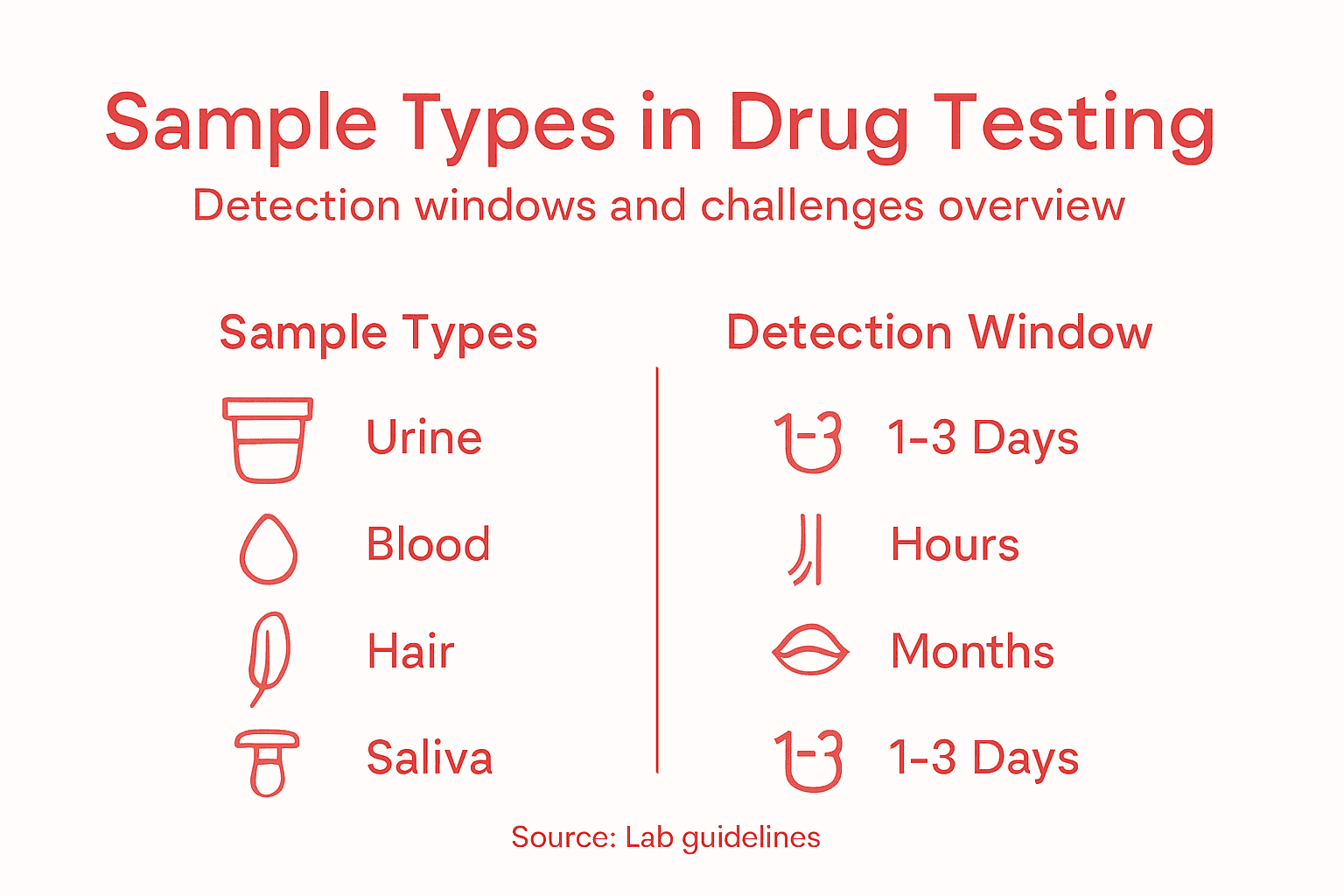
But detection windows are only part of the story. Validated bioanalytical methods for different biological matrices must account for how each sample type behaves during collection, handling, and storage. Urine is relatively stable if kept cool, but bacterial growth and chemical degradation occur over time. Blood requires anticoagulants and proper refrigeration or it becomes unreliable. Hair doesn’t degrade quickly but requires specialized extraction methods. Saliva can be contaminated by food, drink, or oral medications. Each matrix presents unique challenges that affect sensitivity and specificity.
Understanding Each Sample Type
Urine testing remains the gold standard for most clinical drug screening because it’s noninvasive, abundant, and relatively stable. Detection windows extend 2 to 5 days for most drugs. Urine concentrations of drug metabolites often exceed blood concentrations, making detection easier and more sensitive. The downside? Urine can be diluted, adulterated, or substituted more easily than other matrices. Hydration status, kidney function, and pH all influence how long metabolites remain detectable.
Blood testing provides the most recent picture of drug use. Detecting drugs in blood means active use occurred within hours or days, not weeks. This makes blood ideal for driving under the influence (DUI) testing or monitoring medication compliance in real time. But blood collection is invasive, which many patients resist. Blood also requires careful handling with anticoagulants, and drug concentrations can be lower than in urine, making detection more challenging.
Hair testing extends the detection window dramatically. Hair grows approximately half an inch per month, and drugs incorporated into hair shafts persist for months. Testing the first 1.5 inches of hair reveals drug use from roughly the past 3 months. This makes hair ideal for long-term monitoring or detecting chronic abuse patterns. The challenge? Hair testing is expensive, requires specialized laboratory processing, and can be affected by hair color, treatment, and environmental contamination.
Saliva testing offers a middle ground. Detection windows extend 24 to 72 hours for most drugs. Saliva collection is noninvasive and harder to adulterate than urine, making it attractive for workplace testing. But saliva concentrations of drugs are typically lower than in urine or blood, reducing sensitivity. Food, drink, and oral medications can contaminate samples.
Each sample type requires different validation approaches. The FDA and professional guidelines emphasize that selecting appropriate sample types and volumes affects assay performance. A screening method validated for urine cannot simply be applied to blood or saliva without revalidation. Different matrices have different stability profiles, different interference patterns, and different metabolite concentrations.
Here’s how key biological sample types compare in drug testing:
| Sample Type | Detection Window | Collection Complexity | Common Accuracy Challenge |
|---|---|---|---|
| Urine | 2–5 days | Easy, noninvasive | Dilution and adulteration |
| Blood | Hours to 2 days | Invasive, skilled | Low drug concentration |
| Hair | Up to 90 days | Moderate, specialized | Environmental contamination |
| Saliva | 24–72 hours | Easy, noninvasive | Food/medication interference |
Choosing the Right Sample for Your Context
Your clinical or forensic question should drive your sample type selection:
- Workplace compliance: Urine screening with confirmatory testing catches recent use cost-effectively
- Pain management monitoring: Urine testing weekly or monthly detects medication misuse and nonprescription drug use
- DUI investigation: Blood testing provides the most defensible evidence of recent impairment
- Chronic abuse assessment: Hair testing reveals patterns of use over months
- Point-of-care screening: Saliva testing offers noninvasive, rapid results with lower contamination risk
- Medication adherence in hospital: Blood or urine testing confirms whether patients took prescribed doses
Sample handling becomes critical the moment you collect. Urine must be kept cool and processed within specific timeframes. Blood requires proper anticoagulants and temperature control. Hair needs protection from environmental contamination. Saliva collection must follow strict protocols to prevent food or drink contamination. Any deviation from validated collection and handling procedures compromises accuracy, regardless of how good your lab’s confirmatory testing is.
Your sample type choice locks in your detection window and your sensitivity. Choose wrong, and accurate results become irrelevant because they answer the wrong question.
Matrix-Specific Accuracy Considerations
Different sample types present different accuracy challenges. Urine testing faces dilution and adulteration. Blood testing struggles with lower drug concentrations and requires invasive collection. Hair testing must account for environmental contamination and individual variations in incorporation rates. Saliva faces interference from oral hygiene products and food residue.
The important principle: validate your methods separately for each matrix you use. A GC-MS method validated for urine may not perform identically for blood. Cutoff concentrations appropriate for urine may be too high or too low for hair. Your quality assurance program must address matrix-specific challenges.
Consider also that different populations metabolize drugs at different rates. Genetic variations, age, organ function, and medications all influence how long metabolites remain detectable. What appears as a negative result in one patient might be a true negative in another based purely on individual metabolism. The sample type you choose and the interpretation window you establish must account for this biological reality.
Pro tip: When designing your testing program, use urine for initial screening and recent-use detection, but reserve hair testing for assessing chronic patterns and detecting deception where patients claim they haven’t used recently. Combining sample types gives you the complete picture of actual drug use behavior.
Common Sources of Error and False Results
False positives and false negatives don’t happen by accident. They result from specific, identifiable failures in testing methodology, sample handling, or interpretation. Understanding these common sources of error helps you build systems that catch mistakes before results reach patients or employers. Some errors are technical. Others are procedural. The most dangerous ones are systemic—built into how your lab operates.
The most obvious source of error is relying on screening tests without confirmation. Presumptive field tests produce false positives due to cross-reactivity and poor specificity, yet many labs and enforcement agencies treat screening results as conclusive. A benzodiazepine immunoassay flags a specimen positive. The clinician assumes the patient took a benzodiazepine. But what if the positive came from a cross-reaction with a common antihistamine the patient took for allergies? Without confirmatory testing, you’ll never know. This scenario plays out thousands of times daily in clinical settings.
Cross-reactivity happens when a screening test antibody binds to compounds structurally similar to the target drug. The test wasn’t designed to detect those compounds, but they trigger a positive reaction anyway. Certain over-the-counter medications, supplements, and even foods can cause cross-reactions depending on your test’s specificity. Ephedrine triggers amphetamine screens. Poppy seeds trigger opioid screens. Sertraline (an antidepressant) can trigger benzodiazepine screens on some immunoassays. These aren’t rare edge cases. They’re common occurrences that contaminate your results unless you confirm positives.
Beyond cross-reactivity, procedural failures such as improper reagent handling, sample contamination, and lack of validation create surges in false positive rates. When laboratories change reagents, modify procedures, or skip validation steps to save time or money, accuracy suffers. A major testing facility once changed an immunoassay reagent without proper validation and saw false positive rates spike dramatically, affecting thousands of individuals. The lab had cut corners on validation to accelerate testing. The consequences were profound.
Technical Sources of Error
Cross-reactivity remains the single largest technical source of false positives in immunoassay screening. Your antibodies are specific, but not perfectly specific. They bind most strongly to the target drug but also bind weakly to structurally similar compounds.
Common cross-reactants include:
- Over-the-counter decongestants and antihistamines triggering amphetamine or benzodiazepine screens
- Prescription antidepressants triggering benzodiazepine or barbiturate screens
- Poppy seed consumption triggering opioid screens
- Common NSAIDs and supplements interfering with various drug assays
- Herbal supplements containing compounds similar to banned drugs
Cutoff concentrations heavily influence false positive rates. Lower your cutoff, and you catch more true positives but also more false positives from cross-reactants. Raise your cutoff, and false positives decrease but you miss genuine drug use. Most labs use standard cutoff concentrations established by regulatory bodies, but those standards represent a compromise between sensitivity and specificity that won’t fit every clinical scenario.
Specimen degradation occurs when samples aren’t stored or handled properly. Urine samples left at room temperature develop bacterial growth that breaks down drug metabolites. Blood samples without proper anticoagulants clot and become useless. Hair samples exposed to moisture may degrade over time. Saliva samples contaminated with food residue interfere with testing. Each delay in processing, each temperature fluctuation, each exposure to light or air degrades your specimen’s integrity and accuracy.
Procedural and Systemic Errors
Many false results stem not from technical limitations but from how labs handle samples and manage processes. Sample mix-ups occur when labels aren’t read carefully or specimens aren’t tracked through every step. A positive result gets reported for patient A when it actually belongs to patient B. Chain-of-custody errors allow specimens to be altered or contaminated between collection and testing. Reagent preparation mistakes introduce contamination. Quality control materials run improperly. Calibration standards expire without replacement.
Validation gaps represent another critical failure point. When you change a reagent, modify a procedure, or switch testing platforms, you must revalidate your methods. Many labs skip this step to save time and money. They assume the new reagent or procedure performs identically to the old one. Often they’re wrong. That assumption has led to cascading false positive rates across multiple facilities using the same flawed reagent.
Instrument maintenance failures create systematic bias. A mass spectrometer running out of calibration produces inaccurate confirmatory results. An immunoassay analyzer with contaminated reagent lines triggers false positives on every sample. Preventive maintenance isn’t glamorous, but missing it costs you accuracy and client trust.
The difference between accurate testing and inaccurate testing often comes down to discipline in procedures that seem tedious. Your quality control program, your equipment maintenance schedule, and your validation protocols directly determine whether results are defensible or dangerous.
Sample Handling and Adulteration
Sample adulteration represents an intentional source of error. Sophisticated adulterants designed to interfere with drug testing have become increasingly common. Oxidizing agents destroy drug metabolites chemically. Surfactants suppress immunoassay reactions. Synthetic urine products increasingly mimic real specimens. Without dedicated adulterant testing, these sophisticated specimens pass through your screening phase and produce false negatives.
Dilution occurs when patients drink excessive water to dilute their urine and reduce drug metabolite concentrations below detection thresholds. This isn’t adulteration in the technical sense, but it’s intentional manipulation. Your lab should test for dilution using creatinine levels and specific gravity measurements. A dilute negative is not the same as a true negative.
Contamination happens during collection, storage, or processing. A patient’s urine specimen touches a surface contaminated with another patient’s sample. A technician handles a specimen without gloves. Environmental contaminants enter during processing. Any contamination can introduce foreign drugs or interfere with testing accuracy.
This table summarizes main sources of error affecting drug test results:
| Error Type | Typical Cause | Possible Consequence |
|---|---|---|
| Cross-reactivity | Medications or supplements | False positive results |
| Specimen degradation | Improper storage | False negative or invalid data |
| Procedural mistakes | Label mix-ups, poor tracking | Wrong patient result reported |
| Adulteration | Deliberate tampering | Drug use hidden or missed |
Quality Assurance as Your Defense
Robust quality control catches these errors before they reach your clients. Run positive and negative controls with every batch. Use proficiency testing materials to verify your methods perform as expected. Maintain detailed logs of equipment maintenance and calibration. Document every procedure change and revalidate before implementing. Implement blind quality control samples mixed into your regular workflow. These aren’t bureaucratic overhead. They’re your defense against the errors that destroy accuracy and damage lives.
Your lab’s documentation matters too. If an error occurs and you can demonstrate you followed validated procedures, used appropriate controls, and maintained proper chain-of-custody, you have a defensible position. If documentation is incomplete or missing, even accurate results become questionable in the eyes of clinicians and legal systems.
Pro tip: Implement a post-analysis review step where staff members other than the testing technician verify critical results before release. This simple second-check catches many procedural errors and cross-reactivity issues that might otherwise produce false results.
Ensuring Quality Control and Regulatory Compliance
Quality control and regulatory compliance aren’t separate concerns—they’re inseparable. Your lab’s ability to produce accurate results depends entirely on how well you follow established protocols, document your work, and respond when things go wrong. Regulators don’t care about good intentions. They care about evidence that you’re doing things right, consistently, every single day. That evidence comes from your quality control program and your compliance infrastructure.
Regulatory frameworks like Good Laboratory Practice (GLP) establish minimum standards for how drug testing labs must operate. Good Laboratory Practice guidelines establish international principles for quality assurance20/en/pdf) including proper study planning, sample handling, documentation, audit trails, and personnel training. These aren’t bureaucratic boxes to check. They’re proven systems that prevent the exact errors and oversights that produce false results. When a lab follows GLP principles, data integrity improves. When they cut corners, accuracy suffers.
Your lab operates within multiple regulatory frameworks depending on your location and clients. Clinical labs must meet Clinical Laboratory Improvement Amendments (CLIA) standards. Forensic labs must satisfy Scientific Working Group for the Analysis of Seized Drugs (SWGDRUG) guidelines. Workplace testing labs follow Department of Transportation (DOT) standards if they test transportation workers. Each framework has specific requirements for equipment, personnel training, quality control procedures, documentation, and proficiency testing.
Ignoring these frameworks isn’t an option. Regulators conduct inspections, review your documentation, and test your procedures. They’re looking for evidence that you follow validated methods, maintain proper quality controls, document deviations, and investigate errors. A single inspection failure can result in loss of certification, which destroys your business. Beyond legal consequences, poor compliance directly enables the inaccuracy that harms patients and perpetuates injustice.
Building Your Quality Control Program
Quality control means running tests and procedures to verify your methods perform as expected. This happens at multiple levels. Positive and negative controls run with every batch of samples, confirming your immunoassays and confirmatory equipment function properly. A positive control should test positive. A negative control should test negative. If either fails, something is wrong with your reagents, equipment, or procedure. You stop and investigate before processing patient samples.
Proficiency testing involves running samples from external providers that you don’t know the answer to. You test them like regular samples, report your results, and the provider tells you whether you’re right. These blind proficiency samples keep you honest. They catch systematic errors you might miss using only your internal controls. Most regulatory frameworks require participation in proficiency testing programs, typically quarterly or annually.
Equipment maintenance and calibration protects your results at the technical level. Your immunoassay analyzers need calibration verification before use. Your mass spectrometer needs regular maintenance and performance checks. Your refrigerators storing samples need temperature monitoring. Document all of this. If equipment fails or drifts out of calibration, you have evidence to investigate which samples might be affected and which results should be repeated or reported with caveats.
Key elements of an effective quality control program:
- Daily positive and negative controls for screening methods
- Monthly or quarterly internal quality control samples covering your entire assay range
- Quarterly proficiency testing participation with documented review of results
- Equipment maintenance logs and calibration certificates
- Temperature logs for all refrigerators and freezers storing samples
- Documentation of all reagent lot numbers, expiration dates, and performance
- Personnel competency assessment and training records
- Procedures for investigating out-of-range results and equipment failures
Quality control isn’t a cost center—it’s your insurance policy against the false results that destroy accuracy and damage lives.
Compliance Infrastructure That Protects You
Compliance means following established procedures consistently and documenting that you did. Your lab must have written policies covering everything from specimen collection procedures to confirmatory testing methods to result reporting. These aren’t suggestions. They’re requirements you must follow, and you must prove you followed them.
Chain-of-custody documentation tracks every specimen from collection through testing and reporting. Who collected it? When? Who handled it? Where was it stored? Who tested it? When were results reported? If a result is ever questioned, complete chain-of-custody documentation proves the specimen wasn’t lost, mixed up, or contaminated along the way.
Deviation reporting and investigation happens when something goes wrong. A control fails. Equipment breaks down. A reagent shows unexpected behavior. Your procedure requires documenting the deviation, investigating the cause, determining which samples are affected, and deciding whether to repeat testing or investigate further. This documentation demonstrates to regulators that you catch problems and fix them rather than hiding them.
Personnel training and competency verification ensures everyone on your staff knows how to collect, handle, test, and report on specimens properly. Document training dates, content, and competency assessments. Train staff initially and annually refresh their knowledge. Competency means they can actually perform their job correctly, not just that they sat through a training session.
Your Standard Operating Procedures (SOPs) document exactly how your lab does everything. How to collect urine specimens. How to prepare samples for testing. How to run immunoassay screens. How to analyze confirmatory results. How to investigate deviations. How to report results. SOPs aren’t flexible. You follow them as written, and if you discover a better way to do something, you formally update the SOP, validate the change, and train staff on the new procedure. This formality prevents the dangerous practice of people doing things “the way we’ve always done it” rather than following validated procedures.
Preparing for Regulatory Inspection
Regulatory inspections happen unannounced or with short notice. Inspectors review your documentation, observe your processes, and may interview your staff. They’re looking for evidence that you follow your own procedures and meet regulatory standards.
Preparation means:
- Having all documentation readily accessible and organized
- Keeping training records current for all staff
- Maintaining complete equipment maintenance logs and calibration certificates
- Documenting all quality control results and proficiency testing outcomes
- Having written procedures for everything your lab does
- Investigating and documenting all deviations promptly
- Maintaining proper chain-of-custody for all specimens
- Keeping reagent and supply records showing lot numbers and expiration dates
Inspectors know that no lab is perfect. They understand that equipment breaks down and things occasionally go wrong. What they’re evaluating is whether you have systems in place to catch problems, whether you investigate deviations, and whether you document everything. A lab that quickly identifies a problem, investigates it thoroughly, and implements corrective action impresses inspectors. A lab that hides problems or makes excuses does not.
Pro tip: Conduct a mock regulatory inspection internally every two years. Have someone outside your department review your documentation, observe your processes, and identify gaps before actual regulators do. This practice catches compliance issues before they become inspection findings.
Enhance Your Lab’s Drug Testing Accuracy with Reliable Supplies
Achieving true accuracy in drug testing requires more than just understanding screening and confirmatory methods. It demands high-quality, validated supplies designed to minimize cross-reactivity, detect adulterants promptly, and maintain specimen integrity. At rapidtestcup.com, we understand the critical challenges your lab faces from false positives and sample adulteration. Our extensive selection of FDA-approved drug test cups, dip cards, and adulterant detection kits help you implement the multi-tiered testing protocols essential for dependable results.
Don’t let outdated or unreliable testing materials jeopardize your laboratory’s reputation or your clients’ trust. Equip your facility with trusted products crafted for professional, forensic, and clinical settings, all available with bulk discounts and fast shipping. Visit rapidtestcup.com today to browse our full catalog and ensure your lab’s accuracy stays consistently high. For seamless integration into your workflow, explore our lineup of urine test cups and specimen collection supplies tailored to your needs and experience the difference that quality and compliance bring.
Frequently Asked Questions
What is the difference between screening tests and confirmatory tests in drug testing?
Screening tests, like immunoassays, are designed to quickly and affordably identify possible drug presence but can have false positives. Confirmatory tests, such as gas chromatography-mass spectrometry (GC-MS), provide definitive identification and are more accurate with minimal risk of false positives. The two-step process is essential for reliable results.
How does accuracy in drug testing impact clinical decisions?
Accuracy in drug testing is critical because it ensures reliable identification of substances, influencing patient treatment, employment decisions, and legal outcomes. A false result can lead to incorrect treatment plans or unjust penalties, highlighting the need for confirmatory testing.
What are the common sources of error in drug testing?
Common sources of error include cross-reactivity in screening tests, specimen degradation, procedural mistakes, sample contamination, and inadequate validation of methods. Understanding and addressing these sources can prevent false results that could harm patients or clients.
Why is specimen adulteration a concern in drug testing?
Specimen adulteration poses a significant accuracy threat as individuals may tamper with urine samples to mask drug use. Adulterants can chemically interfere with drug testing or alter results, making it essential for labs to implement specific tests to detect these adulterants effectively.