
Blog
Adulterant Detection: Tools, Methods & Real Impact

TL;DR:
- Adulterant detection is crucial as drug tampering methods continue to evolve in complexity.
- Layered testing approaches, including strips, confirmatory tests, and proteomics, improve detection accuracy.
- Proactive monitoring and protocol updates are essential to stay ahead of emerging adulteration techniques.
Most professionals assume that a lab-processed drug test is essentially tamper-proof. That assumption is wrong, and it’s getting more dangerous by the year. Sample manipulation has evolved far beyond simply drinking extra water before a test. Today’s adulteration tactics include masking agents, synthetic substitutes, and biochemically sophisticated chemicals that can fool first-generation detection systems. Adulterant detection protects drug testing integrity by identifying attempts to manipulate results, and without it, high-stakes decisions in healthcare, law enforcement, and workplace compliance rest on a foundation that can be quietly undermined.
Table of Contents
- What is adulterant detection? Definition and core concepts
- How adulterant detection works: Screening methods and technologies
- Regulatory frameworks and validity criteria
- Challenges, limitations, and emerging frontiers in adulterant detection
- Why the best adulterant detection is proactive, not reactive
- Equip your team for reliable adulterant detection
- Frequently asked questions
Key Takeaways
| Point | Details |
|---|---|
| Layers of detection | Effective adulterant detection uses a combination of initial screening and confirmatory laboratory methods. |
| Regulatory standards | Compliance with SAMHSA and federal guidelines ensures defensibility in workplace and legal contexts. |
| Evolving challenges | New adulterants and manipulations require ongoing education and adoption of advanced detection technology. |
| Proteomic advancements | Emergent proteomics can identify subtle sample tampering that traditional tests miss. |
What is adulterant detection? Definition and core concepts
Adulterant detection is the process of identifying whether a biological specimen, most often urine, has been tampered with before or after collection. Tampering can take three primary forms: dilution, substitution, and chemical adulteration. Each presents a distinct challenge, and each requires a different detection approach.
Dilution is the most common tactic. A donor drinks excessive fluids to reduce drug metabolite concentrations below detection cutoffs. Substitution involves replacing the original specimen entirely, either with synthetic urine or someone else’s clean sample. Chemical adulteration is the most technically demanding to catch. It involves adding substances directly to the specimen to destroy drug metabolites or interfere with the immunoassay chemistry used in standard testing.
Common adulterants professionals encounter include:
- Oxidizing agents such as bleach, hydrogen peroxide, and nitrite-based products
- Acidic or alkaline compounds that shift specimen pH outside normal physiological ranges
- Surfactants that disrupt antibody-antigen binding in immunoassay panels
- Creatinine-lowering agents designed to mimic dilution without obvious fluid intake
- Enzyme inhibitors targeting specific metabolite detection pathways
Understanding adulterants in drug tests is not optional for professionals operating in federally regulated environments. SAMHSA guidelines establish the baseline for what constitutes a valid, substituted, or adulterated specimen, and these definitions carry legal weight.
“A specimen that passes a drug screen but fails validity testing is not a clean result. It is an invalid result, and treating it otherwise is a compliance failure.”
The stakes are real. In workplace safety programs, a missed adulteration can mean a drug-impaired employee returns to a safety-sensitive role. In forensic and legal contexts, a compromised specimen can derail prosecution or custody determinations.
How adulterant detection works: Screening methods and technologies
Professionals working in high-throughput environments need detection workflows that are both fast and defensible. No single method covers every scenario, which is why layered approaches have become the standard.
Here is how a sound detection workflow typically unfolds:
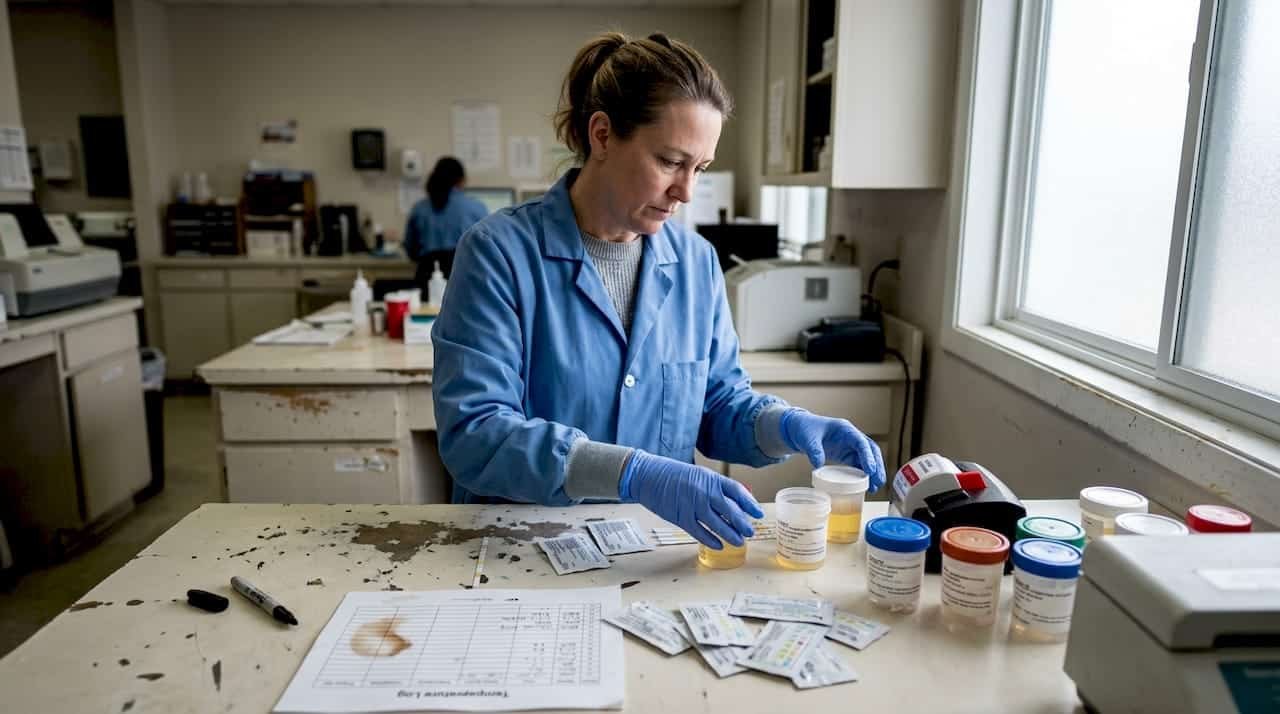
- Physical observation at collection: temperature check, color, and visible clarity
- Colorimetric strip testing for pH, oxidants, nitrites, specific gravity, and creatinine
- Immunoassay screening for target drug panels using validated test cups or dip cards
- Confirmatory testing via GC-MS or LC-MS for any presumptive positives or invalid specimens
- Advanced proteomic analysis when masked adulteration is suspected and standard methods fall short
Adulteration test strips are the frontline tool for most labs and collection sites. They detect common adulterants quickly and at low cost, making them practical for high-volume settings. However, they have real limits. Some oxidizing agents degrade rapidly, and if testing is delayed, strip results may underreport contamination.
| Method | Speed | Cost | Defensibility | Novel adulterant detection |
|---|---|---|---|---|
| Colorimetric strips | Very fast | Low | Presumptive only | Limited |
| Immunoassay panels | Fast | Moderate | Presumptive | Limited |
| GC-MS / LC-MS | Slow | High | Legally defensible | Strong |
| LC-HR-MS/MS proteomics | Slow | Very high | Emerging | Excellent |
Advanced laboratory methods include LC-MS proteomics to detect manipulation even when common adulterants are masked. Proteomics works by analyzing the protein composition of the specimen itself. Adulteration changes the biological environment of urine in ways that leave protein-level fingerprints, even after the adulterant chemical has degraded or been diluted below detectable thresholds.
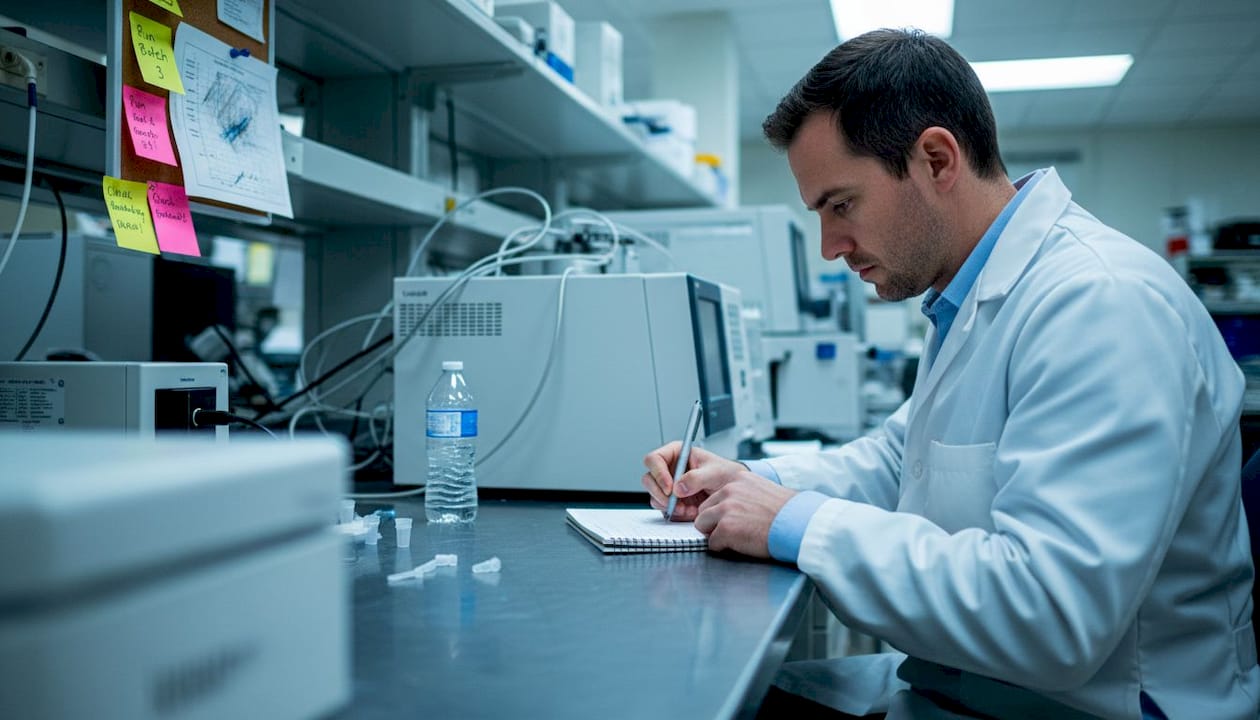
Pro Tip: Always pair strip-based screening with a documented temperature log at collection. Many substitution attempts fail this single physical check before any chemistry is involved.
Understanding the urine test strip types available to your program helps match the right tool to the right context, whether you are running a field screen or a certified laboratory workflow.
Regulatory frameworks and validity criteria
Knowing what to test for is only half the equation. Knowing the regulatory thresholds that define a result as valid, dilute, substituted, or adulterated is what separates a defensible program from a liability.
Federal standards, primarily driven by SAMHSA, set specific cutoff values that laboratories and collectors must apply:
| Parameter | Valid range | Substituted | Adulterated |
|---|---|---|---|
| Creatinine | 2 to 200 mg/dL | Below 2 mg/dL | N/A |
| Specific gravity | 1.003 to 1.030 | Below 1.001 or above 1.020 | N/A |
| pH | 4.5 to 9.0 | N/A | Below 3 or above 11 |
| Nitrites | Below 200 mcg/mL | N/A | 500 mcg/mL or above |
| Oxidants | Negative | N/A | Any positive result |
SAMHSA standards for federal workplace drug testing require that certified labs run all five validity parameters on every specimen. Non-federal programs often follow the same framework voluntarily because it provides a legally defensible baseline.
Key regulatory facts every professional should know:
- A specimen with creatinine below 2 mg/dL and specific gravity below 1.001 is reported as substituted, not dilute
- A specimen with pH below 3 or above 11 is reported as adulterated regardless of drug results
- Federal cutoff levels were updated in 2026 to address emerging oxidizing adulterants not covered under prior guidance
- An invalid result requires a second collection under direct observation in most federal programs
For professionals managing urine specimen validity across a mixed portfolio of federal and non-federal clients, maintaining a single high standard across all collections reduces error and simplifies audit preparation. Your workflow compliance guide should document how validity results trigger each downstream action.
Challenges, limitations, and emerging frontiers in adulterant detection
Even a well-designed, multi-stage detection workflow has blind spots. Understanding where those gaps exist is the first step toward closing them.
The most pressing current challenges include:
- Novel oxidizing agents formulated specifically to evade nitrite and chromate strip detection
- Biochemically masked adulterants that normalize creatinine and specific gravity while still destroying target metabolites
- Synthetic urine products with increasingly accurate pH, creatinine, and specific gravity profiles
- Timed degradation adulterants that break down before laboratory analysis but destroy metabolites at the collection point
- Biological substitution using another person’s clean urine, which passes all validity checks unless direct observation is required
A 2024 review found that proteomics applications can identify protein-level biomarkers of adulteration in specimens that pass all standard validity checks. This is a significant finding because it means a specimen can look completely normal by every current regulatory metric and still be manipulated.
Statistic: LC-HR-MS/MS proteomic methods have demonstrated proof-of-concept identification of adulteration biomarkers in specimens that showed no abnormality on colorimetric or immunoassay screening.
Balancing speed, cost, and sensitivity is an ongoing tension. Proteomics is not a field-deployable technology. It requires specialized instrumentation, trained analysts, and processing time that makes it impractical as a first-line screen. The practical answer is tiered escalation: use strips and immunoassay as the gate, then escalate to confirmatory MS, and reserve proteomics for contested or high-consequence cases.
Pro Tip: Build a specimen hold protocol into your collection SOP. Retaining aliquots at controlled temperature for 72 hours after initial screening gives you the option to run advanced confirmatory methods if a result is challenged.
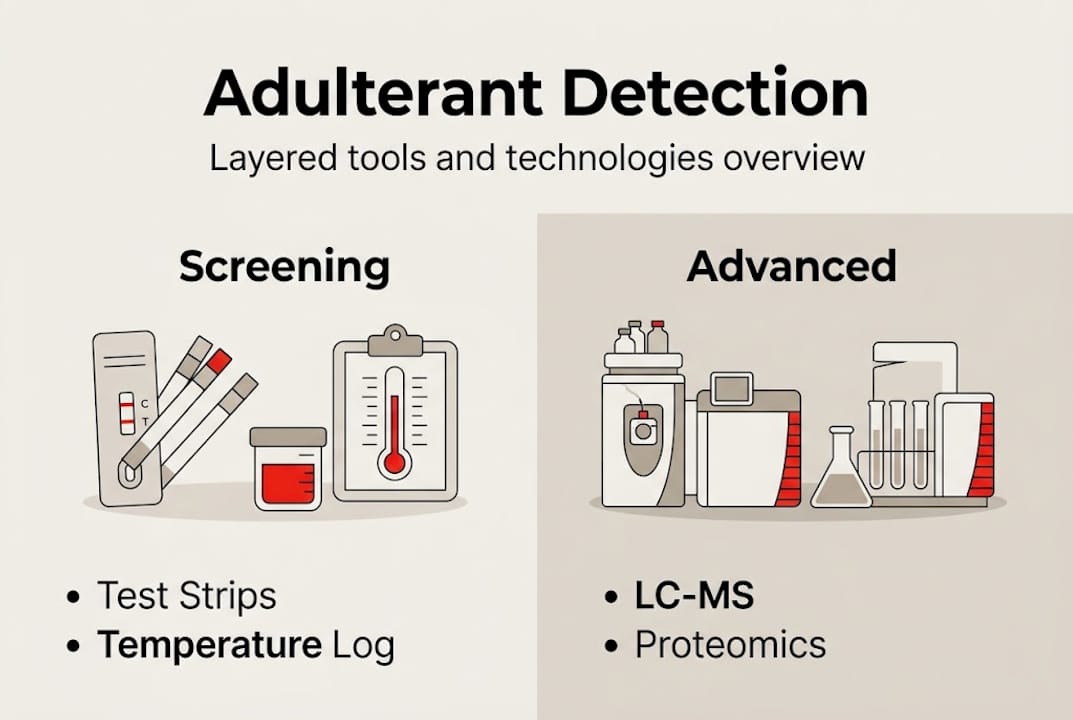
A multi-layered approach combining strips, confirmatory MS, and emerging proteomics is essential to combat increasingly sophisticated adulteration. Investing in accuracy in drug test results at the protocol level, not just the product level, is what separates programs that hold up under scrutiny from those that don’t.
Why the best adulterant detection is proactive, not reactive
Here is the uncomfortable reality: most drug testing programs design their adulterant detection around the threats they already know about. That is a reactive posture, and it is exactly what sophisticated manipulators count on.
The field moves fast. A new oxidizing adulterant product can reach online retail channels months before any regulatory guidance acknowledges its existence. By the time a lab updates its strip panel or a guideline is revised, that product has already been used in thousands of collections.
The programs that consistently produce defensible, manipulation-resistant results share one trait: they treat adulterant detection as an intelligence problem, not just a chemistry problem. They track emerging products, share findings with peer labs, and update their protocols before they are forced to. They also invest in confirmatory capacity so that a strip result is never the final word on a contested specimen.
Following a structured forensic drug testing checklist is a practical starting point, but the real shift is cultural. Move your program from “catch what we know” to “anticipate what’s coming.” That means ongoing staff education, regular protocol audits, and a willingness to escalate to advanced methods even when initial screens look clean. Reactive detection is always one step behind. Proactive detection is the only posture that holds.
Equip your team for reliable adulterant detection
Building a defensible detection workflow starts with having the right tools at every stage of the process. For labs, clinics, and law enforcement programs that need multi-adulterant sensitivity built directly into their screening step, high-panel test cups with integrated validity checks are the practical foundation.
At rapidtestcup.com, you will find options like the 22-panel drug test cup with adulterant detection built in, the 15-panel drug test for programs needing a focused panel, and a full range of types of urine test strips for standalone validity screening. All products are CLIA waived and FDA approved, with bulk pricing available for high-volume programs. If your protocol requires customization, contact us directly for a tailored quote.
Frequently asked questions
What are common adulterants in urine drug testing?
Common specimen manipulations include dilution, substitution, and chemical adulteration using oxidizers like bleach or nitrites, pH-altering compounds, and masking agents, each requiring dedicated detection strategies.
How accurate are test strips for adulterant detection?
High-quality test strips detect adulterants at trace levels, but some manipulations, particularly biochemically masked or rapidly degrading adulterants, require confirmatory laboratory methods to produce reliable results.
What is the role of proteomics in adulterant detection?
Proteomics via LC-HR-MS/MS detects changes in protein signatures caused by adulteration, identifying manipulation that passes all standard colorimetric and immunoassay checks.
What do SAMHSA guidelines require for specimen validity testing?
SAMHSA guidelines require certified labs to check creatinine, specific gravity, pH, oxidants, and nitrites on every specimen to classify it as valid, substituted, or adulterated.
Can adulterant detection keep up with evolving sample manipulation methods?
Detection technologies are advancing, but a multi-layered approach combining strips, confirmatory MS, and emerging proteomics remains essential because no single method can address all current and future adulteration tactics.