

Blog
Benefits of Forensic Testing in U.S. Criminal Justice


TL;DR:
- Forensic testing enhances criminal justice by increasing conviction confidence and enabling wrongful exonerations.
- Speed and lab quality are critical to maximizing societal benefits, with rapid results preventing additional victimization.
Forensic testing delivers measurable, documented benefits across criminal justice, public health, and workplace safety. The core advantages are clear: higher conviction confidence, exoneration of innocent suspects, faster investigative leads, and substantial cost savings for society. For professionals and organizations managing drug testing programs, understanding these benefits shapes smarter supply decisions and stronger compliance frameworks.
Key benefits at a glance:
- Enhanced conviction confidence: Forensic evidence, particularly DNA, is associated with more guilty verdicts and higher juror confidence than eyewitness testimony alone.
- Exoneration of the innocent: Forensic DNA has exonerated 238 wrongly convicted individuals in the United States, including 17 who served time on death row.
- Increased arrests and prosecutions: Cases with DNA traces tend to result more often in suspect identification, arrest, and charges compared to cases without DNA evidence.
- Crime prevention through rapid analysis: Faster turnaround times reduce the window for serial offenders to victimize additional people.
- Public health and workplace safety: Forensic drug testing supports substance abuse programs, law enforcement, and clinical decision-making.
- Cost-effective crime reduction: Front-end forensic investment yields returns between $81 and $646 for every dollar spent, depending on lab efficiency.
Table of Contents
- What are the core benefits of forensic testing for investigations?
- Why speed and lab quality determine whether forensic testing delivers
- How quality drug testing supplies support reliable forensic outcomes
- What challenges and advances are shaping forensic testing’s future?
- Rapidtestcup supplies the professional-grade products your program needs
- Key Takeaways
What are the core benefits of forensic testing for investigations?
Forensic testing’s impact on criminal justice outcomes is well-documented and spans every stage of an investigation, from initial suspect identification through prosecution.
Conviction confidence and verdict quality. Experimental research confirms that forensic evidence, especially DNA, produces more guilty verdicts and higher juror confidence compared to eyewitness testimony. Critically, this effect is strongest at the verdict stage rather than sentencing, which means forensic evidence drives the decision that matters most in a criminal trial.
Exoneration of innocent suspects. Wrongful convictions from eyewitness misidentification are a documented problem in the U.S. justice system. Forensic DNA analysis provides an objective check: it has cleared 238 people convicted of serious crimes they did not commit. That figure represents not just individual justice but systemic credibility for the courts.
Arrest and prosecution rates. A randomized controlled study found that rapid DNA trace analysis led to twice as many arrests and more than twice as many prosecutions compared to cases without early DNA processing. Cases charged were notably higher when forensics were collected compared to when they were not.

Linking crimes and identifying serial offenders. DNA databases like CODIS allow investigators to connect crimes committed by the same offender across jurisdictions and time. This capability is particularly powerful for property crimes, where DNA trace analysis is five times more effective at suspect identification than fingerprint analysis in some studies.
Case clearance across crime types. NIJ research from Denver and San Diego found clearance rates with forensic evidence far exceeded those without it: 30.8% versus 8.3% for robberies, and 21.8% versus 3.9% for burglaries. Homicide clearance with forensic evidence reached 74.6%.
| Crime Type | Clearance Rate With Forensic Evidence | Clearance Rate Without |
|---|---|---|
| Homicide | 74.6% | Lower (2 of 4 cases) |
| Sexual assault | 32.0% | 10.1% |
| Robbery | 30.8% | 8.3% |
| Burglary | 21.8% | 3.9% |
Deterrence and recidivism reduction. The existence of DNA databases creates a deterrent effect. Incapacitating serial offenders earlier in their criminal careers also prevents future victims, which is where the largest societal cost savings accumulate.
Why speed and lab quality determine whether forensic testing delivers
The benefits of forensic analysis are not automatic. They depend heavily on how fast results are produced and how rigorously labs maintain quality.
Turnaround time is the single most controllable variable in forensic value delivery. A cost-benefit analysis of forensic lab resources found that every day a case sits awaiting analysis represents additional exposure to victimization by serial offenders. In one Louisiana case study, investigators estimated that five of six homicide victims could have been saved had a DNA database been in place and cases processed promptly. Speed is not a convenience; it is a crime prevention mechanism.
Poor lab quality creates the opposite effect. Backlogs, inadequate quality controls, and under-resourced labs have led to audits, scandals, and lab closures across the U.S. False negatives, where no correct match is made, are a common forensic error. When evidence goes untested or is tested poorly, crimes go unsolved, innocent people remain under suspicion, and victims receive no justice.
Best practices for forensic labs to maintain both speed and quality:
- Implement blind testing protocols as part of a formal quality assurance program
- Pursue accreditation through recognized bodies and maintain documented chain-of-custody procedures
- Balance automation with trained human analyst review, particularly for complex mixed DNA profiles
- Prioritize immediate submission of new cases rather than allowing backlogs to accumulate
- Allocate dedicated resources for research and quality improvement, not just capacity expansion
Pro Tip: Investing in front-end forensic resources, meaning immediate testing of new cases rather than reactive backlog clearance, produces the highest ROI. Lab economies of scale push returns as high as $646 for every dollar spent on de novo case submissions.
Automation through forensic algorithms improves processing speed, but the U.S. GAO has cautioned that human oversight remains essential. Probabilistic genotyping, latent print analysis, and facial recognition algorithms each carry risks of cognitive bias and misinterpretation when analysts treat algorithm outputs as definitive rather than as investigative aids.
How quality drug testing supplies support reliable forensic outcomes
Forensic testing is only as good as the supplies used to collect and analyze specimens. For drug investigations specifically, the quality of testing products determines whether results will hold up under legal scrutiny.
FDA-approved, CLIA-waived testing kits provide the validated, reproducible results that forensic and clinical settings require. Adherence to validated collection and testing protocols is critical for legal and regulatory acceptance. A result obtained with an unvalidated or improperly stored kit can be challenged in court, potentially collapsing a prosecution built on otherwise solid evidence.
Essential forensic drug testing supplies and their roles:
- Multi-panel drug test cups: Screen for multiple substances simultaneously from a single urine specimen, reducing handling time and contamination risk
- Adulteration test strips: Detect specimen tampering by checking creatinine, pH, specific gravity, and oxidants before the primary drug screen
- Urine specimen cups with temperature strips: Confirm specimen validity at the point of collection, a critical chain-of-custody step
- Dip card immunoassay strips: Provide rapid, substance-specific screening for targeted investigations
- Specimen collection accessories: Tamper-evident seals, labels, and transport containers that preserve chain of custody from collection through lab analysis
Standardized testing also supports forensic drug testing in legal settings, where results must withstand defense challenges. Law enforcement agencies and clinical programs that use professionally validated supplies reduce false positives and false negatives, both of which carry serious consequences. A false positive can wrongfully implicate someone; a false negative can allow a dangerous situation to go undetected.
What challenges and advances are shaping forensic testing’s future?
Forensic testing faces real structural challenges, but the trajectory of the field is toward greater capability and broader application.
Current challenges include:
- Lab backlogs: Demand for forensic analysis consistently outpaces capacity in many U.S. jurisdictions
- Funding constraints: Only 14% of publicly funded crime labs had any resources dedicated to research as of 2014
- Variable quality control: Without standardized federal regulation, quality assurance practices differ widely between labs
- Algorithm oversight gaps: Forensic algorithms improve speed but require expert validation to prevent interpretation errors and bias
Emerging technologies and approaches reshaping the field:
- Rapid DNA systems: Portable units that produce a DNA profile in under two hours, enabling on-site identification
- Forensic intelligence integration: Linking lab data with big datasets and investigative databases for proactive lead generation
- Expanded CODIS applications: Broadening database coverage to include more offense categories and arrestee profiles
- Forensic data analysis in corporate settings: Forensic data analysis now serves compliance, insider threat detection, and operational risk management in corporate environments, extending forensic methods well beyond traditional crime labs
The most durable gains will come from balanced investment: funding quality controls alongside capacity, training analysts to work with algorithms rather than defer to them, and applying cost-benefit frameworks to guide resource allocation. Forensic testing is increasingly a proactive tool, not just a reactive one.
Rapidtestcup supplies the professional-grade products your program needs
When your forensic or clinical drug testing program depends on accurate, legally defensible results, the supplies you choose are not a secondary decision.
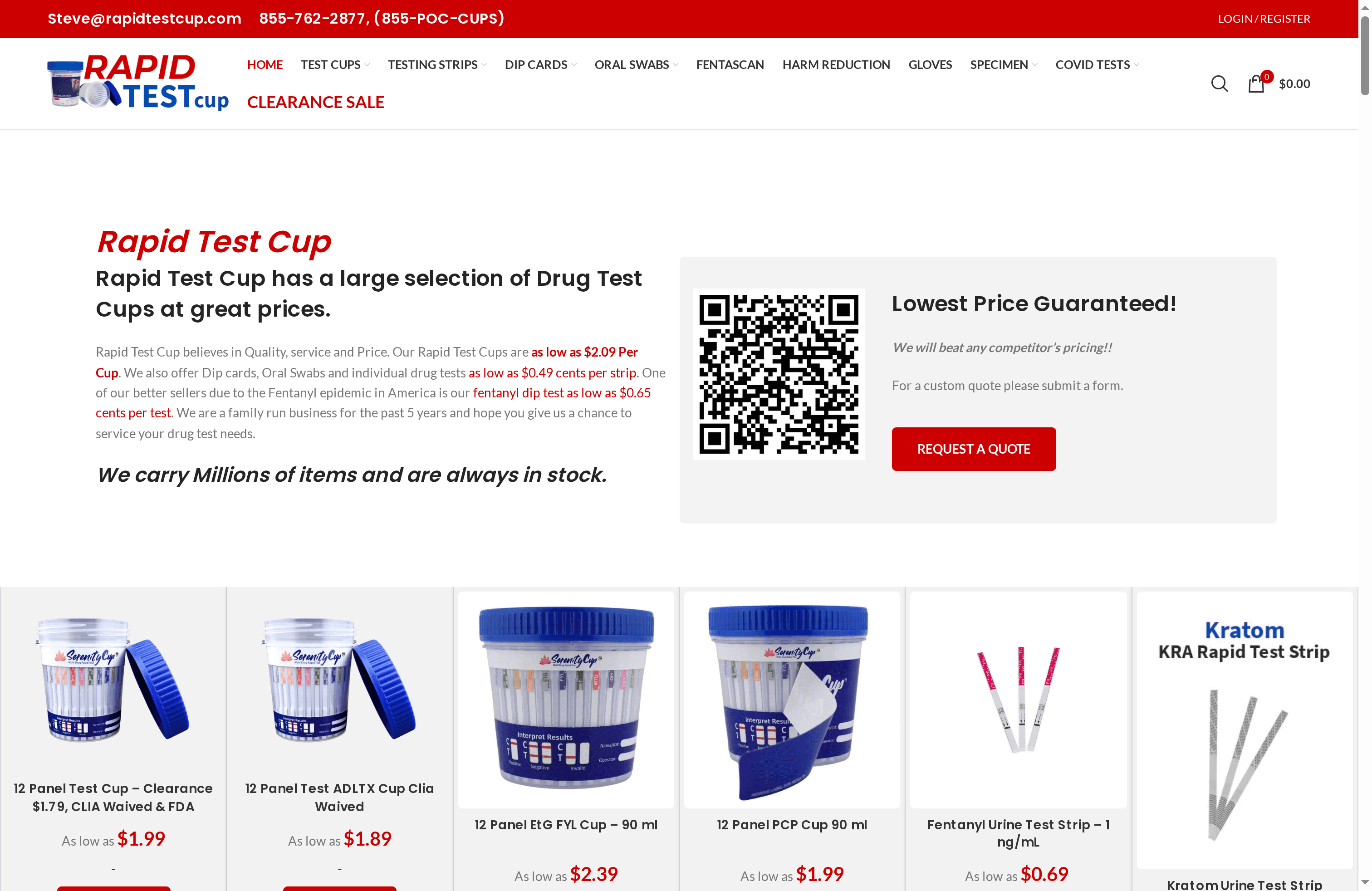
Rapidtestcup offers FDA-approved, CLIA-waived drug test cups, dip cards, urine test strips, and specimen collection supplies built for professional use. Whether you run a substance abuse program, support law enforcement investigations, or manage a clinical lab, Rapidtestcup’s catalog covers multi-panel screening, adulteration detection, and bulk ordering with wholesale pricing. No long-term contracts, no minimum order requirements that price out smaller programs. Browse the top lab testing products or check out the forensic drug testing essentials guide to match the right kit to your workflow. Request a custom quote directly on the site for large-volume orders.
Key Takeaways
Forensic testing’s benefits are largest when labs are fast, well-funded, and use validated supplies from collection through analysis.
| Point | Details |
|---|---|
| Conviction confidence | Forensic evidence produces more guilty verdicts and higher juror confidence than eyewitness testimony alone. |
| Exoneration power | DNA analysis has exonerated 238 wrongly convicted individuals in the U.S., including 17 from death row. |
| Speed drives ROI | Front-end forensic investment yields between $81 and $646 in societal benefit for every dollar spent, depending on lab scale. |
| Lab quality is non-optional | Poor quality control causes backlogs, false results, and unsolved crimes; accreditation and blind testing protocols are the floor, not the ceiling. |
| Rapidtestcup for professionals | FDA-approved, CLIA-waived drug test cups and specimen supplies from Rapidtestcup support legally defensible forensic and clinical results. |