Blog
How Rapid Testing Streamlines Forensic Investigations


Traditional evidence processing can delay investigations by weeks or months, creating backlogs that slow case resolution and risk public safety. Rapid DNA testing can now generate actionable profiles at the scene in under 90 minutes, transforming how forensic professionals and law enforcement approach field evidence. This guide explains how rapid testing technologies work, their legal compliance requirements, and the critical limitations you must understand before deploying them in high-stakes investigations.
Table of Contents
- How rapid testing works in forensic investigations
- Comparing rapid DNA and rapid drug testing: workflow and use cases
- The advantages: speed, efficiency, and investigative impact
- Limitations, legal considerations, and compliance standards
- Best practices for maximizing reliability and investigative outcomes
- Choose the right rapid testing solutions for your agency
- Frequently asked questions
Key Takeaways
| Point | Details |
|---|---|
| Accelerates investigation speed | Rapid tests deliver actionable information in minutes to hours, transforming timelines for lead generation. |
| Demands lab confirmation | Rapid DNA and drug test results serve as preliminary; lab analysis remains essential for prosecution and CODIS. |
| Improves efficiency and officer safety | Field deployment limits evidence backlog, speeds up triage, and reduces exposure risks for agency staff. |
| Compliance is critical | Adhering to FBI, SWGDAM, and state standards ensures results are legally defensible. |
How rapid testing works in forensic investigations
Rapid testing encompasses two primary technologies: DNA analysis and drug screening. DNA rapid testing uses buccal swabs, blood, or touch samples to generate single-source profiles directly at crime scenes or booking facilities. Drug rapid testing employs immunoassays, test strips, or portable gas chromatography-mass spectrometry (GC-MS) to identify controlled substances in seized materials or biological specimens.
These systems deliver results in hours rather than weeks. Rapid DNA enables on-site suspect screening and databasing without lab bottlenecks, producing profiles in approximately 90 minutes. Fentanyl strips and rapid GC-MS offer safer, faster presumptive drug screening at the scene, with test strips detecting 16 of 18 fentanyl analogs at 45 ng/mL sensitivity and portable GC-MS completing runs in 10 minutes.
Typical deployment scenarios include:
- Crime scene triage for property crimes and sexual assaults
- Booking suspect identification and database comparison
- Field screening of seized drug evidence
- Officer safety assessments during traffic stops
- Mass disaster victim identification
The technology excels when you need immediate investigative leads. A burglary scene with fresh blood can yield a suspect profile before officers leave the location. A traffic stop involving unknown powder can confirm fentanyl presence within minutes, informing charging decisions and officer safety protocols. Understanding what is rapid drug testing helps agencies determine appropriate deployment contexts.
Pro Tip: Rapid testing works best for single-source, high-quantity samples. Always collect duplicate samples for laboratory confirmation to maintain chain of custody and meet prosecution standards.
Comparing rapid DNA and rapid drug testing: workflow and use cases
While both technologies accelerate investigations, they serve distinct purposes with different operational characteristics. The following comparison clarifies when to deploy each tool:
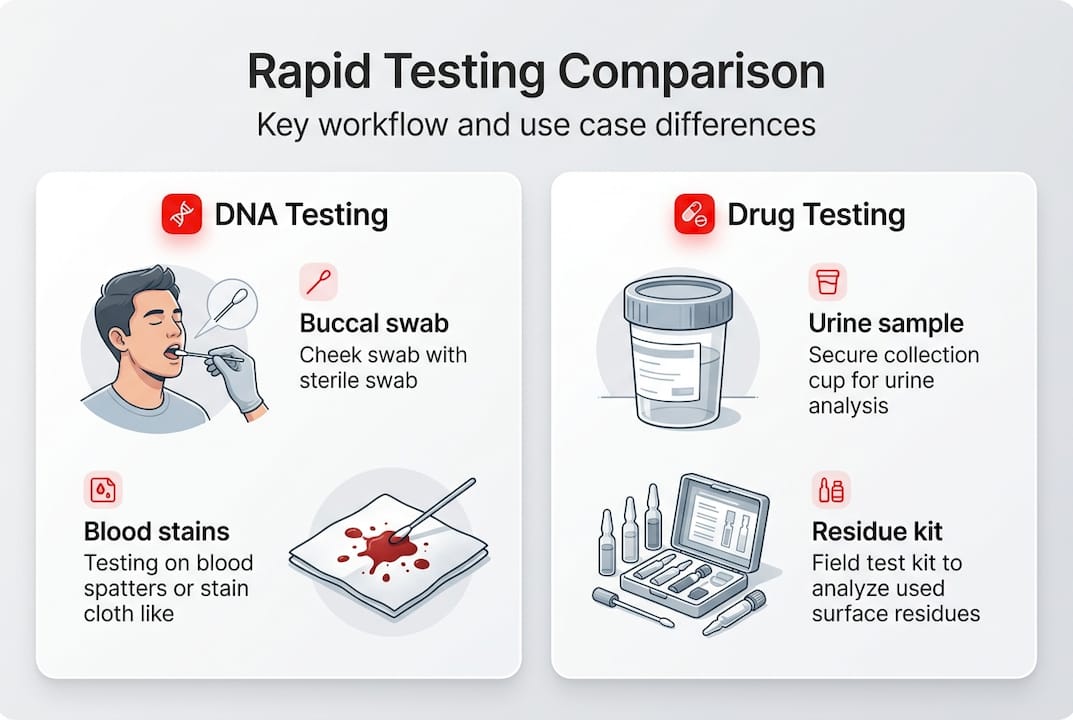
| Feature | Rapid DNA Testing | Rapid Drug Testing |
|---|---|---|
| Sample Types | Buccal swabs, blood, touch DNA | Powders, pills, biological fluids |
| Turnaround Time | 90 minutes | 10-30 minutes |
| Primary Use Cases | Suspect identification, database hits | Substance identification, field screening |
| Field Suitability | Requires controlled environment | Fully portable |
| Sensitivity | High for single-source samples | Varies by method and target |
| Major Limitation | Ineffective for mixtures | Presumptive only, requires confirmation |
Rapid DNA is most useful in single-source, high-quantity sample situations, making it ideal for reference samples from known suspects or victims. Rapid drug tests (immunoassays, strips, rapid GC-MS) are vital for fast-turnaround screening when officer safety or immediate charging decisions depend on substance identification.
The typical rapid testing workflow follows four steps:
- Sample collection: Swab the evidence source using sterile collection materials, documenting exact location and time.
- Processing: Load the sample into the rapid testing device following manufacturer protocols and quality control procedures.
- Analysis: The system extracts, amplifies, and analyzes the sample automatically, generating a preliminary result.
- Documentation: Record results, preserve remaining sample material, and initiate laboratory confirmation request.
Field scenarios demonstrate the practical differences. At a residential burglary, you collect blood from a broken window. Rapid DNA processing at the mobile crime lab generates a profile that hits against a local database, providing a suspect name within two hours. At a drug seizure, you use fentanyl test strips on white powder, confirming the presence of synthetic opioids in five minutes and informing officer safety measures and preliminary charges.
Understanding the benefits of rapid drug tests and reviewing law enforcement drug testing compliance requirements ensures proper deployment and legal defensibility.
Pro Tip: Always preserve a duplicate sample for laboratory confirmation. This A/B swab strategy protects chain of custody and ensures prosecution-grade evidence remains available regardless of rapid test outcomes.
The advantages: speed, efficiency, and investigative impact
Rapid testing transforms investigative timelines and resource allocation. The technology reduces case processing time from weeks to hours, provides immediate investigative leads, and limits laboratory backlogs for routine cases.
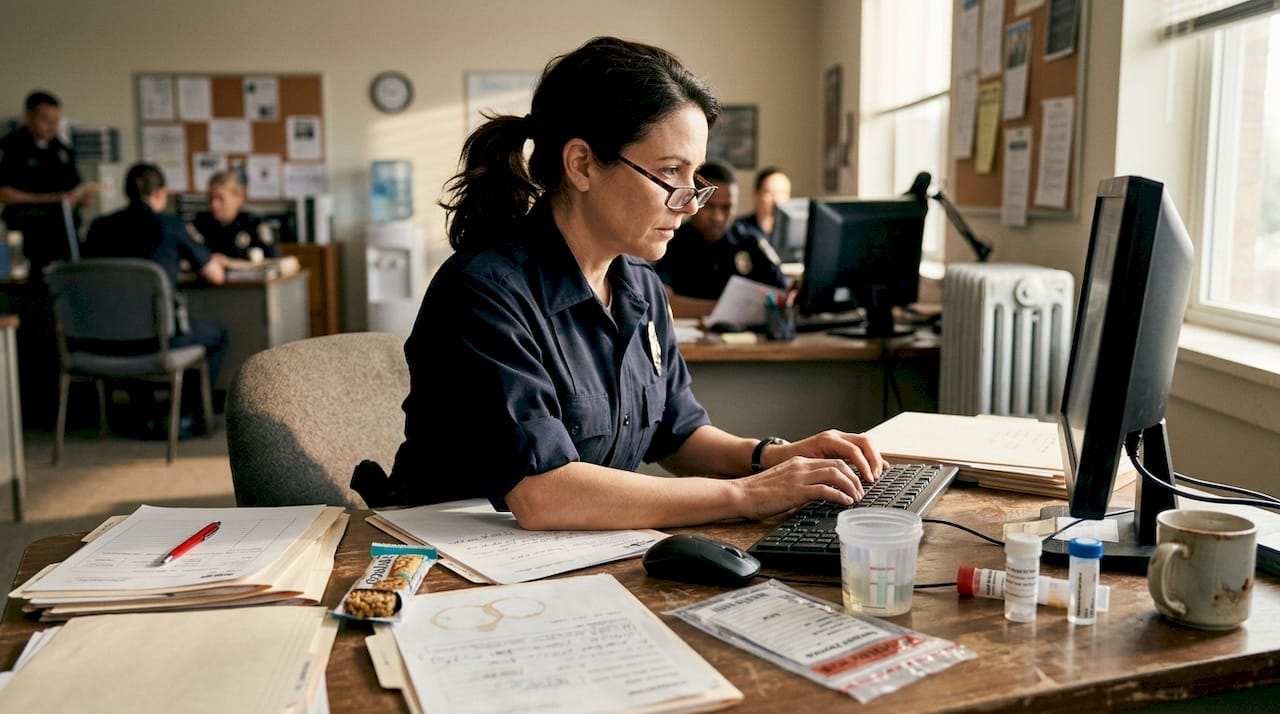
Field studies show rapid DNA reduces case time from weeks to hours with a 53% hit rate in volume crimes. This performance data demonstrates real-world impact:
| Metric | Traditional Lab | Rapid Testing | Improvement |
|---|---|---|---|
| Median Turnaround | 21 days | 2 hours | 252x faster |
| Database Hit Rate | 48% | 53% | +10% effectiveness |
| Cases Processed/Month | 150 | 450 | 3x capacity |
| Officer Hours Saved | Baseline | -65% | Major efficiency gain |
Key advantages include:
- Immediate investigative leads: Suspect identification at the scene enables faster apprehension and interview strategies.
- Reduced laboratory backlog: Routine cases processed in the field free laboratory capacity for complex forensic analysis.
- Improved officer safety: Rapid drug screening identifies dangerous substances like fentanyl before extended exposure occurs.
- Enhanced case prioritization: Quick results help agencies allocate resources to cases with the strongest evidence.
- Increased clearance rates: Faster suspect identification leads to more cases closed within statute of limitations.
“Rapid testing provides actionable leads at crime scenes or booking facilities, enabling real-time investigative decisions. However, edge cases involving mixtures, degraded samples, or legal challenges demand full laboratory confirmation to ensure results withstand scrutiny.”
Agencies benefit through increased cases closed, better suspect prioritization, and improved officer safety. A property crimes unit using rapid DNA can process three times more cases monthly compared to traditional workflows. A narcotics team with portable GC-MS can confirm substance identity during search warrant execution, strengthening probable cause and charging decisions.
Exploring why rapid testing is used and understanding rapid drug screening explained provides deeper context for implementation decisions.
Limitations, legal considerations, and compliance standards
While rapid testing offers significant advantages, you must understand its boundaries and legal requirements. These technologies provide presumptive results that require laboratory confirmation for prosecution.
Primary limitations include:
- Lower sensitivity: Rapid systems detect high-quantity samples effectively but may miss low-level DNA or trace drug amounts.
- Mixture unsuitability: Rapid systems are less sensitive; mixture samples, low-quantity, and degraded evidence require lab processing.
- No CODIS upload: Rapid DNA profiles cannot be uploaded to national databases without additional validation.
- Environmental constraints: Temperature, humidity, and contamination affect field results more than controlled laboratory conditions.
- Limited legal admissibility: Legal regulations restrict rapid DNA/drug test court use unless confirmed per state and federal standards.
Rapid tests serve specific legal functions. Results establish probable cause for arrest, support preliminary hearings, and guide investigative strategy. However, prosecution requires laboratory confirmation using validated methods that meet FBI Quality Assurance Standards and Scientific Working Group on DNA Analysis Methods (SWGDAM) guidelines.
Compliance requirements include:
- FBI Quality Assurance Standards: Rapid DNA systems must meet FBI standards for accuracy, precision, and validation.
- SWGDAM guidance: Follow protocols for sample collection, processing, and result interpretation.
- State laboratory regulations: Many states require specific certifications and training for rapid testing operators.
- Chain of custody: Maintain documentation from collection through analysis and confirmation testing.
- Operator certification: Personnel must complete manufacturer training and demonstrate proficiency.
Understanding drug testing compliance best practices ensures your agency meets legal requirements and maintains evidence integrity.
Pro Tip: Adopt an A/B swab strategy for all rapid DNA testing. Collect two samples at the scene: one for immediate rapid analysis and one preserved for laboratory confirmation. This approach protects sample integrity and ensures prosecution-grade evidence remains available.
Best practices for maximizing reliability and investigative outcomes
Successful rapid testing implementation requires structured protocols that balance speed with legal defensibility. Follow these steps to integrate rapid testing into your forensic workflow:
- Establish clear selection criteria: Define which case types and sample conditions qualify for rapid testing versus direct laboratory submission.
- Implement standardized collection protocols: Use consistent swabbing techniques, documentation formats, and preservation methods across all personnel.
- Maintain environmental controls: Process samples in clean, temperature-controlled environments whenever possible to minimize contamination and degradation.
- Document every step: Record collection location, time, environmental conditions, operator identity, and result interpretation in standardized forms.
- Preserve confirmation samples: Always collect duplicate samples or preserve sufficient material for laboratory confirmation testing.
- Establish confirmation workflows: Create automatic laboratory submission protocols for all rapid test results used in charging or prosecution decisions.
- Train personnel thoroughly: Ensure operators complete manufacturer certification, understand limitations, and follow quality control procedures.
- Conduct regular proficiency testing: Verify operator competency and equipment performance through blind sample testing and external audits.
- Maintain equipment calibration: Follow manufacturer maintenance schedules and document all calibration and quality control activities.
- Review and update SOPs: Regularly assess protocols against emerging case law, regulatory changes, and technological improvements.
Edge cases require careful sample selection and confirmation testing to ensure results stand up in court. Real-world implementation shows that agencies following structured protocols achieve twice the acceptance rate for rapid test evidence in preliminary hearings compared to those with informal procedures.
Sample preparation and record keeping determine whether rapid test results support prosecution. Document the exact swabbing location, environmental conditions, and any factors that might affect result reliability. Photograph the sample source before collection. Maintain continuous chain of custody from collection through laboratory confirmation.
Training checklists should cover sample selection criteria, collection techniques, equipment operation, quality control procedures, result interpretation, documentation requirements, and legal limitations. Regular refresher training ensures consistency as personnel change and technology evolves.
Reviewing drug testing best practices and following the drug screening workflow guide helps agencies maintain compliance while maximizing investigative value.
Choose the right rapid testing solutions for your agency
Implementing reliable rapid testing requires access to validated, field-ready solutions that meet forensic standards. RapidTestCup provides law enforcement and forensic agencies with comprehensive testing options designed for compliance and accuracy.
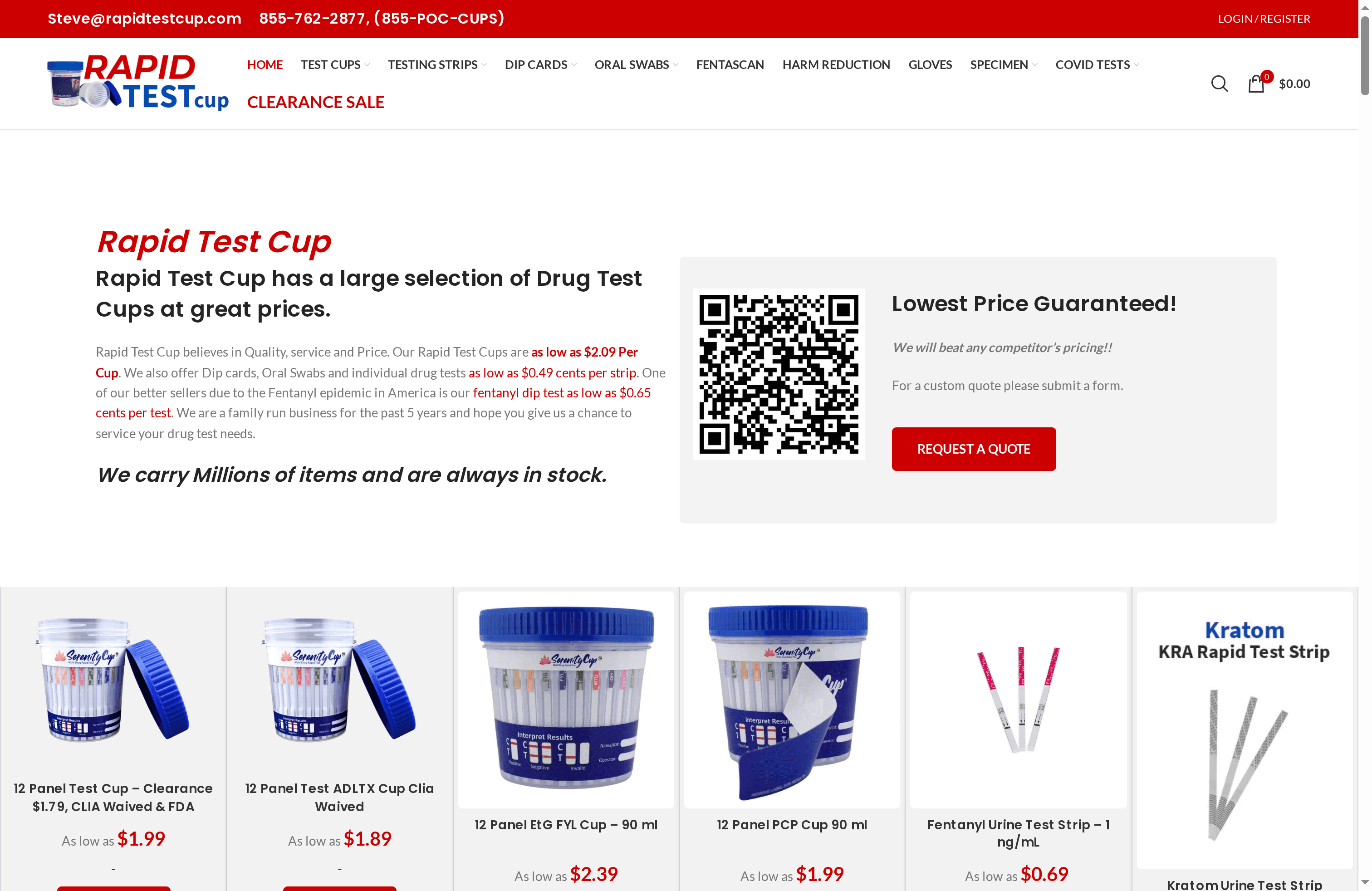
Our catalog includes CLIA-waived, FDA-approved rapid testing products that support both DNA and drug screening workflows. From multi-panel drug test cups to specialized detection strips, each product undergoes rigorous quality control to ensure consistent performance in field conditions. Bulk pricing and custom configurations accommodate agency-specific requirements while maintaining the compliance standards prosecution demands.
Explore our 12 panel rapid test cup for comprehensive drug screening, review MET drug test strips for targeted methamphetamine detection, and learn about types of urine test strips to select the right tools for your investigative needs.
Frequently asked questions
What types of cases benefit most from rapid testing?
Rapid testing is most effective for single-source DNA samples and on-the-spot drug screening in property crimes, violent crimes, and drug seizure cases where immediate leads accelerate investigations.
Are rapid test results admissible in court without lab confirmation?
No, rapid results are presumptive and court admissibility usually requires confirmatory laboratory testing that meets state and federal forensic standards for prosecution.
How long do rapid DNA and drug tests take?
Rapid DNA results are available in about 90 minutes; drug test strips provide results in 5-10 minutes, while portable GC-MS completes analysis in approximately 10-30 minutes.
What are the main limitations of rapid testing?
Rapid systems lack mixture software and are lower sensitivity than laboratory analysis, making them unreliable for degraded samples, complex mixtures, or trace evidence requiring maximum detection capability.
Can rapid DNA profiles be uploaded to CODIS?
No, rapid DNA profiles require additional validation and laboratory confirmation before CODIS upload, as current systems do not meet the database’s stringent quality standards without supplementary testing.