

Blog
Marijuana Testing After Legalization: What the Law Allows


Legalization has not made marijuana testing illegal. State legalization does not automatically stop employers from testing for marijuana or keeping a drug-free workplace policy. What has changed is the fine print: some states now limit pre-employment or random testing, protect off-duty use for certain jobs, or require proof of impairment before an employer acts. Federal rules for safety-sensitive work have not moved at all.
This guide walks through the federal baseline, then Texas, Washington, Colorado and New York, and ends with a practical way to set up a testing program that matches your state.
TL;DR
- Legal under state law does not mean untestable. Federal rules for DOT-regulated jobs still require marijuana testing, and most states let private employers keep testing policies.
- States differ sharply: Texas is permissive, Colorado gives little off-duty protection, Washington limits pre-employment screening for most jobs, and New York restricts testing broadly.
- A urine or oral fluid test shows prior use. It does not prove someone is impaired right now, so document observed behavior alongside any result.
- Write a policy that names the state rules you follow, the roles that are exempt from state limits, and the steps after a positive result.
- Pick tests and collection supplies that fit your policy, and train whoever administers them.
Table of Contents
- Why legalization did not end marijuana testing
- The federal baseline
- State by state: Texas, Washington, Colorado and New York
- What a positive test does and does not show
- Building a policy that survives legalization
- Choosing the right test for the policy
- Promo: supplies for a compliant program
- Our perspective
- FAQ
- Sources
Why legalization did not end marijuana testing
Marijuana is legal for medical use, adult use, or both in a large majority of states, yet it remains illegal under federal law. That gap is the whole story. Employers with federal obligations must keep testing, and employers without them mostly keep the freedom to set their own rules, unless their state says otherwise.
The question “can we still test?” therefore has three layers:
- Federal rules. Do any of your employees do work the federal government regulates?
- State law. Does your state limit when you may test, or what you may do with a positive result?
- Your own policy. What have you written down, and do you apply it consistently?
A National Law Review overview of workplace testing summarizes the pattern well: state rules vary, some states restrict pre-employment or random testing, and some allow testing on reasonable suspicion or after an accident. That variation is why multistate employers struggle most, a point the DISA state-by-state overview also makes.
The federal baseline
DOT-regulated and safety-sensitive work
The U.S. Department of Transportation is explicit. Its notice on testing for marijuana, last updated December 19, 2025, says marijuana remains Schedule I under the Controlled Substances Act until rescheduling is complete, and that DOT testing requirements for safety-sensitive employees do not change until then. State legalization does not alter them.
Two further DOT notices close the common loopholes:
- State legalization initiatives have no bearing on the DOT drug-testing program, and a Medical Review Officer may not verify a test as negative just because the use was legal under state law.
- A physician’s recommendation under state law is not a valid medical explanation for a positive marijuana result in the DOT program.
For commercial drivers, FMCSA says the same: state legalization does not change federal qualification rules, and 49 CFR Parts 40 and 382 continue to apply.
What about rescheduling?
Federal rescheduling is in motion, and headlines can make it sound like testing is ending. It is not. A September 2026 Forbes analysis of rescheduling and DOT testing reports that DOT has said moving some marijuana products to Schedule III does not change testing rules for safety-sensitive transportation employees. A JD Supra update on the rescheduling pause likewise notes that existing federal workplace testing requirements stay in place and that employers generally may prohibit marijuana use and impairment, subject to federal, state and local law.
Because this is moving, check the DOT page above before you change a DOT-covered program.
The ADA
The Americans with Disabilities Act does not currently protect marijuana use because of its federal status. Law firm Hunton notes that employers are still encouraged to engage in the interactive process when an employee discloses medical marijuana use. Talking it through is good practice even where the law does not force it.
State by state: Texas, Washington, Colorado and New York
The four states below show the range, from almost no limits to strong limits. Check your own state’s statute and, for anything beyond a routine case, ask an employment attorney.
| State | Pre-employment testing | Random testing | Off-duty use protection |
|---|---|---|---|
| Texas | Permitted | Permitted | None for private employers |
| Washington | Limited for most jobs since January 1, 2024 | Not addressed by the pre-employment statute | Applicants protected in initial hiring, with exceptions |
| Colorado | Employers may set policy | Employers may set policy | No broad protection |
| New York | Generally legal statewide, subject to local rules | Generally not allowed unless required by law | Restrictions on testing and action |
Texas marijuana testing law
Texas is one of the most employer-friendly states. The Texas Workforce Commission says that private employers face almost no limitation on adopting drug-testing policies: pre-employment, random and for-cause testing are all permitted, and neither Texas nor federal law requires rehabilitation after a positive test. The same page advises employers to weigh applicable statutes, contracts, insurance requirements and job safety when writing a policy.
Texas does have a medical program. State law lets qualifying physicians prescribe low-THC cannabis to permanent residents with specified conditions. Yet the June 2025 amendment to the Compassionate Use Program did not create new employee protections or testing requirements. A patient in the program should not assume a job is safe from a positive result.
Washington marijuana testing law
Washington went the other way for applicants. Under RCW 49.44.240, effective January 1, 2024, employers may not discriminate against applicants in the initial hiring process because of off-duty cannabis use, or because a pre-employment screen detects nonpsychoactive cannabis metabolites. The protection does not apply to safety-sensitive positions, first responders, or jobs that require a federal background check.
In practice, a Washington employer should:
- Stop treating a THC metabolite result as a hiring disqualifier for non-exempt roles.
- Identify and document which roles are safety-sensitive or otherwise exempt.
- Keep rules against on-duty use and impairment in the handbook.
Colorado marijuana testing law
Colorado legalized adult use early, but that did not create broad job protection. Colorado employers generally may maintain zero-tolerance drug policies and discipline employees who test positive. Anyone relying on legal off-duty use as a defense at work in Colorado is on weak ground. Employers still benefit from a written policy that states the rule plainly and applies it evenly.
New York
New York is the clearest example of a restrictive state, and it is often the one readers ask about after the other three. The state Department of Labor says an employer generally may not test for cannabis unless Labor Law Section 201-D(4-a) or another law authorizes it. Federal authorization alone is not enough, although federal or state law may require testing for certain positions. Cornell’s ILR School adds that random testing is generally off the table unless required by law, while pre-employment testing is generally legal statewide, subject to local restrictions.
What a positive test does and does not show
This is the point most policies get wrong. A drug test shows that a substance or its metabolite is present. For marijuana, it cannot tell you whether someone is impaired right now. The National Law Review piece says plainly that tests cannot measure current marijuana impairment and that employers should document the reasons for discipline, including evidence of impairment at work.
New York’s guidance frames it the same way: a cannabis test can indicate prior use but does not by itself establish impairment. Employers may still act on on-duty use or objectively observable signs of impairment.
What that means for your process:
- Record what you saw. Slurred speech, unsteady movement, odor, missed steps in a task, who witnessed it and when.
- Use two supervisors where possible. A second observer makes the record stronger.
- Keep the test in context. Treat it as one piece of evidence, never the only piece, unless the law behind the test says otherwise.
- Know the metabolite issue. Washington’s statute targets exactly this: nonpsychoactive metabolites can linger after off-duty use. For background on what can and cannot cause a positive, see this explainer on CBD and THC drug tests.
Building a policy that survives legalization
A good program is simple enough that every supervisor can follow it. Our guide to legal considerations for drug testing at work and our workplace drug testing best practices for HR go deeper. The core steps:
- Map your roles. Mark which jobs fall under DOT or other federal rules, which are safety-sensitive, and which are ordinary.
- Match each role to your state rule. In Washington or New York, that may mean a different pre-employment approach for ordinary roles than for exempt ones.
- Choose when you test. Pre-employment, reasonable suspicion, post-accident and random each carry different legal footing by state. Some states allow reasonable suspicion or post-accident testing even where other types are restricted.
- Write the rules in plain words. Say what is prohibited (use or impairment at work), what triggers a test, and what happens after a positive.
- Plan the confirmation step. Decide how a non-negative screen goes to confirmation and who reviews results. See how to manage drug test results in the workplace.
- Protect privacy. Limit who sees results and store them separately. Our privacy and drug testing explainer covers the basics.
- Handle medical marijuana disclosures. Where an employee discloses medical use, have a conversation, involve HR, and check state law. DOT-covered roles are a separate matter, as described above.
- Train and review. Review the policy at least once a year, since state law and federal scheduling keep changing.
If you are comparing the compliance side with the operational side, our workplace drug testing compliance guide is a good companion.
Examples of how this plays out
A Texas warehouse. A private employer can test applicants, run random tests and test after incidents. The practical work is consistency: the same rule for every employee in the same role, and a written policy people have read.
A Washington retailer. The company stops using a THC metabolite result to reject applicants for stockroom and sales roles. It keeps testing for a delivery role that is safety-sensitive, and documents why. Supervisors learn to record observed impairment instead of relying on a screen.
A Colorado clinic. The clinic holds a zero-tolerance policy. Because Colorado gives little off-duty protection, it focuses on clear notice during onboarding and on documenting each action.
A New York contractor. The contractor tests only where a law or mandate authorizes it, such as roles under a federal requirement, and trains managers to act on visible signs of impairment.

Choosing the right test for the policy
Once the policy is set, the product choice follows. Think about three things.

Where the sample is taken. Urine cups suit most workplace and clinic settings. Oral swabs are quicker to observe and are often chosen for on-site situations. Our cup vs dip card comparison explains how the formats differ.
Which panel you need. Match the panel to your policy. If marijuana is part of what you screen, pick a panel that covers THC, and add only the other substances your policy lists. Fewer unneeded analytes means fewer results to explain.
Whether you need adulterant checks. Some cups add adulterant strips so the collector can see signs of a tampered sample at the time of collection.
Collection supplies. A consistent, sealed collection routine matters as much as the test, especially if a result may later be disputed.
Promo: supplies for a compliant program
Rapidtestcup is a family business that sells drug test cups, dip cards, urine test strips, oral swabs and specimen collection supplies, with CLIA waived and FDA-approved options and bulk discounts for labs, clinics, treatment programs, employers and individuals. We ship the same day and keep a large inventory in stock.
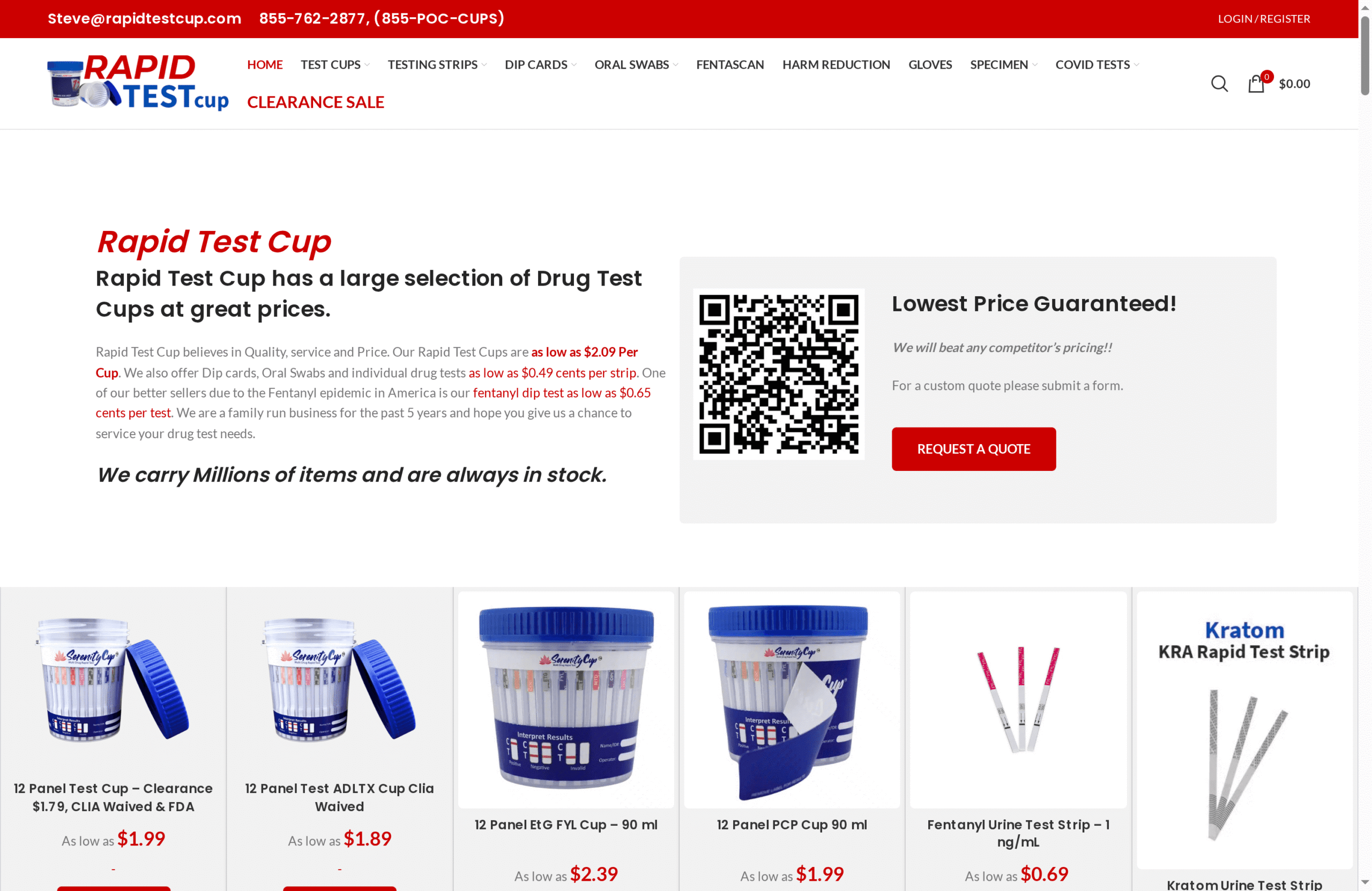
If you are setting up or updating a program, start with the full shop, or look at multi-panel options such as the 15 panel cup with adulterant checks or the 10 panel dip card. For oral fluid, see the 5 panel oral swab. Need volume pricing? Ask for a custom quote.
Our perspective
Legalization changed the conversation about marijuana, not the need to know what your people are doing on the job. We see employers move through the same stages: first worry that testing is no longer allowed, then overcorrect and drop the program, then settle on a clear, narrower policy tied to specific roles.
That third stage is where we think programs work best. A policy that names the roles, the triggers and the follow-up steps is easier to defend than one that tests everyone the same way, or not at all. The test itself is a screening tool. It tells you what was used, and the observed behavior tells you what to do next.
That is why we focus on giving buyers a wide range of formats and panels, in stock and shipped quickly, at prices we stand behind and will work to beat. A lab, a clinic or a small employer should be able to pick a CLIA waived, FDA-approved option that fits their policy, order in bulk when they need to, and spend their time on training and documentation instead of chasing supply.
Justin
FAQ
Is it legal for an employer to test for marijuana where it is legal?
Generally yes. State legalization does not automatically prevent employers from testing or keeping a drug-free workplace policy. Some states, such as New York and Washington, limit certain kinds of testing, so check your state’s rules first.
Can a medical marijuana card protect me from a failed test?
Not reliably. In DOT-regulated jobs, a state physician recommendation is not a valid medical explanation for a positive result. Outside DOT work, protection depends on your state, and the ADA does not currently cover marijuana use. If you hold a card and a test is coming, talk to HR or an employment attorney in your state.
Does a positive marijuana test mean the person is high at work?
No. A test can show prior use but cannot measure current impairment. That is why employers should document observed behavior and the reason for any discipline.
Will rescheduling to Schedule III end DOT marijuana testing?
DOT has said it does not change testing rules for safety-sensitive transportation employees, as reported in September 2026. Confirm the current position on DOT’s own marijuana notice before changing a covered program.
Sources
- DISA: Marijuana Legality by State
- National Law Review: What Employers Need to Know for Workplace Drug Testing
- U.S. DOT: Notice on Testing for Marijuana
- U.S. DOT: Recreational Marijuana Notice
- U.S. DOT: Medical Marijuana Notice
- FMCSA: Medical Qualification FAQ on controlled substances
- Forbes: Marijuana Rescheduling and DOT Drug Testing
- JD Supra: Marijuana Rescheduling Pause
- Hunton: Marijuana Drug Testing in the Age of Legalization
- Texas Workforce Commission: Drug Testing in the Workplace
- Texas Occupations Code Chapter 169
- Washington RCW 49.44.240
- U.S. Fire Administration: Substance Abuse Policy and Off-Duty Use
- New York Department of Labor: Adult Use Cannabis and the Workplace
- Cornell ILR School: Cannabis Drug Testing in the Workplace
- CBD and THC drug tests