Blog
2026 Chain of Custody Form: U.S. Templates and ECCF Tips for Labs

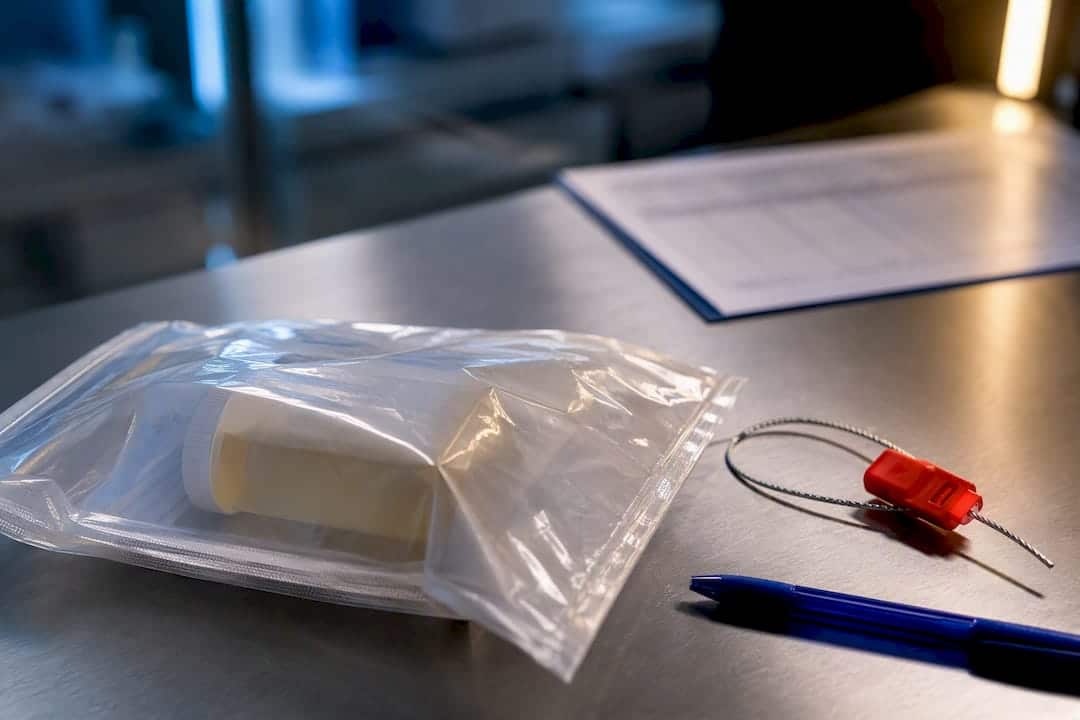
The 2026 Federal Custody and Control Form (CCF) is the standard chain of custody form for federally regulated drug testing in the United States, and it’s ready to download now. For environmental, forensic, or law enforcement evidence, agencies like USGS, NIJ, and EPA publish their own ready-made templates. Grab the form that matches your specimen type, then work through the completion steps below before your first collection.
TL;DR:
- Using the official templates tailored to each specimen type ensures the integrity and legal defensibility of the evidence or sample chain of custody.
- Properly filling out the form involves recording unique IDs, signatures, transfer details, and seal conditions in chronological order, with corrections documented immediately.
- The 2026 Federal CCF is effective through 2027 for DOT-regulated testing, with specific receipt checks such as seal condition and sign-offs required upon sample arrival.
- Common chain-breaking errors include missing signatures, unrecorded seal numbers, or uncorrected blank fields, which courts generally reject if corrected promptly and properly.
- Electronic workflows can improve speed and traceability but must include backup labeling and access logs to prevent data loss and ensure continuous chain accountability.
Table of Contents
- Where to Find an Official Chain of Custody Form
- How Do You Fill Out a Chain of Custody Form Correctly?
- What Changed With the 2026 Federal CCF?
- The Errors That Actually Break a Chain of Custody
- Running an Electronic or Hybrid Chain of Custody Workflow
- How Long Should You Keep Completed Chain of Custody Forms?
- Practitioner Perspective: Speed and Legal Rigor Don’t Have to Compete
- Procurement Support for Federal CCF Compatible Workflows
- Official Downloads and Guidance
- Sources
Where to Find an Official Chain of Custody Form
You don’t need to build a form from scratch, and you shouldn’t try. Federal and state agencies already publish templates built for exactly this purpose, and using an unofficial or homemade version is one of the fastest ways to raise questions about a specimen’s integrity later.
The 2026 Federal CCF covers federally regulated urine drug testing and is distributed through SAMHSA and DOT channels in paper, writable PDF, and electronic (ECCF) formats. For environmental and sample-shipping work, the USGS chain of custody form comes as an Excel file (chain_of_custody_form.xlsx), which makes it easy to batch multiple samples on one sheet. Law enforcement and forensic teams typically use the NIJ evidence chain-of-custody template, a DOCX file built for physical evidence rather than biological specimens. The EPA and most state public health labs also maintain their own PDF forms tailored to specific environmental matrices like soil, water, or air samples.
| Template | Issuing body | Primary use | Format |
|---|---|---|---|
| 2026 Federal CCF | SAMHSA / DOT / HHS | Federally regulated drug testing | PDF, ECCF, hybrid |
| USGS COC form | U.S. Geological Survey | Environmental sample shipping | Excel (.xlsx) |
| NIJ evidence template | National Institute of Justice | Law enforcement / forensic evidence | DOCX |
| EPA / state lab forms | EPA and state public health labs | Environmental matrices (soil, water, air) |
Each format serves a different specimen type, so match the form to the sample before you start filling anything in.
How Do You Fill Out a Chain of Custody Form Correctly?
Every completed form should read like a timeline nobody can argue with. Miss one link, and the whole chain becomes vulnerable to challenge. Work through these steps in order for any specimen or evidence item:
- Record a unique specimen ID, case or project number, and the matrix or specimen type at the top of the form before anything else happens.
- Have the collector print their name, sign, and note the date, time, collection site, and reason for taking custody.
- Document every transfer with a “Released by” and “Received by” entry, each carrying its own date, time, and stated purpose for the handoff.
- Note the condition of any tamper-evident seal and record its seal number at each transfer point, not just at collection.
- At the lab, have the accessioner print and sign their name, check a receipt-condition box, and log any device or tube expiration date where applicable.
Formatting matters as much as content. Use black or blue ink only, make single-line corrections with an initial and date next to the strike, and write “N/A” in any field that doesn’t apply rather than leaving it blank. A blank field looks like an omission; an “N/A” looks like a decision.
Pro Tip: Print a few blank copies of your chain of custody form and do a dry run with your team before a real collection. Most documentation errors happen because someone improvises a field they’ve never actually filled out under pressure.
For a printable version of this sequence, 7 Steps to a Forensic Drug Testing Checklist walks through the same logic in checklist form.
What Changed With the 2026 Federal CCF?
The revised Federal CCF became effective in 2026 and is approved for use over the following few years in paper, electronic, or hybrid formats.
Key date: DOT-regulated employers may continue using the previous CCF until mid-2027; after that, use of the old form requires a memorandum for the record explaining the discrepancy.
Beyond the format flexibility, SAMHSA’s guidance for the 2026 CCF spells out specific receipt checks labs should verify the moment a specimen arrives: seal condition, expiration dates on oral-fluid collection devices, and accessioner sign-off before any testing begins. If a specimen gets forwarded to another certified lab or an Instrumented Initial Testing Facility, the chain doesn’t reset. The receiving lab continues documentation on the authoritative Test Facility copy rather than starting a new record, which keeps the full history traceable from collection through final result.
The Errors That Actually Break a Chain of Custody
Most broken chains trace back to a handful of repeat offenders, not exotic mistakes.
- A missing or illegible signature or timestamp. Fix it by having the original handler add the missing entry with a dated notation explaining the delay, never by backdating.
- An overwrite with no initials or date, a blank field left open, or a transfer with no stated purpose. Correct these immediately with a single-line strike, initials, date, and the correct entry beside it.
- An unrecorded seal number or a seal that arrived damaged. Photograph the specimen, add an initialed notation describing the condition, and prepare a memorandum for the record if the damage raises any question about tampering.
Courts generally accept well-documented corrections made close to the time of the error. What they don’t accept is silence, a field that’s simply blank with no explanation at all.
Pro Tip: Keep a small supply of pre-numbered tamper-evident seals on hand at every collection point. A seal number that doesn’t match anywhere on the form is one of the fastest ways to lose an evidentiary argument.
Running an Electronic or Hybrid Chain of Custody Workflow
Digital chain of custody workflows can cut down on physical handoffs and speed up lab accession, but only when they’re built with a backup plan.
- Pair every ECCF with a printed Copy 1 sealed inside the specimen package, or place a backup QR code label inside the bag itself.
- Keep an audited electronic access log tied to every signature, and minimize manual edits once the ECCF is generated.
- Add a second QR code or internal label inside the packaging so the specimen can still be linked to its record if the exterior label gets damaged in transit.
That inside label matters more than it sounds. A damaged exterior barcode with no backup is one of the most common ways a hybrid workflow breaks down before the lab even opens the package. Done right, though, electronic workflows mean fewer handoffs and faster accession, exactly the kind of operational upside SAMHSA’s guidance points to for teams that document the process properly.
How Long Should You Keep Completed Chain of Custody Forms?
Retention periods vary by program and jurisdiction, so check your specific agency or lab accreditation requirements rather than assuming a blanket rule.
- Store completed forms securely, with access limited to authorized personnel only.
- Link every digital record to its physical specimen using accession numbers, consistent folder naming, or QR code cross-references.
- Annotate the final disposition of each specimen and keep an access log showing who reviewed the record afterward.
For labs building out longer-term storage protocols, Peptide Laboratory Standards and Best Practices covers specimen integrity practices worth cross-referencing.
Practitioner Perspective: Speed and Legal Rigor Don’t Have to Compete
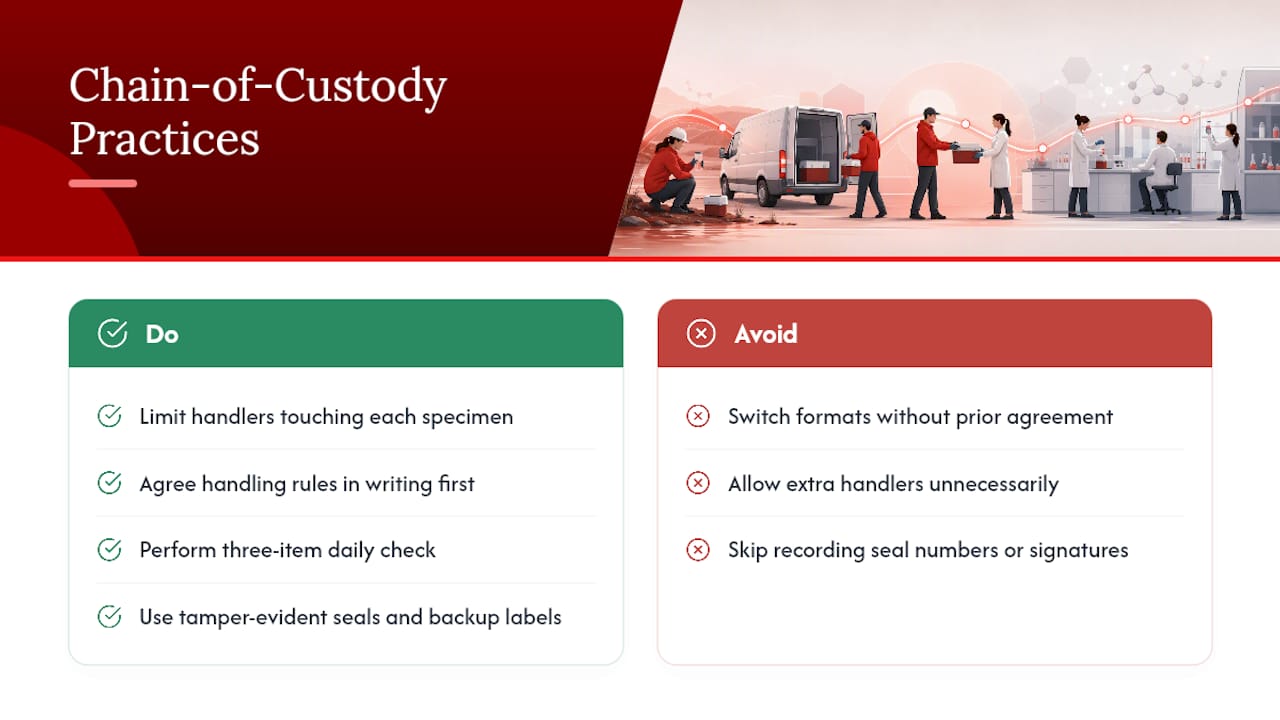
Teams that keep clean chains almost always do one thing well: they limit the number of hands touching a specimen. Every extra handler is another chance for a missed signature or an unrecorded seal number, and that’s true whether you’re running paper forms or a full electronic workflow.
Before switching to ECCF with a partner lab, agree on the handling rules in writing first, not after a specimen shows up in a format nobody expected. A three-item daily check, correct specimen ID, complete signatures, seal number recorded, catches most of the errors that actually cause problems. Tamper-evident seals and backup labels cost pennies. A challenged chain of custody costs a case.
— Justin
Procurement Support for Federal CCF Compatible Workflows
Getting the paperwork right only works if the physical supplies match it. Rapidtestcup stocks the multi-panel test cups, tamper-evident seals, and printable kit labels teams need to keep a chain of custody form fully backed by compliant collection materials, so your documentation and your specimens tell the same story.
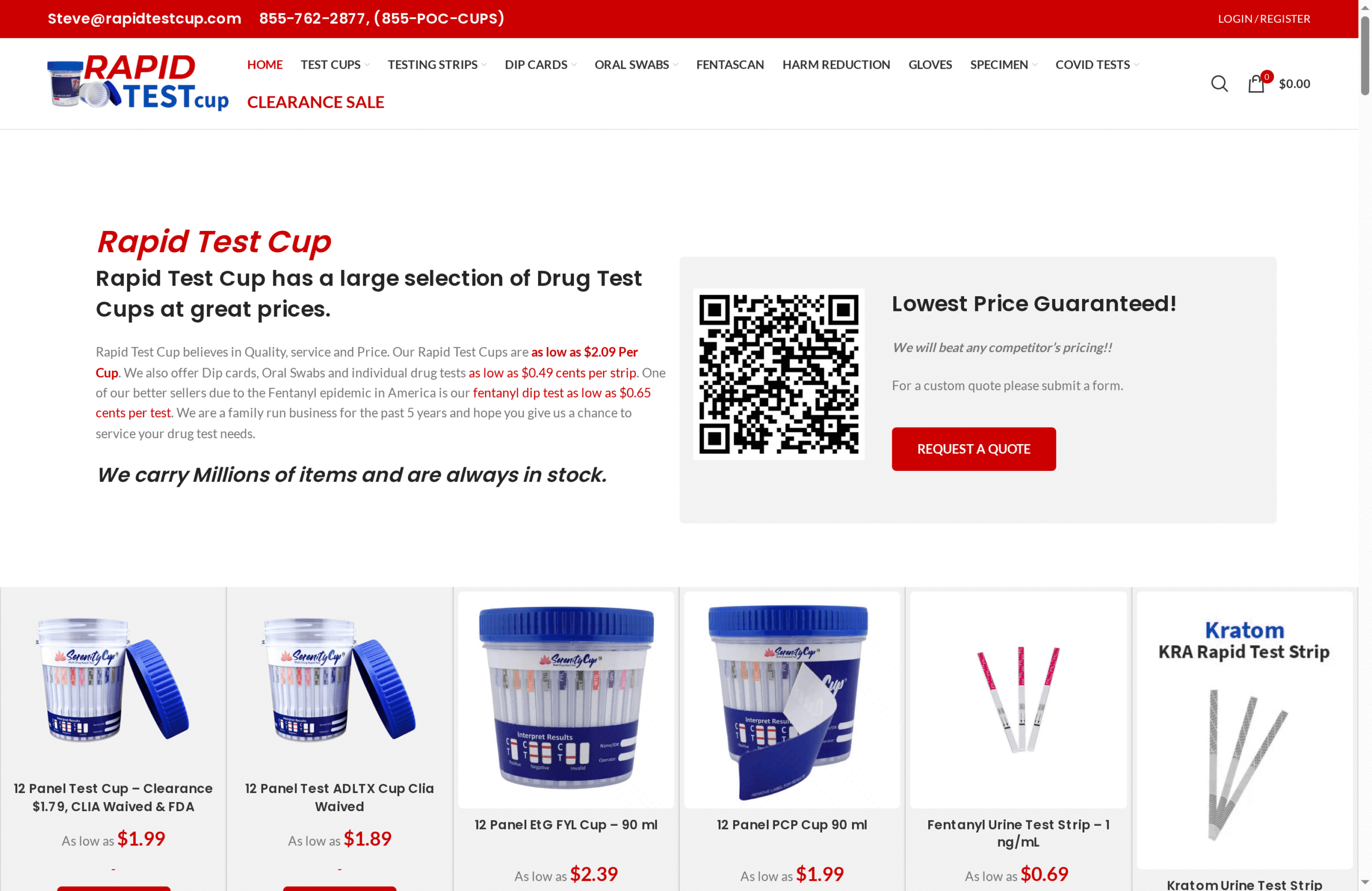
Our 12 panel drug test cups come with built-in seal features designed for CCF workflows, and they’re priced for bulk ordering when labs and collection sites need volume without a long procurement cycle. For teams standardizing collection procedures across multiple sites, the drug specimen collection guide for professionals pairs well with whatever cup or panel configuration you choose. Check current stock and bulk pricing on the 12 panel cup page and get your next order moving before your current supply runs low.
Official Downloads and Guidance
- 2026 Federal CCF notice — US DOT
- 2026 Federal CCF completion guidance — SAMHSA
- Evidence chain-of-custody template — NIJ
- USGS chain of custody form
- Chain of custody explanatory chapter — NCBI
Sources
- National Library of Medicine / NCBI – Chain of custody (explanatory chapter)
- US Department of Transportation – Revised CCF 2026 notice
- SAMHSA – Guidance for Using the 2026 Federal Custody and Control Form (CCF)
- National Institute of Justice – evidence-or-sample-chain-of-custody.docx