Blog
How to Use Drug Test Kits for Accurate Results

Finding reliable drug test kits can be a real challenge for many American rehabilitation centers striving to meet strict compliance standards. Accuracy is non-negotiable, especially when even a single error can compromise patient outcomes and audit readiness. This step-by-step guide brings clarity to each phase of the testing process so every American program director can create a trustworthy, legally defensible environment for drug screening.
Table of Contents
- Step 1: Prepare the Test Environment and Supplies
- Step 2: Collect and Handle Specimen Properly
- Step 3: Run the Drug Test Kit According to Instructions
- Step 4: Interpret and Verify Test Results
- Step 5: Dispose of Materials Safely and Document Outcomes
Quick Summary
| Key Point | Explanation |
|---|---|
| 1. Create a Clean Testing Environment | Select a private, undisturbed space to minimize contamination and ensure proper specimen collection and analysis. |
| 2. Prepare All Necessary Supplies | Gather collection containers, gloves, and documentation forms before testing to streamline the drug testing process. |
| 3. Follow Standard Specimen Collection Protocols | Verify donor identity, use proper containers, and maintain documentation for legal compliance and accurate results. |
| 4. Adhere to Test Kit Instructions | Follow manufacturer guidelines closely to ensure accurate results and minimize the risk of errors during testing. |
| 5. Securely Dispose of Testing Materials | Place all used components in biohazard containers and document the entire testing process for professionalism and legal compliance. |
Step 1: Prepare the Test Environment and Supplies
Creating a controlled and professional testing environment is critical for obtaining accurate drug test results. Your preparation sets the foundation for reliable specimen collection and analysis.
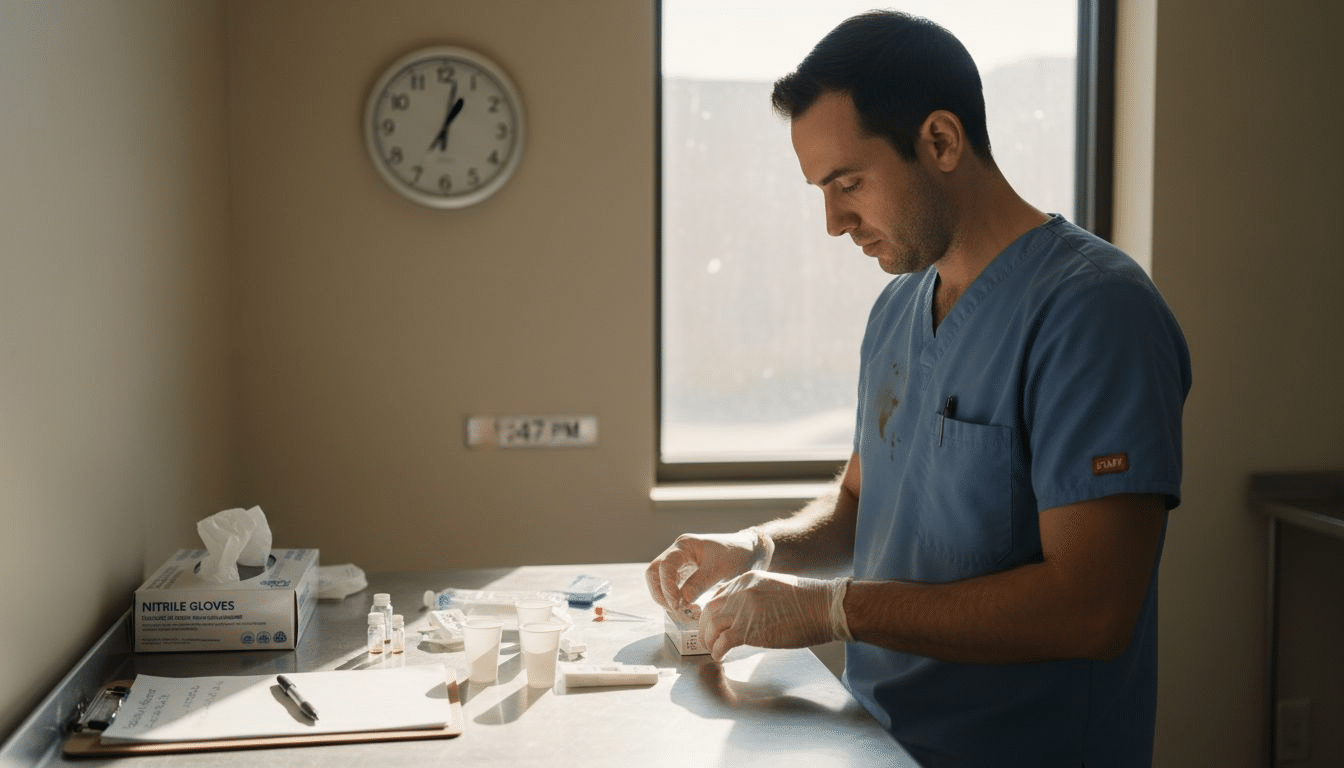
Start by selecting a clean, private space that allows for secure and undisturbed testing. According to FDA best practices for drug testing facilities, your environment must prevent contamination and provide adequate space for organized equipment placement. Choose a room with a flat surface, good lighting, and minimal foot traffic to minimize potential disruptions or specimen handling errors.
Gather all necessary supplies before beginning testing. Your testing kit should include collection containers, gloves, documentation forms, and the specific drug test panels you plan to use. National Testing Center recommendations emphasize having all materials prepared and readily accessible before initiating the testing process. Arrange supplies in a logical order that supports a smooth, systematic workflow.
Here’s a summary of essential supplies and their roles in a drug testing environment:
| Supply Type | Purpose | Impact on Testing Integrity |
|---|---|---|
| Collection containers | Secure specimen storage | Prevents contamination |
| Gloves | Protects specimen from handlers | Minimizes cross-contamination |
| Documentation forms | Records test and donor details | Supports chain-of-custody |
| Test panels | Detects specific drug classes | Ensures accurate screening |
Pro tip: Keep a small cleaning station with disinfectant wipes and paper towels nearby to immediately sanitize any surfaces and maintain a sterile testing environment.
Step 2: Collect and Handle Specimen Properly
Collecting and handling drug test specimens requires precision and careful attention to detail. Your goal is to ensure the integrity and accuracy of the testing process from collection through submission.
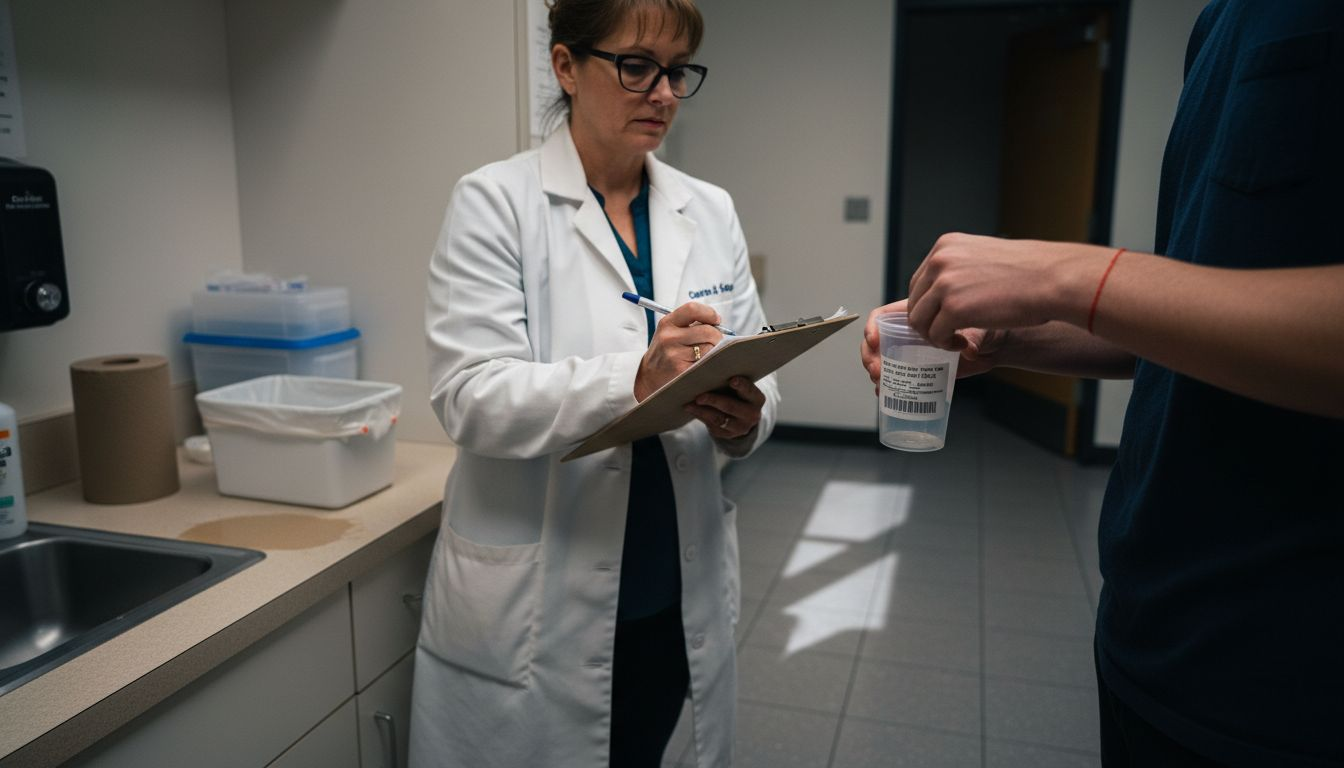
Specimen collection protocols demand strict adherence to standardized procedures that prevent contamination and maintain legal chain-of-custody. Begin by verifying the donor’s identity using official identification and ensuring they understand the testing process. Use designated collection containers specifically designed for drug testing, handling them with clean gloves to avoid introducing external contaminants.
Follow systematic steps for proper specimen management. Always collect specimens in the presence of an authorized observer, label containers immediately with unique identifiers, and document relevant details thoroughly. Accredited healthcare collection guidelines emphasize maintaining clear documentation and following infection control protocols throughout the collection process. Once collected, store specimens at recommended temperatures and prepare them for secure transportation to the testing laboratory.
Pro tip: Wear disposable gloves during the entire specimen collection process and change them between different stages to minimize cross-contamination risks.
Step 3: Run the Drug Test Kit According to Instructions
Running a drug test kit requires meticulous attention to detail and precise execution. Your goal is to ensure accurate results by following each step carefully and systematically.
Professional drug testing protocols emphasize the critical importance of adhering strictly to manufacturer instructions. Begin by carefully unpacking the test kit and checking all components for integrity. Read the entire instruction manual before starting, paying close attention to specific timing requirements, sample application techniques, and result interpretation windows. Different test panels may have unique procedural steps, so avoid assuming all kits operate identically.
Accurately execute each testing stage while maintaining a controlled environment. National testing center guidelines recommend documenting every step of the testing process, including the exact time of sample application, waiting period, and initial result observation. Monitor environmental conditions like temperature and humidity, as these can impact test accuracy. Handle the test kit components with clean gloves and avoid touching the test areas directly to prevent potential contamination.
Pro tip: Set a timer precisely when you begin the test to ensure you read results within the manufacturer’s specified time window and avoid misinterpreting potential faint or developing test lines.
Step 4: Interpret and Verify Test Results
Interpreting drug test results requires careful analysis and understanding of potential nuances. Your objective is to accurately assess the test outcome while recognizing the limitations of initial screening methods.
Professional urine drug screening protocols emphasize the importance of distinguishing between preliminary and confirmatory test results. Initial immunoassay screenings can produce false positives or negatives, making it crucial to read test lines precisely and understand the subtle variations in color intensity and line definition. Compare the test lines against the control line, noting any faint or partial lines that might indicate trace substance presence.
The following table outlines differences between initial screening tests and confirmatory tests:
| Test Type | Method | Accuracy Level | Recommended Use |
|---|---|---|---|
| Screening | Immunoassay | Susceptible to errors | Initial drug detection |
| Confirmatory | GC-MS analysis | Highly precise | Verification of positives |
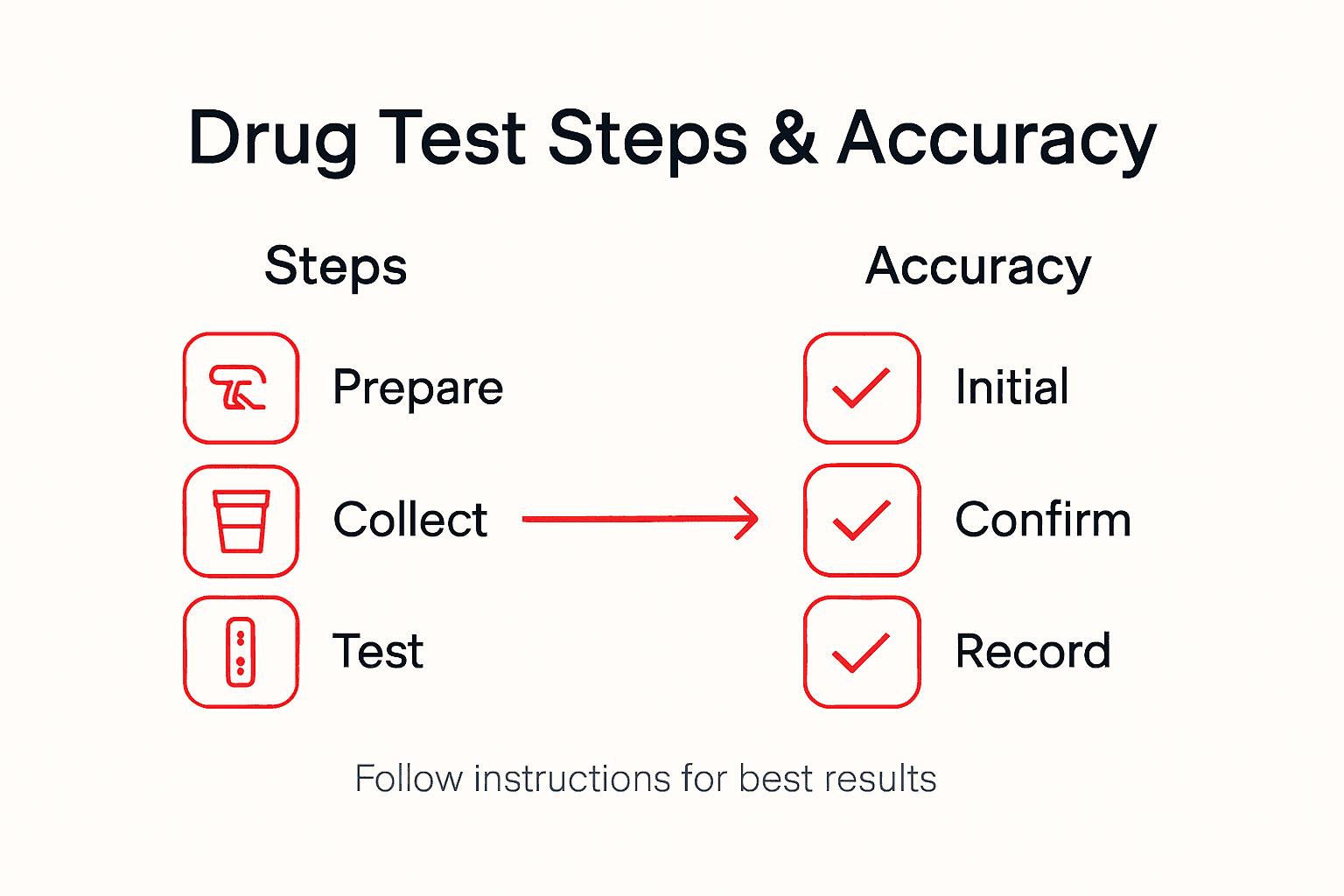
Forensic drug analysis standards recommend a systematic approach to result verification. When a test appears positive, consider requesting a confirmatory test using more advanced techniques like gas chromatography-mass spectrometry to eliminate potential false positives. Document all observations meticulously, including the exact time of result reading, line intensities, and any unusual test characteristics. Context matters tremendously context when interpreting results, so consider factors like medication history, potential cross-reactivity, and specific testing panel limitations.
Pro tip: Always photograph the test result immediately after the designated reading time as a permanent record, ensuring you capture the most accurate representation of the test lines for potential future reference or verification.
Step 5: Dispose of Materials Safely and Document Outcomes
The final stage of drug testing involves responsible disposal of materials and comprehensive documentation to maintain professional standards and legal compliance. Your actions here protect both personal privacy and environmental safety.
Biohazard waste management protocols require careful handling of used testing materials. Immediately place all used test components including containers, strips, and gloves into designated biohazard containers. These specialized containers prevent potential contamination and unauthorized access to biological specimens. Ensure the container is sealed properly and marked with appropriate biohazard labeling to signal potential infectious materials.
Document the entire testing process meticulously, creating a comprehensive record that includes date, time, testing panel used, initial results, and any observations. Include details about specimen collection, testing conditions, and disposal procedures. This documentation serves multiple purposes including maintaining chain-of-custody integrity, supporting potential future confirmatory testing, and providing a clear audit trail for professional or legal requirements.
Pro tip: Create a standardized documentation template beforehand to ensure consistent and thorough recording of all critical testing information, reducing the chance of overlooking important details.
Achieve Accurate Drug Test Results with Reliable Supplies from RapidTestCup
The challenge of obtaining precise and trustworthy drug test outcomes hinges on following strict procedures and using high-quality materials. As detailed in the article “How to Use Drug Test Kits for Accurate Results,” maintaining specimen integrity, adhering to manufacturer instructions, and proper documentation are essential steps that require dependable testing kits and collection supplies. Without the right tools, even the most careful processes risk errors, contamination, or invalid results that can compromise professional or legal standards.
At RapidTestCup, we understand these critical needs. Our extensive selection of FDA-approved drug test cups, urine test strips, specimen collection accessories, and adulterant detection products supports your workflow at every stage — from specimen collection to safe disposal. Explore our collection to access affordable, CLIA waived kits designed for accuracy and ease of use whether you represent a laboratory, clinic, or a substance abuse program. Trusting our products means you can concentrate on following best practices like labeling, timing your tests carefully, and documenting results without worrying about kit reliability.
Don’t let uncertainty undermine your drug testing program. Visit RapidTestCup today to stock up on quality supplies and experience quick shipping that keeps your operations running smoothly. The right test kit can make all the difference between a valid result and costly delays — act now to ensure your testing is precise, professional, and compliant.
Frequently Asked Questions
How should I prepare the testing environment before using drug test kits?
Creating a clean and private testing environment is crucial for accurate results. Select a room with good lighting and minimal foot traffic, ensuring it is equipped with all necessary supplies before starting the test.
What steps should I follow to collect and handle specimens properly?
To ensure accurate results, verify the donor’s identity and use designated collection containers. Always collect specimens in the presence of an authorized observer, label containers immediately, and document every step thoroughly.
How do I correctly run a drug test kit according to the manufacturer’s instructions?
Carefully read the entire instruction manual before starting the test. Follow each step precisely, maintaining the specified timing and temperature conditions to ensure the test’s accuracy.
What should I do if I get a positive result from an initial drug test?
If the initial test shows a positive result, consider requesting a confirmatory test for verification. Utilize advanced testing methods to eliminate potential false positives and document all observations for future reference.
How can I safely dispose of materials after drug testing?
Immediately place all used testing materials into designated biohazard containers to prevent contamination. Ensure that these containers are sealed and properly labeled to comply with biohazard waste management protocols.
What information should I include in my documentation after conducting a drug test?
Document key details such as the date, time, testing panel used, initial results, and any observations made during the process. This comprehensive record will maintain chain-of-custody integrity and support future confirmatory testing.