

Blog
Role of Drug Testing in Clinics: Ensuring Safe Care


Selecting the right approach to drug testing can feel confusing when myths and outdated beliefs cloud clinical practice. For healthcare professionals aiming to provide high-quality care, understanding the true purpose of drug testing as a harm reduction tool means placing patient safety and trust at the center of every protocol. This resource clarifies the core definition, addresses common misconceptions, and offers practical guidance so your clinic can make ethical, effective decisions that meet both legal requirements and patient needs.
Table of Contents
- Drug Testing in Clinics: Core Definition and Myths
- Types of Clinical Drug Tests and Their Uses
- Clinical Drug Testing: Legal and Compliance Frameworks
- Patient Rights, Ethics, and Result Interpretation
- Risks, Limitations, and Avoidable Errors
Key Takeaways
| Point | Details |
|---|---|
| Understanding Drug Testing | Drug testing is a clinical tool for identifying substance use, supporting diagnoses, and monitoring recovery, not a judgment mechanism. |
| Addressing Common Myths | Dispelling myths about drug testing helps maintain trust and improves its effectiveness in clinical practice. |
| Legal Compliance | Ensure strict compliance with legal requirements related to drug testing to protect patient rights and clinical integrity. |
| Interpreting Test Results | Always combine drug test results with clinical context and patient history to avoid misdiagnosis and foster trust in treatment decisions. |
Drug Testing in Clinics: Core Definition and Myths
Drug testing in clinics is far more nuanced than most people realize. It’s not about judgment or punishment—it’s a clinical tool that identifies substance use and connects patients to appropriate care. Understanding what drug testing actually is (and isn’t) shapes how you implement it effectively in your clinic.
What Drug Testing Really Means
Drug testing refers to detecting drugs or metabolites in biological samples within a specific timeframe. Your clinic collects samples—typically urine, oral fluid, or hair—and analyzes them to identify the presence of controlled substances or medications.
The goal isn’t to shame patients. Drug testing serves three critical functions:
- Identifies substance use disorders early
- Supports diagnosis and treatment planning
- Monitors recovery and medication compliance during treatment
Drug testing is a harm reduction tool designed to keep patients safe and guide them toward appropriate healthcare resources.
Common Myths That Undermine Good Practice
Misunderstandings about drug testing can damage patient trust and reduce effectiveness. Here are the myths that actually matter in clinical settings:
Myth 1: Drug testing proves moral failure. This one persists despite decades of research showing substance use disorders are medical conditions, not character flaws. Your patients need treatment, not judgment.
Myth 2: All drug tests are equally reliable. Accuracy varies significantly based on test type, sample collection, and laboratory standards. CLIA-waived, FDA-approved tests ensure consistent results, but quality matters.
Myth 3: One positive test means addiction. A single positive result indicates use, not necessarily disorder. Clinical context matters—including patient history, symptoms, and additional assessment findings.
Myth 4: Drug testing stops substance use. Testing identifies problems; it doesn’t solve them. Behavioral interventions and treatment engagement drive actual change.
Why Clinics Need Accurate Definitions
Your clinic’s approach to drug testing directly impacts patient outcomes. Clear definitions prevent miscommunication with patients and staff. When everyone understands testing as a diagnostic tool rather than a punishment mechanism, compliance improves.
Understanding biological sample analysis for drug detection helps you explain the process to hesitant patients and frame results as starting points for treatment, not endpoints for judgment.
Accurate protocols also protect your clinic legally and ethically. You’re not making accusations—you’re gathering clinical information to guide care decisions.
Pro tip: Educate your entire team on the distinction between substance use, abuse, and addiction before implementing testing protocols; this shared understanding transforms how staff communicate results to patients and improves acceptance of testing as a care tool.
Types of Clinical Drug Tests and Their Uses
Your clinic doesn’t need a one-size-fits-all testing approach. Different specimen types, detection windows, and testing methods exist for specific clinical reasons. Choosing the right test depends on your patient population, suspected substances, and what you actually need to know.
The Five Main Testing Methods
Each specimen type has distinct advantages and limitations. Understanding these differences ensures you’re collecting the right sample for your clinical question.
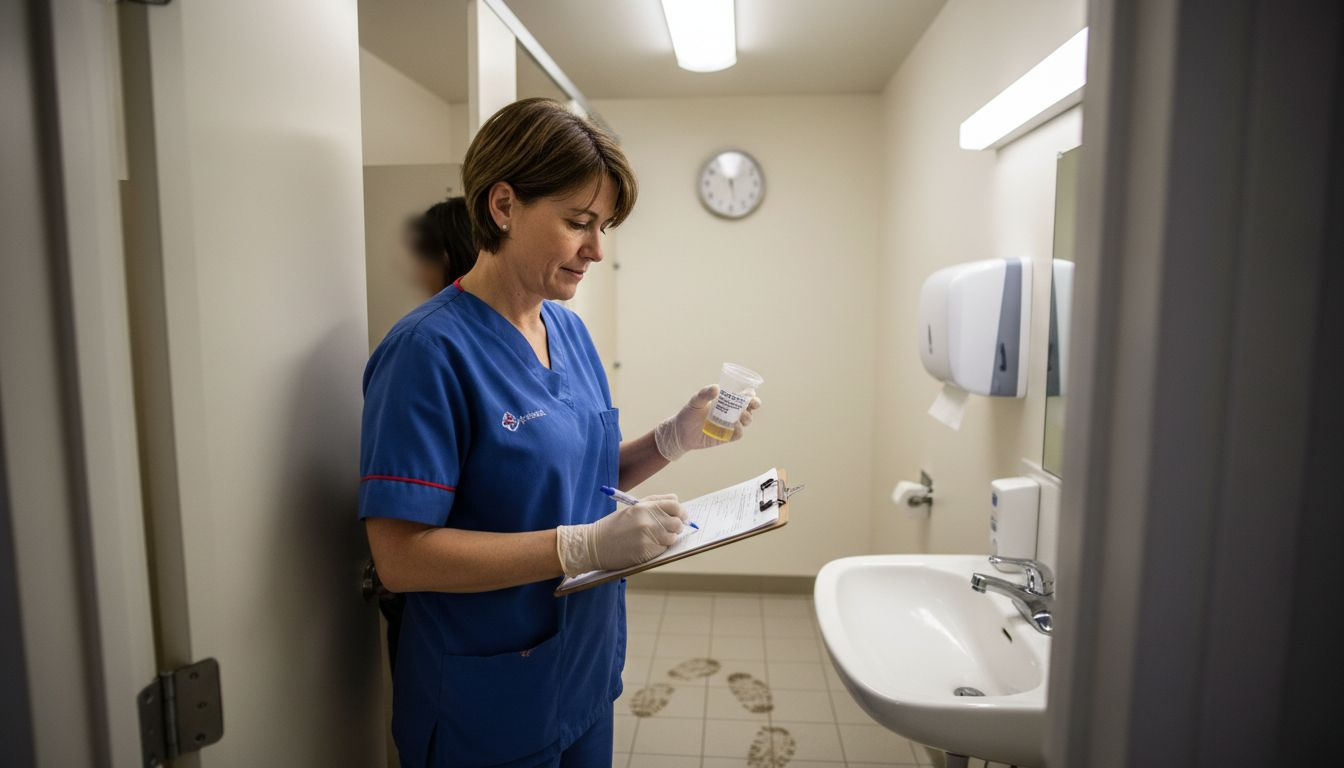
Urine Testing remains the most common method in clinics. It’s affordable, non-invasive, and detects most drugs within 2-3 days of use. However, it doesn’t show impairment in real-time and requires supervised collection to prevent tampering.
Blood Testing offers accuracy and a shorter detection window (typically 6-24 hours). It’s useful when immediate impairment assessment matters, but it’s more invasive and expensive than urine testing.
Oral Fluid Testing (saliva) detects recent use and shows impairment potential. It’s harder to tamper with than urine and works well for roadside or workplace screening, though detection windows are shorter.
Hair Testing reveals chronic use patterns over months. It’s excellent for long-term monitoring but can’t detect very recent use and raises privacy concerns for some patients.
Sweat Testing through patches provides continuous monitoring over days. It’s less common in clinics but valuable for intensive outpatient programs or monitoring compliance.
Here is a comparison of clinical drug testing methods and their typical clinical application:
| Testing Method | Detection Window | Typical Clinical Use | Invasiveness |
|---|---|---|---|
| Urine | 2-3 days | Early identification, monitoring | Low |
| Blood | 6-24 hours | Impairment assessment | High |
| Oral Fluid | Few hours to 2 days | Recent use, workplace screening | Moderate |
| Hair | Months | Long-term pattern recognition | Low |
| Sweat Patch | Days | Continuous accountability | Moderate |
Different specimen types answer different clinical questions—choose based on your detection window needs, not convenience.
Detection Windows and Clinical Context
Biological sample types vary widely in detection capacity and timeframes. A urine test won’t catch someone who used cocaine 4 days ago, but hair testing will show use from months prior.
Your testing decision should align with clinical goals:
- Early identification of substance use: Use urine or oral fluid
- Monitoring compliance with abstinence: Use regular urine or hair testing
- Assessing current impairment: Use blood or oral fluid
- Long-term pattern recognition: Use hair testing
- Continuous accountability: Use sweat patches in intensive programs
Confirmatory Testing Matters
Initial screening tests (like rapid cups) are sensitive but not always specific. Different testing methods serve complementary purposes in clinical workflows, and confirmatory testing through laboratory analysis prevents false positives that damage patient trust.
Always plan for confirmatory testing when results will drive major clinical decisions—like starting medication, adjusting treatment intensity, or addressing patient concerns about accuracy.
Pro tip: Select your primary specimen type based on your clinic’s most common clinical question, then establish a clear protocol for when confirmatory testing gets ordered; this consistency prevents confusion and ensures results actually guide treatment decisions.
Clinical Drug Testing: Legal and Compliance Frameworks
Drug testing in clinics operates within strict legal boundaries. Regulations vary by jurisdiction, but core principles remain consistent: protect patient rights, maintain confidentiality, ensure accuracy, and document everything. Ignoring compliance requirements exposes your clinic to liability and undermines patient trust.
Key Legal Requirements
Your clinic must understand which regulations apply to your specific setting. Federal laws, state laws, and accreditation standards often layer on top of each other, creating complex compliance obligations.
Chain of custody is non-negotiable. Every sample must be tracked from collection through analysis to disposal, with documented handoffs at each step. This creates legal defensibility if results are challenged.
Patient consent and privacy matter legally and ethically. Patients have the right to know you’re testing, why you’re testing, and how results will be used. Document consent clearly and protect test results like any other sensitive medical information.
Specimen collection standards prevent legal challenges. Supervised collection for observed specimens, proper labeling, temperature control, and sealed containers all matter. Poor collection practices invalidate results legally.
Compliance isn’t optional—it’s the foundation that makes your test results legally defensible and clinically trustworthy.
Regulatory Framework Overview
Standardized practices ensure quality care and regulatory adherence in clinical drug testing. Healthcare providers must conduct tests ethically, interpret results accurately, and maintain confidentiality throughout.
Your clinic likely operates under multiple regulatory layers:
- Federal rules (CLIA, HIPAA)
- State licensing requirements
- Accreditation standards (Joint Commission, CARF)
- Workplace safety regulations
- Insurance and reimbursement rules
Documentation and Defensibility
If your test results ever end up in court or during an audit, documentation proves your clinic followed proper procedure. Write down collection times, observer names, specimen conditions, chain of custody transfers, and result interpretation dates.
Specimen collection protocols and chain of custody procedures directly impact the legal validity of test results. Organizations must align testing practices with applicable laws and accreditation standards.
Never assume verbal communication is enough. Written procedures, signed acknowledgments, and timestamped records protect both you and your patients.
Pro tip: Create a compliance checklist covering consent, collection, chain of custody, documentation, and result communication, then audit your clinic quarterly against it; this proactive approach catches gaps before they become legal problems.
Patient Rights, Ethics, and Result Interpretation
Patients deserve transparency about drug testing—and your clinic’s credibility depends on it. Testing must be conducted ethically, results interpreted carefully, and patients treated with dignity throughout. A positive test isn’t a character judgment; it’s clinical information that guides treatment decisions.
Informed Consent and Transparency
Informed consent means patients know you’re testing, why, and how results will be used. This isn’t just ethical—it’s a legal requirement. Explain the purpose clearly: identifying substance use to support treatment planning, not to punish or shame.
Patients should understand:
- What substances you’re testing for
- How the test works and what it can show
- How results will be shared and stored
- Consequences of positive or negative results
- Their right to understand and question results
Documenting consent protects both you and your patients. A simple signed acknowledgment demonstrates you provided this information and the patient agreed.
Patients who understand testing are more likely to engage with treatment and accept results as part of their care plan.
Interpreting Results Ethically and Accurately
Test result interpretation requires understanding limitations and clinical context rather than viewing results in isolation. A single positive test doesn’t automatically confirm addiction; it confirms the presence of a substance.
Common interpretation errors damage patient trust:
- False positives: Some medications or foods trigger positive results for drugs they aren’t
- Timing confusion: A positive result reflects past use, not current impairment
- Single-test diagnosis: One positive doesn’t equal substance use disorder—it requires comprehensive assessment
- Ignoring clinical context: A patient’s explanation matters; listen before concluding
Always interpret results as one data point within a broader clinical picture. Combine test results with patient history, symptoms, and behavioral observations.
Confidentiality and Patient Dignity
Fair treatment requires protecting patient privacy and using results as clinical tools30825-4/fulltext) rather than punishment mechanisms. Test results are protected health information—treat them accordingly.
Avoid stigmatizing language when discussing results. Never label patients as “positive” or “dirty”—use clinical terminology like “substance detected” or “medication present.” This language shift reflects respect and professionalism.
Results belong only to patients and their care team. Don’t share findings with employers, family, or others without explicit consent unless legally mandated.
Pro tip: Schedule result conversations privately, present findings calmly, and ask patients to explain positive results before making treatment adjustments; this collaborative approach builds trust and often reveals important clinical context that changes your interpretation.
Risks, Limitations, and Avoidable Errors
No drug test is perfect. False positives, false negatives, collection errors, and interpretation mistakes happen regularly in clinics. Understanding these risks protects your patients and prevents clinical decisions based on unreliable results. Awareness is your first defense against avoidable errors.
False Positives and False Negatives
False positives occur when tests detect substances that aren’t actually present. Common culprits include over-the-counter medications, prescription drugs, foods, and even supplements that chemically resemble illegal substances.
Example: Cold medications containing pseudoephedrine can trigger positive results for amphetamines. Without knowing this, you might misinterpret a legitimate medication use as substance abuse.
False negatives happen when tests miss actual drug use. This occurs with:
- Testing too early or too late (missing detection windows)
- Diluted samples from excessive water intake
- Adulterants intentionally added to mask drug use
- Individual metabolic differences affecting drug clearance
Understanding drug testing limitations and false results requires confirmatory testing before making major clinical decisions. Never act on screening results alone.
A positive screening test is a question, not an answer—confirmatory testing provides the actual answer.
Collection and Handling Errors
Technical mistakes during specimen collection and storage invalidate results. These errors are entirely preventable with proper training and protocols.
Common collection mistakes:
- Unlabeled or mislabeled samples
- Broken chain of custody documentation
- Improper temperature control (degrading samples)
- Unsupervised collection allowing sample substitution
- Contaminated collection containers
One mislabeled sample creates legal liability and clinical harm. A patient’s positive result might belong to someone else. Establish clear collection procedures and train staff to follow them consistently.
Below is a summary of main sources of errors in drug testing and how clinics can proactively prevent them:
| Error Source | Impact on Results | Prevention Strategy |
|---|---|---|
| False Positives | Wrong substance detected | Confirm with lab analysis |
| False Negatives | Missed substance use | Time specimen collection carefully |
| Collection Mistakes | Invalid or misattributed tests | Staff training, strict chain of custody |
| Interpretation Errors | Misdiagnosis or mistrust | Contextual clinical assessment |
| Biological Variability | Detection window varies | Adjust for patient factors |
Biological and Timing Variability
Drug testing methods vary in sensitivity and face limitations from biological specimen variability and testing timing. Individual metabolism differs dramatically—the same drug dose clears faster in some patients than others.
Age, body weight, organ function, and concurrent medications all affect detection windows. A result interpreted without considering these factors leads to misinterpretation.
Testing timing matters enormously. Testing someone 72 hours after cocaine use yields a negative result, not because they didn’t use cocaine, but because it’s past the detection window.
Interpretation Without Clinical Context
Laboratory results don’t speak for themselves. Interpreting a positive test in isolation—without patient history, medications, or behavioral observations—causes misdiagnosis and inappropriate treatment.
Always ask: Does this result make clinical sense? Does the patient have a plausible explanation? Are there medications or foods that could trigger this result? Combine testing with comprehensive clinical assessment.
Pro tip: Implement a three-step verification process: screen, confirm, then interpret—never rely on screening results alone, always order confirmatory testing for actionable results, and always pair positive results with direct patient conversation before adjusting treatment.
Equip Your Clinic for Accurate and Ethical Drug Testing
Implementing drug testing as a clinical tool demands reliable supplies and trusted partners. The article highlights the challenge of avoiding errors such as false positives, collection mistakes, and improper result interpretation. Your clinic needs high-quality, FDA-approved, and CLIA-waived testing kits that support your goal of safe, transparent, and legally compliant care.
Discover a wide range of drug testing products and specimen collection supplies at RapidTestCup. Whether you require urine test cups, dip cards, or adulteration detection tools, you can ensure your clinic’s protocols follow best practices while maintaining patient trust. Act now to streamline your drug testing process with affordable pricing and fast shipping. Visit RapidTestCup to upgrade your clinic’s testing capabilities today and take the first step toward safer, more responsible care.
Frequently Asked Questions
What is the purpose of drug testing in clinics?
Drug testing in clinics serves to identify substance use disorders early, support diagnosis and treatment planning, and monitor recovery and medication compliance during treatment.
How do different types of drug tests vary in terms of detection windows?
Different drug tests have unique detection windows: urine tests detect most drugs within 2-3 days, blood tests typically within 6-24 hours, oral fluid tests for a few hours to 2 days, hair tests for months, and sweat patches for several days.
What are the common myths surrounding drug testing in clinics?
Common myths include the beliefs that drug testing indicates moral failure, that all tests are equally reliable, that a single positive test confirms addiction, and that testing alone can stop substance use.
Why is confirmatory testing important in clinical drug testing?
Confirmatory testing is crucial because initial screening tests can produce false positives. Confirmatory tests provide accurate results that guide major clinical decisions, ensuring the reliability of test outcomes.