Blog
Substance Abuse Screening: Ensuring Treatment Success


Every treatment center director knows the pressure that comes with choosing the right screening tools for your client population. Drug screening is more than routine paperwork—it is the backbone of compliant, outcomes-driven care in both urban and rural American settings. When you select evidence-based screening methods and align processes with regulatory standards, your program gains reliable data to individualize treatment, reduce risk, and demonstrate quality to oversight bodies.
Table of Contents
- Defining Substance Abuse Screening In Treatment
- Major Drug Screening Methods Explained
- Legal Requirements And Compliance Standards
- Common Challenges And Solutions For Programs
Key Takeaways
| Point | Details |
|---|---|
| Substance Abuse Screening Is Essential | Screening is a foundational step in treatment that identifies substance use severity and co-occurring conditions early. |
| Rapid and Reliable Testing Is Crucial | Urine testing combined with confirmatory testing provides immediate and accurate results for clinical decisions. |
| Compliance With Legal Standards Is Mandatory | Adherence to confidentiality, informed consent, and testing accuracy is critical to protect both clients and the program. |
| Addressing Common Challenges Is Necessary | Overcoming funding constraints and stigma through staff training and integration into treatment planning enhances screening effectiveness. |
Defining Substance Abuse Screening in Treatment
Substance abuse screening is the systematic process of identifying individuals with risky, harmful, or dependent substance use patterns before they reach crisis points. In treatment settings, this isn’t a one-time box-check—it’s the foundation that determines your entire intervention strategy.
Think of screening as your early warning system. When someone walks through your door, you need to quickly understand their substance use history, severity level, and any co-occurring health issues. Screening and assessment approaches are designed to be adaptable across different clinical settings, allowing your staff to tailor methods based on your specific population and resources.
Here’s what effective screening accomplishes:
- Identifies substance use severity before complications worsen
- Uncovers co-occurring conditions like depression, anxiety, or trauma
- Establishes baseline data for measuring treatment progress
- Guides personalized treatment planning and intervention intensity
- Improves client engagement by showing you understand their specific situation
The screening process differs fundamentally from full assessment. Screening is brief and focused—typically 5-15 minutes. It answers one core question: Does this person have a substance use problem that needs intervention?
Full assessment comes later and digs deeper into treatment history, medical background, social factors, and psychiatric conditions. But screening comes first and gates whether a full assessment is even necessary.
Accurate screening at intake directly correlates with treatment completion rates and long-term recovery outcomes.
Program directors often struggle with under-detection because screening tools don’t match their population or staff aren’t trained properly. Your screening tool must match your specific clientele—teenagers screen differently than middle-aged adults; rural populations require different approaches than urban settings.
The World Health Organization recommends brief intervention screening methods that facilitate early identification and personalized treatment paths. These tools move clients quickly from identification to intervention without unnecessary delays.
Screening also creates accountability. When you document what was screened, how severity was rated, and what factors were identified, you build a clinical record that protects your program and ensures continuity of care.
Pro tip: Use standardized screening tools consistently across your entire staff—this reduces bias, improves reliability, and creates comparable data you can analyze to refine your intake processes over time.
Major Drug Screening Methods Explained
Drug screening methods detect the presence or absence of substances using biological samples—typically urine, blood, or hair. Your choice of method affects speed, accuracy, and cost. Understanding each option helps you select the right tool for your treatment program’s needs.
Urine drug screening remains the most common choice in treatment settings. It’s fast, non-invasive, and relatively affordable. Results arrive within minutes using rapid immunoassay tests, allowing immediate clinical decisions during intake or monitoring sessions.
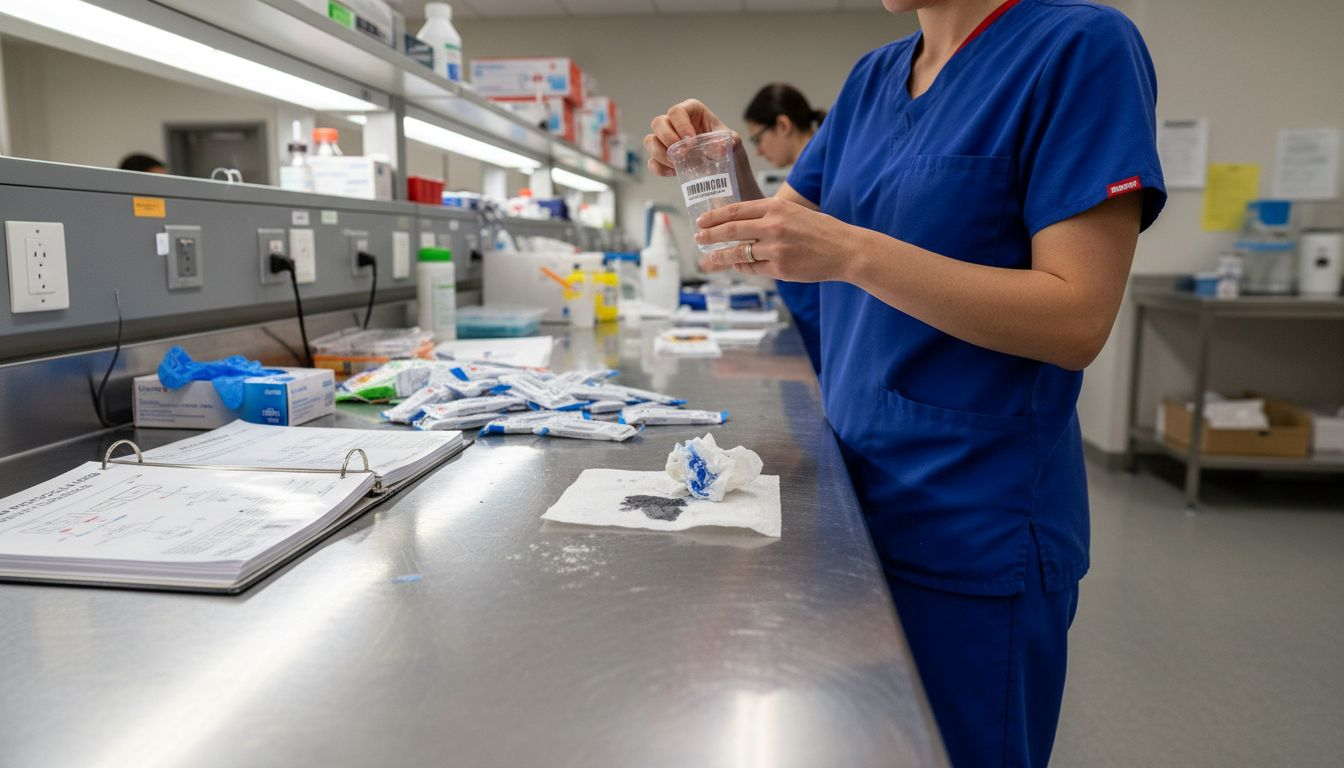
However, urine screening alone isn’t conclusive. A positive result requires confirmatory testing through methods like advanced laboratory confirmation techniques. These confirmatory tests use sophisticated instrumentation to eliminate false positives and provide legally defensible results.
Here are the primary screening methods you’ll encounter:
- Urine testing: Rapid results (5-15 minutes), cost-effective, non-invasive
- Blood testing: More invasive but detects recent use; requires phlebotomy
- Hair testing: Detects longer history (90 days); slower results
- Oral fluid testing: Quick, non-invasive alternative; growing in clinical use
- Breath testing: Primarily for alcohol; limited substance use applications
For treatment programs, urine testing with confirmatory capability offers the best balance. You get immediate screening data for clinical decisions, then confirm results with definitive testing for documentation and legal protection.
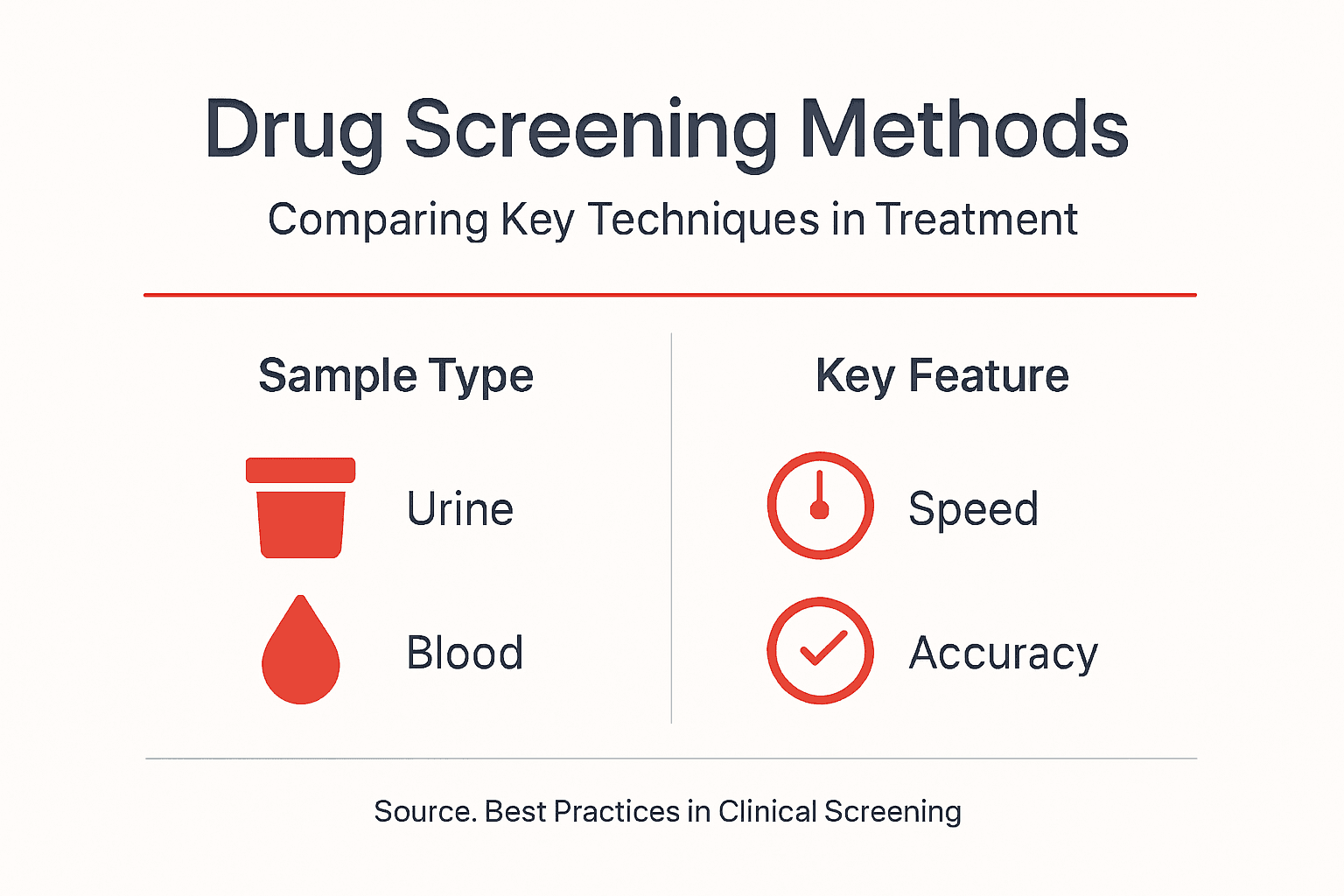
Here’s a comparison of common drug screening methods used in treatment settings:
| Screening Method | Detection Window | Invasiveness | Typical Use Case |
|---|---|---|---|
| Urine Testing | 1-3 days | Non-invasive | Routine intake & monitoring |
| Blood Testing | Up to 24 hours | Moderately invasive | Recent use detection |
| Hair Testing | Up to 90 days | Non-invasive | Long-term substance history |
| Oral Fluid Testing | 12-48 hours | Non-invasive | Quick, on-site screening |
| Breath Testing | Hours (alcohol) | Non-invasive | Alcohol detection only |
Confirmatory testing eliminates false positives and protects your program from liability and clinical errors.
Modern laboratories use advanced methods like liquid chromatography and mass spectrometry detection to identify even novel substances. These sophisticated approaches catch emerging drugs that standard immunoassay tests might miss.
The speed advantage of rapid screening is critical. You need results during intake so clients can’t manipulate results or leave before you understand their situation. Rapid tests provide that clinical window.
Multi-drug panels expand your detection capacity. Standard panels screen for five drugs (cocaine, marijuana, opioids, amphetamines, phencyclidine). Extended panels add benzodiazepines, barbiturates, and synthetic opioids—matching your population’s actual substance use patterns.
Remember: screening detects drug presence but cannot diagnose substance use disorder. A positive test means the substance is present, not necessarily that addiction exists. Clinical assessment follows screening results.
Pro tip: Pair rapid urine screening during intake with confirmatory testing and keep both results documented—this creates a bulletproof clinical record that supports your treatment decisions and protects liability.
Legal Requirements and Compliance Standards
Substance abuse screening operates within a complex legal and regulatory framework. Your treatment program must comply with federal regulations, state laws, and ethical standards or face serious consequences—fines, loss of licensure, and liability exposure.
The foundation starts with understanding that screening programs must follow evidence-based treatment standards established by major health organizations. These standards ensure your screening practices are ethical, respectful of client rights, and scientifically sound.
Federal regulations govern how you handle screening data and protect client privacy. The main compliance areas include:
- Confidentiality requirements: Client screening results are protected health information; unauthorized disclosure violates law
- Informed consent: Clients must understand screening procedures, what substances are tested, and how results are used
- Testing accuracy: Your tests must be FDA-approved or CLIA-waived to produce legally defensible results
- Record retention: Documentation standards require specific storage periods and secure handling practices
- Chain of custody: Any sample sent for confirmatory testing must follow strict documentation protocols
Your program likely operates under substance abuse treatment regulations specific to your state. These vary significantly. Some states mandate specific screening tools; others allow flexibility. Some require licensed personnel to conduct screening; others permit trained staff.
Non-compliance with screening regulations can result in license revocation, loss of funding, and personal liability for program directors.
Institutional oversight bodies enforce adherence through regulatory compliance frameworks and oversight mechanisms. Your program may face audits examining whether your screening practices align with stated policies and regulatory requirements.
Client rights protection is non-negotiable legally and ethically. Clients must consent to screening before it occurs. They have rights to understand results, challenge inaccurate testing, and access their own records. Violating these rights creates legal exposure.
Addiction treatment programs receiving federal funding must maintain strict screening compliance. Medicaid and Medicare reimbursement depends on meeting specific documentation standards. Failure to document screening properly means lost reimbursement—not just for individual clients but potentially program-wide penalties.
Licensing boards in your state establish minimum standards for screening qualifications. Some states require medical directors to oversee screening; others allow master’s-level counselors to manage it. Ensure your staff credentials match your state’s legal requirements.
Drug testing equipment must meet quality standards. Your rapid test kits should be CLIA-waived, meaning they’ve been validated for reliable results. Using non-validated tests exposes your program to liability if results are inaccurate.
Below is a summary of key compliance responsibilities for treatment programs:
| Compliance Area | Essential Action | Consequence If Missed |
|---|---|---|
| Confidentiality | Safeguard screening results | Legal penalties, lawsuits |
| Informed Consent | Obtain written client agreement | Loss of trust, program violation |
| Testing Accuracy | Use only validated, approved tests | Inaccurate results, liability |
| Record Retention | Securely store records by law’s timeline | Audit failures, lost funding |
| Chain of Custody | Document all test handling steps | Results challenged in court |
Pro tip: Conduct an annual compliance audit reviewing your screening procedures against current state regulations and federal guidelines—catching compliance gaps before regulators do prevents costly violations and protects your program’s license.
Common Challenges and Solutions for Programs
Every substance abuse screening program faces real obstacles. Funding constraints, workforce gaps, and stigma create barriers that prevent effective implementation. Knowing these challenges helps you plan realistic solutions.
Funding limitations top the list for most programs. Screening equipment, staff training, and confirmatory testing all require budget allocation. Many programs operate with minimal resources, forcing difficult choices between rapid test kits and confirmatory lab capacity.
The workforce shortage runs deep. Enhancing staff wages and professional development directly improves retention and screening quality. Programs struggling to attract qualified personnel often resort to hiring minimally trained staff, which undermines screening accuracy and clinical judgment.
Common operational obstacles include:
- Inadequate staff training on screening protocols and tool administration
- Limited access to confirmatory testing labs, delaying clinical decisions
- Poor integration with treatment planning—screening results not informing care
- Client stigma reducing honest disclosure during screening interviews
- Technology gaps preventing electronic documentation and result tracking
- High staff turnover creating inconsistent screening practices
Many programs lack awareness of available resources. Staff don’t know which evidence-based screening practices maximize treatment engagement or how to leverage existing funding streams effectively. This knowledge gap perpetuates outdated approaches.
Programs that integrate screening directly into treatment planning see higher engagement and better outcomes than those treating screening as isolated intake paperwork.
Integration failures cause significant problems. Your screening identifies substance abuse, but then results sit in files unconnected to treatment planning. Clients don’t understand how screening information shaped their treatment recommendations. This disconnect reduces buy-in and engagement.
Staff burnout from inadequate resources compounds these challenges. Screening requires clinical skill, not just data collection. When staff feel overworked and undersupported, screening quality deteriorates. They rush through interviews, miss critical information, and become prone to errors.
Stigma—both internal and external—affects screening accuracy. Some staff harbor biases that color how they interpret results. Clients fear judgment, so they minimize substance use during screening. These dynamics produce inaccurate pictures of actual substance use severity.
Solutions require strategic action. Invest in staff training and competitive wages. Build partnerships with external labs for confirmatory testing capacity. Create screening protocols integrated directly into treatment planning workflows. Use standardized tools consistently. Track screening metrics to identify improvement opportunities.
Start small if resources are tight. Use validated rapid screening tools appropriate for your population. Partner with regional labs for confirmatory testing rather than maintaining in-house capacity. Document everything so you can demonstrate value to funders and justify resource expansion.
Pro tip: Establish a monthly screening metrics review meeting—track positive rates, confirmatory results, and client engagement—to identify specific barriers in your workflow and allocate limited resources where they create measurable impact.
Enhance Your Substance Abuse Screening with Reliable Testing Solutions
Effective substance abuse screening relies on fast, accurate, and compliant drug testing methods to ensure successful treatment outcomes. The challenges of meeting legal requirements, avoiding false positives, and integrating screening results into personalized care demand high-quality tools you can trust. Whether you need CLIA-waived rapid urine test cups or comprehensive specimen collection supplies, having the right products makes all the difference.
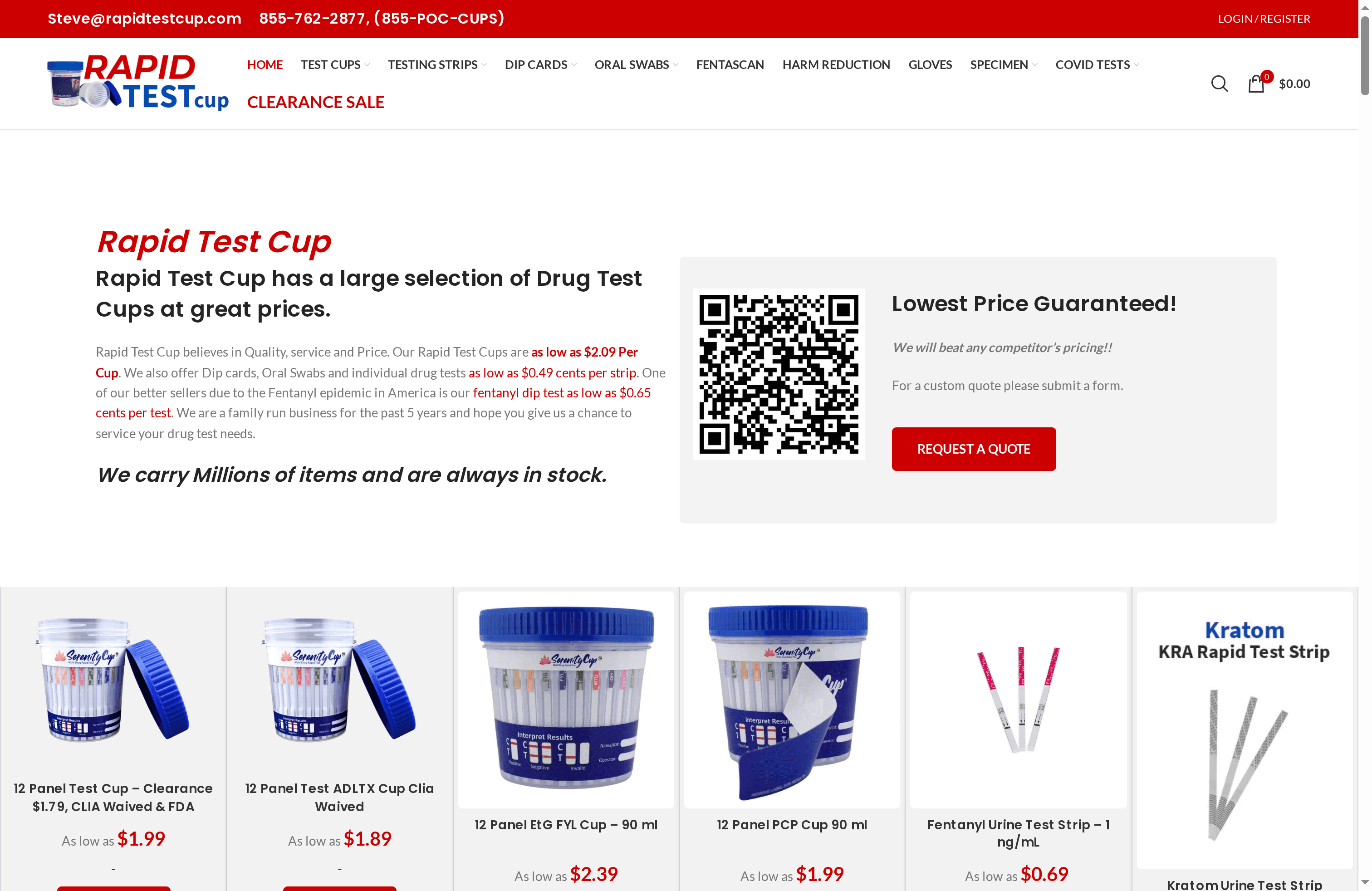
Discover how RapidTestCup.com supports treatment programs by offering FDA-approved, affordable, and easy-to-use drug testing kits designed for professional substance abuse screening. Act now to build a bulletproof clinical record, improve client engagement, and comply with federal and state mandates. Explore our extensive selection at RapidTestCup.com and equip your team with trusted solutions that deliver reliable screening results every time.
Frequently Asked Questions
What is substance abuse screening?
Substance abuse screening is a systematic process used to identify individuals who may have risky, harmful, or dependent patterns of substance use before they develop more severe issues. It is typically a brief process that aims to determine if someone requires further intervention.
How does substance abuse screening differ from full assessment?
Screening is focused and brief, lasting about 5-15 minutes, and seeks to determine whether a substance use problem exists. Full assessment, on the other hand, is more comprehensive and delves deeper into treatment history, medical background, and other relevant factors.
Why is accurate screening important in treatment programs?
Accurate screening is crucial as it directly correlates with treatment completion rates and long-term recovery outcomes. It helps to identify the severity of substance use, co-occurring conditions, and informs personalized treatment planning.
What are the common methods used for drug screening?
Common drug screening methods include urine testing, blood testing, hair testing, oral fluid testing, and breath testing. Urine testing is the most common due to its speed, cost-effectiveness, and non-invasive nature, but confirmatory testing is often required for accuracy.