Blog
Ways to Prevent Test Adulteration: 2026 Pro Guide


TL;DR:
- Test adulteration involves intentionally corrupting a biological specimen to manipulate drug test results. Preventative measures include direct observation, specimen validity testing, controlled environments, and strict chain-of-custody documentation to ensure test integrity. Confirmatory laboratory testing and adherence to federal standards provide legal defensibility and protect public safety.
Test adulteration is defined as any deliberate act to corrupt a biological specimen before or during drug testing, including dilution, chemical adulteration, and sample substitution. These tactics undermine test validity, expose organizations to legal liability, and put public safety at risk. Federal standards like SAMHSA guidelines and 49 CFR Part 40 set the baseline for defensible testing programs. The most effective ways to prevent test adulteration combine direct observation, specimen validity testing (SVT), and strict procedural controls from the moment of collection through final laboratory confirmation.
1. Ways to prevent test adulteration start with direct observation
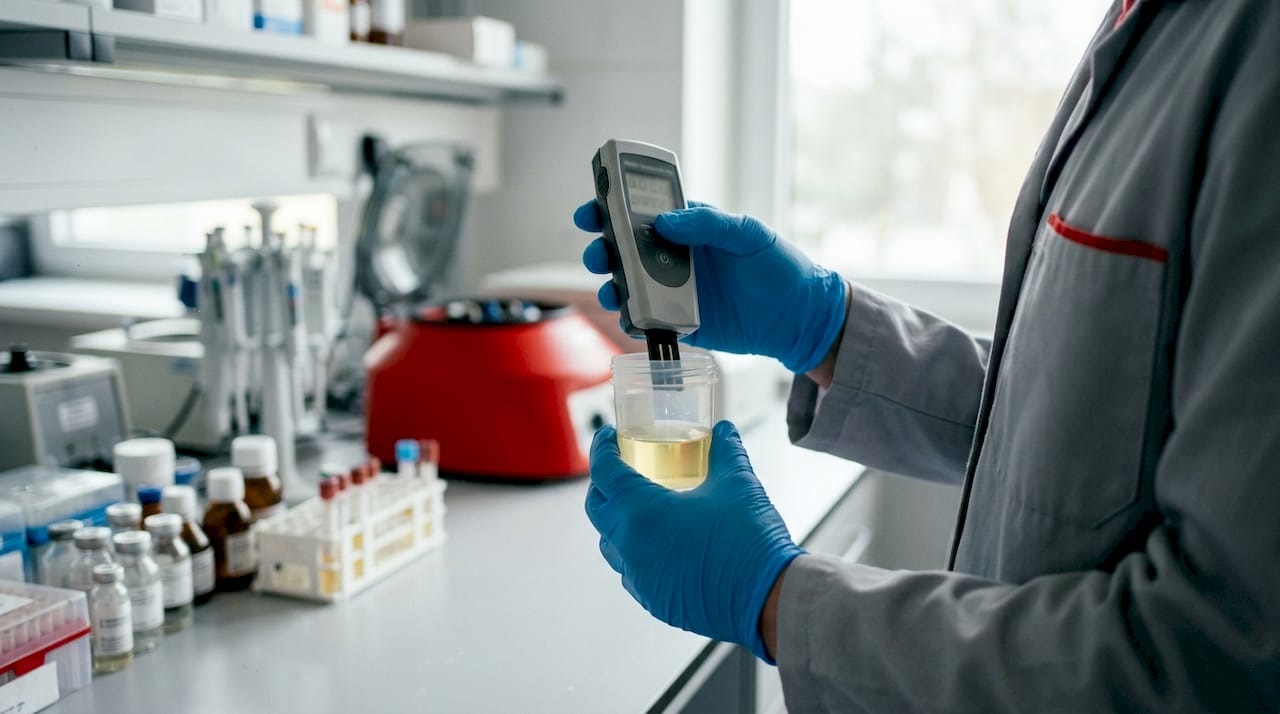
Direct observation is the single most effective deterrent against sample tampering. Direct observation prevents 99.2% of adulteration and substitution attempts in high-risk environments. That number makes the case for supervised collection better than any policy memo ever could.
Under direct observation protocol, a same-gender collector watches the donor produce the specimen in real time. This eliminates the opportunity to introduce synthetic urine, dilute the sample with water, or swap a pre-collected specimen. Federal regulations under 49 CFR Part 40 mandate direct observation in specific circumstances, including return-to-duty and follow-up testing.
Collectors trained in this protocol watch for:
- Unusual body movements or hesitation during collection
- Containers, pouches, or devices concealed on the body
- Temperature readings outside the 90°F–100°F range for fresh urine
- Inconsistencies between observed behavior and specimen volume
Pro Tip: Temperature must be checked within four minutes of collection. Fresh urine falls in the 90°F–100°F range; anything outside that window is an immediate red flag for substitution.
The privacy-versus-integrity tension is real, but it is manageable. Collectors must document every observation in writing. That documentation often determines whether a result holds up in court.
2. Specimen validity testing: biochemical markers that catch adulterants
Specimen validity testing is the laboratory layer that catches what direct observation cannot. SVT is mandatory for all federally regulated workplace drug testing programs. Labs measure four core markers to assess whether a specimen is authentic.
| Marker | Normal Range | What Abnormal Means |
|---|---|---|
| Creatinine | Greater than 20 mg/dL | Below 2 mg/dL suggests substitution |
| Specific gravity | 1.003–1.030 | Outside range indicates dilution or substitution |
| pH | 4.5–9.0 | Outside range suggests chemical adulteration |
| Temperature | 90°F–100°F | Outside range indicates substitution |
Each marker tells a different story. Low creatinine paired with low specific gravity points to dilution. A pH reading outside the normal range points to chemical interference.
Chemical adulterants like bleach, vinegar, and synthetic nitrates disrupt immunoassay detection but trigger red flags in validity testing assays. Labs identify these substances through oxidant testing and specific reagent panels. The key point is that no single adulterant defeats a properly run SVT panel.
Confirmatory testing by a Medical Review Officer (MRO) adds a final check. Instant screening devices alone are insufficient for legal defensibility. Non-negative screens must go to a certified laboratory for gas chromatography-mass spectrometry (GC-MS) or liquid chromatography-tandem mass spectrometry (LC-MS/MS) confirmation before any adverse action is taken.
3. Controlling the collection environment to remove tampering opportunities
The collection site itself is either a vulnerability or a control. Every physical element of the space either helps or hurts test integrity. Controlling that environment is one of the most underrated methods for reliable testing.
Standard environmental controls include:
- Bluing tablets in toilet tanks to prevent donors from diluting specimens with toilet water
- Restricted access to sinks, soap dispensers, and cleaning chemicals during collection
- Tamper-evident tape on all water sources in the collection area
- No personal bags, coats, or containers allowed in the collection room
- A single-entry, single-exit collection space monitored by trained staff
Bluing toilet water and restricting chemical access are proven site-level controls that reduce adulteration opportunities before the donor even produces a specimen. These measures cost almost nothing to implement and remove entire categories of tampering risk.
Staff training is equally critical. Collectors must apply protocols consistently across every donor, every time. Inconsistent application creates legal exposure and gives defense attorneys a foothold to challenge results. A written standard operating procedure, reviewed annually, keeps the team aligned.
4. Chain-of-custody documentation as a legal and procedural safeguard
Chain-of-custody (COC) documentation is not paperwork for its own sake. It is the legal record that connects a physical specimen to a named donor at every step from collection to final result. Documentation of donor behavior, temperature checks, and the custody chain often decides validity in court.
A complete COC form captures the collector’s name, the donor’s ID, collection time and date, specimen temperature, and every transfer of custody. Each person who handles the specimen signs and dates the form. Any gap in that chain gives an attorney grounds to challenge the result.
Most drug testing program failures trace back to incomplete documentation rather than flawed science. The lab result may be accurate, but without a clean COC, it becomes legally indefensible. Treat every COC form as a legal document from the moment collection begins.
Pro Tip: Use tamper-evident specimen bags with integrated COC forms. These reduce handling errors and make it physically obvious if a sample has been opened or compromised after sealing.
5. Applying 49 CFR Part 40 standards beyond federally mandated programs
49 CFR Part 40 is the federal regulation governing drug and alcohol testing for DOT-regulated industries. Employers outside federal mandates should adopt these standards as the de facto standard of care. Courts and arbitrators increasingly treat 49 CFR Part 40 compliance as the benchmark for any workplace testing program.
The regulation specifies collector qualifications, specimen handling procedures, laboratory certification requirements, and MRO review processes. Following it outside a DOT context signals that your program is defensible, consistent, and professionally managed. It also protects the organization if a result is ever challenged.
Non-DOT employers who adopt 49 CFR Part 40 procedures gain a documented framework that reduces liability exposure. The cost of adoption is low. The cost of a successful legal challenge to a non-compliant result is not.
6. Oral fluid testing as a strategy for 100% observed collection
Oral fluid testing eliminates the privacy-versus-integrity conflict that makes urine collection complicated. Oral fluid collection is 100% observed by definition, because the collector watches the donor swab their own mouth. Substitution and adulteration opportunities are virtually eliminated.
This method is particularly valuable in settings where direct observation of urine collection is legally or practically difficult. Law enforcement, probation programs, and some clinical settings have adopted oral fluid testing precisely because it removes the ambiguity around supervised collection.
The detection window for oral fluid is shorter than urine for most substances. That is a genuine limitation. However, for programs focused on recent use detection rather than historical exposure, oral fluid is a strong fit. Federal agencies including the Department of Transportation have expanded oral fluid testing options in recent years, which signals growing regulatory acceptance.
7. Tamper-evident collection supplies and electronic chain-of-custody tools
Physical tamper-evident features on collection supplies are a frontline defense against post-collection manipulation. Tamper-evident seals on specimen cups make it immediately visible if a sample has been opened, replaced, or altered after collection. These seals are a requirement under most federally compliant collection protocols.
Electronic chain-of-custody (eCOC) systems replace paper forms with digital records that timestamp every transfer and flag missing signatures automatically. This removes the human error that creates gaps in paper-based COC documentation. Many certified collection sites and laboratories now use eCOC as standard practice.
Combining tamper-evident physical supplies with digital documentation creates a two-layer verification system. The physical seal protects the specimen. The digital record protects the legal chain. Together, they address the two most common points of failure in specimen integrity programs.
Pro Tip: When selecting collection cups, look for integrated adulterant test strips built into the cup itself. Products like the 12 Panel ADLTX Cup from Rapidtestcup screen for oxidants, pH, specific gravity, creatinine, and nitrites at the point of collection, before the specimen ever reaches the lab.
8. Confirmatory lab testing and MRO review as the final integrity check
Instant screening devices serve a useful purpose, but they are not the end of the process. Laboratory confirmation with MRO review is the standard that makes results legally defensible. Skipping this step to save time or money is the most common and most costly mistake in workplace drug testing.
The MRO reviews the laboratory result alongside the donor’s medical history. This step catches legitimate medical explanations for positive results and prevents wrongful adverse actions. It also provides a documented expert review that strengthens the result’s legal standing.
Presumptive versus confirmatory testing is a distinction every compliance professional must understand. A presumptive positive from an instant screen is a reason to send the specimen to a lab. It is not a reason to take action against a donor.
Key Takeaways
Preventing test adulteration requires layered controls: direct observation, specimen validity testing, environmental safeguards, complete chain-of-custody documentation, and confirmatory laboratory review working together.
| Point | Details |
|---|---|
| Direct observation is the top deterrent | Supervised collection prevents 99.2% of tampering attempts in high-risk settings. |
| SVT catches what observation misses | Creatinine, specific gravity, pH, and temperature markers identify dilution and chemical adulteration. |
| Environment controls remove opportunity | Blued toilets, restricted water access, and tamper-evident supplies eliminate common adulteration methods. |
| COC documentation decides legal outcomes | Incomplete chain-of-custody records are the leading cause of failed legal challenges to drug test results. |
| Confirmatory testing is non-negotiable | Non-negative instant screens must go to a certified lab with MRO review before any adverse action. |
What I’ve learned about adulteration prevention that most programs get wrong
After working closely with drug testing programs across clinical, forensic, and workplace settings, one pattern stands out: organizations invest in good equipment and then underinvest in the people and paperwork that make it defensible.
The science of specimen validity testing is mature. The biochemistry works. What fails programs is the collector who skips a temperature check because the donor seems cooperative, or the administrator who files an incomplete COC form because the lab will “figure it out.” Courts do not give credit for good intentions. They look at the record.
The other underappreciated issue is policy staleness. Adulteration tactics evolve. Synthetic urine products are reformulated to defeat specific gravity and creatinine thresholds. Chemical adulterants change. A testing policy written in 2019 may not address the products available in 2026. Annual policy review is not a compliance checkbox. It is a genuine operational need.
Oral fluid testing deserves more attention from programs that struggle with the privacy-versus-observation tension in urine collection. The detection window limitation is real, but for programs focused on current impairment rather than historical use, the tradeoff is often worth it. The 100% observed collection advantage is significant and underutilized.
The programs that hold up under legal scrutiny share three traits: trained collectors who follow protocol every time, complete documentation from collection through MRO review, and a willingness to send non-negative screens to a certified lab rather than acting on an instant result. None of that requires expensive technology. It requires discipline.
— Justin
Drug testing supplies built for adulteration prevention
Maintaining test integrity starts with the right collection tools. Rapidtestcup carries a full catalog of drug testing products for labs designed to support every layer of an adulteration prevention program, from tamper-evident collection cups to multi-panel screens with built-in adulterant detection.
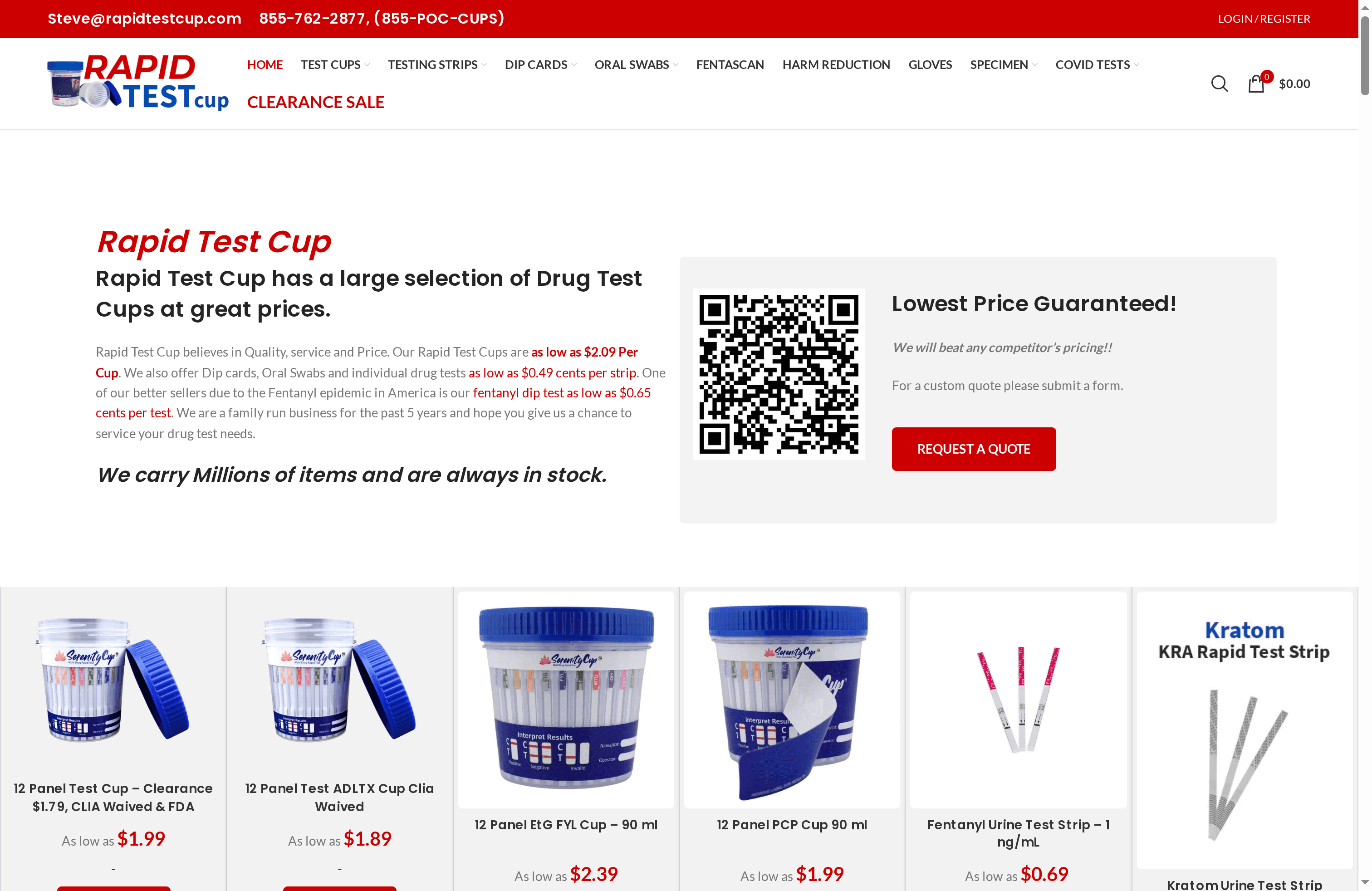
Products like the 22-panel drug test with adulterants combine broad substance detection with on-cup validity checks for oxidants, pH, specific gravity, creatinine, and nitrites. All Rapidtestcup products are CLIA waived and FDA approved, making them suitable for laboratories, clinics, substance abuse programs, and law enforcement. Bulk pricing and fast shipping support high-volume programs without compromising on quality or compliance.
FAQ
What is specimen adulteration in drug testing?
Specimen adulteration is the deliberate act of altering a biological sample to defeat drug test detection, through dilution, chemical interference, or substitution with a foreign substance.
How does direct observation prevent test adulteration?
Direct observation requires a same-gender collector to watch the donor produce the specimen in real time, eliminating the opportunity to introduce synthetic urine or adulterants. This method prevents 99.2% of tampering attempts in high-risk environments.
What biochemical markers detect an adulterated sample?
Labs check creatinine (normal above 20 mg/dL), specific gravity (1.003–1.030), pH (4.5–9.0), and specimen temperature (90°F–100°F). Readings outside these ranges indicate dilution, substitution, or chemical adulteration.
Is an instant drug test result enough to take action against a donor?
No. Non-negative instant screening results must be confirmed by a certified laboratory using GC-MS or LC-MS/MS, followed by MRO review, before any adverse action is legally defensible.
Does oral fluid testing prevent adulteration?
Yes. Oral fluid collection is 100% observed by design, which virtually eliminates substitution and adulteration opportunities. It is particularly effective in settings where supervised urine collection is legally or practically difficult.