

Blog
What Is a Negative Drug Test: Implications for Treatment


A single negative drug test can bring a sense of relief to your clinical staff, but what does it really confirm about patient progress in recovery? Understanding the true meaning behind a negative drug test result is essential for every administrator striving to maintain both regulatory compliance and effective patient management. Laws and standards in the United States and Canada require testing protocols that reflect both detection windows and cutoff thresholds, so this article breaks down what a negative result actually means and how it should inform—not determine—your facility’s clinical decisions.
Table of Contents
- Core Definition Of A Negative Drug Test
- Types Of Drug Tests And Detection Windows
- How Negative Results Are Determined
- Reliability, Limitations, And False Negatives
- Compliance And Patient Management Implications
Key Takeaways
| Point | Details |
|---|---|
| Negative Results Indicate Absence of Detectable Substances | A negative drug test means no drugs or metabolites were detected above established cutoff levels, but it does not confirm full abstinence from substances. |
| Testing Methods Vary in Detection Windows | Different tests have varying detection windows and sensitivities, influencing the meaning of a negative result across methodologies. |
| Negative Does Not Equal Clean Health | A single negative test should not be the sole basis for diagnosing substance use disorder; it must be assessed in conjunction with other clinical observations. |
| Document Cutoff Levels and Procedures | Maintain clear documentation of cutoff thresholds and test methodologies to ensure compliance and accurate interpretation of negative results. |
Core Definition of a Negative Drug Test
A negative drug test result means that no illegal drugs or metabolites were detected at or above the established cutoff levels in the biological sample tested. Whether you’re collecting urine samples, blood work, or hair specimens at your treatment center, this result indicates the absence of specific substances the test was designed to identify. When a patient’s test comes back negative, it means their body chemistry shows no measurable traces of the target drugs within the detection window, which typically spans from a few days to several weeks depending on the substance and testing method.
The critical distinction your team needs to understand is that a negative result is not the same as a clean bill of health from substance use disorder. Negative test results reflect only what the test can measure at specific cutoff thresholds established by standards like those from the Substance Abuse and Mental Health Services Administration (SAMHSA). Your lab must follow these standardized cutoff levels precisely. A patient who used drugs but falls below the detection threshold will still receive a negative result, even though substance use occurred. Think of it like a thermometer that only registers temperatures above 98 degrees. Something might be there, but your instrument simply cannot detect it below that measurement point.
Why does this matter for treatment administrators? Because negative results serve as one data point within a comprehensive assessment strategy. You cannot diagnose or rule out substance use disorder based solely on a negative test. Your clinical team should use negative results alongside behavioral observations, patient self-reporting, treatment progress metrics, and repeated testing over time. A single negative result suggests either no recent drug use or consumption below detectable levels, but it tells you nothing about past patterns, withdrawal management needs, or underlying addiction severity. When comparing different drug test types, remember that each method has different detection windows and sensitivity levels, which directly affects what “negative” actually means in context.
Pro tip: Document the specific cutoff levels, testing methodology, and detection window for each negative result in your patient records. This documentation protects your facility during compliance reviews and ensures clinical staff understand exactly what each negative test does and does not confirm about a patient’s recovery progress.
Types of Drug Tests and Detection Windows
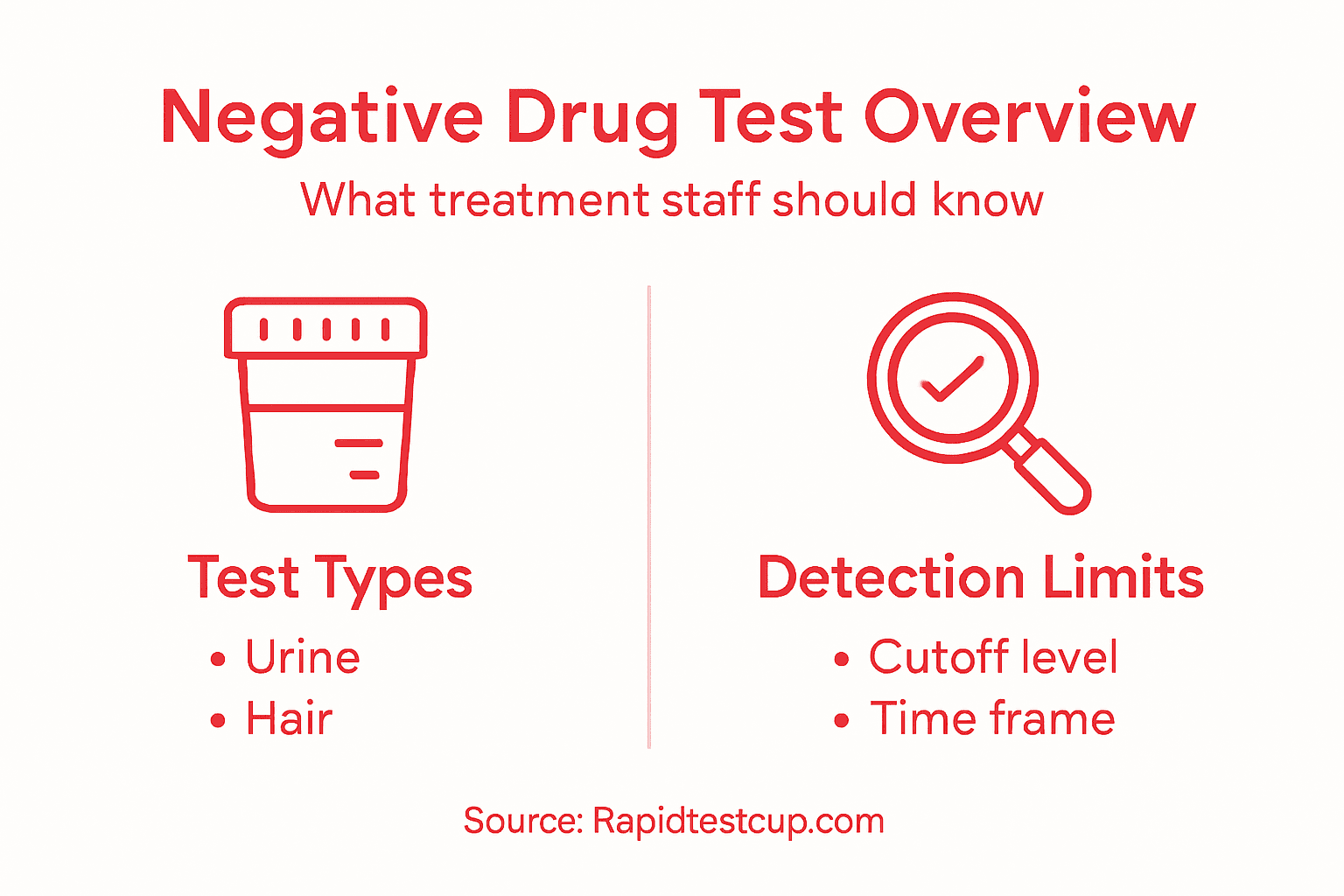
Your treatment facility likely uses multiple testing methods, and each one operates with different detection windows and detection capabilities. Understanding these differences is crucial because a negative result on one test type does not necessarily mean the same thing as a negative result on another. Urine tests remain the most common choice in treatment settings because they are rapid, noninvasive, cost-effective, and suitable for frequent monitoring. However, urine testing has a relatively short detection window, typically capturing drug use from approximately 48 to 72 hours prior to collection, though this extends to several days for chronic users of certain substances like opioids or benzodiazepines. Blood tests offer more precision but are more expensive and invasive, with detection windows of just 24 to 48 hours for most drugs. Saliva tests provide another quick option with detection windows ranging from 24 to 48 hours, making them useful for roadside or immediate compliance checks.
For longer-term monitoring and program accountability, hair testing provides substantially more historical perspective. Hair tests can detect drug use up to 90 days prior to collection, offering your clinical team a much broader window into a patient’s actual substance use patterns. This extended detection window makes hair testing valuable during intake assessments or when evaluating program completion before discharge. The tradeoff is that hair testing takes longer to produce results and costs significantly more than urine testing. When selecting from available drug testing panels, your team should consider which substances your patient population uses most frequently, how often you need to test, and what your budget allows.
The detection window variations create real implications for how you interpret negative results. A patient who tests negative on urine could have used drugs three days ago and still appear clean. Someone with a negative hair test shows no detectable drug use in the past three months, which is a fundamentally different statement about recovery. Detection windows also depend heavily on individual metabolism, body weight, hydration status, and the specific drug involved. Methamphetamine might be detectable for five days in one person and ten days in another. These variables mean your staff cannot simply assume all negative results tell the same story. You need testing strategies that align with your program’s goals, whether that is frequent short-term accountability through urine testing or comprehensive long-term monitoring through hair analysis combined with periodic urine screens.
Pro tip: Mix testing types strategically: use urine tests for frequent monitoring during early recovery phases, add hair tests at intake and discharge milestones, and consider saliva tests for surprise compliance checks since they are harder to adulterate on short notice.
Here’s a quick reference comparing common drug test types and their key characteristics:
| Test Type | Detection Window | Sample Required | Manipulation Risk |
|---|---|---|---|
| Urine | 2–7 days | Urine | Moderate |
| Blood | 24–48 hours | Blood | Low |
| Saliva | 1–2 days | Saliva | Low |
| Hair | Up to 90 days | Hair strand | Very low |
How Negative Results Are Determined
When your lab receives a drug test sample, the determination of a negative result follows a precise scientific process based on predetermined cutoff thresholds. Negative results occur when drug metabolites fall below established concentration limits in the sample, meaning the test finds either no drugs present or amounts too small to measure reliably. These cutoff levels are not arbitrary numbers. Organizations like SAMHSA establish these thresholds to ensure that only meaningful drug concentrations register as positive, reducing false positives from incidental exposure or residual traces. Your lab must follow these exact cutoff standards without exception. If a test finds 150 nanograms per milliliter of a substance but the cutoff is set at 300 nanograms, that result registers as negative even though the drug is technically present in the sample.
The actual mechanics of determining a negative result depend on your testing methodology. For immunoassay tests, a visible second line appears beside the control line, which indicates a negative result regardless of how faint or intense that second line appears. Your staff needs training on this distinction because line intensity does not matter. A very faint second line is still negative. A thick dark line is also negative. Only the presence or absence of that second line determines the result at the screening stage. Many treatment centers use rapid cup tests or dip card immunoassays because they are quick, affordable, and easy to read in clinical settings. When the immunoassay produces a negative screening result, many labs stop there and report the negative. However, confirmatory testing using more sophisticated methods like gas chromatography or mass spectrometry provides greater accuracy when confirmation is warranted by protocol or regulation.

Understanding this two-step process matters for your compliance and clinical documentation. Initial screening followed by confirmatory testing ensures drug presence is truly below detection limits rather than a false negative from test error or sample issues. A negative screening result alone may be sufficient for routine monitoring in your treatment program, but your written policies should specify when confirmatory testing is required. Your staff should know that line visibility matters for reading immunoassay results correctly, but the intensity of that line does not change the interpretation. Train your team to read results under consistent lighting conditions and to follow manufacturer instructions precisely. Document your cutoff levels and confirmation procedures in your testing protocols so every staff member understands what negative actually means in your facility.
Pro tip: Keep a reference card at each testing station showing exactly how to read your specific test cups or dip cards, including examples of what negative, positive, and invalid results look like, reducing staff interpretation errors and protecting your documentation accuracy.
Reliability, Limitations, and False Negatives
A negative drug test result carries inherent limitations that every treatment administrator must understand. False negatives occur due to timing, metabolism, dilution, and other biological factors that can mask actual drug use. A patient may have genuinely used substances but still test negative because the drugs cleared their system before testing, their metabolism eliminated metabolites faster than average, or they intentionally diluted their sample. Immunoassay screening tests introduce another layer of uncertainty through cross-reactivity, where antibodies bind to non-drug molecules that chemically resemble the target drugs, potentially creating false positives or false negatives. This is precisely why confirmatory testing exists. When a screening test produces a negative result, your facility might stop there for routine monitoring, but you should understand that confirmatory tests using gas chromatography and mass spectrometry provide substantially greater accuracy. The trade-off is cost and turnaround time, which is why most treatment centers rely on immunoassay screening for frequent monitoring and reserve confirmatory testing for situations requiring higher certainty.
Urine testing specifically presents vulnerability to sample manipulation that directly affects result reliability. Negative urine tests can be circumvented through dilution, substitution, or timing drug use strategically to evade detection. A patient who knows testing happens on Mondays and Fridays can use drugs on Tuesday or Thursday and likely appear negative by their next test. Someone who drinks large amounts of water before testing can dilute their sample below detectable cutoff levels. Substitution using synthetic urine or another person’s sample represents a more deliberate circumvention technique. Your facility needs collection procedures that prevent these tactics through direct observation during sample collection, temperature monitoring, and adulterant testing. Hair testing, by contrast, is much more difficult to manipulate because patients cannot easily alter hair chemistry after drug use occurs.
These limitations do not make negative results worthless. Rather, they make negative results one component of comprehensive monitoring rather than definitive proof of abstinence. A negative urine test combined with observed behavioral improvements, participation in counseling, stable housing, and employment suggests genuine recovery progress. A single negative result without supporting evidence means far less. Your clinical protocols should specify how negative results integrate with other assessment data. Document whether your facility uses observed collection procedures, adulterant testing, and confirmatory testing protocols. Different approaches to these procedures directly affect how much you can trust that a negative result actually reflects the clinical reality of your patient’s substance use status.
Pro tip: Implement random observed urine collections unpredictably scheduled across different times of day rather than on fixed schedules, combined with periodic hair testing, to substantially reduce the likelihood of intentional circumvention while maintaining cost-effectiveness.
This summary table highlights critical factors influencing the reliability of negative drug test results:
| Factor Affecting Reliability | Description | Impact on Interpretation |
|---|---|---|
| Cutoff Thresholds | Defines lowest detectable drug amount | May miss low-level usage |
| Sample Dilution | Excess fluids lower drug concentration | Can cause false negatives |
| Individual Metabolism | Metabolizes drugs at different rates | Alters detection time |
| Testing Methodology | Varies by immunoassay or confirmatory testing | Affects result accuracy |
Compliance and Patient Management Implications
Negative drug test results serve as critical data points for treatment monitoring, but your facility needs clear protocols about how these results influence patient management decisions. Negative results indicate adherence and support treatment progress monitoring within comprehensive care approaches, yet they should never be your sole basis for major treatment decisions like discharge or level of care reduction. When a patient consistently tests negative alongside active participation in counseling, group therapy, and structured programming, that constellation of evidence suggests genuine recovery movement. Conversely, a negative test from someone who is isolated, missing sessions, and showing behavioral red flags requires clinical skepticism. Your treatment team should establish written policies specifying how negative results influence specific decisions: whether they support reduced monitoring frequency, whether they justify temporary privileges, whether they contribute to discharge readiness. These policies protect both your patients and your facility by creating consistency and transparency. Different treatment contexts require different testing protocols. Outpatient programs might test monthly after initial stabilization, while intensive outpatient programs test weekly, and residential programs test multiple times weekly. Each testing frequency reflects different clinical risk profiles and compliance monitoring needs.
Dilute samples and negative results complicate patient management further. Negative dilute results require recollection under supervision to ensure proper compliance verification rather than accepting them at face value. A dilute negative is ambiguous. The patient might have genuinely abstained but coincidentally drunk excessive water, or they might have deliberately diluted their sample knowing it would prevent detection of drug use. Your collection procedures should identify dilute samples through specific gravity testing or creatinine analysis, triggering immediate recollection under observed conditions. Document each dilute result and recollection in your patient files. These records demonstrate to regulatory surveyors that your facility recognizes the limitations of dilute samples and takes appropriate action rather than blindly accepting ambiguous results. Some patients will test negative because they are genuinely abstinent. Others will test negative because they successfully evaded detection. Your clinical judgment combined with behavioral observations should inform which interpretation applies.
Discharge planning represents the highest stakes patient management decision involving negative results. A series of negative tests might suggest readiness for discharge, but negative results alone do not indicate treatment readiness. Your discharge criteria should include employment or education engagement, stable housing, family or social support connections, engagement in aftercare planning, and completion of treatment curriculum alongside the negative testing data. A patient with three months of negative tests but no job, no housing plan, and no support network faces dramatically higher relapse risk than someone with negative tests plus solid community connections. Create discharge summary documentation that synthesizes testing results with clinical progress notes, counselor observations, family involvement, and aftercare arrangements. This comprehensive approach protects your facility from liability while providing patients with genuinely supportive discharge planning rather than premature release based solely on negative test results.
Pro tip: Establish a written policy specifying exactly which negative result combinations trigger specific actions: three consecutive negatives allow reduced testing frequency, six consecutive negatives support discharge consideration contingent on other criteria, and any dilute result requires supervised recollection within 48 hours.
Ensure Reliable Negative Drug Test Results with Trusted Testing Solutions
Understanding the challenges of interpreting negative drug test results is critical for treatment administrators who need reliable and accurate data to make informed decisions. The article highlights key factors such as cutoff thresholds, sample dilution, and the importance of combining testing methods to provide a clear picture of recovery progress. Your facility requires high-quality, FDA-approved drug testing kits to minimize risks like false negatives and sample manipulation.
Rapidtestcup.com offers a comprehensive selection of professional drug test cups, dip cards, and specimen collection supplies designed to meet clinical and forensic standards. Whether you need CLIA waived urine tests with precise cutoff levels or adulteration detection to ensure sample integrity, our products help support your treatment program’s compliance and accuracy requirements.
Take control of your testing accuracy today.
Explore reliable testing panels and collection accessories at Rapidtestcup.com. Equip your staff with trusted tools that enhance confidence in negative results and strengthen patient management protocols. Visit us now to browse our affordable options and bulk discounts that fit your program’s needs.
Frequently Asked Questions
What does a negative drug test result mean?
A negative drug test result indicates that no illegal drugs or their metabolites were detected in the tested sample at or above established cutoff levels. It reflects the absence of specific substances intended to be identified by the test.
How do different drug test methods affect negative results?
Different drug testing methods, such as urine, blood, saliva, and hair tests, have varying detection windows. A negative result on one method may not equate to the same timeframe for another. For example, urine tests typically detect drug use within 48 to 72 hours, while hair tests can identify usage up to 90 days prior.
Can a negative drug test guarantee sobriety?
No, a negative drug test does not guarantee sobriety. It only indicates that specific substances were not detected at measurable levels during the testing window. A person can still have used drugs below the detection threshold and appear negative.
What should treatment facilities do with negative drug test results?
Treatment facilities should use negative drug test results as one of many data points in assessing a patient’s recovery. These results should be considered alongside behavioral observations, patient self-reports, and treatment progress to inform clinical decisions.