Blog
Training Staff for Drug Testing: Achieve Workplace Compliance


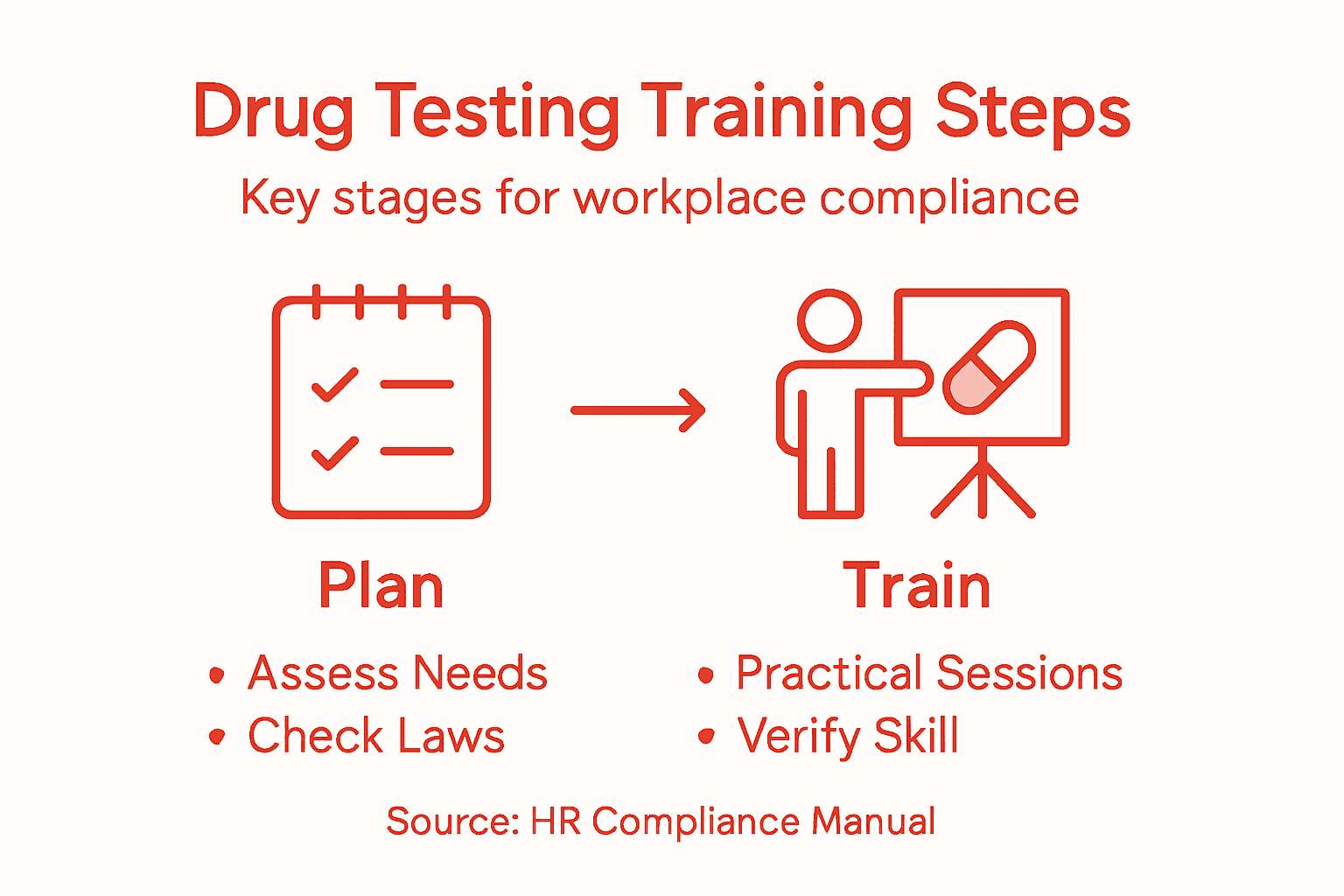
Rolling out a drug testing program goes far beyond simply choosing the right test kits. For Human Resources managers, balancing legal expectations with practical workflow is a daily challenge, especially when federal and local regulations such as the Department of Transportation’s drug testing procedures directly impact your team. Creating effective staff training methods becomes the linchpin for workplace safety and lasting compliance. This guide shows how precise planning and hands-on preparation keep your business protected and your staff genuinely ready.
Table of Contents
- Step 1: Assess Training Needs And Legal Requirements
- Step 2: Prepare Drug Testing Materials And Procedures
- Step 3: Conduct Hands-On Training Sessions
- Step 4: Verify Staff Competency And Adherence
- Step 5: Monitor Compliance And Refine Processes
Quick Summary
| Key Insight | Explanation |
|---|---|
| 1. Assess Training Needs Clearly | Identify specific legal requirements and training needs based on your industry to tailor your program effectively. |
| 2. Ensure Quality Testing Materials | Source reliable testing materials compliant with standards to maintain accuracy and reliability in your drug testing process. |
| 3. Implement Hands-On Training | Conduct practical training sessions for staff with real scenarios to build confidence and ensure correct procedure execution. |
| 4. Verify Competency Regularly | Assess staff competency through practical tests and spot-checks to maintain adherence to best practices over time. |
| 5. Continuously Monitor and Improve | Establish feedback mechanisms and analyze testing data regularly to refine processes and enhance compliance and effectiveness. |
Step 1: Assess Training Needs and Legal Requirements
Before you roll out any drug testing program, you need to understand what your organization actually requires and what the law demands. This step determines the scope and focus of your training, ensuring your team knows exactly what they’re implementing and why it matters. Start by identifying your industry, your company size, and whether you operate in a regulated sector. Transportation companies, for example, face strict requirements. If your business falls under Department of Transportation oversight, you’ll need to understand DOT workplace drug testing procedures and ensure your training covers those specific mandates. Other industries have their own regulations, and what applies to a healthcare facility differs completely from what a manufacturing plant needs.
Next, assess your current workforce and their roles. Not everyone needs identical training. A manager overseeing the testing process requires different knowledge than an employee being tested. Some staff members need to understand chain of custody procedures, specimen collection protocols, and result documentation, while others simply need to know their rights and responsibilities as participants. Walk through your organization and identify which departments and positions interact with drug testing at any point. Then evaluate any existing gaps. Do your supervisors know how to recognize signs of substance use? Can your human resources team explain testing procedures to nervous employees? Are your designated collection specialists properly trained on equipment and protocol? Document these gaps honestly. This inventory becomes your training blueprint.
Here’s a summary of key drug testing roles and the specialized training focus for each:
| Role/Position | Primary Responsibilities | Training Focus |
|---|---|---|
| Managers | Oversee program, ensure compliance | Legal requirements, workflow |
| Supervisors | Conduct and monitor testing | Signs of substance use, protocols |
| HR Team | Support, explain procedures | Policy explanations, confidentiality |
| Collection Specialists | Collect specimens, manage chain of custody | Equipment handling, documentation |
| General Employees | Test participants | Rights, process expectations |
Finally, review federal, state, and local regulations specific to your area and industry. Check whether your company operates across multiple states or countries, as requirements vary significantly. The Omnibus Transportation Employee Testing Act requirements provides comprehensive guidance if you’re in transit, but even non-regulated industries often have compliance obligations. Look at your company’s current policies and compare them against legal standards. You might discover that your testing procedures need adjustment before training even begins. Schedule time with your legal or compliance team to discuss any uncertain areas. This prevents you from training staff on outdated or incorrect procedures.
Pro tip: Create a simple one-page regulatory checklist for your industry and state, then have each trainer initial it during your training sessions to document that staff members learned current legal requirements.
Step 2: Prepare Drug Testing Materials and Procedures
Gathering the right materials and establishing clear procedures is where theory becomes reality. This step ensures your testing process runs smoothly, maintains legal compliance, and produces reliable results that your organization can trust. Before your first test, you need to inventory everything from collection cups to documentation forms, verify that all materials meet regulatory standards, and create a step-by-step workflow that every staff member can follow consistently.
Start by selecting appropriate testing materials. If you work in the transportation industry, your collection procedures must align with federally mandated collection protocols that specify exact equipment requirements and handling standards. For other industries, you still need materials that deliver accurate results. Quality matters here because a faulty test cup or degraded reagent compromises your entire program. Source testing materials from reputable suppliers who can provide documentation proving FDA approval and CLIA waiver compliance. Check expiration dates on everything before use. Create a checklist of materials your team needs: collection containers, specimen bags, chain of custody forms, alcohol prep pads, gloves, and any confirmatory testing equipment. If you’re conducting on-site tests, ensure you have temperature validation strips and privacy screens. For laboratory-based testing, coordinate with your testing facility about specimen preparation requirements and transportation protocols. Stock materials in a secure location away from moisture and direct sunlight, which can degrade testing accuracy.
Next, document your complete testing procedures in a way your staff can actually understand and follow. Write step-by-step instructions for collection, specimen handling, documentation, and result communication. Include timelines for each stage so supervisors know how long the process takes. When testing procedures involve presumptive and confirmatory testing methods, clarify which substances require additional verification and how long confirmatory results typically take. Document your chain of custody procedures so specimens never sit unmonitored or become mixed up. Create visual aids like flowcharts that show decision points, such as what happens when a result is positive or when a specimen appears invalid. Your procedures should address common complications like diluted specimens, missing identification, or temperature excursions. Include contingency plans for equipment failures or staff absences. Make these procedures accessible to everyone who needs them, whether that means printed manuals, digital documents, or laminated quick-reference cards posted in collection areas.
This table compares on-site and laboratory-based drug testing processes for practical reference:
| Aspect | On-Site Testing | Lab-Based Testing |
|---|---|---|
| Speed | Immediate results | Results take 1-3 days |
| Equipment Needed | Cups, strips, temp checks | Specimen bags, transport kits |
| Accuracy | Good for screen, less precise | Highest confirmation quality |
| Best For | Quick screening, low risk environments | Regulated, high-stakes settings |
Pro tip: Conduct a dry run of your entire testing procedure with volunteer staff before launch, then photograph or video record the process to create training materials that show exactly how your organization conducts testing.
Step 3: Conduct Hands-On Training Sessions
Theory only takes you so far. Your staff needs to actually practice with the equipment, understand the procedures firsthand, and build confidence before they’re responsible for real testing situations. Hands-on training transforms your written procedures into muscle memory and practical competence, ensuring everyone executes the process correctly when it counts. This is where your team moves from understanding what to do to knowing how to do it.
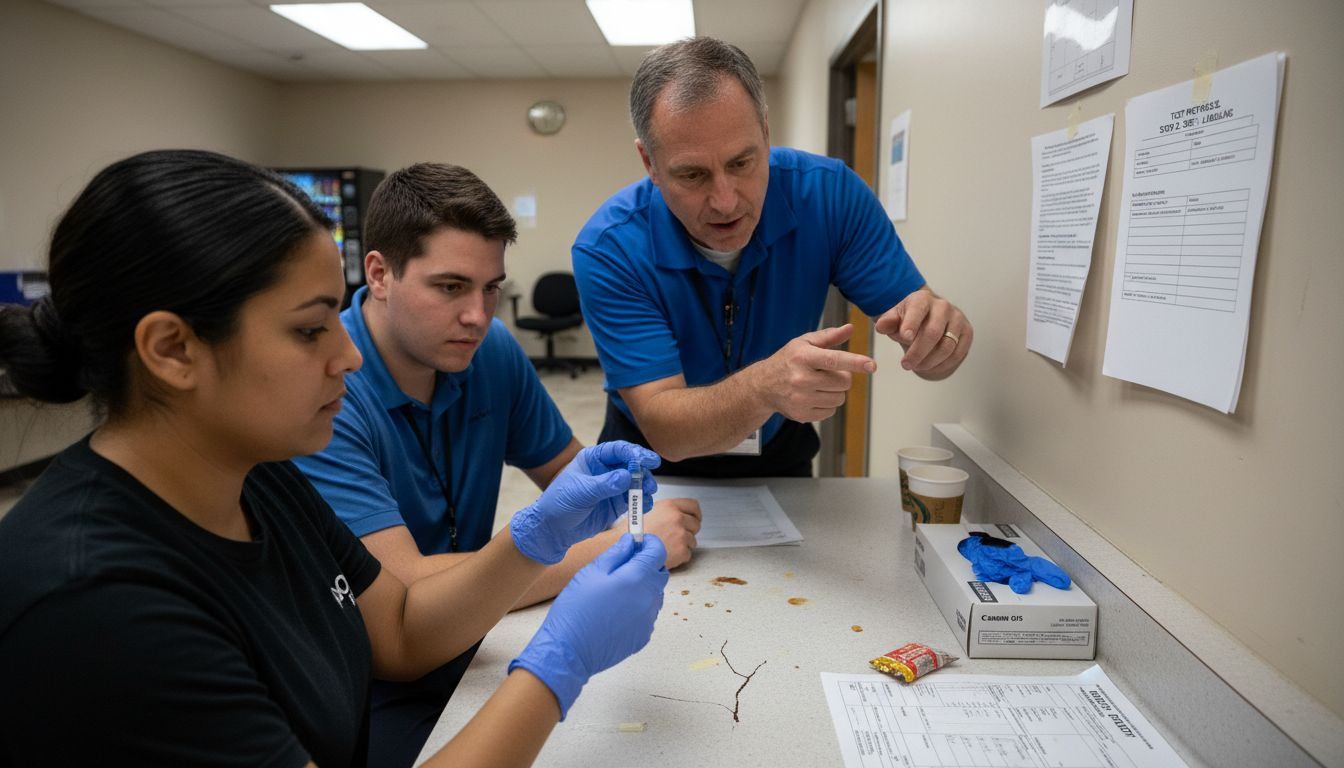
Start by bringing your staff together in a controlled environment where mistakes are learning opportunities, not failures. Begin with a walkthrough of your entire testing process using sample materials or demo equipment. Show everyone exactly how to handle a specimen cup, how to check identification, how to fill out chain of custody forms, and how to recognize an invalid specimen. Let people ask questions freely at this stage. Then move into the hands-on portion where staff members actually perform each task. Have them practice specimen collection using water in dummy cups so they understand the mechanics without using real specimens. Walk them through the documentation process step by step. If you’re using specific testing equipment, ensure everyone operates it correctly. Let supervisors practice how they’ll explain procedures to anxious employees. Comprehensive hands-on training for specimen collection staff is a federal requirement in many industries, not optional, so document what you cover and who participates.
Rotate participants through different roles so everyone understands the full workflow. Have someone practice collecting while another person observes chain of custody. Switch roles. This cross-training prevents bottlenecks and builds empathy for each person’s responsibilities. Address real-world complications during training. What happens when someone refuses to remove a hat for the photo? What if a specimen looks contaminated? How do you handle an employee who seems impaired but hasn’t failed a test yet? Use role-playing scenarios that reflect situations your team will actually encounter. Include a question-and-answer session where staff can voice concerns or ask about gray areas in your procedures. Training should feel interactive and collaborative, not like a lecture people endure. Consider attending federal workshops and training programs if your industry offers them, as these provide expert-led hands-on components and peer learning opportunities that strengthen your internal program.
Pro tip: Create a “test station” in your workplace where staff can practice the entire procedure monthly as a refresher, keeping skills sharp and catching any drift from your established protocols.
Step 4: Verify Staff Competency and Adherence
Training doesn’t end when the session concludes. You need to verify that your staff actually understands the material, can execute procedures correctly, and maintains those standards over time. This verification step prevents costly mistakes, protects your organization legally, and ensures your drug testing program remains credible and compliant. Without ongoing verification, training becomes a checkbox rather than a genuine safeguard.
Start by assessing competency immediately after training through practical demonstrations and written assessments. Have staff members complete a simple test covering key procedures, legal requirements, and scenario-based questions that reflect real situations they’ll encounter. For hands-on roles like specimen collectors, observe them performing the actual procedure and provide constructive feedback. Create a checklist of critical competencies and document that each person has demonstrated mastery before they’re authorized to work independently. Someone who struggles with chain of custody documentation needs additional practice before handling specimens. After initial certification, conduct spot-checks on your staff’s actual work. Observe a supervisor conducting a test and review their documentation. Pull a few completed chain of custody forms and verify they’re filled out correctly. When you notice errors or inconsistencies, address them immediately through coaching rather than waiting until problems accumulate. Ongoing competency verification and adherence monitoring are essential for maintaining a compliant workplace culture and reducing liability risk. Your team should know they’re being monitored not as punishment but as quality assurance.
Create a schedule for refresher training at least annually, and more frequently if you’re a larger organization or have high staff turnover. Use these refreshers to address any drift from your established procedures and to cover updates in regulations or company policy. Track training and competency verification in a simple spreadsheet or management system so you can demonstrate compliance if regulators ask. When new regulations appear or you discover procedural gaps through your spot-checks, incorporate those lessons into your refresher training. Medical Review Officers and laboratory staff require formal certification and ongoing competency updates to maintain standards, and this same principle applies to your internal staff. Document everything. A simple form showing date, what was covered, who attended, and any issues identified provides protection and demonstrates your commitment to quality.
Pro tip: Create anonymous “mystery shopper” scenarios twice yearly where you have someone pose as a nervous employee requesting a test, allowing you to observe how your staff handles real-world interactions and communication without them knowing they’re being evaluated.
Step 5: Monitor Compliance and Refine Processes
Your drug testing program isn’t static. Real compliance happens through continuous monitoring, careful analysis of what’s working and what isn’t, and willingness to adjust your processes based on actual results. This final step transforms your training investment into a living system that improves over time and protects your organization. Without ongoing monitoring, even the best initial training eventually drifts into inconsistency and gaps.
Begin by establishing a clear record-keeping system that captures every aspect of your testing program. Document each test conducted, including date, employee, substance panel tested, results, and who handled the specimen at each stage. Track your training sessions, who attended, and what was covered. Record any incidents where procedures weren’t followed correctly and how you addressed them. Detailed record-keeping and quality control measures are federally mandated for regulated industries and represent best practices for everyone. These records become invaluable when regulators ask questions or when you need to demonstrate due diligence in a legal situation. Review your records quarterly to identify patterns. Are certain staff members making consistent documentation errors? Is there a particular time of day when procedures slip? Did you notice an uptick in invalid specimens that suggests a problem with your collection technique or materials? These patterns tell you where your training needs reinforcement. If you notice that supervisors consistently miss steps in the chain of custody process, that’s a signal to conduct targeted refresher training rather than waiting for annual reviews. Use data to drive decisions.
Establish feedback loops that allow staff to report problems or suggest improvements without fear of retaliation. Sometimes your front-line collectors spot inefficiencies that managers never notice. Create an easy way for them to suggest changes, whether that’s an anonymous form, a suggestion box, or a regular meeting. Program evaluation and feedback mechanisms help identify areas for refinement and enhance overall program effectiveness. When staff contribute to improvements, they also become invested in the program’s success. Schedule quarterly or semi-annual reviews with your program coordinator to assess what’s working. Are you seeing consistent results? Are employees understanding their rights? Are you maintaining proper documentation? Use these reviews to update your procedures, refine your training materials, and adjust your approach. Perhaps you’ll discover that your written procedures need clarification or that new regulations require updated training. Maybe you’ll find that your testing frequency or substance panels need adjustment based on your workforce or industry trends. This continuous refinement keeps your program relevant and effective.
Pro tip: Create a simple one-page monthly compliance dashboard showing test volume, any documentation errors found, staff certifications due for renewal, and procedural adjustments made that month, then share it with your leadership team to keep drug testing program performance visible.
Equip Your Team with Trusted Drug Testing Supplies for Effective Training
Training staff for drug testing involves mastering legal requirements, understanding collection procedures, and ensuring consistent compliance. The challenges of sourcing reliable, FDA-approved materials and maintaining accuracy can feel overwhelming. At RapidTestCup, we simplify this process by offering a comprehensive range of high-quality drug test cups, specimen collection supplies, and adulteration testing products designed to support your entire training workflow. Our products help eliminate uncertainty so your team gains confidence while executing procedures correctly every time.
Don’t wait for errors to expose your workplace to risk. Reinforce your training sessions with professional-grade drug testing supplies that meet CLIA waiver standards and regulatory requirements. Visit RapidTestCup today and access affordable prices, bulk discounts, and detailed product information to streamline compliance. Start building an effective, hands-on training program now by choosing supplies trusted by laboratories and clinics nationwide.
Frequently Asked Questions
What initial steps should I take to train my staff for drug testing compliance?
Begin by assessing your organization’s training needs and understanding legal requirements. Identify your industry and specific roles that interact with drug testing, then document any gaps in knowledge to create a tailored training plan.
How can I ensure my drug testing procedures are clear and easy to follow for the staff?
Document your testing procedures in detailed step-by-step instructions and create visual aids like flowcharts. Make these resources accessible to all staff involved in the drug testing process to enhance comprehension and execution.
What are effective training methods to engage staff during drug testing training sessions?
Incorporate hands-on training by allowing staff to practice with sample materials in a controlled environment. Use role-playing scenarios and interactive Q&A sessions to build confidence and competence among the participants.
How can I verify that my staff has understood the drug testing training and can apply it correctly?
Implement competency assessments immediately after training, including practical demonstrations and written tests. Use a checklist to validate that each staff member has mastered the necessary procedures before allowing them to work independently.
What should I do if I discover gaps in compliance or procedures after training?
Establish a routine for continuous monitoring and feedback loops to identify any inconsistencies. Conduct periodic refresher training sessions, at least annually, to address gaps and keep staff updated on any changes in regulations or company policy.
How can I track and document my drug testing program’s compliance over time?
Create a thorough record-keeping system to log all testing activities, staff training sessions, and any incidents of non-compliance. Review these records regularly to spot patterns and make informed adjustments to your training and procedures.