Blog
Pre-Employment Screening Explained: Protect Your Workplace


TL;DR:
- Pre-employment screening verifies identity, credentials, background, and substance use to prevent costly mis hires.
- Accurate, comprehensive checks are essential for legal compliance and reducing long-term costs.
- Consistent, documented processes and quality screening tools build workplace safety, trust, and organizational resilience.
Hiring the wrong person is one of the most expensive mistakes a company can make, yet it happens constantly. Over 75% of employers find discrepancies in resumes, and a single bad hire can cost more than 30% of that position’s first-year salary. Most HR teams treat screening as a formality, a checkbox before the offer letter. But the data tells a different story. This guide breaks down exactly what pre-employment screening covers, which components matter most, how to choose the right provider, and what mistakes to avoid so your organization stays protected, compliant, and staffed with people who are exactly who they claim to be.
Table of Contents
- What is pre-employment screening?
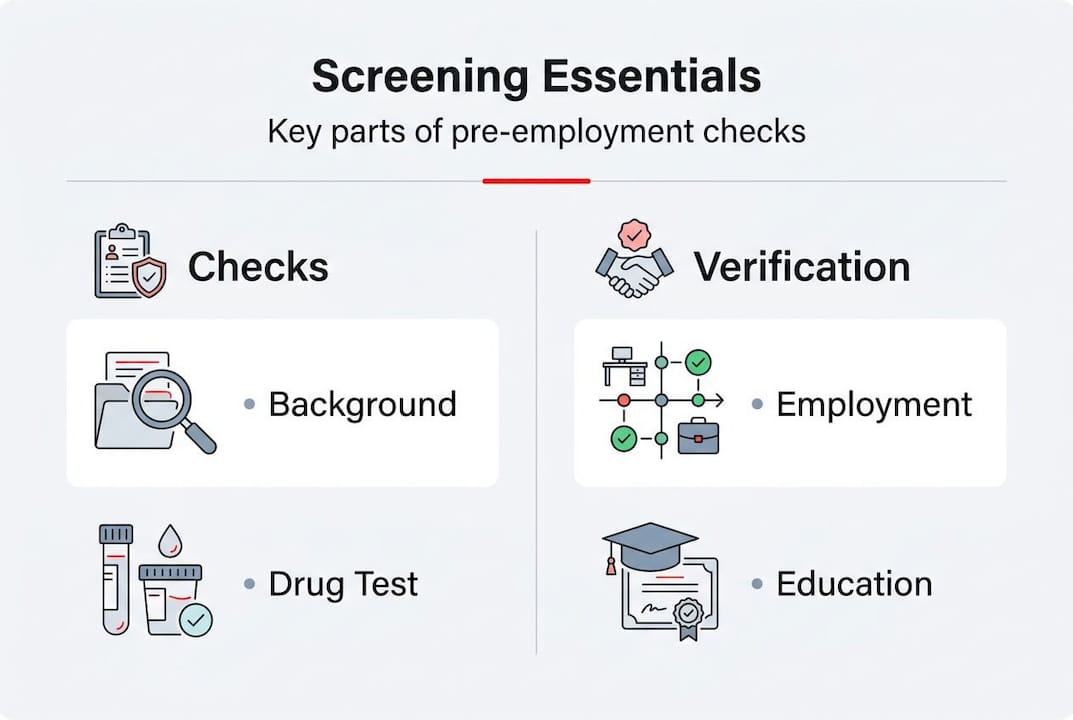
- Core components of pre-employment screening
- Why accuracy matters more than cost in screening providers
- Best practices for implementing pre-employment screening
- The hidden ROI of high-integrity pre-employment screening
- Enhance your hiring with rapid, reliable screening solutions
- Frequently asked questions
Key Takeaways
| Point | Details |
|---|---|
| High prevalence of discrepancies | More than 85% of employers discover lies or omissions during the screening process. |
| Accuracy prevents costly mistakes | Choosing quality over cost helps avoid expensive hiring errors and improves safety. |
| Comprehensive, consistent process | Following well-documented, step-by-step screenings keeps your workplace compliant and dependable. |
| Long-term business ROI | Investing in effective screening delivers ongoing benefits for retention, culture, and risk reduction. |
What is pre-employment screening?
Pre-employment screening is a multi-step verification process that confirms a candidate’s identity, qualifications, background, and fitness for a role before they are hired. It is not just a background check. It is a structured system designed to reduce the risk of negligent hiring, protect your existing workforce, and ensure your organization meets legal and regulatory requirements.
The core objectives of pre-employment screening include:
- Confirming identity to prevent fraud and impersonation
- Validating credentials such as degrees, certifications, and licenses
- Reviewing criminal history to assess safety risks
- Testing for drug and alcohol use to maintain a safe workplace
- Verifying employment history to catch falsified experience
These checks work together to give you a complete, factual picture of a candidate before they ever walk through your door. 90% of organizations conduct criminal checks and over 75% uncover resume discrepancies, which means the odds are high that any given candidate pool contains at least one person misrepresenting themselves.
The legal stakes are just as real as the financial ones. Negligent hiring claims can expose your company to significant liability if an employee causes harm and it is later shown that a reasonable screening process would have flagged the risk. Courts have consistently held employers responsible when they failed to conduct due diligence before placing someone in a position of trust or access.
For industries like healthcare, transportation, childcare, and financial services, screening is not optional. Regulators mandate it. But even in sectors without strict legal requirements, the business case is overwhelming. A thorough pre-employment drug testing overview shows how drug screening alone reduces workplace accidents, absenteeism, and turnover in measurable ways.

Pro Tip: Document every step of your screening process, including what checks you ran, when, and what results were returned. This creates a defensible record if a hiring decision is ever challenged legally.
Screening is not about distrust. It is about making informed decisions with verified information rather than relying on a polished resume and a confident handshake.
Core components of pre-employment screening
Understanding what screening means is one thing. Knowing how its parts fit together is what allows you to build a process that actually works. Most effective programs include five core components, each serving a distinct purpose.
| Screening method | Purpose | Strengths | Limitations |
|---|---|---|---|
| Criminal background check | Identify past offenses | Widely accepted, legally defensible | May vary by jurisdiction |
| Employment history verification | Confirm past roles and tenure | Catches resume fraud | Some employers limit disclosures |
| Education verification | Validate degrees and certifications | Prevents credential fraud | Slow if institutions are unresponsive |
| Drug and alcohol testing | Detect substance use | Objective, fast with quality kits | Requires proper chain of custody |
| Professional license check | Confirm active credentials | Critical for regulated roles | Requires updated database access |
89% of employers check criminal history and 85% find resume lies, which confirms that nearly every component above will surface something worth knowing.
A compliant and effective screening sequence typically follows this order:
- Obtain written consent from the candidate before initiating any checks
- Verify identity using government-issued documentation
- Run criminal background checks at the federal, state, and county levels
- Confirm employment history directly with previous employers
- Validate education and professional licenses with issuing institutions
- Conduct drug and alcohol testing using a reliable, drug testing accuracy verified method
- Review all results against your written hiring criteria before making a decision
Pro Tip: Use a standardized checklist for every candidate, regardless of role level. Inconsistency in who gets screened and how is one of the most common compliance failures HR teams face.
Drug testing deserves special attention in this sequence. The quality of the test matters as much as the timing. Understanding clinical integrity in drug tests helps you choose kits that produce defensible, accurate results rather than ones that generate false positives or miss actual use.
Why accuracy matters more than cost in screening providers
When HR teams are under budget pressure, it is tempting to choose the cheapest screening provider. That decision is almost always more expensive in the long run.
“A bad hire costs an average of $14,900, and accuracy is the top priority for global employers when selecting screening partners.”
That $14,900 figure does not include the downstream costs: lost productivity, team disruption, retraining, potential litigation, or reputational damage. When you factor those in, a single screening miss can cost several times that amount.
Here is what separates high-accuracy providers from low-cost alternatives:
- Database coverage: Cheap providers often use incomplete or outdated criminal databases. A thorough check covers federal, state, and county records.
- Turnaround time vs. thoroughness tradeoff: Faster is not always better. Rushed checks miss records that require manual court searches.
- False positive and false negative rates: For drug testing specifically, accuracy in drug testing is the difference between a defensible result and a costly legal challenge.
- Regulatory compliance: Providers must stay current with Fair Credit Reporting Act (FCRA) requirements, ban-the-box laws, and state-specific rules. A non-compliant provider puts your organization at legal risk even when the screening itself is accurate.
- Chain of custody documentation: Especially for drug tests, proper documentation is required for results to hold up in court or regulatory review.
Understanding factors that influence accuracy in drug testing, such as specimen handling, cutoff levels, and adulteration detection, helps you ask the right questions when evaluating any provider. The goal is not the cheapest process. It is the most defensible one.
Best practices for implementing pre-employment screening
Knowing what to screen for is only half the equation. How you implement and maintain your process determines whether it actually protects your organization.
85% of employers uncover lies or omissions in candidate applications, which means your process needs to be thorough enough to catch what candidates try to hide.
Follow these steps to build a reliable, compliant screening program:
- Define your screening policy in writing. Specify which checks apply to which roles and document the criteria used to evaluate results.
- Select vendors based on accuracy and compliance track record, not just price. Request references and ask specifically about FCRA compliance and database coverage.
- Obtain written, informed consent from every candidate before initiating any check. Keep signed consent forms on file.
- Apply your policy consistently. Every candidate for the same role must go through the same process. Selective screening creates discrimination liability.
- Review results against documented criteria, not gut instinct. Decisions must be defensible and tied to legitimate business reasons.
| Compliance checkpoint | Required action | Documentation needed |
|---|---|---|
| Candidate consent | Written authorization before screening | Signed consent form |
| Adverse action | Pre-adverse and adverse action notices | Copies of notices sent |
| Drug test chain of custody | Documented specimen handling | Chain of custody form |
| Result review | Criteria-based evaluation | Decision log with rationale |
A solid workflow for workplace compliance ensures nothing falls through the cracks between consent collection and final decision. For teams that need speed without sacrificing accuracy, rapid screening methods can dramatically reduce time-to-hire while maintaining defensible results.
Pro Tip: Review your screening policy at least once a year. Laws change, especially ban-the-box regulations and state-level drug testing rules. An outdated policy can expose you to liability even when your intentions are correct.
The hidden ROI of high-integrity pre-employment screening
Most companies calculate the ROI of screening by looking at what it costs versus what it saves in bad hires avoided. That is a reasonable starting point, but it misses the bigger picture entirely.
Rigorous screening changes the composition of your workforce over time. When you consistently hire people who are who they say they are, you build a culture of accountability. Teams trust each other more. Managers spend less time managing performance issues. Retention improves because high performers stay longer when they are not surrounded by people who do not pull their weight.
The organizations that cut corners on screening often do not connect the dots. They see high turnover as a market problem or a management problem, not a hiring problem. But when you trace it back, many retention failures start at the point of hire.
There is also a litigation angle that rarely gets discussed. A single workplace incident tied to a hire that a proper screen would have flagged can generate legal costs that dwarf years of screening investment. The benefits for reliable screening extend far beyond the moment of hire. They compound over time in ways that show up in culture, safety records, and legal exposure. Invest upfront, and the returns are quiet but significant.
Enhance your hiring with rapid, reliable screening solutions
Building a strong pre-employment screening process means having the right tools at every stage, and drug testing is one area where quality and speed both matter.
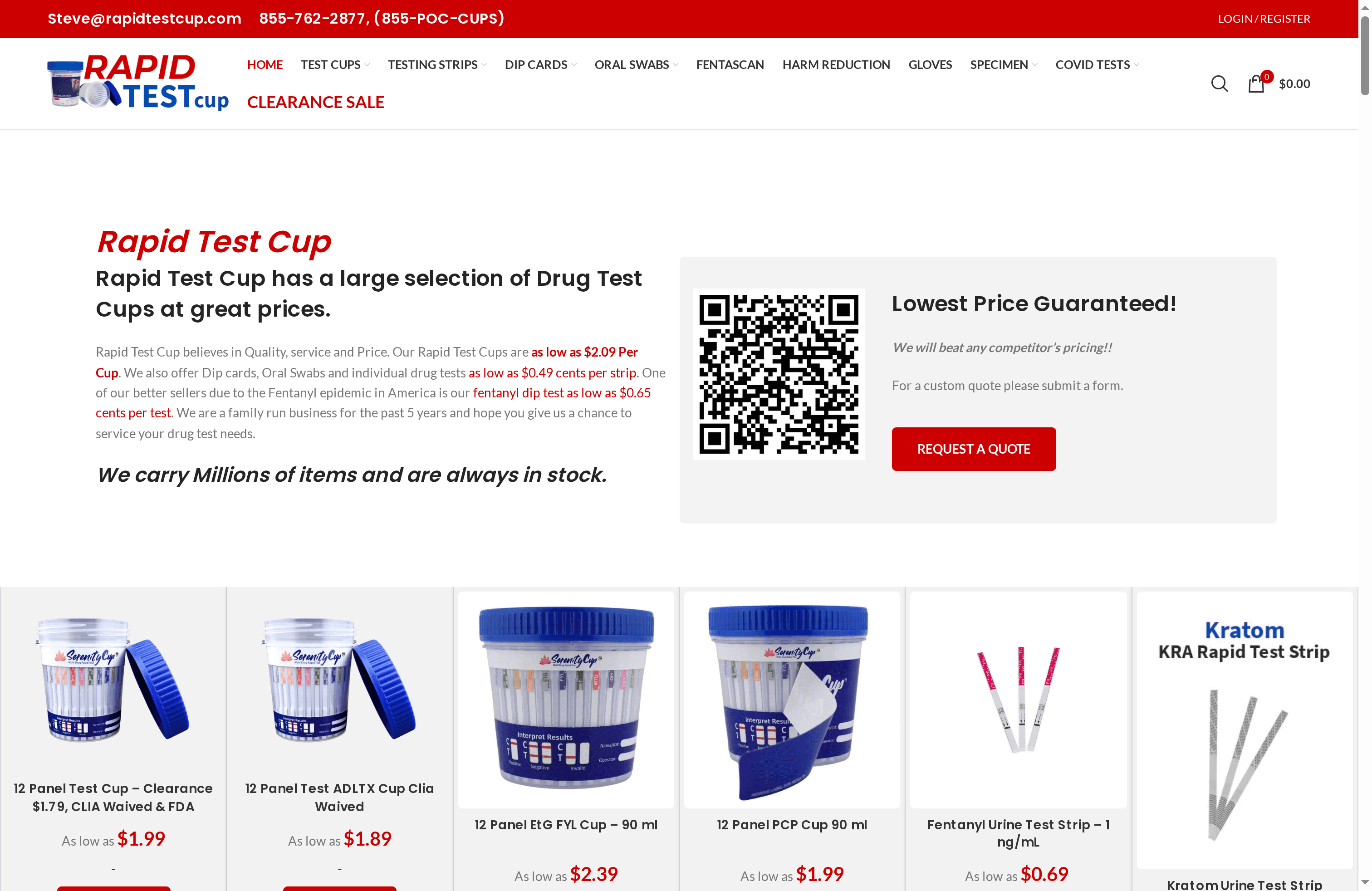
At Rapid Test Cup, we offer CLIA waived, FDA-approved testing solutions designed for professional screening programs. Our 18-panel test cup delivers broad-spectrum detection with built-in adulterant checks, while our 12-panel test cups offer a reliable, cost-effective option for standard hiring programs. If you want to understand which format fits your workflow, our guide on types of urine test strips breaks down the options clearly. Bulk pricing and fast shipping make it easy to keep your program running without delays.
Frequently asked questions
What types of checks are included in pre-employment screening?
Most pre-employment screenings include criminal background checks, employment and education verification, drug testing, and professional credential validation, with the exact mix depending on the role and industry. Screening types used globally show that criminal checks and drug testing are the most universally applied components.
Why do employers prioritize accuracy over cost in screening?
A single bad hire costs $14,900 on average, and that figure excludes downstream costs like litigation, retraining, and team disruption, making accuracy the only financially rational priority.
How can employers ensure their screening process stays compliant?
Apply your policy consistently across all candidates for the same role, document consent and decision rationale, and choose providers who stay current with FCRA and state-specific regulations. The HireRight 2024 benchmark data highlights that consistent process documentation is a key differentiator among compliant programs.
What are common errors in pre-employment screening?
Selective application of screening policies, choosing providers based only on price, and skipping drug testing for certain roles are among the most frequent mistakes employers make. Typical screening mistakes often stem from treating the process as a formality rather than a risk management tool.