

Blog
Why monitor prescription drugs: safety and compliance


TL;DR:
- Prescription drug monitoring programs help prevent misuse and overdoses by providing full prescription histories.
- Effective use of PDMPs improves safety, reduces opioid prescriptions, and supports coordinated care.
- Successful monitoring relies on integrating tools, training staff, addressing disparities, and fostering a supportive culture.
Prescription drug monitoring is often dismissed as paperwork, a regulatory checkbox that slows down clinical workflows without adding real value. That assumption is dangerously wrong. PDMPs track controlled substance prescriptions to prevent misuse, doctor shopping, diversion, and overdoses by giving prescribers and pharmacists access to a patient’s full prescription history. For healthcare professionals, counselors, and employers, understanding how and why monitoring works is not optional. It is the foundation of safe, accountable, and legally defensible practice.
Table of Contents
- What is prescription drug monitoring and why does it matter?
- How drug monitoring enhances patient safety and quality of care
- Compliance: Legal, ethical, and professional risks of not monitoring
- Limitations of PDMPs and controversies in prescription drug monitoring
- Best practices: Making drug monitoring work for your organization
- Our perspective: The uncomfortable truth about prescription drug monitoring
- Connect with rapid drug testing solutions
- Frequently asked questions
Key Takeaways
| Point | Details |
|---|---|
| PDMPs save lives | Prescription monitoring prevents overdose deaths and reduces inappropriate prescribing. |
| Compliance is critical | Failing to monitor drugs can lead to legal penalties and harm to patient safety. |
| Recognize program limits | Understanding data gaps and equity concerns helps refine drug safety efforts. |
| Education matters | Combining monitoring with education and error reporting produces optimal outcomes. |
What is prescription drug monitoring and why does it matter?
A Prescription Drug Monitoring Program (PDMP) is a state-run electronic database that records every controlled substance prescription dispensed within that state. Pharmacists submit data when filling prescriptions, and authorized prescribers can query the system before writing new orders. The goal is straightforward: give clinicians the information they need to make safer prescribing decisions.
Who uses PDMPs? The list is broader than most people assume:
- Physicians and nurse practitioners checking for overlapping opioid or benzodiazepine prescriptions
- Pharmacists flagging early refill requests or cash-only payment patterns
- Substance abuse counselors verifying whether clients are receiving controlled substances from multiple providers
- Employers and occupational health programs supporting workplace safety compliance
The misconception that monitoring is purely administrative falls apart when you look at what the data actually reveals. PDMPs track controlled substance prescriptions and prevent misuse by sharing prescription history with authorized prescribers, turning a passive record into an active safety tool.
Modern PDMPs do not operate in isolation. PDMPs integrate with EHRs for real-time checks on prescription patterns, overlaps, early refills, and cash payments as red flags, embedding safety checks directly into the clinical workflow rather than adding a separate step.
“Monitoring is not about suspicion. It is about having the full picture before making a clinical decision that could harm or help a patient.”
Understanding why prescription drug tests matter goes hand in hand with PDMP use, especially when urine drug testing is used to confirm whether patients are taking prescribed medications as directed. Together, these tools support what monitoring drug compliance is truly about: better outcomes, not just better records.
How drug monitoring enhances patient safety and quality of care
The clinical case for prescription drug monitoring is not theoretical. Real-world data shows measurable improvements in patient outcomes when PDMPs are used consistently and correctly.
PDMPs improve patient safety by preventing adverse drug events, dangerous drug interactions, and enabling coordinated care across multiple providers. When a patient sees three different specialists and none of them knows what the others have prescribed, the risk of a harmful interaction is significant. PDMPs close that gap.
The numbers are striking. Robust PDMPs are associated with reduced opioid overdose deaths, with one overdose death prevented every two hours nationwide in states with strong programs. Pennsylvania saw a 38% drop in opioid prescriptions after implementing a robust PDMP.

| State | PDMP feature | Outcome observed |
|---|---|---|
| Pennsylvania | Mandatory query law | 38% reduction in opioid prescriptions |
| New York | Real-time EHR integration | Significant drop in overlapping prescriptions |
| Tennessee | Proactive alerts to prescribers | Reduced high-dose opioid prescribing |
How does monitoring identify high-risk patients in practice? Follow this stepwise approach:
- Query the PDMP before prescribing any new controlled substance
- Review the patient’s full prescription history for overlaps, early refills, or multiple prescribers
- Flag patients receiving controlled substances from three or more providers in a 90-day window
- Document your review and any clinical decisions made based on PDMP data
- Refer high-risk patients to appropriate counseling or treatment resources
This process does not add significant time to a clinical encounter. It does, however, dramatically reduce the chance of contributing to a preventable overdose or adverse event. Consistent use also supports compliance boost with regular monitoring, reinforcing a culture of accountability across your entire practice.
Compliance: Legal, ethical, and professional risks of not monitoring
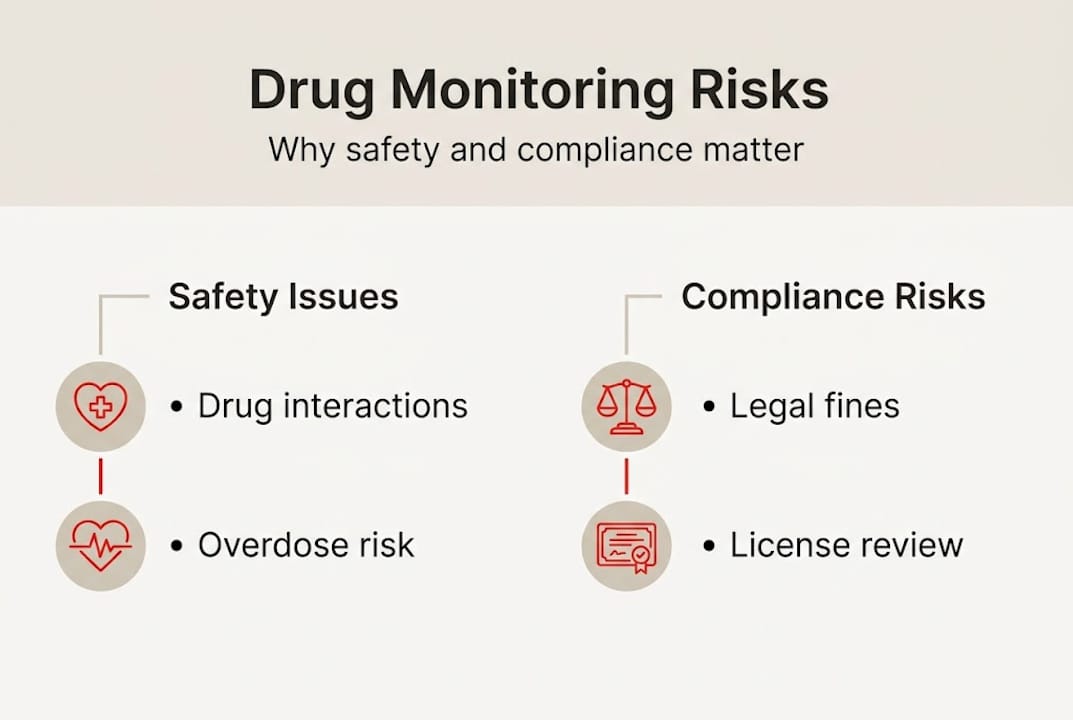
The legal landscape around prescription drug monitoring has hardened significantly. All 50 states have PDMPs, and non-compliance risks fines, license suspension, or even criminal prosecution depending on the severity and circumstances.
Key legal and ethical responsibilities for practitioners and employers include:
- Mandatory query requirements: Many states require prescribers to check the PDMP before issuing opioid or benzodiazepine prescriptions
- Documentation obligations: Failure to document PDMP checks can constitute a compliance violation even if the check was performed
- Employer duty of care: Workplaces with safety-sensitive roles have an independent obligation to monitor for prescription drug misuse
- Ethical responsibility: Prescribing without checking available safety data is increasingly viewed as a breach of the standard of care
| Risk category | Potential consequence |
|---|---|
| Failure to query PDMP | State board fines, license review |
| Repeated non-compliance | License suspension or revocation |
| Diversion facilitation | Criminal prosecution |
| Institutional failure | Loss of accreditation, civil liability |
The risks go beyond fines. When a patient is harmed because a prescriber did not check available prescription history, the damage to institutional reputation and patient trust can be lasting. Juries and licensing boards take a dim view of avoidable failures.
Pro Tip: Schedule a quarterly compliance audit that reviews PDMP query rates by provider. Low query rates are an early warning sign of policy drift, and catching them early is far less costly than responding to a regulatory complaint. Review your drug testing compliance guide and understand why compliance matters as a foundation for organizational policy.
Limitations of PDMPs and controversies in prescription drug monitoring
No tool is perfect, and PDMPs are no exception. Honest implementation requires understanding where the data falls short.
Specific limitations include:
- Incomplete reporting: Data limitations include no hospital or clinic reporting, human entry errors, incomplete diagnosis codes, and significant state-by-state variation in what gets reported
- Interstate data gaps: Patients who fill prescriptions across state lines may not appear in a single state’s database
- Reporting lags: Some states allow pharmacies days or even weeks to submit data, meaning real-time queries may reflect outdated information
- Scope limitations: Over-the-counter medications, herbal supplements, and illicit substances are entirely outside PDMP scope
The equity concerns are serious and deserve direct attention. Must-query PDMPs have been linked to increased overdose deaths among Black and Hispanic populations in some studies, suggesting that heavy-handed enforcement can push vulnerable patients away from legitimate care and toward more dangerous alternatives.
“PDMPs are most effective when paired with education and used in a non-punitive way. Surveillance without support does not reduce harm. It displaces it.”
Privacy concerns are also real. Centralized prescription databases are targets for data breaches, and patients in stigmatized communities may avoid necessary care if they fear their records will be used against them. Reviewing the accuracy of drug test reporting and applying sound risk management in drug testing practices helps organizations navigate these tensions responsibly.
Best practices: Making drug monitoring work for your organization
Evidence and nuance are only useful if they translate into action. Here is a practical framework for making prescription drug monitoring genuinely effective in your setting.
- Integrate and regularly review PDMP data: Build PDMP queries into your EHR workflow so they happen automatically at the point of prescribing, not as an afterthought
- Train staff on non-punitive reporting: Staff who fear blame will underreport concerns. Create a culture where flagging a problem is rewarded, not punished
- Address equity concerns in policy: Review your query and referral patterns by race and ethnicity annually. If disparities exist, adjust protocols and provide additional training
- Combine monitoring with harm reduction: Combining PDMPs with non-punitive error reporting, continuous education, and harm reduction produces the best outcomes. Surveillance alone does not reduce harm
- Use technology to reduce burden: Automated PDMP alerts and integrated reporting tools reduce the manual workload that leads to skipped checks
Pro Tip: Small practices and non-medical workplaces can start simple. A written policy requiring PDMP review before any controlled substance prescription, combined with a monthly chart audit, covers most compliance requirements without expensive software.
The culture piece matters more than most organizations admit. When staff understand that monitoring exists to protect patients and not to catch them in wrongdoing, query rates go up and the quality of follow-up care improves. Knowing how to document testing procedures properly is the operational backbone of any monitoring program that holds up under scrutiny.
Our perspective: The uncomfortable truth about prescription drug monitoring
Most guides on prescription drug monitoring focus on what you must do to stay compliant. We think that framing misses the point entirely.
The organizations that get the most out of monitoring are not the ones with the strictest enforcement. They are the ones that treat monitoring as a learning tool rather than a punishment mechanism. When a prescriber sees a patient with overlapping opioid prescriptions, the right response is a clinical conversation, not an automatic denial. That distinction matters enormously for patient outcomes.
Heavy-handed enforcement creates a chilling effect. Patients who fear scrutiny avoid disclosing relevant information. Prescribers who fear liability under-treat legitimate pain. Neither outcome is good for anyone.
The smarter path is building a culture where monitoring data informs care rather than replaces clinical judgment. That means investing in training, creating safe channels for staff to raise concerns, and reviewing outcomes rather than just query rates. The real impact of drug monitoring is measured in patients who stay in care, not just in prescriptions that get flagged.
Connect with rapid drug testing solutions
Prescription drug monitoring works best when it is part of a broader, layered approach to patient safety and workplace compliance. Point-of-care drug testing fills critical gaps that PDMPs cannot cover, confirming medication adherence, detecting unreported use, and supporting clinical decisions in real time.
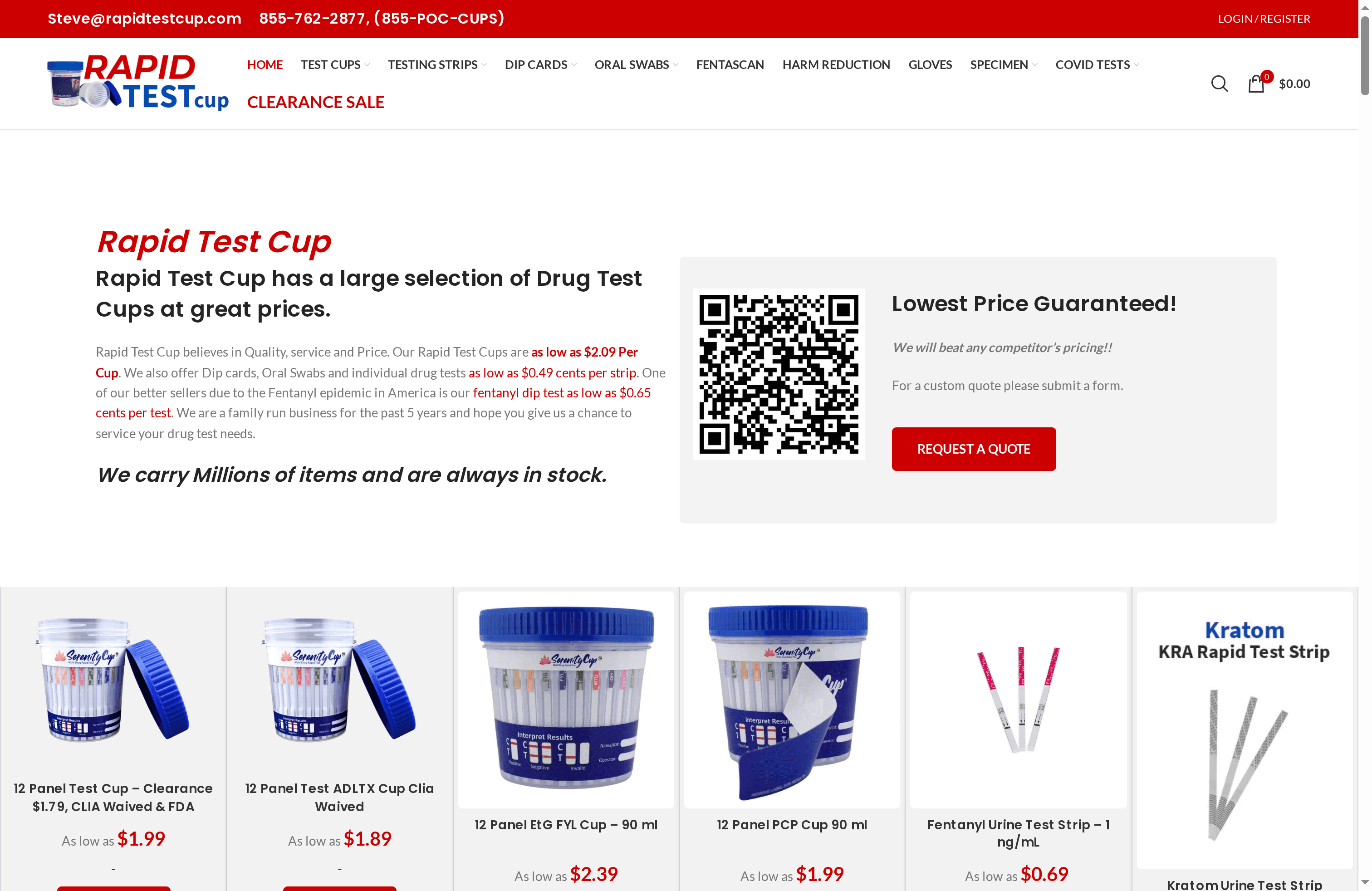
At RapidTestCup.com, we supply clinics, counseling programs, and employers with CLIA waived, FDA-approved testing tools built for professional use. The 12 panel test cup screens for a broad range of substances in a single, easy-to-use format. For targeted prescription drug screening, our MET drug test strip delivers fast, reliable results. Explore our full range of drug test strip options to find the right fit for your compliance program.
Frequently asked questions
What is a Prescription Drug Monitoring Program (PDMP)?
A PDMP is a state-run database that tracks controlled substance prescriptions to help prevent misuse, doctor shopping, and diversion while supporting safer prescribing decisions.
Do all states require prescription drug monitoring?
All 50 states have PDMPs, though mandatory query requirements, reporting timelines, and program features vary by state.
Can prescription monitoring programs reduce overdose deaths?
Yes. Robust PDMPs are associated with reduced opioid overdose deaths and significant reductions in high-dose prescribing when query requirements are enforced consistently.
What are the main limitations of PDMPs?
Data limitations include incomplete reporting, human entry errors, and state-by-state variation, meaning some prescriptions may not appear in a query even when they should.
How can organizations improve prescription drug monitoring effectiveness?
Combining PDMPs with non-punitive error reporting, continuous education, and harm reduction strategies produces better outcomes than enforcement-only approaches.