

Blog
Role of drug testing in compliance: a 2026 guide


Many professionals view drug testing as a simple workplace formality, underestimating its critical compliance function. Effective drug testing programs serve as the backbone for meeting rigorous regulatory standards and ensuring workplace safety across laboratory and healthcare environments. This guide clarifies drug testing’s essential compliance functions, explores legal considerations, and provides practical implementation strategies for compliance officers and administrators.
Table of Contents
- Understanding Regulatory Requirements For Drug Testing In Compliance
- Confirmatory Drug Testing Methods And Their Compliance Significance
- Implementing Fair, Consistent Drug Testing Policies To Minimize Legal Risks
- Best Practices For Maintaining Testing Integrity And Compliance Documentation
- Explore Our Trusted Drug Testing Solutions For Compliance
Key takeaways
| Point | Details |
|---|---|
| Compliance foundation | Drug testing programs underpin regulatory compliance and protect workplace safety in laboratory settings. |
| Testing accuracy | Confirmatory methods like LC–MS/MS eliminate false positives and provide legally defensible results. |
| Legal framework | Proper certifications, documented policies, and adherence to civil rights laws minimize legal exposure. |
| Fair implementation | Consistent testing policies reduce discrimination risks and support compliance objectives. |
| Quality partnerships | Working with accredited laboratories ensures testing standards meet regulatory requirements. |
Understanding regulatory requirements for drug testing in compliance
You face a complex web of regulatory requirements when implementing drug testing programs in laboratory and healthcare settings. To operate legally, your lab must hold the appropriate CLIA certificate and, when applicable, accreditation from organizations such as the College of American Pathologists (CAP). These certifications validate your facility’s capability to produce accurate and reliable testing results that stand up to regulatory scrutiny.
Federal, state, and local laws create overlapping compliance requirements that vary by jurisdiction. Your testing program must navigate Department of Transportation regulations, Substance Abuse and Mental Health Services Administration guidelines, and state-specific mandates. Each jurisdiction may impose unique requirements for specimen handling, result reporting, and recordkeeping that you must incorporate into your standard operating procedures.
Documented policies serve as your first line of defense against compliance violations. You need written protocols that align with applicable laws and clearly define testing procedures, employee rights, and result management. These policies must address specimen collection methods, chain of custody procedures, and result confidentiality measures that protect both your organization and the individuals being tested.
Civil rights and workers’ rights statutes add another compliance layer requiring careful attention. Your testing program must avoid discrimination based on protected characteristics while respecting privacy rights and disability accommodations. Understanding these legal considerations in drug testing prevents violations that could expose your organization to costly litigation and regulatory penalties.
Key regulatory compliance elements include:
- Current CLIA certification matching your testing scope and complexity
- CAP or other recognized accreditation demonstrating quality standards
- Written policies addressing federal, state, and local requirements
- Regular legal reviews ensuring continued compliance as laws evolve
- Staff training on regulatory requirements and proper procedures
Legal counsel plays an essential role in navigating these complex requirements. Expert guidance helps you structure policies that mitigate risks including wrongful discharge claims, privacy violations, defamation, and discrimination allegations. Proactive legal consultation proves far less expensive than defending against compliance failures.
Confirmatory drug testing methods and their compliance significance
Liquid chromatography–tandem mass spectrometry (LC–MS/MS) is the gold standard for confirmatory toxicology, providing unmatched precision in identifying drug substances and their metabolites. This technology separates complex biological mixtures and identifies specific compounds with exceptional accuracy, making results defensible in legal and regulatory proceedings. When preliminary screening tests flag potential positives, confirmatory testing eliminates doubt and protects against costly errors.
Confirmatory testing protects your organization from the severe consequences of false positives. A screening test might detect a substance that appears problematic, but only confirmatory analysis can definitively identify what compound is present and at what concentration. This distinction matters tremendously when employment decisions, regulatory actions, or legal proceedings hinge on your test results.
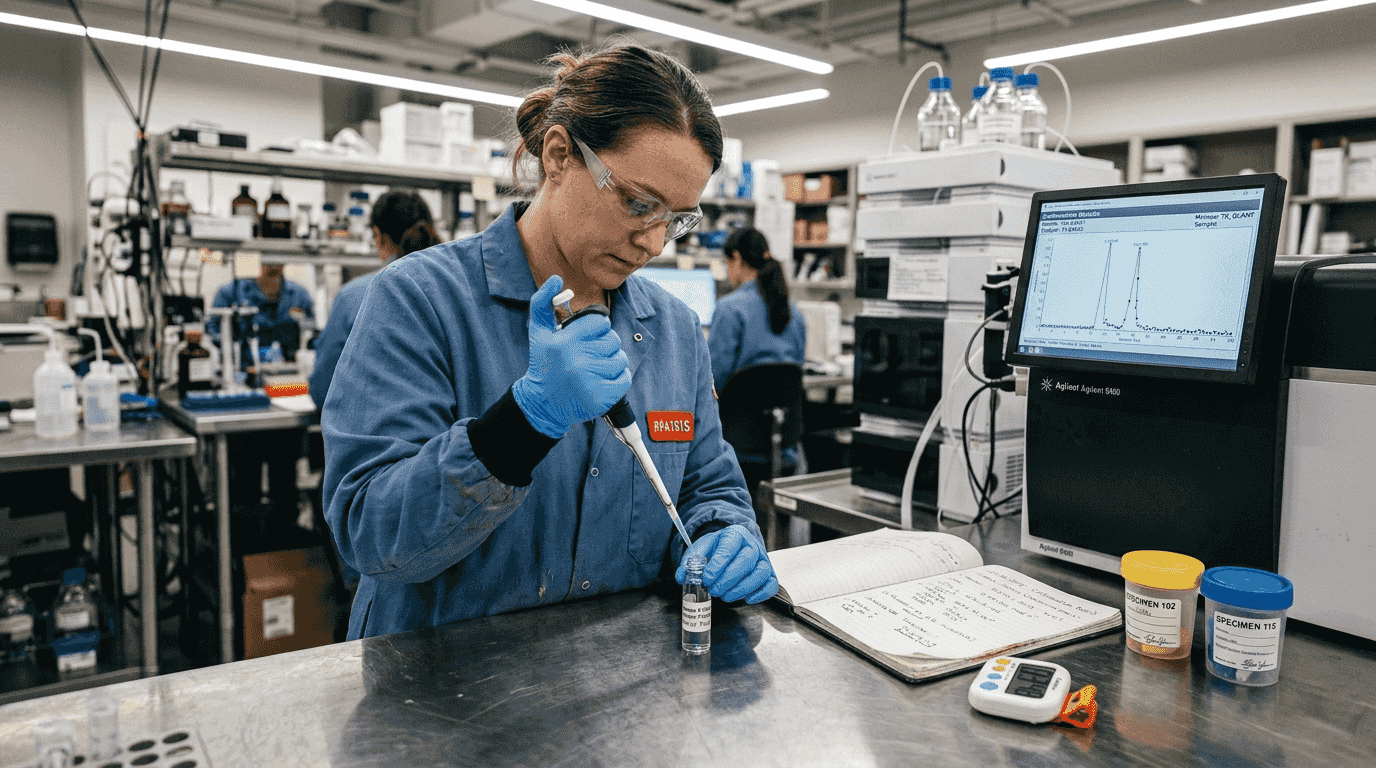
LC–MS/MS methods require specialized instrumentation and expertise that distinguish professional laboratories from basic testing facilities. Your laboratory needs qualified personnel who understand method validation, quality control procedures, and result interpretation. The technology investment extends beyond equipment purchase to include ongoing maintenance, calibration, and proficiency testing that ensures continued accuracy.
GC-MS enables forensic scientists, medical professionals, and regulatory agencies to analyze biological samples for drugs, toxins, and other hazardous substances with exceptional sensitivity. This complementary technology works alongside LC–MS/MS to provide comprehensive testing capabilities. Different drug classes respond better to specific analytical methods, so maintaining both capabilities maximizes your laboratory’s compliance readiness.
These advanced methods enhance legal defensibility through multiple mechanisms:
- Quantitative results showing exact drug concentrations, not just presence or absence
- Structural identification confirming specific compounds rather than drug classes
- Method validation data demonstrating accuracy and reliability
- Quality control documentation proving consistent performance
- Chain of custody integration ensuring specimen integrity from collection to reporting
Quality controls and chain of custody procedures work together to support test integrity. You must track every specimen through documented custody transfers, secure storage, and controlled access. Simultaneously, routine quality control samples validate that your analytical methods perform correctly on each testing run. These compliance drug testing best practices create the documentation trail that withstands regulatory audits and legal challenges.
Pro Tip: Establish relationships with reference laboratories offering confirmatory testing before you need their services. Quick turnaround for confirmatory analysis reduces the window of uncertainty when preliminary results require verification, and pre-established protocols eliminate delays during time-sensitive situations.
Implementing fair, consistent drug testing policies to minimize legal risks
Fair and consistent drug testing policies protect your organization from legal exposure while supporting legitimate compliance objectives. Your policy must specify exactly who gets tested, under what circumstances, and through what procedures. Vague or selectively applied policies create discrimination vulnerabilities that plaintiff attorneys exploit in wrongful termination and civil rights litigation.
Employers should implement drug testing policies fairly and consistently to avoid legal issues, ensuring compliance with federal, state, and local civil rights and workers’ rights laws. Your policy needs clear triggers for testing such as pre-employment screening, reasonable suspicion, post-accident protocols, and random selection procedures. Each category requires specific criteria that prevent subjective decision-making and discriminatory application.
Aligning policies with civil rights and privacy laws requires understanding how different statutes interact. The Americans with Disabilities Act restricts medical inquiries and requires reasonable accommodations, while state privacy laws may limit when and how you can conduct testing. Your policy must navigate these requirements without creating compliance gaps that expose your organization to liability.
Inconsistent policy enforcement creates legal risks exceeding those of having no policy at all. When supervisors apply testing requirements differently across employees or departments, patterns suggesting discrimination emerge quickly in litigation discovery. Documentation showing uniform application becomes your strongest defense against claims that testing decisions reflected bias rather than legitimate business needs.
Legal counsel is advisable for employers considering drug testing to avoid lawsuits related to invasion of privacy, wrongful discharge, defamation, and discrimination. Attorneys specializing in employment law and healthcare compliance can review your policies before implementation, identifying provisions that create unnecessary legal exposure. This proactive investment prevents expensive litigation and regulatory enforcement actions.
Key policy elements ensuring fairness and legal compliance:
- Written procedures specifying testing circumstances and selection criteria
- Training for supervisors on policy application and documentation requirements
- Reasonable suspicion checklists preventing subjective or discriminatory testing decisions
- Accommodation procedures addressing disability and religious considerations
- Appeal processes allowing employees to challenge results or procedures
- Confidentiality protections limiting access to testing information
Employee communication and training strengthen policy compliance and reduce legal risks. Your staff needs clear information about testing procedures, their rights during the process, and available resources for substance abuse treatment. Transparent communication demonstrates your commitment to fairness while documenting that employees understood policy requirements before facing testing situations.
Pro Tip: Conduct annual policy reviews with legal counsel to ensure continued compliance as laws evolve. Many organizations implement policies and never update them, creating compliance gaps when new statutes or court decisions change the legal landscape. Regular reviews with updated training keep your program legally sound. Understanding legal considerations in drug testing helps maintain robust policies.
Best practices for maintaining testing integrity and compliance documentation
A documented chain of custody tracks specimens from collection to reporting, creating an unbroken record of every person handling each sample and every action performed. This documentation proves specimen identity and integrity when results face legal or regulatory scrutiny. You need standardized chain of custody forms capturing collection details, transfer information, storage conditions, and analytical procedures applied to each specimen.
The chain of custody process protects against specimen mix-ups, tampering, and questions about result validity. Every custody transfer requires signatures, dates, and times creating a complete audit trail. Secure storage with restricted access prevents unauthorized handling, while tamper-evident seals demonstrate that specimens remained intact during transport and storage. These measures prove essential when results lead to employment actions or regulatory consequences.
Routine quality controls validate each assay run, ensuring your analytical methods perform correctly before reporting patient results. You must analyze negative controls confirming the absence of false positives, positive controls at relevant concentrations verifying detection capability, and blind controls preventing analyst bias. Quality control failures require investigation and corrective action before releasing any results from affected testing runs.
Quality control procedures include:
- Daily calibration verification confirming instrument performance meets specifications
- Positive and negative controls analyzed with each testing batch
- Blind quality control samples submitted by external agencies
- Proficiency testing through recognized programs demonstrating ongoing competence
- Method validation studies documenting accuracy, precision, and detection limits
- Equipment maintenance logs showing regular service and calibration
Comprehensive documentation supports regulatory or legal audits by providing objective evidence of proper procedures and accurate results. Your laboratory needs organized record systems allowing quick retrieval of specimen documentation, quality control data, and analytical results. Electronic laboratory information systems facilitate documentation management while maintaining security and backup provisions that protect against data loss.
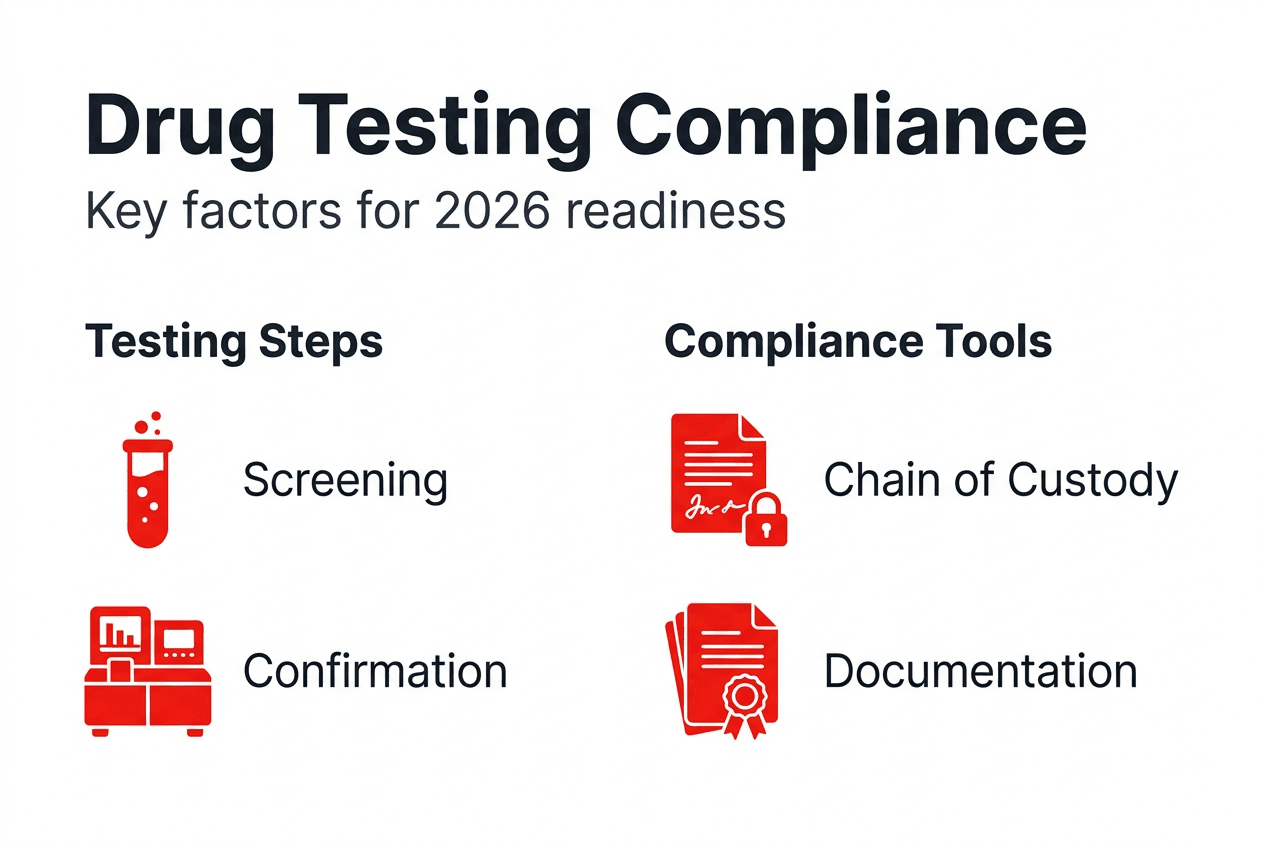
Thorough recordkeeping creates compliance advantages extending beyond audit readiness. Documentation helps you identify process improvements, track performance trends, and demonstrate continuous quality improvement. When questions arise about specific results or procedures, complete records provide answers without relying on staff memory or speculation.
| Documentation Type | Compliance Purpose | Retention Period |
|---|---|---|
| Chain of custody forms | Proves specimen identity and handling integrity | 2-7 years depending on jurisdiction |
| Quality control records | Demonstrates method accuracy and reliability | Minimum 2 years |
| Proficiency testing results | Validates ongoing laboratory competence | 2 years minimum |
| Standard operating procedures | Defines approved methods and requirements | Current version plus superseded for 2 years |
| Training records | Documents staff qualifications and competency | Duration of employment plus 2 years |
| Corrective action reports | Shows response to quality issues | 2 years minimum |
Proactive communication with confirmatory testing laboratories strengthens your overall program quality. You need clear agreements specifying turnaround times, reporting formats, and communication protocols for unusual findings. Regular dialogue about trending results, method updates, and quality issues helps you maintain current knowledge supporting informed decision-making. These drug screening workflow guide compliance practices ensure seamless operations.
Explore our trusted drug testing solutions for compliance
Applying these compliance principles requires reliable testing products designed for professional laboratory environments. Rapid Test Cup offers comprehensive drug testing solutions meeting regulatory standards while simplifying your compliance obligations. Our products combine accuracy, ease of use, and robust documentation supporting your quality assurance requirements.
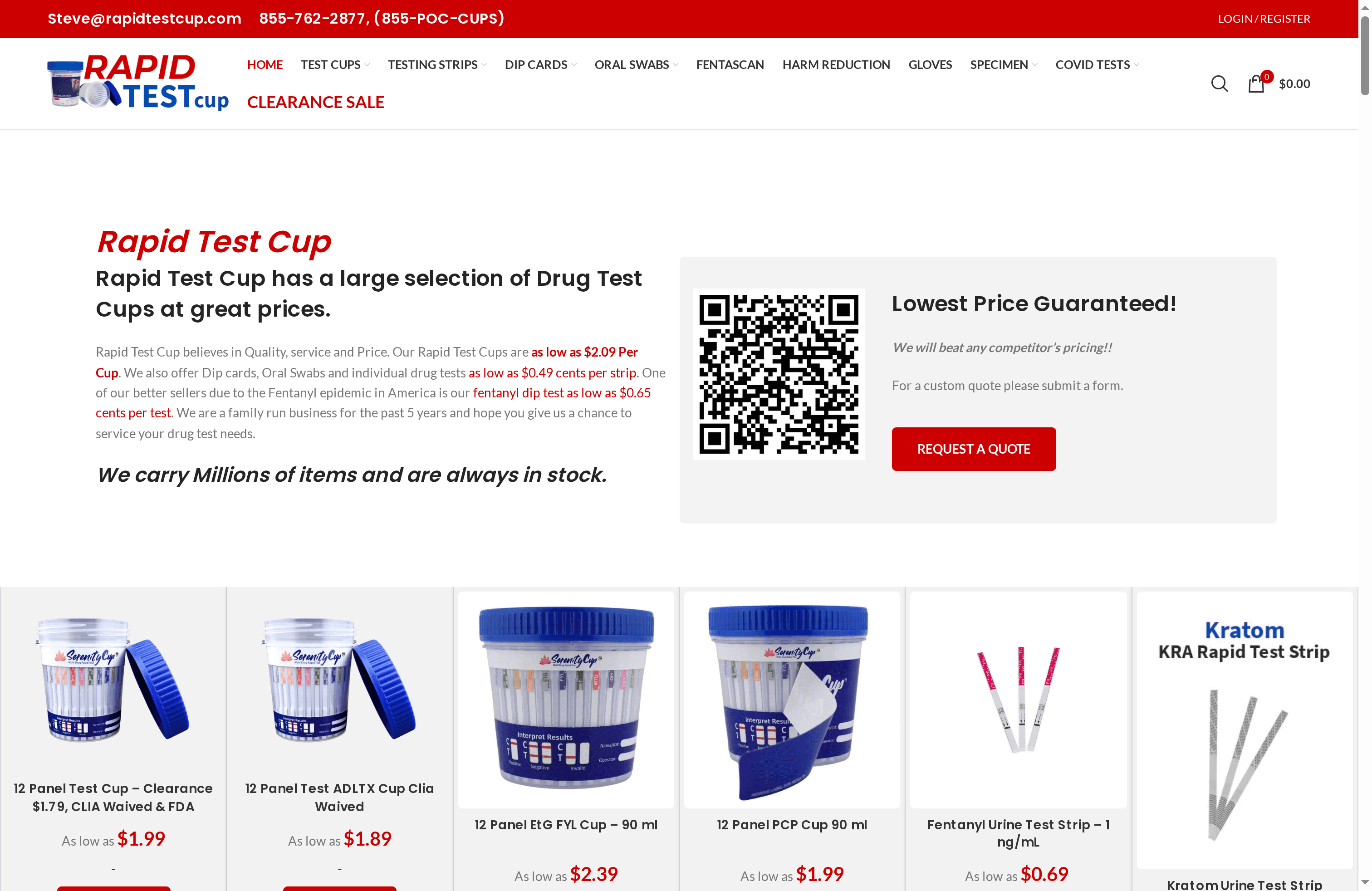
The 12 panel adltx cup provides integrated adulteration testing alongside comprehensive drug screening, detecting specimen tampering that could compromise result validity. This FDA-approved, CLIA-waived device streamlines your testing workflow while supporting chain of custody requirements through clear result windows and secure specimen handling. When you need focused analysis, our met drug test strip delivers reliable methamphetamine detection in an easy-to-use format. For maximum coverage, the 15 panel drug test with adulterants combines broad spectrum screening with tampering detection in a single integrated device. Each product supports your compliance objectives through consistent performance, clear documentation, and adherence to regulatory standards. Partner with us to maintain the testing integrity your compliance program demands.
FAQ
What is the role of LC–MS/MS in confirmatory drug testing?
LC–MS/MS is the gold standard for confirmatory toxicology, providing definitive identification of specific drug compounds and metabolites. This technology eliminates false positives from preliminary screening tests by structurally identifying substances with exceptional precision. Results from LC–MS/MS analysis withstand legal scrutiny and regulatory review because the method’s accuracy and reliability have been extensively validated across forensic, clinical, and workplace testing applications.
How can labs ensure legal compliance when implementing drug testing?
Labs must hold CLIA certification and may require CAP accreditation matching the complexity and scope of testing performed. Beyond certifications, you need documented policies addressing federal, state, and local requirements, regular staff training on compliance procedures, and quality control systems validating result accuracy. Consulting legal counsel during policy development helps identify potential compliance gaps and minimize legal risks. Understanding legal considerations in drug testing provides essential guidance for maintaining compliant programs.
What are best practices for handling positive drug test results compliantly?
Use documented, consistent protocols for every positive result, starting with confirmatory testing to eliminate false positives before taking any employment action. Respect privacy by limiting result disclosure to personnel with legitimate need to know, and follow civil rights laws prohibiting discrimination based on disability or protected characteristics. Provide employees access to employee assistance programs and substance abuse treatment resources, supporting rehabilitation while maintaining workplace safety. Proper handling procedures protect both your organization and affected individuals. Learn more about how to handle positive drug tests in compliance with regulatory requirements.
Why is chain of custody documentation critical for compliance?
Chain of custody documentation proves specimen identity and integrity throughout the testing process, creating legally defensible evidence that results correspond to specific individuals. Courts and regulatory agencies reject results lacking proper chain of custody documentation because gaps create reasonable doubt about specimen handling and result validity. Complete chain of custody records showing every transfer, storage condition, and analytical procedure protect your organization when results face legal challenges or regulatory audits. This documentation separates professional testing programs from unreliable procedures that cannot withstand scrutiny.
How often should drug testing policies be reviewed and updated?
Review policies annually with legal counsel to ensure continued compliance as laws, regulations, and court decisions evolve. Major regulatory changes, new court precedents, or organizational restructuring may require more frequent reviews and immediate policy updates. Regular reviews with updated staff training keep everyone informed about current requirements and prevent compliance gaps from emerging unnoticed. Documenting policy reviews demonstrates your commitment to maintaining legally sound testing programs that protect all stakeholders.