Blog
5 Panel vs 10 Panel Drug Tests: Key Differences


TL;DR:
- Choosing the correct drug test panel is vital for compliance, safety, and cost management across various workplaces.
- While the 5-panel test is federally mandated for DOT-regulated roles, the 10-panel expands detection to include commonly misused prescription medications outside federal scope.
Selecting the wrong drug test panel for your workplace is not just a minor administrative error. It can expose your organization to compliance failures, missed impairment risks, or unnecessary costs. The difference between 5 panel and 10 panel tests goes well beyond a simple count of substances. Each panel reflects a distinct regulatory framework, workplace risk philosophy, and legal context. Whether you manage a DOT-regulated fleet, run a hospital hiring program, or oversee substance abuse treatment, understanding what each panel screens for and when to use it is the foundation of an effective drug testing program.
Table of Contents
- Key takeaways
- Difference between 5 panel and 10 panel tests: what each screens for
- What the 10-panel test adds
- Side-by-side comparison of 5-panel vs 10-panel tests
- Regulatory compliance and where things get complicated
- Choosing the right panel for your workplace
- My take on what most organizations get wrong
- Rapidtestcup has the panels your program needs
- FAQ
Key takeaways
| Point | Details |
|---|---|
| Panel size means categories | Each panel covers drug categories, not individual drugs, and each category includes multiple analytes requiring confirmatory testing. |
| DOT mandates the 5-panel | Federal DOT testing requires the 5-panel format under 49 CFR Part 40 and cannot be substituted with an expanded panel. |
| 10-panel adds prescription classes | The 10-panel test adds benzodiazepines, barbiturates, methadone, and others to address prescription drug misuse in non-DOT settings. |
| Compliance and risk drive the choice | Panel selection should reflect your regulatory environment and realistic substance impairment risks, not a preference for more screening. |
| MRO review is non-negotiable | A Medical Review Officer must interpret positive results for either panel to protect both employer and employee. |
Difference between 5 panel and 10 panel tests: what each screens for
Before comparing the two panels, it helps to understand what “panel” actually means. A panel refers to a category of drug classes, not individual substances. The SAMHSA federal framework makes clear that each category, such as opioids, can include multiple individual drugs, all of which require both initial immunoassay screening and confirmatory testing through gas chromatography or mass spectrometry.
What the 5-panel test covers
The 5-panel test covers five federally mandated drug categories:
- Amphetamines (including methamphetamine and MDMA)
- Cocaine (and its metabolite benzoylecgonine)
- Marijuana (THC metabolites)
- Opiates and opioids (including codeine, morphine, heroin, oxycodone, and hydrocodone)
- Phencyclidine (PCP)
Urine is the only federally accepted specimen for DOT-regulated 5-panel testing, and it remains the most practical for most workplace programs given its detection window, cost, and collection ease. Urine specimen validity tests run alongside the panel screen, checking for adulteration, dilution, and tampering. These validity checks are mandated in federal programs and are what make results legally defensible.
Pro Tip: If your organization conducts DOT-regulated testing, confirm that your laboratory is SAMHSA-certified. Using a non-certified lab invalidates results and creates compliance exposure.
The 5-panel test is the backbone of workplace drug screening in the United States. Its substance categories were selected based on the most commonly misused drugs that affect workplace safety, and 5-panel urine testing balances detection window, cost, and collection ease better than any alternative method currently approved for federal programs.
What the 10-panel test adds
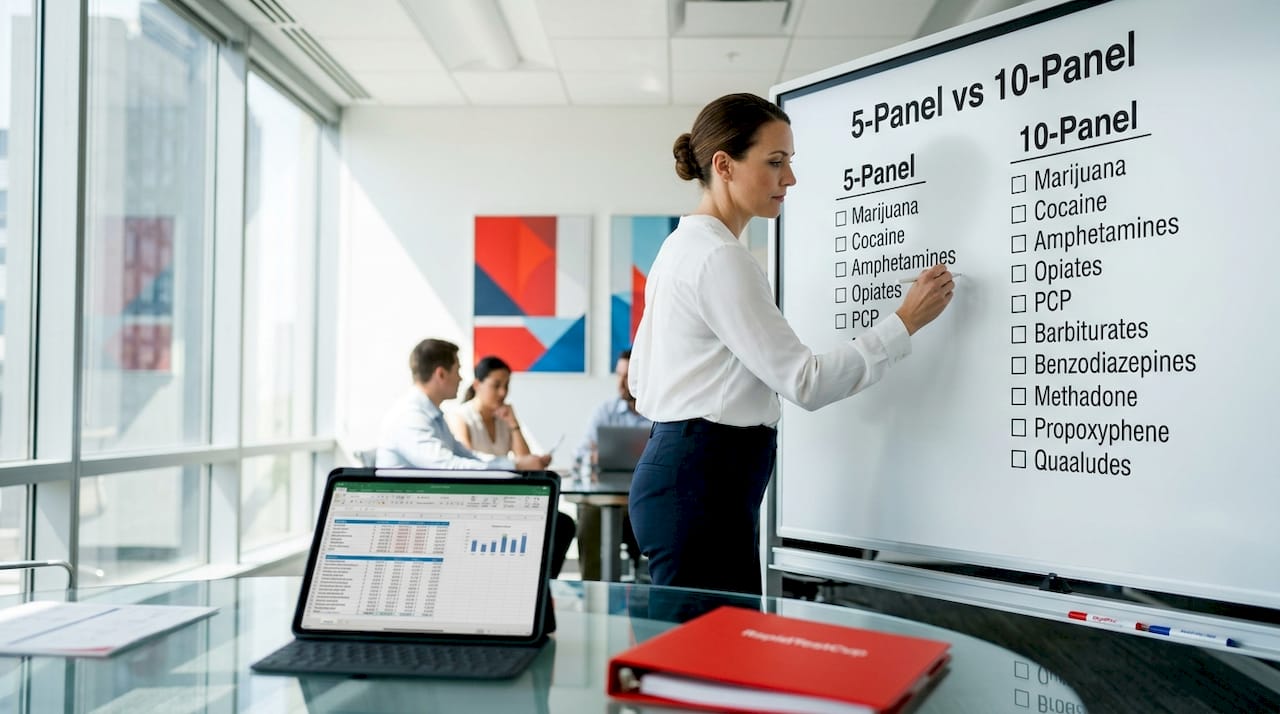
The 10-panel drug test starts with the same five substance categories as the federal panel and then expands into prescription drug classes that the 5-panel does not address. The typical additions include the following five categories:
- Benzodiazepines (such as diazepam, alprazolam, and lorazepam)
- Barbiturates (including phenobarbital and butalbital)
- Methadone (often prescribed but misused)
- Propoxyphene (a synthetic opioid analgesic)
- Methaqualone (Quaaludes) (less common today but still screened)
This expansion matters because prescription sedatives, particularly benzodiazepines, represent a growing source of workplace impairment that the 5-panel simply misses. An employee can test clean on a 5-panel while impaired by a legally prescribed but heavily misused benzodiazepine. For safety-sensitive roles that fall outside DOT jurisdiction, such as healthcare workers handling medications or heavy equipment operators in non-regulated industries, expanded panels help employers detect prescription sedative misuse before it affects alertness and workplace safety.
The 10-panel test is generally used in non-federally regulated workplace environments. Its testing procedures mirror those of the 5-panel: urine specimen collection, immunoassay screening, and confirmatory GC-MS analysis for presumptive positives. Specimen validity testing should still be incorporated, though it is not federally mandated in non-DOT programs.
Pro Tip: For healthcare employers specifically, the 10-panel test is often a minimum bar, not a ceiling. Consider whether your facility’s risk profile calls for testing benzodiazepines AND synthetic opioids like fentanyl separately, since fentanyl is rarely included in standard 10-panel configurations.
Side-by-side comparison of 5-panel vs 10-panel tests
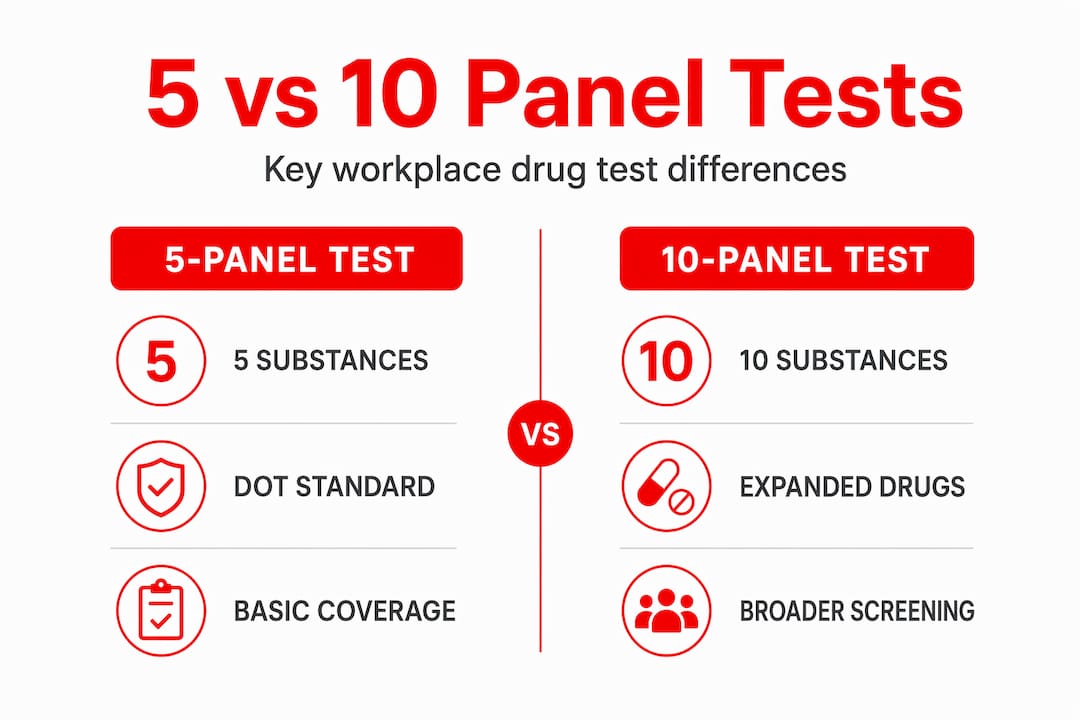
Here is a structured comparison that cuts through the surface-level differences and gets to what actually matters for employers and healthcare professionals making a panel decision.
| Category | 5-panel test | 10-panel test |
|---|---|---|
| Substances detected | Amphetamines, cocaine, marijuana, opiates/opioids, PCP | All 5-panel substances plus benzodiazepines, barbiturates, methadone, propoxyphene, Quaaludes |
| Regulatory framework | DOT/SAMHSA mandated under 49 CFR Part 40 | Non-DOT; employer discretion |
| Specimen type | Urine (federally required) | Urine (standard practice) |
| Typical cost | Lower | Moderately higher |
| Turnaround time | 1 to 3 business days | 1 to 3 business days (similar) |
| MRO review required | Yes | Yes |
| Prescription drug detection | Limited (some opioids) | Broader (benzos, barbiturates, methadone) |
The cost difference between a 5-panel and 10-panel test is often smaller than employers expect. The additional reagents and confirmatory testing for five more categories do add cost, but the per-test premium is modest compared to the liability of missing a prescription drug impairment incident.
What you should weigh against that cost difference is the nature of your workforce:
- Safety-sensitive DOT roles require the 5-panel format. No exceptions.
- Healthcare, legal, and financial roles where prescription drug access is elevated often warrant the broader 10-panel.
- Industries with lower prescription exposure risk may find the 5-panel sufficient for their program goals.
The 5 panel vs 10 panel decision is ultimately a risk-based one. More substances detected is not inherently better if those substances are not realistic risks in your workforce.
Regulatory compliance and where things get complicated
This is where most employers and healthcare administrators run into trouble. The DOT mandates a specific 5-panel structure under 49 CFR Part 40, and that structure is non-negotiable in safety-sensitive transportation industries, including aviation, trucking, rail, transit, and maritime sectors.
Here is what the compliance picture actually requires:
- DOT-covered employers must use the federally mandated 5-panel test. Adding substances to that test does not make it “more compliant.” It makes it non-compliant.
- If a DOT-regulated employer also wants to test for benzodiazepines or barbiturates, those tests must be conducted separately under a non-DOT program.
- The results of the non-DOT test must be kept entirely separate from DOT records. Mixing expanded results into a DOT testing program creates reportable compliance violations.
- A Medical Review Officer must interpret all positive results in both programs. MROs assess whether a valid prescription exists and whether the individual can safely perform their duties.
- Employers running dual programs must train supervisors on which results belong to which program and what actions each allows.
Pro Tip: Review your drug screening compliance workflow annually. Regulatory updates to substance cutoff levels and panel requirements happen more often than most organizations realize, and an outdated policy creates unintentional violations.
Non-compliance with DOT drug testing requirements carries substantial consequences, including civil penalties, loss of operating authority, and liability exposure if an impaired employee causes an incident. The rules exist because DOT compliance is non-negotiable in safety-sensitive industries, not a best practice.
Choosing the right panel for your workplace
The practical question is: which panel fits your organization’s actual risk profile? A structured approach makes this decision cleaner.
Start by answering these questions:
- Are any of your employees in DOT-regulated roles? If yes, those employees require 5-panel testing. Period.
- Do employees in non-regulated roles have access to controlled prescription medications? If yes, a 10-panel test adds meaningful protection.
- Is prescription drug misuse a documented risk in your industry? Review your incident reports and workers’ compensation claims for patterns.
- What does your current drug-free workplace policy specify? The test panel you use must align with your written policy, or you lose legal standing when taking adverse action.
For practical scenario guidance: a trucking company with a mix of DOT drivers and warehouse staff should run two separate programs, a 5-panel DOT program for drivers and a multi-panel test program for warehouse employees based on their specific risk exposure. A hospital system, where employees have daily access to controlled substances, may start with a 10-panel test and add custom panels covering synthetic opioids separately.
Cost should factor into your decision but should not drive it. The difference in per-test cost between a 5-panel and 10-panel is far smaller than the cost of a single workplace accident caused by an impairment your current panel did not detect. For HR teams building or revising policy, the workplace drug testing HR guide from Rapidtestcup covers how to document panel selection rationale in a way that withstands legal scrutiny.
My take on what most organizations get wrong
I’ve reviewed drug testing programs across healthcare systems, transportation companies, and manufacturing facilities. The most common mistake is treating the number of substances on a panel as a proxy for program quality. It is not.
In my experience, organizations that jump to a 10-panel test without mapping their actual substance risk exposure end up with extra data they do not know how to act on. A positive barbiturate result in a low-risk administrative role creates confusion if supervisors have not been trained on what that finding means, when it might reflect legitimate medication use, and what the MRO process looks like.
The inverse mistake is equally costly. I have seen DOT-regulated employers assume that running a 10-panel makes them “more compliant” when it actually voids their DOT results entirely. More coverage does not equal more compliance.
What actually improves program quality is clear written policy, trained supervisors, a qualified MRO, and regular audits of your collection and reporting chain. Panel choice is one variable in a larger system. Getting that system right matters more than adding substances to a panel.
The trend toward synthetic opioids is where I think the conversation is heading. Standard 10-panel tests do not detect fentanyl. Organizations in high-risk industries are already adding fentanyl-specific panels separately, and I expect that to become standard practice within the next few years.
— Justin
Rapidtestcup has the panels your program needs
When you know which panel fits your program, sourcing the right test matters just as much. Rapidtestcup offers CLIA waived, FDA-approved test cups and dip cards across a full range of panel configurations, from standard 5-panel kits to expanded options built for non-DOT workplace programs.
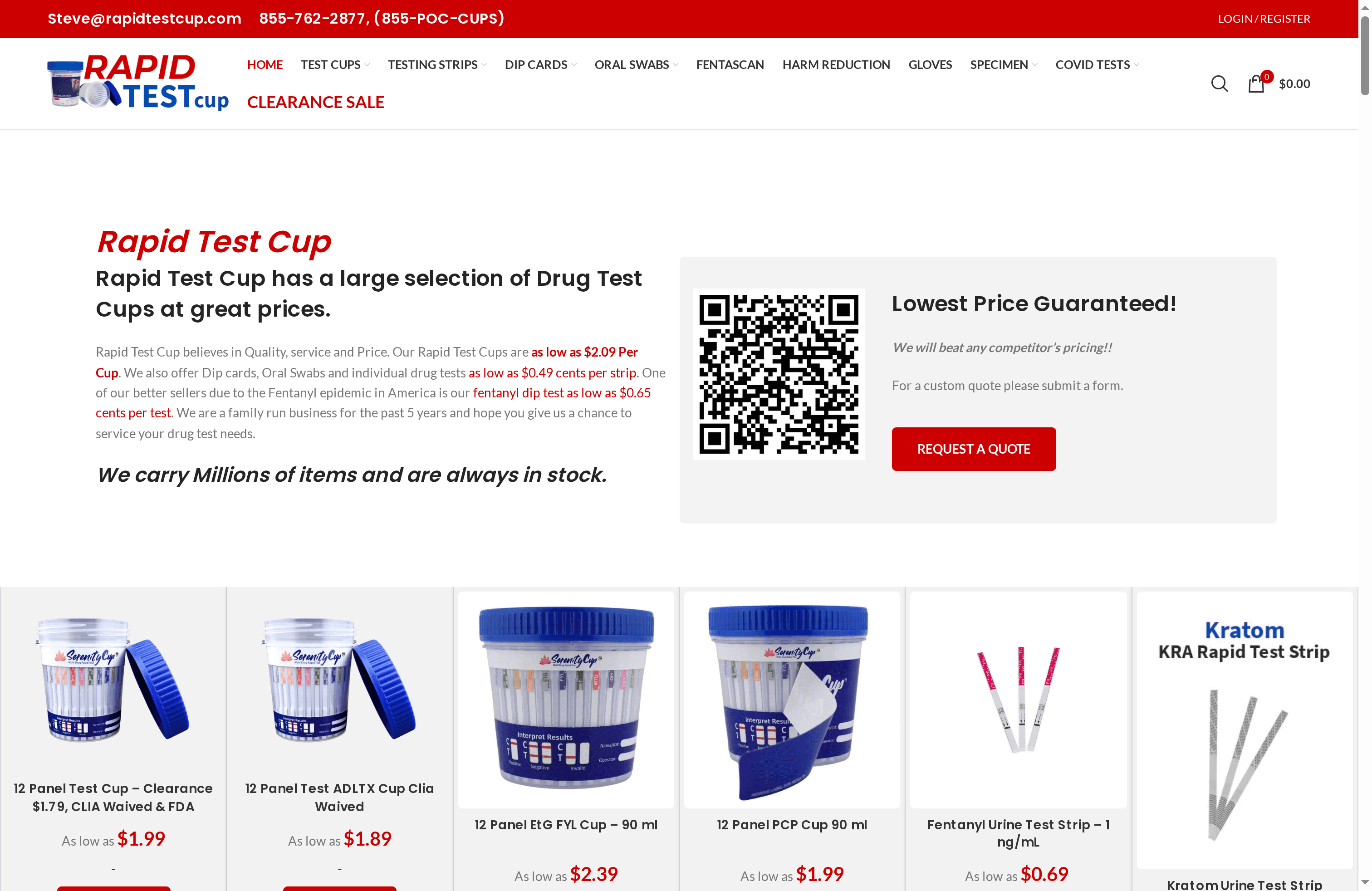
For employers stepping up to broader screening, the 10-panel dip card delivers fast, reliable results with clear read windows and bulk pricing that makes program-wide deployment practical. If your risk profile calls for coverage beyond 10 substances, the 12-panel ADLTX cup includes built-in adulterant detection, adding an extra layer of specimen validity protection that standalone panels do not provide. All products ship quickly and come with detailed documentation to support your compliance records. Contact Rapidtestcup for custom quotes or panel configuration guidance tailored to your organization’s needs.
FAQ
What is the main difference between 5 panel and 10 panel tests?
The 5-panel test covers five federally mandated substance categories including marijuana, cocaine, amphetamines, opiates, and PCP, while the 10-panel test adds five prescription drug classes such as benzodiazepines, barbiturates, and methadone. The 5-panel is required for DOT-regulated programs; the 10-panel is used in non-DOT workplace settings.
Can a 10-panel test replace a DOT 5-panel test?
No. DOT regulations under 49 CFR Part 40 mandate the specific 5-panel structure, and an expanded panel cannot substitute for it. Any additional substance testing for DOT-covered employees must be conducted as a separate non-DOT program with results kept entirely segregated.
What substances does a 10-panel test add beyond the 5-panel?
A 10-panel test typically adds benzodiazepines, barbiturates, methadone, propoxyphene, and methaqualone to the standard five federal categories. These additions target prescription drug classes most commonly associated with workplace impairment outside of traditional illicit drug categories.
Is a Medical Review Officer required for both panel types?
Yes. MRO review is required for DOT 5-panel results and is strongly recommended best practice for any 10-panel positive. An MRO evaluates whether a valid prescription exists and determines whether a positive result is medically explainable before an employer takes adverse action.
When should an employer choose a 10-panel test over a 5-panel?
Employers should choose the 10-panel when employees in non-DOT roles have elevated exposure to prescription medications, work in safety-sensitive positions outside federal jurisdiction, or when industry data shows prescription drug misuse is a documented impairment risk in their workforce.