

Blog
What Are Adulterants in Drug Testing: A Clear Guide


TL;DR:
- Adulterants in drug testing interfere with results through intentional or accidental chemical modifications of urine samples.
- Understanding detection methods and specimen validity parameters helps ensure accurate interpretation and reduces false negatives or invalid results.
Most people assume a failed or invalid drug test tells a simple story. Either someone used drugs, or someone tried to cheat. The reality is far more complicated. Understanding what are adulterants in drug testing means grasping that substances can interfere with results in ways that are both intentional and completely accidental. Whether you are a lab professional, an employer, or someone navigating a workplace screening, knowing how adulterants work and how they are detected changes how you read every result that comes back flagged.
Table of Contents
- Key Takeaways
- What are adulterants in drug testing
- How adulterants affect test accuracy
- Detection methods for specimen adulteration
- Interpreting flagged results: what “adulterated” actually means
- My take on the adulterant problem
- Reliable test cups with built-in adulterant screening
- FAQ
Key Takeaways
| Point | Details |
|---|---|
| Adulterants alter test chemistry | Chemical additives, dilution, and substitution can each cause false negatives or invalid results. |
| Not all flags mean tampering | SAMHSA clarifies that an adulterated specimen flag reflects sample characteristics, not confirmed misconduct. |
| SVT is the first line of defense | Specimen validity testing checks pH, creatinine, temperature, and oxidants before any drug analysis begins. |
| MROs interpret results in context | Medical Review Officers integrate medical history and interviews before drawing conclusions about any flagged specimen. |
| Better tools close detection gaps | Multi-panel cups with built-in adulterant checks catch tampering that observation alone cannot prevent. |
What are adulterants in drug testing
In clinical and forensic toxicology, the recognized industry term is specimen adulteration. Practically speaking, adulterants in urine tests are any substances, whether added deliberately or present due to contamination, that interfere with the accuracy of drug analysis.
Labs and testing professionals categorize adulteration into three main types:
- Chemical adulteration: A foreign substance is added directly to the urine sample to destroy drug metabolites or interfere with the testing reagents.
- Sample substitution: The original urine is replaced entirely, either with synthetic urine or another person’s clean specimen.
- Dilution: The sample is watered down, either by drinking excessive fluids before collection or by adding water directly to the cup, to drop metabolite concentrations below detection cutoffs.
The most concerning category from a laboratory standpoint is chemical adulteration, because it is the hardest to catch without dedicated testing. Common chemical adulterants include household bleach, laundry detergent, table salt, glutaraldehyde, and a range of oxidizing agents. Several commercial products have been sold specifically for this purpose. UrinAid contains glutaraldehyde, while Stealth combines peroxidase with hydrogen peroxide. Both are engineered to exploit the chemistry behind standard immunoassay screens.
What substances adulterate drug tests beyond these commercial products? Vinegar and eye drops (containing benzalkonium chloride) have both shown up in submitted specimens. Some individuals add nitrite-based compounds from readily available sources. The range is wide, and new substances continue to appear as testing methods evolve.
| Adulterant Type | Common Examples | Primary Mechanism |
|---|---|---|
| Oxidizing agents | Bleach, Stealth, potassium nitrite | React with and destroy drug metabolites |
| Aldehyde-based | Glutaraldehyde (UrinAid) | Disrupts immunoassay antibody binding |
| Surfactants | Laundry detergent, soap | Interfere with enzyme reactions in immunoassays |
| Ionic compounds | Table salt, vinegar | Alter pH and specific gravity of specimen |
| Substitution | Synthetic urine, third-party specimen | Replaces drug-containing urine entirely |
How adulterants affect test accuracy
The impact of adulterants on drug test results goes beyond a simple pass or fail. These substances attack the test at the chemistry level, and the effects vary depending on which adulterant is present and which drug is being screened.
Immunoassay screening, which is the standard first step in most workplace and clinical panels, relies on antibody-antigen reactions. When glutaraldehyde is present, it disrupts antibody binding, producing a false-negative result for cannabinoids even when THC metabolites are actually in the sample. Oxidizing adulterants like bleach or potassium nitrite chemically react with drug metabolites, breaking them down before the test can detect them. The result looks clean when it is not.
Dilution creates a different problem. It does not destroy metabolites outright, but it drops concentrations below the threshold that triggers a positive result. A specimen with a creatinine level between 2 and 20 mg/dL and a specific gravity between 1.001 and 1.003 is flagged as substituted under federal guidelines, because those values are physiologically inconsistent with normal human urine.
Pro Tip: If a urine sample reads negative across all drug panels but also shows abnormal pH, low creatinine, or an oxidant signal, treat that combination as a red flag. The absence of drug detection in a compromised specimen does not confirm the person is drug-free.
Here is what labs look for when evaluating specimen validity before any drug result is reported:
- pH outside the 4.0 to 9.0 range
- Creatinine below 2 mg/dL or above 300 mg/dL
- Temperature outside 32 to 38°C at the time of collection
- Specific gravity outside the 1.001 to 1.020 range
- Presence of oxidants, nitrites, surfactants, or glutaraldehyde
Detection methods for specimen adulteration
Specimen validity testing (SVT) is the structured process labs use to confirm a sample is genuine before interpreting drug results. Think of it as quality control for the specimen itself. SVT can be performed at the point of collection using test cups with built-in validity parameters, or at the laboratory using more sensitive analytical methods.
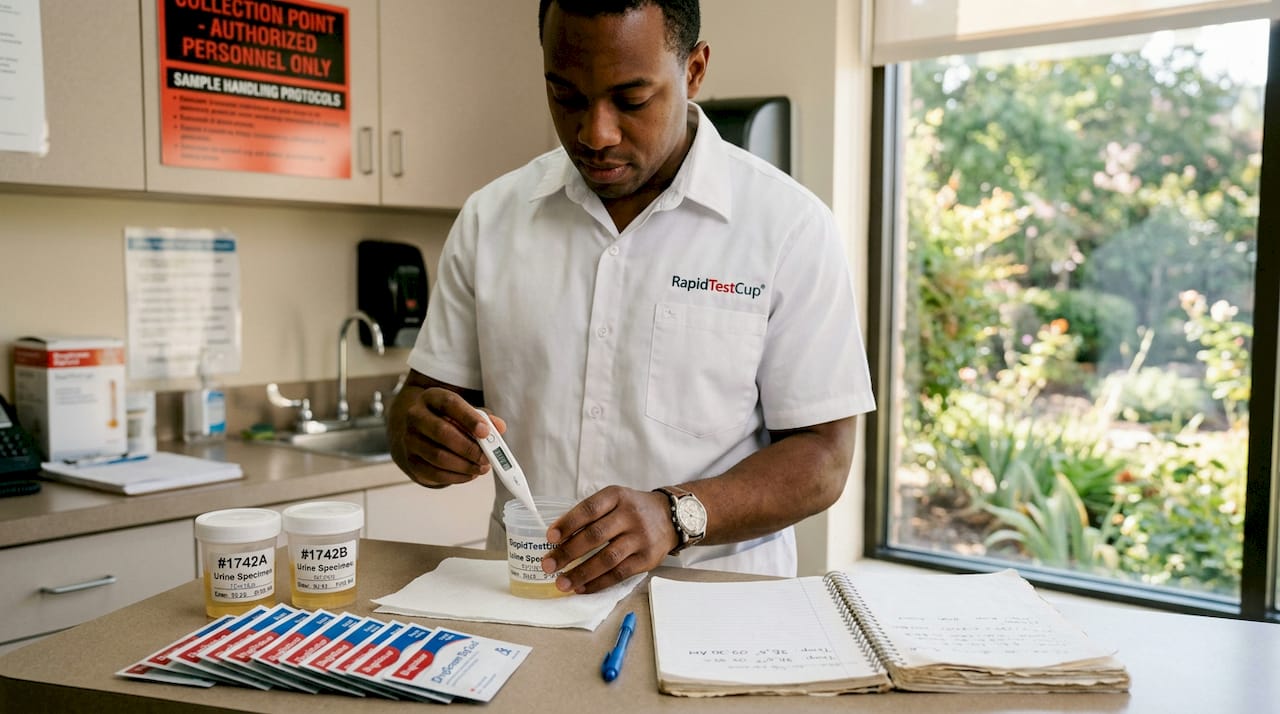
At the collection site, the most practical checks involve temperature strips, pH indicators, and creatinine or oxidant test pads built directly into the collection device. These catch the most obvious tampering attempts immediately.
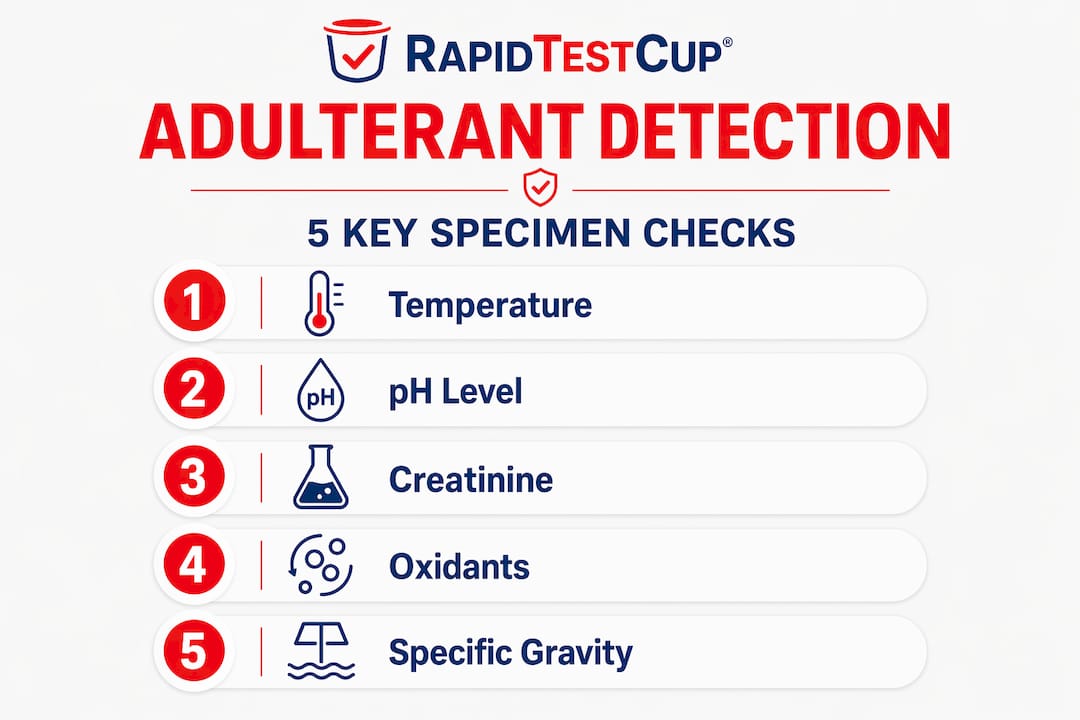
Laboratory-level detection goes significantly deeper. The table below outlines the layered approach:
| Detection Method | What It Identifies | Setting |
|---|---|---|
| Temperature strip | Specimen not from the human body | Collection site |
| pH indicator | Bleach, acid, or alkaline additives | Collection site or lab |
| Creatinine test | Dilution or substitution | Collection site or lab |
| Oxidant test | Bleach, nitrites, pyridinium chlorochromate | Collection site or lab |
| Nitrite immunoassay | Nitrite-based commercial adulterants | Lab |
| GC-MS / LC-MS | Confirm specific adulterant compounds | Forensic lab |
Adulterant test strips provide a practical middle ground for settings that need more sensitivity than a basic cup but cannot send every sample to a full forensic lab. They screen specifically for nitrites, glutaraldehyde, oxidants, pH, creatinine, and specific gravity as separate reactive pads.
It is worth addressing a common assumption directly: direct observation during collection reduces tampering risk, but it does not eliminate it. A person who pre-mixes a chemical adulterant with their sample before arriving, or who uses a catheter device concealed on their body, can still bypass visual oversight. Chemical detection remains necessary regardless of collection protocols.
Pro Tip: When managing a high-stakes testing program, pair point-of-collection adulterant screening with confirmatory lab testing rather than relying on either method alone. Combined screening and confirmatory approaches catch what single-layer testing misses.
Interpreting flagged results: what “adulterated” actually means
When a laboratory reports a specimen as adulterated or substituted, that designation describes a characteristic of the sample, not the intent of the person who provided it. SAMHSA is explicit on this point: specimen validity flags reflect testing observations, not proof of deliberate misconduct.
This distinction matters enormously in practice. Consider these scenarios:
- A patient on high-dose vitamin C supplements may have slightly altered urine chemistry that shifts pH or specific gravity.
- Someone with a kidney condition may produce urine with naturally low creatinine levels, triggering a substituted flag without any tampering.
- A person who drank several liters of water before a stress-related screening could produce a diluted specimen with no intent to mask anything.
Medical Review Officers (MROs) exist precisely to prevent these scenarios from producing unfair outcomes. An MRO reviews the lab report, interviews the donor, and considers documented medical history before assigning a final result category. That final category, whether reported as negative, positive, refusal to test, or invalid, carries the weight of clinical judgment, not just chemistry.
For employers and program administrators, the practical takeaways are clear:
- Do not communicate a specimen validity flag to an employee as a confirmed positive for drug use.
- Always route flagged results through an MRO before taking action.
- Maintain records of all validity testing parameters alongside drug panel results for compliance documentation.
- Understand that MRO evaluations exist to protect both the program’s integrity and the individual’s rights.
Compliance programs that skip MRO review or treat adulterated flags as automatic proof of wrongdoing expose organizations to significant legal risk. The science of specimen validity testing is built on probability and chemistry, not certainty about individual behavior.
My take on the adulterant problem
I have spent a lot of time working through testing scenarios with professionals who are frustrated by one recurring problem: they see an adulterated flag and immediately assume the worst. I understand why. The default assumption is that only someone hiding drug use would tamper with a sample.
What I have found is that this assumption creates two real problems. It leads programs to mishandle flagged results, and it discourages professionals from investing in layered detection. If you believe that tampering is always obvious and always intentional, you underestimate how many chemically compromised specimens slip through single-layer testing.
The uncomfortable truth is that direct observation alone is not a testing protocol. It is a partial control. The programs I have seen handle this best are the ones that treat SVT not as an optional add-on, but as the first step in every collection. They also train their staff to read validity parameters alongside drug results, not after them.
My advice to any professional managing a testing program: stop thinking of adulterant detection as a tampering investigation. Think of it as quality assurance. The goal is a specimen you can trust. Whether the compromise was intentional or not changes your next conversation with the donor. It should not change your testing protocol.
— Justin
Reliable test cups with built-in adulterant screening
Getting adulterant detection right starts with the collection device itself. At Rapidtestcup, you will find drug test cups designed to screen for adulterants and drugs in a single step, which is exactly the layered approach that professionals need.
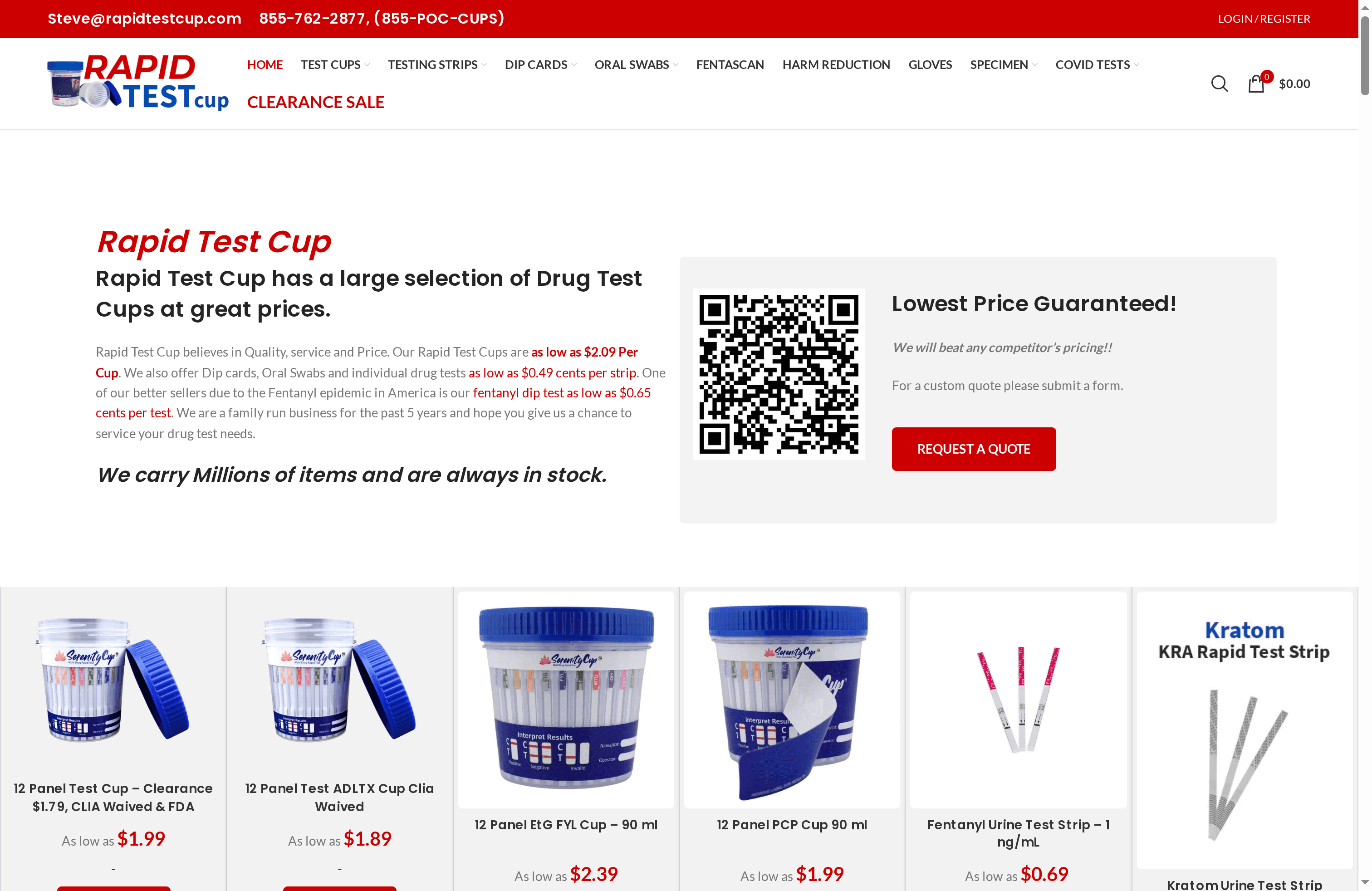
The 12-panel ADLTX cup checks temperature, creatinine, pH, oxidants, and specific gravity alongside a full drug panel, so validity and drug results are available at the same time. If you need broader coverage, the 15-panel cup with adulterants adds ketamine, fentanyl, and kratom to the panel with the same built-in validity checks. All products are CLIA waived and FDA approved, with bulk pricing available for labs, clinics, and workplace programs.
FAQ
What are the most common adulterants found in urine drug tests?
The most common adulterants include bleach, table salt, laundry detergent, glutaraldehyde, and oxidizing agents like potassium nitrite. Commercial products such as UrinAid and Stealth have also been widely used to exploit immunoassay weaknesses.
How do labs detect adulterants in a urine sample?
Labs use specimen validity testing to check pH, creatinine, temperature, specific gravity, and the presence of oxidants or nitrites before interpreting any drug result. Advanced labs may use chromatographic methods to identify specific adulterant compounds.
Does an adulterated specimen always mean someone tried to cheat?
No. SAMHSA specifies that an adulterated flag describes sample characteristics, not confirmed intent. Medical conditions, hydration levels, and dietary factors can all produce abnormal specimen parameters without any deliberate tampering.
What is the role of an MRO in reviewing adulterated results?
A Medical Review Officer reviews flagged lab results alongside the donor’s medical history and a direct interview before issuing a final result. This process prevents chemistry flags from automatically becoming adverse employment or compliance actions.
Can on-site drug test cups screen for adulterants?
Yes. Multi-panel cups with integrated adulterant validity checks test for temperature, pH, creatinine, and oxidants at the point of collection, giving programs immediate data on specimen integrity before the sample ever reaches a lab.