

Blog
What Is a Confirmation Test in Drug Screening?


TL;DR:
- A confirmation test is a mandatory laboratory process that definitively identifies drug metabolites after an initial positive screen. It uses precise methods like GC-MS or LC-MS/MS to provide legally defensible results, taking 1 to 3 days to complete. Confirmation testing is crucial to avoid false positives and ensure accurate legal, clinical, and employment decisions.
A confirmation test is defined as a mandatory secondary analytical procedure performed after an initial drug screening detects a presumptive positive, with the goal of definitively identifying and quantifying specific drug metabolites. Regulatory bodies like SAMHSA require confirmation testing before any legal, clinical, or employment action can follow a positive result. The reason is straightforward: initial immunoassay screens are designed for speed and sensitivity, not specificity. They generate false positives when common medications like ibuprofen or pseudoephedrine trigger cross-reactive results. Confirmation testing eliminates that ambiguity by applying laboratory-grade analytical chemistry to the same specimen.
What is a confirmation test, and how does it differ from a screening?
A confirmation test uses a fundamentally different scientific method than the initial screen. Initial immunoassay screens detect broad chemical families and are designed to catch any possible positive quickly. Confirmation tests target the exact molecular fingerprint of a specific drug or metabolite. That distinction separates a presumptive result from a legally defensible one.
The two methods serve opposite priorities. Screening tests prioritize speed and sensitivity to flag potential positives, accepting a higher rate of false positives as a trade-off. Confirmation tests prioritize absolute specificity. A result that cannot be confirmed at the molecular level is not reported as positive under any federal or clinical protocol.
The practical gap between the two is significant for professionals. A rapid immunoassay screen can return a result in five minutes. A confirmation test typically takes 1–3 days to process depending on lab workflow and the substances being analyzed. That delay is the cost of certainty. For a healthcare provider managing a patient’s treatment plan, or a law enforcement officer building a case, that certainty is non-negotiable.
Pro Tip: Never communicate a presumptive positive to a patient, employer, or court before confirmation results are available. Premature disclosure based on a screen alone creates legal exposure and clinical risk.
The difference between screening and confirmation is not just technical. It is the line between an accusation and a fact.
What scientific methods are used in confirmation testing?
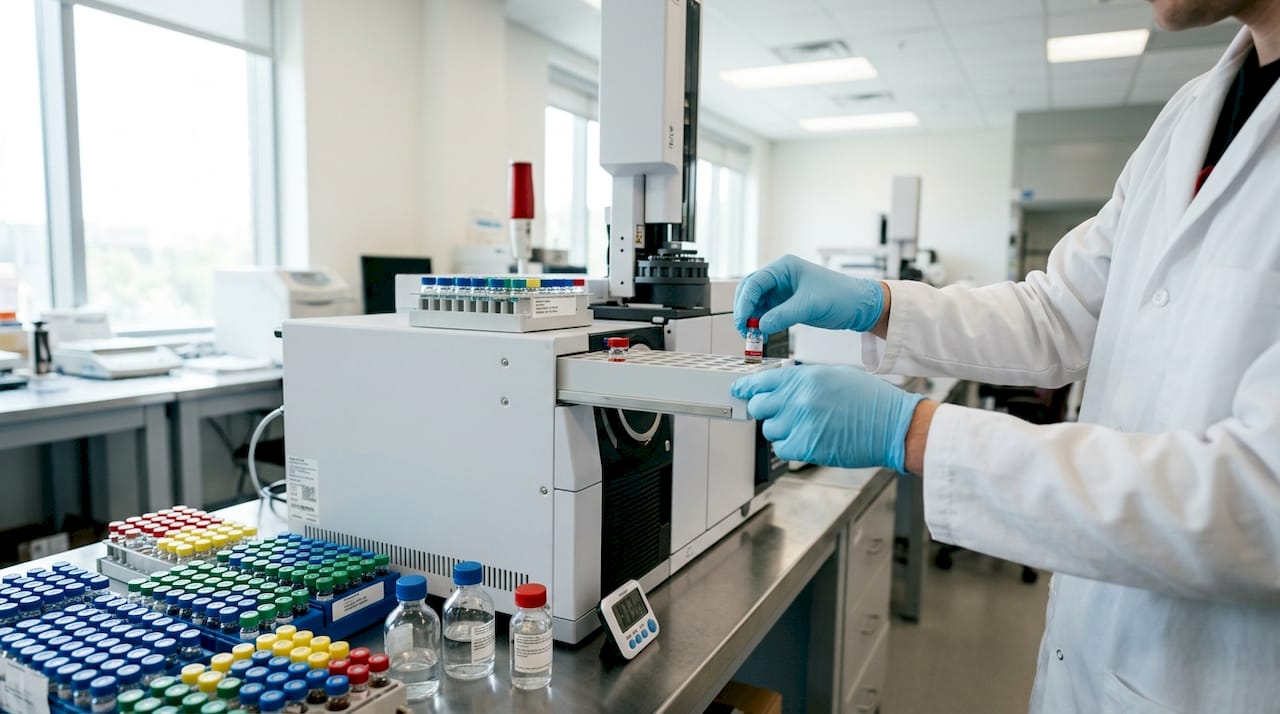
The two gold-standard methods for confirmation testing are Gas Chromatography-Mass Spectrometry (GC-MS) and Liquid Chromatography-Tandem Mass Spectrometry (LC-MS/MS). Both methods separate a specimen’s chemical components and then identify each compound by its unique molecular mass. That process produces a molecular fingerprint that no other substance can replicate.
Here is how each method works in practice:
- GC-MS: The specimen is vaporized and passed through a gas chromatography column, which separates compounds by their chemical properties. The mass spectrometer then measures the mass-to-charge ratio of each fragment, producing a unique spectral signature. GC-MS has been the forensic standard for decades and remains widely used for urine drug testing.
- LC-MS/MS: Liquid chromatography separates compounds in a liquid phase, making it better suited for substances that cannot be easily vaporized. The tandem mass spectrometry step adds a second layer of fragmentation analysis, increasing specificity further. LC-MS/MS is now the preferred method for many clinical labs because it handles a wider range of substances, including synthetic opioids and novel psychoactive substances.
- Immunoassay (initial screen only): Antibody-based detection that reacts to a class of substances rather than a specific compound. Fast and inexpensive, but not specific enough for confirmation.
GC-MS and LC-MS/MS identify unique molecular fingerprints rather than broad chemical families. That specificity is what makes their results legally defensible in court and clinically reliable in treatment settings.
LC-MS/MS requires highly skilled technical staff and rigorous validation according to ICH guidelines. Labs running confirmation testing must document their validation processes, maintain calibration records, and participate in proficiency testing programs. The complexity is real, and so is the quality control burden.
Pro Tip: When reviewing a confirmation report, check that the lab lists the specific metabolite detected, not just the drug class. A report citing “THC-COOH at 18 ng/mL” is confirmation-grade. A report citing “cannabinoids positive” is not.
What regulatory standards and cutoff thresholds guide confirmation testing?
SAMHSA sets the federal cutoff concentrations that govern confirmation testing for federally mandated workplace drug testing programs. These thresholds are not arbitrary. They are calibrated to prevent detection of trace-level environmental exposure while catching genuine use.
The table below shows SAMHSA cutoff levels for common substances at both the screening and confirmation stages:
| Substance | Initial Screen Cutoff | Confirmation Cutoff |
|---|---|---|
| Marijuana (THC-COOH) | 50 ng/mL | 15 ng/mL |
| Cocaine (benzoylecgonine) | 150 ng/mL | 100 ng/mL |
| Opiates (morphine/codeine) | 2,000 ng/mL | 2,000 ng/mL |
| Amphetamines | 500 ng/mL | 250 ng/mL |
| Phencyclidine (PCP) | 25 ng/mL | 25 ng/mL |
The marijuana confirmation cutoff is 15 ng/mL under federal guidelines. That is significantly lower than the 50 ng/mL screening threshold. This means a specimen that screens positive may confirm negative if the actual THC-COOH concentration falls between those two values.
Confirmation tests often use lower cutoff thresholds than initial screening tests. That design reflects the confirmation test’s role as the definitive assessment. A lower confirmation cutoff increases the test’s precision, not its sensitivity. Professionals who expect confirmation results to mirror screening results will misinterpret discordant outcomes. A negative confirmation after a positive screen is not a lab error. It is the system working correctly.
Why is confirmation testing critical in clinical, legal, and forensic contexts?
No federal program permits employment action solely on an unconfirmed initial screening result. That rule exists because false positives from immunoassay screenings can arise from common medications, dietary supplements, and even certain foods. Acting on an unconfirmed result exposes employers, clinicians, and agencies to legal liability and causes direct harm to the individual being tested.
The consequences of skipping confirmation are concrete:
- A patient in a pain management program may lose opioid prescriptions based on a false positive for illicit drug use.
- A law enforcement officer may face disciplinary action from a cross-reactive result caused by a legally prescribed medication.
- A substance abuse treatment client may be discharged from a program based on a result that confirmation would have overturned.
“Professional judgment is critical when handling presumptive positives because technical or procedural interferences can occur. Confirmation tests provide the specificity needed to make defensible clinical and legal decisions.”
Medical Review Officers play a mandatory role in federally regulated testing programs. An MRO reviews every laboratory-confirmed positive result, contacts the donor, and determines whether a legitimate medical explanation exists before reporting the final result to the employer or agency. This step protects individuals who test positive due to lawfully prescribed medications. Without MRO review, a confirmed positive for opiates could result in discipline against a patient taking prescribed codeine.
The importance of confirmatory testing in laboratory workflows extends beyond compliance. In clinical settings, confirmation results directly inform treatment decisions. A substance abuse counselor who knows a patient is using methamphetamine rather than amphetamine-based ADHD medication can adjust the treatment plan accordingly. That level of specificity only comes from confirmation-grade testing.
How is a confirmation test conducted?
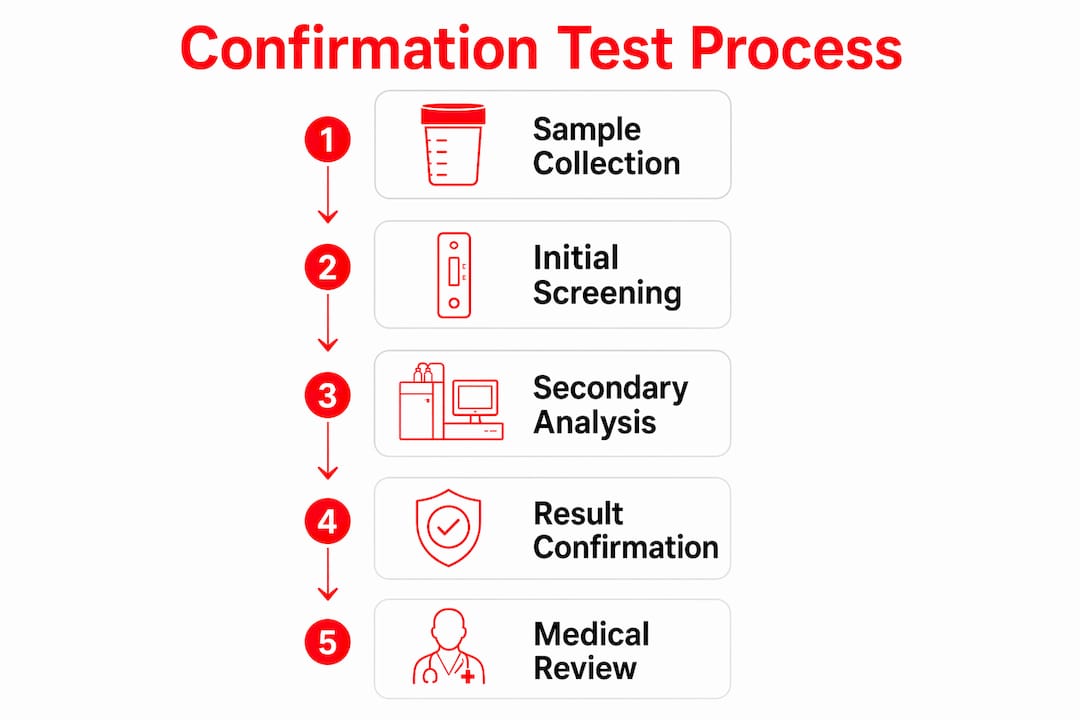
The procedural chain from specimen collection to final result involves multiple checkpoints. Each step protects the integrity of the result and the legal defensibility of the outcome.
- Specimen collection: Urine is collected under controlled conditions using tamper-evident containers. Chain of custody documentation begins at collection and must remain unbroken through final reporting. Proper specimen collection procedures are the foundation of every valid confirmation result.
- Specimen validity testing: Before any drug analysis begins, the lab checks creatinine, specific gravity, and pH. Specimen validity testing detects dilution, substitution, or tampering that would compromise the result. A specimen with creatinine below 2 mg/dL and specific gravity below 1.0010 is reported as substituted, not tested.
- Initial immunoassay screening: The specimen is screened using an immunoassay platform. Presumptive positives are flagged for confirmation. Presumptive negatives are typically reported without further analysis.
- Confirmatory analysis: The flagged specimen is analyzed by GC-MS or LC-MS/MS. The lab identifies the specific metabolite and measures its concentration against the SAMHSA or applicable cutoff threshold.
- Quality control review: Every confirmation run includes calibrators and controls at multiple concentration levels. Results outside acceptable ranges trigger re-analysis. ICH validation guidelines govern the lab’s method validation and ongoing quality assurance.
- MRO review and final reporting: In federally regulated programs, the MRO reviews the confirmed positive, contacts the donor, and issues the final verified result. In clinical settings, the ordering clinician receives the result with the specific metabolite and concentration listed.
Pro Tip: Review the lab testing checklist before submitting specimens for confirmation. Missing chain of custody documentation is the most common reason a legally valid confirmation result becomes inadmissible.
Laboratories must collaborate closely with clinicians and MROs because confirmation testing is part of a larger clinical and legal pathway. A lab result without contextual interpretation is incomplete. The number on the report means nothing without knowing the cutoff, the method, and the donor’s medication history.
Key Takeaways
A confirmation test is the definitive step in drug screening, required by SAMHSA and federal law before any clinical, employment, or legal action can follow a presumptive positive result.
| Point | Details |
|---|---|
| Confirmation test definition | A mandatory secondary test that identifies and quantifies specific drug metabolites after a positive screen. |
| Gold-standard methods | GC-MS and LC-MS/MS identify unique molecular fingerprints, making results legally and clinically defensible. |
| SAMHSA cutoff thresholds | Confirmation cutoffs differ from screening cutoffs; marijuana confirms at 15 ng/mL versus a 50 ng/mL screen threshold. |
| MRO review is mandatory | Medical Review Officers must validate confirmed positives in federally regulated programs before final reporting. |
| Specimen validity testing | Creatinine, pH, and specific gravity checks must precede confirmatory analysis to rule out tampering or dilution. |
The gap between a screen and a confirmed result is where careers and lives are decided
After years of working alongside lab directors, MROs, and substance abuse counselors, the pattern I keep seeing is the same: professionals trust the screen too much and too early. A positive immunoassay result feels like an answer. It is not. It is a question.
The most consequential errors I have observed in drug testing programs do not come from bad labs. They come from good people acting on incomplete information. A clinician who adjusts a patient’s treatment plan based on a presumptive positive, before confirmation, is making a decision with half the data. A law enforcement officer who documents a screen result as a confirmed finding creates a record that will not survive legal scrutiny.
The emerging challenge in 2026 is not the technology. GC-MS and LC-MS/MS are mature, reliable methods. The challenge is training. As LC-MS/MS platforms become more accessible, more labs are running confirmation testing without the depth of expertise the method demands. Emerging challenges include maintaining rigor in high-precision mass spectrometry labs and ensuring adequate training for personnel interpreting complex results. That is the real gap in the field right now.
My recommendation is direct: build the confirmation step into your protocol before you need it, not after a disputed result forces the issue. Know your lab’s validation documentation. Know your MRO. Know the cutoff values for every substance your program tests. The screen tells you where to look. The confirmation tells you what is actually there.
— Justin
Rapidtestcup tools for accurate drug screening and confirmation
Professionals who need reliable initial screening products before confirmation can find CLIA waived, FDA-approved options at Rapidtestcup. The platform carries a full range of urine drug test kits suited for clinical, forensic, and workplace programs, including multi-panel cups with built-in adulterant detection.
Rapidtestcup also stocks adulteration test strips and specimen collection cups designed to support chain of custody integrity from the first step of the process. For programs that need to screen accurately before sending specimens for laboratory confirmation, starting with a high-quality initial screen reduces unnecessary confirmation costs and speeds up the overall workflow. Bulk pricing and custom quotes are available for labs, clinics, and agencies.
FAQ
What is a confirmation test in drug testing?
A confirmation test is a secondary laboratory procedure, typically using GC-MS or LC-MS/MS, that definitively identifies and quantifies a specific drug metabolite after an initial immunoassay screen returns a presumptive positive. It is required for legal and forensic defensibility to rule out false positives.
Why can a screen be positive but confirmation be negative?
Confirmation cutoffs are often set lower and more precisely than screening cutoffs, so a specimen with a drug concentration between the two thresholds will screen positive but confirm negative. This is the system functioning correctly, not a lab error.
How long does a confirmation test take?
Confirmation testing typically takes 1–3 days depending on the lab’s workflow and the substances being analyzed, compared to a five-minute turnaround for rapid immunoassay screens.
Is MRO review required for all confirmation tests?
MRO review is mandatory in federally regulated workplace drug testing programs. The MRO contacts the donor, reviews medical history, and validates the result before it is reported to the employer or agency.
What substances can cause false positives on initial screens?
Common medications including ibuprofen, pseudoephedrine, and certain antihistamines can trigger false positives on immunoassay screens. Confirmation testing distinguishes these substances from actual illicit drug metabolites with molecular-level precision.