

Blog
Drug Metabolite Detection: A 2026 Guide for Professionals


TL;DR:
- Drug metabolite detection involves identifying biochemical transformation products formed when the body processes drugs. It is essential for pharmacokinetics, toxicology, and forensic casework, with high-resolution mass spectrometry being the gold standard. Validation of workflows and use of computational prediction tools are vital for accurate identification and authority compliance.
Drug metabolite detection is defined as the analytical identification and quantification of biochemical transformation products formed when the body processes a drug. These metabolites, not the parent compounds, often carry the most diagnostic weight in pharmacokinetics, clinical toxicology, and forensic casework. Understanding drug metabolite detection requires knowing both the chemistry of Phase I and Phase II biotransformation and the instrumentation capable of capturing those changes at nanomolar concentrations. Regulatory bodies including the FDA have issued guidance on metabolite characterization in drug development, making this knowledge foundational for laboratory professionals working in 2026.
What is drug metabolite detection and why does it matter?
Drug metabolite detection is the process of identifying compounds produced when enzymes, primarily in the liver, chemically modify a drug molecule. Phase I reactions introduce or expose functional groups through oxidation, reduction, or hydrolysis. Phase II reactions conjugate those products with glucuronic acid, sulfate, or glutathione, producing polar metabolites that are excreted in urine. The distinction matters because Phase II glucuronide conjugates are often the dominant species in urine, even when the parent drug is barely detectable.
The importance of drug metabolite testing extends across multiple disciplines. In clinical pharmacology, metabolite profiles determine whether a drug is safe, effective, or likely to cause adverse reactions. In forensic toxicology, metabolites extend the detection window well beyond what parent drug concentrations allow. In regulatory submissions, the FDA requires sponsors to characterize and quantify disproportionate metabolites that exceed 10% of total drug exposure. Missing a major metabolite in any of these contexts carries real consequences.
What are the leading methods of metabolite detection?
LC-HRMS is recognized as the gold standard for drug metabolite identification. It combines the separation power of liquid chromatography with the mass accuracy of high-resolution mass spectrometry, enabling detection of unknown metabolites through full-scan data acquisition. Older techniques like HPLC with UV detection and gas chromatography require prior knowledge of the target compound and cannot identify unexpected biotransformation products. LC-HRMS removes that constraint entirely.
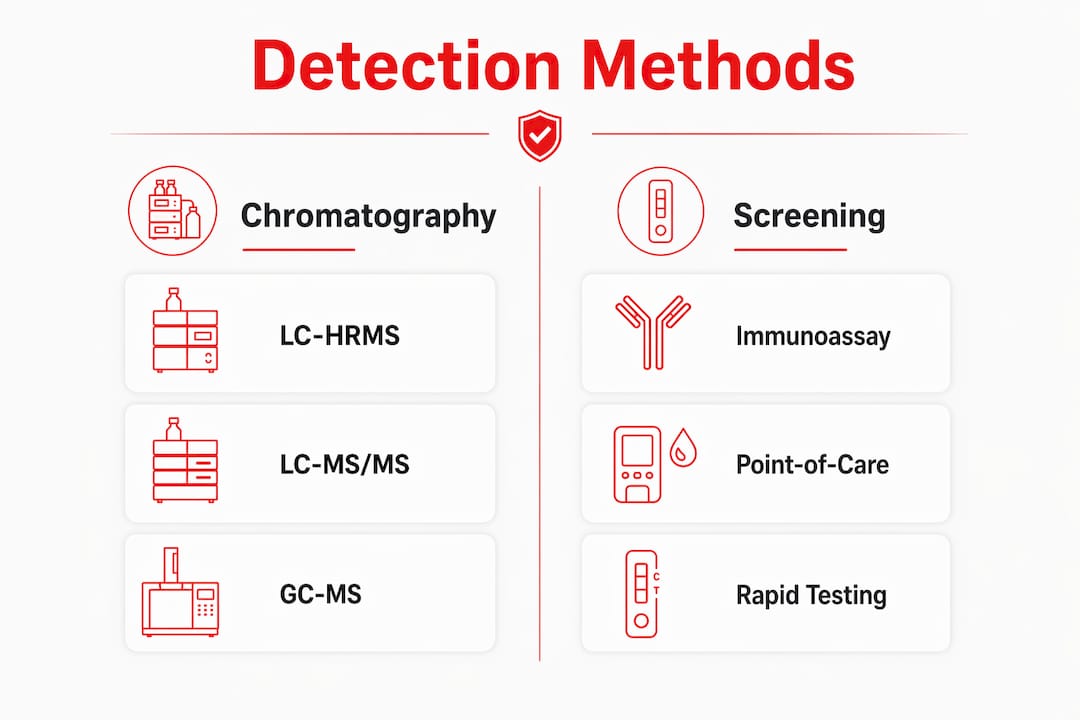
For quantitation, Triple-Quadrupole Mass Spectrometry (TQMS) operating in Multiple Reaction Monitoring mode is the preferred instrument. TQMS achieves quantitation down to nanomolar concentrations with high reproducibility, making it the workhorse of regulated bioanalysis. Mass error for metabolite identification is typically maintained below 5 ppm, which is the threshold required for confident structural elucidation. That level of accuracy is unachievable with conventional HPLC or GC methods.
Key analytical considerations for any metabolite detection workflow include:
- Sample preparation: Protein precipitation, solid-phase extraction, or liquid-liquid extraction removes matrix components that suppress ionization.
- Chromatographic selectivity: Adequate retention time separation prevents co-elution of isobaric compounds.
- Mass accuracy: Sub-5 ppm error is required to assign molecular formulas with confidence.
- Dynamic range: Modern LC-MS/MS systems cover a wide linear dynamic range, allowing simultaneous quantitation of parent drugs and trace-level metabolites.
- Data acquisition mode: Full-scan HRMS captures all ionizable species; targeted MRM captures only pre-selected transitions.
Pro Tip: Add stable isotopically labeled internal standards at the earliest possible stage of sample preparation. Matrix effects cause ion suppression in complex biological samples, and isotope-labeled analogs correct for that signal variability in a way that no post-acquisition correction can replicate.
How do computational workflows improve metabolite identification?
Non-targeted LC-HRMS workflows are now standard in advanced forensic and clinical laboratories. These workflows acquire full-scan data across a broad mass range, then apply data processing software to flag features that correspond to predicted metabolite masses. The critical advantage is that no reference standard is required before detection. This matters enormously when new psychoactive substances appear faster than reference materials can be synthesized and certified.
In silico prediction tools like BioTransformer generate ranked lists of probable metabolites based on known enzyme kinetics and substrate rules. Those predictions feed directly into the data processing pipeline, narrowing thousands of detected features to a manageable shortlist. Integrating in silico prediction with trapped ion mobility QTOF-MS further resolves candidates by collision cross-section, a physical property that distinguishes isomers even when their fragment spectra are identical.
Molecular networking and diagnostic neutral loss filters add another layer of confidence. A glucuronide conjugate, for example, loses exactly 176.0321 Da upon fragmentation. Filtering HRMS data for that neutral loss instantly flags all glucuronidated species in a sample, regardless of the parent drug. QSRR models then predict retention times for each candidate, and QSRR retention time modeling combined with collision cross-section prediction resolves isomeric metabolites that fragment ions alone cannot separate.
Practical tools in this computational stack include:
- BioTransformer: Predicts Phase I and Phase II metabolites from a parent structure.
- Diagnostic neutral losses: Glucuronide (176.0321 Da), sulfate (79.9568 Da), and glutathione (305.0682 Da) losses flag conjugated metabolites.
- Molecular networking: Groups related spectra by spectral similarity, revealing metabolite clusters.
- QSRR models: Predict chromatographic retention times to confirm or reject candidate assignments.
- Ion mobility spectrometry: Adds a collision cross-section dimension to separate isobaric compounds.
Pro Tip: No single computational tool covers all metabolic pathways. Combining multiple complementary approaches reduces false negatives more effectively than relying on any one method, particularly for emerging substances with no prior metabolic data.
Which biological matrices work best for drug metabolite analysis?
Urine is the preferred matrix for forensic toxicological screening, and the reasons are well established. Drug metabolites concentrate in urine at levels far exceeding plasma, extending the detection window for most substances. Validated non-targeted workflows now cover more than 200 substances in urine, including Phase I metabolites identified through pooled human liver microsome incubations. That breadth makes urine the most practical matrix for broad-spectrum screening.
The table below summarizes the key characteristics of the most commonly used matrices in drug metabolite analysis.
| Matrix | Detection window | Key metabolite types | Primary challenge |
|---|---|---|---|
| Urine | Days to weeks | Phase I and Phase II conjugates | Dilution, adulteration |
| Blood/plasma | Hours to days | Parent drug, Phase I metabolites | Low metabolite concentration |
| Oral fluid | Hours to 1–2 days | Parent drug, some Phase I | Collection volume, pH variability |
| Hair | Weeks to months | Incorporated parent and metabolites | Low concentration, external contamination |
| Meconium | Weeks (gestational) | Phase I and Phase II metabolites | Complex matrix, limited volume |
Phase II glucuronide conjugates deserve special attention. Many laboratories historically hydrolyzed samples with beta-glucuronidase before analysis, converting conjugates back to their aglycone forms. Combined non-targeted and targeted LC-HRMS workflows now detect Phase II glucuronides without hydrolysis using the diagnostic neutral loss of 176.0321 Da. This preserves conjugate identity and provides additional structural information that hydrolysis destroys.
Matrix effects remain the most persistent technical challenge. Ion suppression from phospholipids, salts, and endogenous metabolites reduces signal intensity unpredictably. Rigorous sample cleanup through solid-phase extraction or supported liquid extraction reduces co-extracted interferences. Stable isotopically labeled internal standards then correct for residual suppression that cleanup alone cannot eliminate.
What are the practical implications for healthcare and forensic professionals?
Drug metabolite analysis drives decisions across the full clinical and forensic spectrum. In drug development, the FDA’s guidance on metabolite safety testing requires sponsors to identify and quantify metabolites that exceed defined exposure thresholds in humans relative to preclinical species. Laboratories operating under Good Laboratory Practice and Good Clinical Practice standards must validate their metabolite assays against defined criteria for accuracy, precision, selectivity, and stability. Validation is not optional. It is the mechanism that makes data defensible in regulatory submissions and court proceedings.
In forensic toxicology, metabolite detection in urine provides evidence of drug exposure long after the parent compound has cleared. Interpreting that evidence correctly requires understanding which metabolites are specific to a given drug and which are shared across a drug class. Morphine and codeine, for example, share 6-acetylmorphine as a heroin-specific marker. Without that metabolite knowledge, a positive opioid screen cannot distinguish heroin use from prescribed codeine.
Key quality assurance requirements for metabolite assay validation include:
- Selectivity: The method must not produce false positives from endogenous compounds or co-administered drugs.
- Linearity: The calibration range must bracket the expected concentration range in real samples.
- Stability: Metabolites must be stable through freeze-thaw cycles and bench-top storage conditions.
- Carry-over: High-concentration samples must not contaminate subsequent injections.
- Incurred sample reanalysis: A percentage of real study samples must be re-analyzed to confirm reproducibility.
Preliminary screening in clinical and workplace settings relies on immunoassay-based point-of-care tests. These tests detect metabolites at defined cutoff concentrations and provide rapid results without laboratory infrastructure. Rapidtestcup supplies CLIA-waived, FDA-cleared urine drug test cups and dip cards that screen for metabolites of opioids, cannabinoids, benzodiazepines, amphetamines, and many other drug classes. Positive screens from point-of-care tests are confirmed by LC-MS/MS in a reference laboratory, creating a two-tier system that balances speed with analytical certainty.
Key Takeaways
Drug metabolite detection requires combining high-resolution mass spectrometry, validated sample preparation, and computational prediction tools to achieve accurate identification across both known and emerging substances.
| Point | Details |
|---|---|
| LC-HRMS is the gold standard | It identifies unknown metabolites through full-scan acquisition, surpassing older HPLC and GC methods. |
| Urine is the preferred matrix | It concentrates Phase I and Phase II metabolites, extending detection windows beyond parent drug clearance. |
| Computational tools reduce false negatives | BioTransformer and QSRR models predict and confirm metabolites when reference standards are unavailable. |
| Isotope-labeled standards are non-negotiable | They correct for matrix-induced ion suppression that sample cleanup alone cannot eliminate. |
| Two-tier screening is best practice | Point-of-care immunoassay screens are confirmed by LC-MS/MS for defensible, accurate results. |
Where metabolite science is heading: a working view
The laboratories I find most effective in 2026 are not the ones with the most expensive instruments. They are the ones that have built disciplined workflows around their instruments. I have seen LC-HRMS systems produce unreliable data because sample preparation was inconsistent, and I have seen well-validated immunoassay panels catch clinically significant exposures that a poorly configured HRMS method missed entirely.
The integration of machine learning into metabolite prediction is real and accelerating. BioTransformer already uses rule-based metabolism models, and the next generation of tools will incorporate training data from thousands of in vitro and in vivo experiments. That will matter most for new psychoactive substances, where the absence of reference standards currently forces laboratories to rely entirely on predicted fragmentation patterns. When those predictions become more reliable, the gap between known and unknown substances will narrow significantly.
What I think gets underestimated is the forensic interpretation challenge. Detecting a metabolite is one problem. Explaining what its concentration means in the context of dose, timing, and individual variation is a harder problem. Collaboration between clinical pharmacologists and forensic toxicologists is the most underused resource in this field. Clinical labs have pharmacokinetic data. Forensic labs have population-level exposure data. Neither group uses the other’s data as well as they should.
The practical takeaway is this: invest in workflow validation before you invest in new instrumentation. A validated method on a three-year-old instrument outperforms an unvalidated method on the newest platform every time.
— Justin
Rapidtestcup: professional-grade screening for metabolite detection
Accurate metabolite screening starts with reliable point-of-care tools. Rapidtestcup offers a full catalog of CLIA-waived, FDA-cleared urine drug test kits designed for clinical labs, forensic programs, substance abuse treatment centers, and law enforcement.
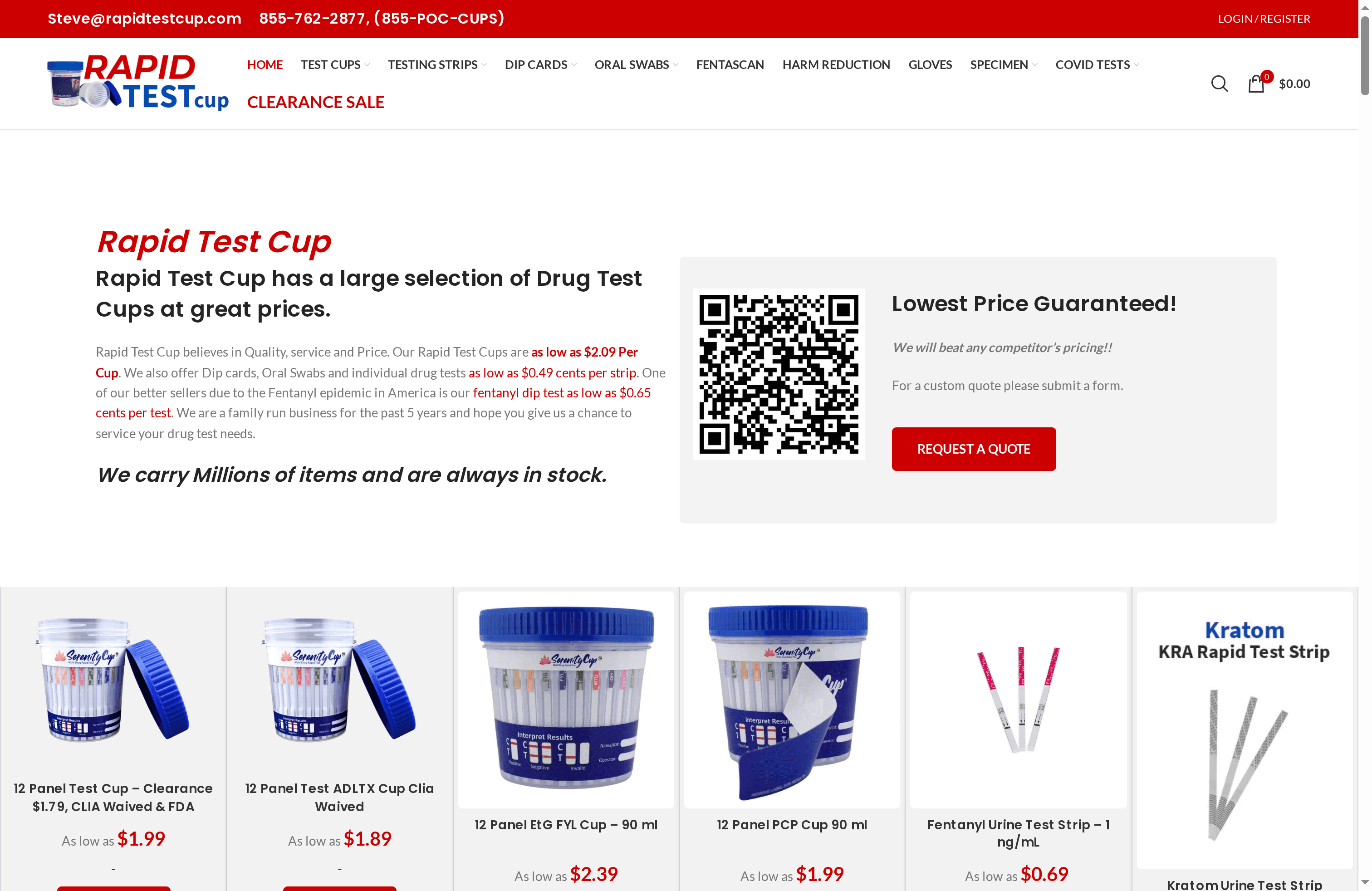
Multi-panel test cups screen for metabolites of opioids, synthetic cannabinoids, fentanyl, ethyl glucuronide, kratom alkaloids, and more in a single collection. The 18-panel drug test cup includes built-in adulterant checks, covering creatinine, pH, oxidants, and specific gravity. Bulk pricing and fast shipping make Rapidtestcup a practical first-tier screening resource for any professional setting that needs speed without sacrificing compliance.
FAQ
What is a drug metabolite?
A drug metabolite is a chemical compound produced when the body enzymatically transforms a parent drug, primarily through Phase I oxidation and Phase II conjugation reactions. Metabolites are often the primary species detected in urine during drug testing.
How are drug metabolites detected in urine?
Urine metabolites are detected using immunoassay-based point-of-care tests for initial screening, followed by LC-MS/MS confirmation in a reference laboratory. Non-targeted LC-HRMS workflows can identify over 200 substances, including Phase II glucuronide conjugates, without requiring hydrolysis.
Why is urine the preferred matrix for forensic drug testing?
Urine concentrates drug metabolites at higher levels than blood or oral fluid, extending the detection window from hours to days or weeks depending on the substance. Phase II conjugates in urine also provide structural information that confirms drug identity more specifically than parent drug detection alone.
What does mass error below 5 ppm mean in metabolite analysis?
A mass error below 5 ppm means the instrument measures a metabolite’s exact molecular mass within five parts per million of its theoretical value. That level of accuracy is required to assign a unique molecular formula and distinguish a metabolite from isobaric interferences.
What is the role of GLP and GCP in drug metabolite testing?
Good Laboratory Practice and Good Clinical Practice standards define the validation requirements that metabolite assays must meet before their data can be used in regulatory submissions or legal proceedings. These standards govern accuracy, precision, stability, and documentation across the full analytical workflow.