Blog
Why Choose Bulk Testing for Healthcare Programs


TL;DR:
- Bulk testing involves large-quantity purchases that lower per-unit costs and ensure supply reliability in high-volume healthcare programs. It offers cost reductions of 15% to 30%, strengthens negotiating power, and prevents operational slowdowns due to shortages. Success depends on tracking usage, maintaining supplier consistency, and aligning inventory with actual demand to maximize efficiency and quality assurance.
Bulk testing is defined as the large-quantity purchasing and processing of diagnostic and substance testing supplies to reduce per-unit costs, maintain consistent availability, and support high-volume workflows in healthcare and substance abuse programs. For labs and clinics managing steady testing demand, this approach delivers per-unit cost reductions of 15% to 30% compared to smaller retail orders. Rapidtestcup supplies CLIA waived, FDA-approved testing kits designed for exactly this kind of volume-driven procurement. Decision-makers who understand why choose bulk testing gain a structural advantage in budgeting, throughput, and supply reliability that individual purchasing simply cannot match.
What are the financial benefits of choosing bulk testing?
Bulk purchasing cuts per-unit costs by 15% to 30% when compared to standard retail orders. Specialized distributors often go deeper on discounts than general wholesalers, which means the supplier you choose matters as much as the quantity you order. For a substance abuse program running hundreds of tests per month, that margin difference adds up to a meaningful budget line.
The financial case goes beyond the unit price. Bulk orders give your program negotiating leverage with suppliers, which opens the door to better payment terms, priority fulfillment, and locked-in pricing across a contract period. Long-term pricing agreements protect your budget from market fluctuations that hit smaller buyers hardest.
The one real financial risk in bulk purchasing is overstock. Expiration-sensitive testing materials lose value fast when they sit unused. Overstocking without demand alignment creates waste that erases the savings you gained at purchase. The fix is not to order less. The fix is to order smarter.
- Calculate your average monthly test volume over the past six months before placing any bulk order.
- Set a maximum stock threshold based on product shelf life, not just available storage space.
- Build in a reorder trigger point that keeps you stocked without pushing into expiration territory.
- Review your order quantities quarterly and adjust for seasonal demand shifts.
Pro Tip: Track usage patterns by week, not just by month. Weekly data reveals demand spikes tied to program intake cycles, court-ordered testing schedules, or seasonal trends. Ordering to that rhythm prevents both shortages and waste.
How does bulk testing improve testing capacity and operational efficiency?
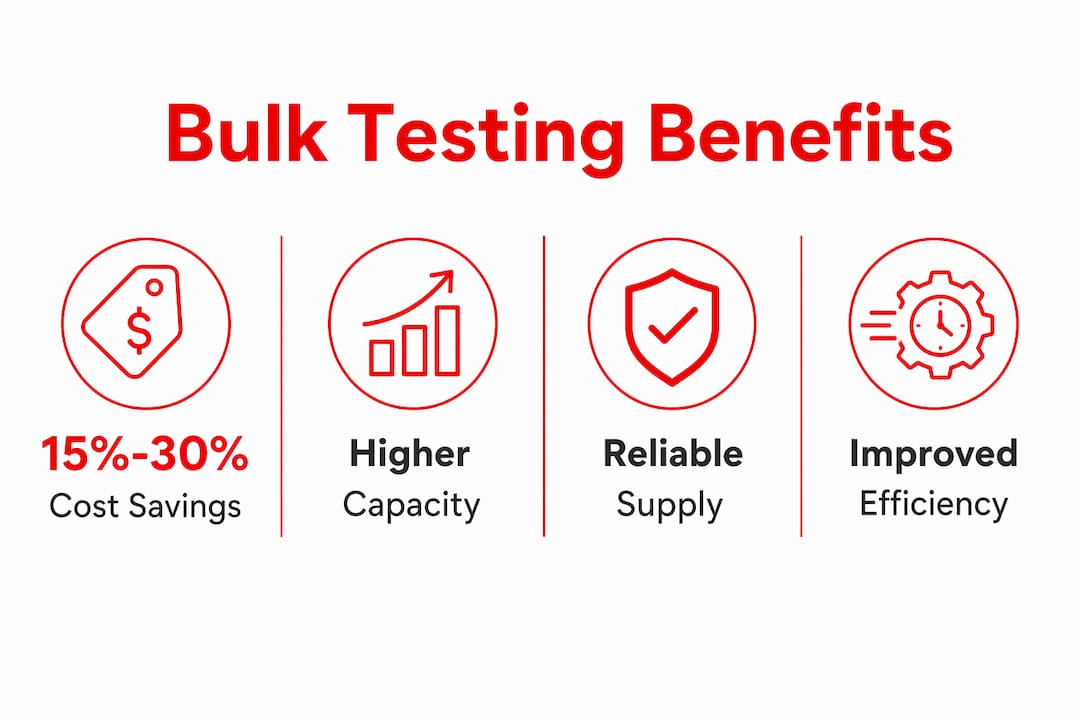
Supply shortages are a direct threat to lab throughput. Labs that rely on just-in-time ordering face operational slowdowns in 40% of cases when supply runs short. Bulk procurement eliminates that risk by keeping a working inventory on hand at all times. Continuous availability means your staff processes samples on schedule instead of waiting on a shipment.

One distinction that decision-makers often miss: bulk procurement and sample pooling are not the same thing. Pooling specimens increases throughput by combining multiple samples for a single test run, but it requires specific hardware configurations and staffing workflows. Bulk procurement simply ensures you have enough supplies to run your existing workflow without interruption. The two strategies complement each other but serve different functions.
Operational efficiency from bulk testing also depends heavily on execution details. Staff scheduling and machine configuration determine whether a well-stocked lab actually runs at capacity or just has full shelves. Supplies alone do not create throughput. The workflow around those supplies does.
A practical approach to maximizing efficiency from bulk testing:
- Audit your current daily testing volume and identify your peak processing hours.
- Align bulk order quantities with your actual consumption rate, not your theoretical capacity.
- Schedule staff shifts to match peak sample intake windows, not standard business hours.
- Configure testing equipment for batch processing when volume justifies it.
- Review turnaround time data monthly to catch bottlenecks before they become chronic.
Pro Tip: Pair your bulk inventory review with your staff scheduling review. A supply surplus means nothing if you do not have trained staff available to process it. Treat both as one system, not two separate tasks.
For labs looking to build on these principles, the bulk testing implementation guide from Rapidtestcup covers the operational steps in detail.
What quality assurance factors matter when choosing bulk testing?
Supplier quality is the variable that most programs underestimate. 30% of companies skip supplier background checks when sourcing testing supplies, which creates direct risk to test accuracy and result reliability. In a substance abuse program or clinical setting, an inaccurate result carries real consequences for the people being tested.
The NIH has documented the consistency problem clearly. Switching suppliers mid-program introduces 15% sample inconsistency in test results. Bulk purchasing from a single vetted source eliminates that variability. Consistent supply from one trusted distributor is not just a convenience. It is a quality control decision.
Strong supplier relationships yield increased profitability for 70% of companies that prioritize collaboration over transactional purchasing. Supplier trust translates directly into better quality, more reliable delivery, and earlier access to product improvements.
Key quality assurance practices for bulk testing programs:
- Verify that all supplies carry CLIA waiver status and FDA clearance before placing any bulk order.
- Request batch documentation with each shipment and log lot numbers for traceability.
- Set expiration date alerts in your inventory system so no batch is used past its shelf life.
- Evaluate supplier responsiveness and replacement policies before committing to a volume contract.
What are the practical steps for implementing a bulk testing program?
Implementation starts with a needs assessment, not a purchase order. You need to know your current testing volume, your storage capacity, and your budget ceiling before you can build a sensible ordering strategy. Programs that skip this step tend to either underorder and face shortages or overorder and face waste.
The implementation sequence that works in clinical and substance abuse settings follows a clear path:
- Conduct a needs assessment covering daily test volume, peak demand periods, and storage space.
- Develop an ordering strategy that sets reorder points, maximum stock levels, and budget limits.
- Select a supplier based on quality credentials, delivery reliability, and bulk pricing terms.
- Establish an inventory control system that tracks lot numbers, expiration dates, and usage rates.
- Review the program at 90 days and adjust order quantities based on actual consumption data.
The most common pitfall is treating bulk purchasing as a one-time decision. Testing demand shifts with program enrollment, court referrals, and seasonal patterns. Overstocking expiration-sensitive materials without tracking those shifts creates waste that undermines the financial case for bulk buying entirely.
The benefits of bulk testing supplies for lab managers extend beyond cost savings into workflow predictability and staff confidence. When supplies are always available, staff spend less time managing shortages and more time processing samples.
Pro Tip: Set a calendar reminder for a quarterly bulk order review. Pull your consumption data, compare it to your current stock levels, and adjust your next order before you hit a shortage or an expiration problem. Thirty minutes of review prevents weeks of disruption.
How does bulk testing compare with individual testing approaches?
Individual testing is the right choice for low-volume settings. Processing under 500 samples daily is faster and more manageable with individual test kits, which require less setup and no batch configuration. The tradeoff is higher per-unit cost and more hands-on staff time per sample.
Bulk testing becomes the clear choice when volume is consistent and high. The economies of scale that drive down per-unit costs only apply when you are ordering and processing enough volume to justify the procurement and storage investment. A small clinic running 20 tests per week does not benefit from bulk purchasing the same way a regional substance abuse program running 500 tests per week does.
Sample pooling fits between these two approaches as a throughput method, not a supply strategy. Pooling requires specialized workflows and hardware that individual testing does not. It is a complement to bulk supply, not a replacement for it.
| Criteria | Bulk testing | Individual testing |
|---|---|---|
| Per-unit cost | 15%–30% lower | Higher at retail pricing |
| Best volume fit | High and consistent volume | Low or variable volume |
| Supply reliability | High with planned inventory | Dependent on reorder timing |
| Staff time per sample | Lower with batch processing | Higher with individual handling |
| Setup complexity | Requires inventory management | Minimal setup required |
Key Takeaways
Bulk testing delivers measurable cost savings, supply reliability, and throughput advantages that individual purchasing cannot match at scale, making it the right strategy for high-volume healthcare and substance abuse programs.
| Point | Details |
|---|---|
| Cost reduction is significant | Bulk purchasing cuts per-unit costs by 15%–30% compared to retail orders. |
| Supply continuity prevents slowdowns | Consistent inventory eliminates the shortages that cause 40% of operational delays. |
| Supplier vetting protects accuracy | Switching suppliers mid-program introduces 15% sample inconsistency; stick with one vetted source. |
| Demand alignment prevents waste | Track weekly usage and set reorder triggers to avoid overstocking expiration-sensitive materials. |
| Bulk and pooling serve different functions | Bulk procurement ensures supply volume; pooling affects throughput and requires separate workflow planning. |
What I have learned from watching programs adopt bulk testing
Programs that succeed with bulk testing share one habit: they treat it as an operational system, not a purchasing shortcut. The decision-makers who get the most out of bulk procurement are the ones who connect their ordering strategy directly to their consumption data. They are not guessing at quantities. They are reading their own numbers.
The supplier relationship piece is where I see the most programs leave value on the table. A transactional approach to purchasing gets you the unit price discount. A collaborative relationship with a reliable distributor gets you the discount plus priority fulfillment, early notice on product updates, and a partner who will work with you when demand spikes unexpectedly. That difference is real and it compounds over time.
The programs that struggle with bulk testing almost always have the same problem: they ordered based on capacity rather than consumption. Full shelves feel like security. Expired stock feels like failure. The discipline to order to your actual usage rate, not your theoretical maximum, is what separates programs that save money from programs that waste it.
If you are evaluating bulk testing for your program, the practical strategies for clinic drug testing are worth reviewing before you finalize your ordering approach. The operational details matter more than most decision-makers expect.
— Justin
Rapidtestcup bulk testing supplies for labs and clinics
Rapidtestcup stocks the drug testing products that high-volume labs and substance abuse programs rely on, with bulk pricing built into the catalog from the start.
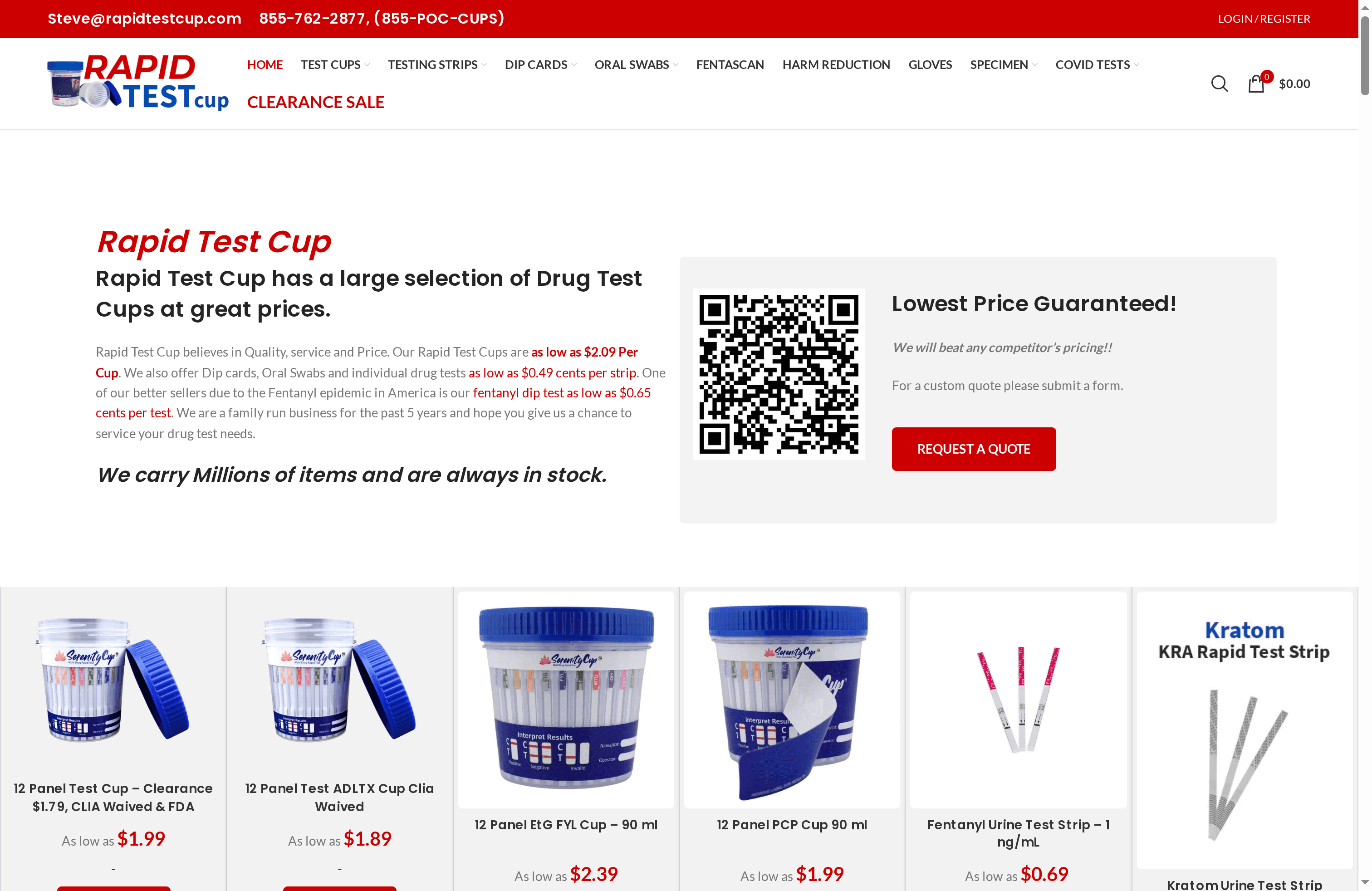
The top drug testing products for labs include the 12 Panel ADLTX Cup, multi-panel urine test strips, and urine specimen cups designed for consistent, high-throughput collection. All products carry CLIA waiver status and FDA clearance, which means your quality assurance requirements are covered at the point of purchase. Rapidtestcup offers custom quote requests for programs ordering at volume, so your pricing reflects your actual scale.
FAQ
What is bulk testing in healthcare settings?
Bulk testing is the practice of purchasing and processing diagnostic or substance testing supplies in large quantities to reduce per-unit costs and maintain consistent supply availability. It is the standard procurement approach for high-volume labs and substance abuse programs.
How much can bulk testing reduce costs?
Bulk purchasing reduces per-unit costs by 15% to 30% compared to retail orders, with specialized distributors often offering deeper discounts than general wholesalers.
Is bulk testing reliable for quality assurance?
Bulk testing from a single vetted supplier is more reliable than rotating between multiple sources. NIH data shows that switching suppliers introduces 15% sample inconsistency, which bulk procurement from one trusted source eliminates.
When is individual testing preferable to bulk testing?
Individual testing is preferable for settings processing under 500 samples daily, where batch setup overhead outweighs the cost savings and simpler workflows are more practical.
What is the difference between bulk testing and sample pooling?
Bulk testing refers to procuring large quantities of supplies to ensure continuous availability. Sample pooling is a throughput method that combines multiple specimens for a single test run and requires specialized hardware and staffing workflows that bulk procurement alone does not provide.