

Blog
7 Key Benefits of CLIA Waived Tests for Clinics


Waiting days for lab results can leave both patients and healthcare providers stuck in uncertainty. When your clinic needs fast and reliable answers, traditional lab testing often slows down decision-making and treatment plans. CLIA waived tests are changing this experience by offering simple and effective diagnostic options at the point of care.
With these tests, you gain rapid results, simplified procedures, and access for staff with minimal training. This means you can provide care and treatment faster without the long delays or complicated logistics. Get ready to discover how CLIA waived testing can transform your workflow, reduce costs, and improve patient satisfaction in your practice.
Table of Contents
- 1. Quick Results For Faster Patient Care
- 2. Simple Operation With Minimal Training Required
- 3. Cost-Effective Solutions For Clinics
- 4. Enhanced Compliance With Federal Regulations
- 5. Reduced Risk Of Lab Errors
- 6. Broad Range Of Fda-Approved Test Options
- 7. Improved Workflow And Patient Satisfaction
Quick Summary
| Takeaway | Explanation |
|---|---|
| 1. Rapid Results Improve Patient Care | CLIA waived tests provide immediate diagnostics, enhancing treatment decisions and reducing wait times for patients. |
| 2. Simple Administration Requires Minimal Training | These tests allow various healthcare staff to perform diagnostics efficiently without extensive training, increasing accessibility. |
| 3. Cost-Effective Diagnostic Solutions | Implementing CLIA waived tests significantly lowers operational costs, reducing dependency on external laboratories. |
| 4. Enhanced Compliance with Regulations | Adhering to CLIA standards simplifies regulatory compliance while ensuring patient safety and test accuracy. |
| 5. Broad Range of FDA-Approved Tests Available | Diverse CLIA waived tests enable clinics to meet various diagnostic needs effectively and reliably. |
1. Quick Results for Faster Patient Care
CLIA waived tests represent a revolutionary approach to diagnostic testing that puts speed and efficiency at the forefront of patient care. By enabling rapid on-site diagnostics, these tests dramatically reduce the waiting time typically associated with traditional laboratory procedures.
Healthcare providers can now obtain critical test results within minutes, allowing for immediate clinical decision-making. This immediacy is particularly crucial in scenarios where prompt intervention can significantly impact patient outcomes. For instance, rapid diagnostic capabilities mean clinicians can quickly confirm conditions like strep throat and initiate treatment during the same patient visit.
Key advantages of quick CLIA waived test results include:
- Reduced patient wait times
- Faster treatment initiation
- Minimized patient anxiety
- Improved clinical workflow efficiency
- Enhanced point-of-care diagnostic capabilities
Rapid test results transform patient care from a waiting game to an immediate action plan.
The speed of CLIA waived tests translates directly into better patient experiences. By eliminating the traditional back-and-forth between clinics and centralized laboratories, healthcare professionals can provide more responsive and patient-centered care.
Pro tip: Always verify your clinic’s CLIA waived testing protocols to maximize diagnostic speed and accuracy.
2. Simple Operation with Minimal Training Required
CLIA waived tests are designed with simplicity at their core, enabling healthcare professionals with varying levels of laboratory experience to perform accurate diagnostics. These tests eliminate the complex technical barriers typically associated with sophisticated laboratory procedures.
Minimal training requirements mean that physicians, nurses, and medical assistants can quickly become proficient in test administration. The streamlined methodology ensures that even staff members with limited laboratory background can confidently execute these diagnostic tools.
Key advantages of simple test operation include:
- Reduced training time and costs
- Lower potential for human error
- Increased testing accessibility
- Faster implementation across different clinical settings
- Consistent result interpretation
CLIA waived tests transform complex diagnostics into straightforward, user-friendly procedures.
The Centers for Disease Control and Prevention provides comprehensive guidance to support proper testing techniques. Healthcare facilities need only obtain a CLIA Certificate of Waiver to legally perform these tests, which are primarily designed for point-of-care environments.
Successful implementation requires adherence to manufacturer instructions and basic procedural training. This approach ensures test accuracy while maintaining the core principle of accessibility.
Pro tip: Develop a standardized training protocol and conduct periodic skill refresher sessions to maintain consistent testing performance.
3. Cost-Effective Solutions for Clinics
CLIA waived tests offer healthcare providers an intelligent approach to reducing diagnostic expenses while maintaining high-quality patient care. By eliminating expensive laboratory referrals and streamlining testing processes, clinics can significantly cut their operational costs.
Point-of-care testing strategies dramatically reduce administrative and logistical expenses associated with traditional laboratory diagnostics. These tests enable clinics to conduct rapid screenings directly within their facilities, minimizing external laboratory dependencies.
Key cost-saving advantages include:
- Reduced specimen transportation expenses
- Lower administrative overhead
- Decreased turnaround time for results
- Minimized patient revisit requirements
- Simplified billing and documentation processes
Cost-effective testing transforms financial management in healthcare delivery.
The economic benefits extend beyond immediate testing expenses. By conducting tests during patient visits, clinics can optimize resource allocation and reduce the financial burden associated with multiple patient interactions.
Healthcare facilities can implement these cost-effective solutions by bulk drug test kit procurement, which offers additional volume-based discounts and reduces per-test expenses.
Pro tip: Develop a strategic testing protocol that prioritizes CLIA waived tests to maximize cost efficiency and patient care quality.
4. Enhanced Compliance with Federal Regulations
CLIA waived tests represent a critical pathway for healthcare facilities to maintain rigorous regulatory standards while delivering efficient diagnostic services. Navigating federal compliance requirements becomes significantly more manageable with these specialized testing protocols.
Federal regulatory compliance standards demand meticulous attention to detail and comprehensive documentation. Healthcare organizations must obtain a CLIA Certificate of Waiver and adhere to specific guidelines that ensure patient safety and test accuracy.
Key compliance requirements include:
- Holding a valid CLIA Certificate of Waiver
- Following manufacturer testing instructions precisely
- Documenting staff training and competency assessments
- Maintaining consistent quality control procedures
- Regularly updating testing protocols
Regulatory compliance is not just a requirement it is a commitment to patient care.
The Joint Commission’s National Performance Goal provides additional oversight by mandating approved policies and procedures. This ensures that healthcare providers go beyond minimal federal requirements to establish robust testing frameworks.
Clinics can compliance drug testing practices by implementing comprehensive staff training programs and maintaining detailed documentation of testing procedures.
Pro tip: Create a standardized compliance checklist that tracks all CLIA waived test regulatory requirements and updates it quarterly.
5. Reduced Risk of Lab Errors
CLIA waived tests are engineered to minimize laboratory errors and provide healthcare professionals with a reliable diagnostic tool. By design, these tests dramatically reduce the potential for inaccurate results through simplified procedures and standardized protocols.
Precision in diagnostic testing requires a comprehensive approach to error prevention. Healthcare providers must implement strategic quality control measures that go beyond basic testing procedures.
Key strategies for error reduction include:
- Following manufacturer instructions precisely
- Conducting regular staff training
- Implementing standardized testing protocols
- Performing consistent competency assessments
- Maintaining detailed documentation
Laboratory errors can be minimized through systematic and disciplined approaches to testing.
The Joint Commission emphasizes the importance of written policies and ongoing staff education. By prioritizing these elements, clinics can significantly reduce the likelihood of testing mistakes.
Healthcare facilities can improve accuracy in drug testing by developing comprehensive training programs and establishing clear quality assurance protocols.
Pro tip: Create a monthly error tracking system to identify and address potential weak points in your testing procedures.
6. Broad Range of FDA-Approved Test Options
CLIA waived tests offer healthcare providers an extensive array of diagnostic tools carefully curated and approved by federal regulatory agencies. These tests represent a comprehensive solution for clinics seeking reliable and diverse screening capabilities.
FDA approved diagnostic options encompass multiple categories of in vitro diagnostic tests designed for point-of-care settings. The breadth of available tests enables healthcare professionals to address a wide range of clinical screening needs.
Key diagnostic test categories include:
- Infectious disease screening
- Blood glucose monitoring
- Pregnancy confirmation
- Urinalysis panels
- Rapid strep tests
- Drug screening protocols
- Cholesterol level assessments
FDA approval ensures consistent quality and reliability across diagnostic testing platforms.
Healthcare facilities can choose drug test kits by consulting comprehensive FDA databases that provide detailed information about waived test classifications and approved methodologies.
The extensive range of tests allows clinics to customize their diagnostic approach based on specific patient population needs and clinical requirements.
Pro tip: Regularly review FDA databases to stay informed about newly approved CLIA waived test options that could enhance your clinic’s diagnostic capabilities.
7. Improved Workflow and Patient Satisfaction
CLIA waived tests transform clinical workflows by enabling faster diagnostic processes that directly enhance patient experiences. These streamlined testing protocols eliminate traditional bottlenecks associated with complex laboratory procedures.
By integrating efficient testing workflows, healthcare providers can dramatically reduce patient wait times and improve overall clinical efficiency. The immediate results generate multiple benefits for both medical staff and patients.
Workflow improvements include:
- Reduced administrative processing time
- Faster clinical decision-making
- Decreased patient anxiety
- More direct patient-provider interactions
- Simplified testing documentation
- Immediate treatment initiation
- Enhanced patient communication
Efficient testing transforms patient care from waiting to action.
Healthcare professionals can leverage rapid diagnostic technologies to create more responsive and patient-centered clinical environments. The ability to obtain immediate results means patients spend less time wondering about their health status and more time receiving targeted care.
Comprehensive testing solutions create a smoother patient journey by minimizing multiple clinic visits and reducing overall diagnostic uncertainty.
Pro tip: Develop a standardized workflow that integrates CLIA waived tests seamlessly into your existing clinical processes to maximize efficiency and patient satisfaction.
Below is a comprehensive table summarizing the advantages, operations, compliance, and other key aspects of CLIA waived diagnostic tests as discussed in the article.
| Aspect | Description | Highlights |
|---|---|---|
| Quick Results | CLIA waived tests enable rapid diagnostic results directly on-site. | Immediate clinical decision-making improves patient outcomes and care efficiency. |
| Simple Operation | Designed for ease of use with minimal training required. | Staff across various roles can confidently perform tests, enhancing accessibility. |
| Cost-Effectiveness | Reduces expenses associated with traditional lab processing. | Minimizes logistical overhead and improves financial management for clinics. |
| Compliance | Facilitates adherence to federal regulations through straightforward protocols. | Requires a CLIA Certificate of Waiver and established quality control measures. |
| Error Reduction | Engineered to minimize chances of diagnostic inaccuracies. | Systematic training and standardized procedures ensure reliable results. |
| Broad Test Range | Offers FDA-approved diagnostic options for various clinical needs. | Includes infectious disease detection, glucose monitoring, and drug screenings. |
| Workflow & Patient Satisfaction | Enhances operational efficiencies leading to improved patient experiences. | Reduces wait times and enables prompt treatment actions. |
Unlock the Full Potential of CLIA Waived Tests in Your Clinic
Speed and accuracy are crucial challenges when implementing CLIA waived tests for effective patient care. With the pressure to deliver quick results, maintain compliance, and reduce costs, clinics seek trustworthy solutions that simplify operations while improving workflow and patient satisfaction. If your goal is to reduce errors and access a broad range of FDA-approved testing options, embracing reliable testing supplies is essential.
Discover how rapidtestcup.com offers an extensive selection of high-quality, CLIA waived drug test kits and specimen collection supplies designed to address these critical needs. Our affordable, easy-to-use products help healthcare professionals ensure regulatory compliance, accelerate diagnostic timelines, and minimize laboratory errors.
Take action now to enhance your clinic’s diagnostic capabilities and streamline patient care with our trusted, FDA-approved testing solutions.
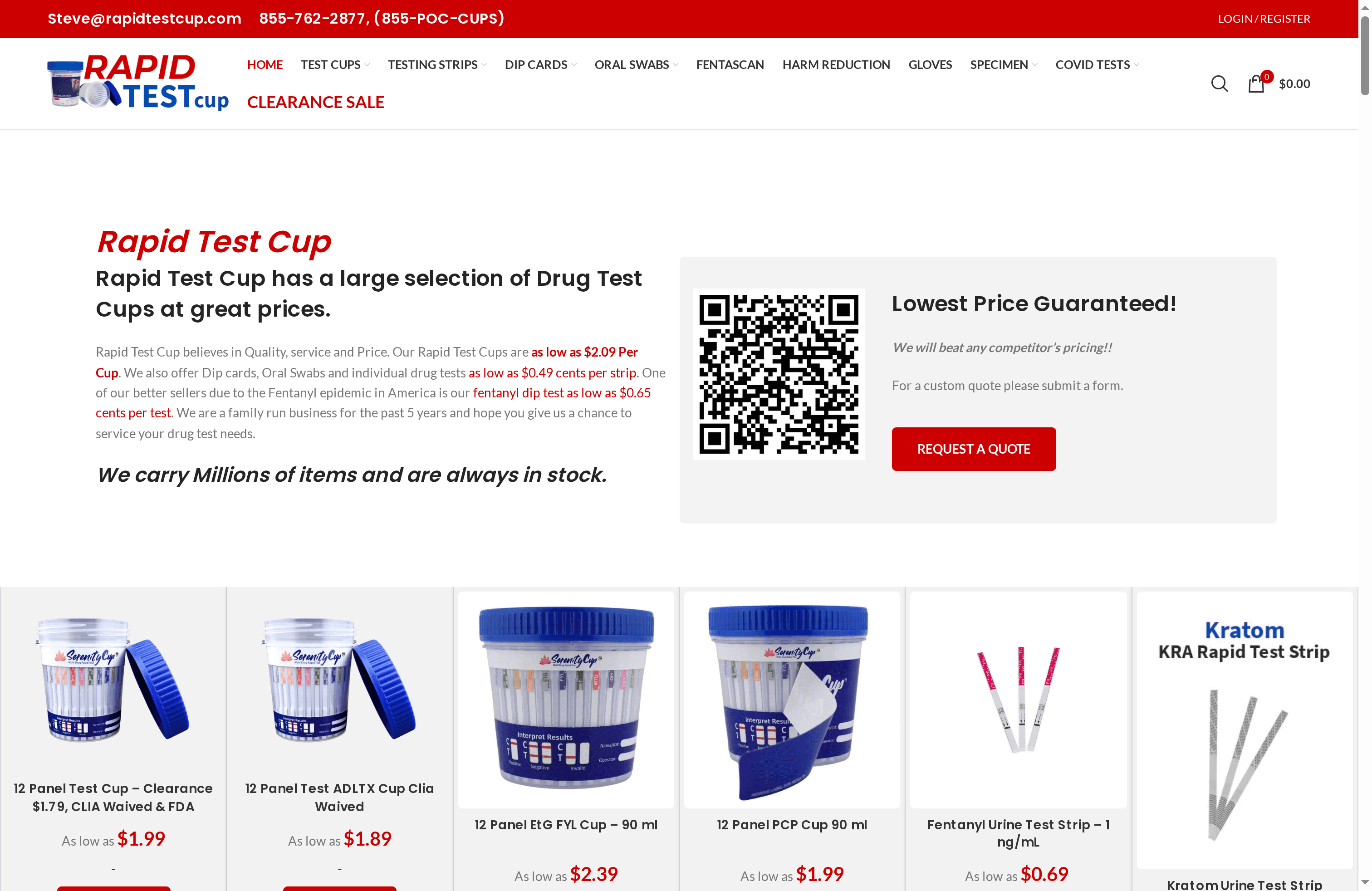
Explore our complete collection at RapidTestCup and step confidently toward faster, more cost-effective, and compliant testing. Your patients deserve the best care delivered without delay. Start optimizing your clinical workflow today with proven drug testing products tailored specifically for your practice.
Frequently Asked Questions
What are CLIA waived tests?
CLIA waived tests are simple diagnostic tests that can be performed in healthcare settings without the need for extensive training. They allow for quick and accurate results, enabling healthcare providers to make immediate clinical decisions.
How do CLIA waived tests improve patient care?
CLIA waived tests reduce patient wait times by providing on-site results within minutes. This immediacy allows clinicians to initiate treatment during the same visit, improving overall patient satisfaction and health outcomes.
What training is necessary for staff to perform CLIA waived tests?
Minimal training is required for healthcare staff to administer CLIA waived tests. Facilities should ensure all personnel are familiar with manufacturer instructions and conduct regular competency assessments to maintain accuracy.
How can clinics save money by using CLIA waived tests?
Clinics can lower diagnostic costs by conducting tests in-house rather than relying on external laboratories. This approach reduces transportation and administrative expenses, as well as turnaround times for results, optimizing financial management.
What are the compliance requirements for using CLIA waived tests?
To use CLIA waived tests, clinics must obtain a CLIA Certificate of Waiver and adhere to specific guidelines provided by the manufacturer. Maintaining proper documentation and conducting staff training are key compliance aspects to ensure quality and safety.
How do CLIA waived tests contribute to reducing lab errors?
CLIA waived tests minimize the risk of laboratory errors through simplified procedures and standardized protocols. By following detailed instructions and implementing quality control measures, clinics can significantly improve testing accuracy.