Blog
How to Choose Drug Test Kits for Accurate Results


Finding dependable drug testing solutions is a top priority for every American clinical laboratory manager and substance abuse program coordinator. The accuracy and compliance of your screening process can determine the outcome of patient care and regulatory inspections. With over eighty percent of North American organizations requiring regular drug tests, understanding the critical steps in selecting FDA-approved test kits will help you meet legal obligations and deliver trustworthy results every time.
Table of Contents
- Step 1: Assess Your Drug Screening Requirements
- Step 2: Compare Available Drug Test Kit Formats
- Step 3: Verify Regulatory Approvals And Compliance
- Step 4: Evaluate Kit Accuracy And Detection Panels
- Step 5: Confirm Supplier Reliability And Support
Quick Summary
| Key Insight | Explanation |
|---|---|
| 1. Assess Screening Needs | Understand organizational requirements, including who will be tested and substances needed. |
| 2. Compare Test Kit Formats | Evaluate different drug test formats like urine cups and oral fluid tests for suitability. |
| 3. Verify Regulatory Compliance | Ensure drug test kits meet FDA and other regulatory standards for safety and accuracy. |
| 4. Evaluate Accuracy and Panels | Carefully select detection panels and understanding methodologies to maintain reliability. |
| 5. Confirm Supplier Reliability | Choose suppliers with solid certifications and customer support for long-term partnership. |
Step 1: Assess your drug screening requirements
Determining the right drug screening approach starts with understanding your specific organizational or clinical needs. Screening tools help identify substance use patterns across various professional environments, from healthcare settings to workplace safety programs.
Your assessment should cover several critical dimensions. First, evaluate the purpose of your screening who will be tested (employees, patients, athletes), what substances you need to detect (opioids, stimulants, marijuana), and the testing frequency. Consider factors like industry regulations, safety protocols, and legal requirements that might influence your screening strategy. Different scenarios demand different approaches some workplaces require comprehensive 10 panel tests, while clinical settings might need more targeted screenings for specific patient populations.
Understand that drug screening is not one size fits all. Evidence based screening protocols vary depending on demographic, organizational context, and specific objectives. Consulting with substance abuse professionals or toxicology experts can help refine your approach and ensure you select the most appropriate drug test kits for your precise requirements.
Pro tip: Always validate your drug testing methodology against current regulatory standards and maintain detailed documentation of your screening procedures to ensure compliance and reliability.
Step 2: Compare available drug test kit formats
Navigating the landscape of drug testing requires understanding the various kit formats available to match your specific screening needs. Different testing methods offer unique performance characteristics that impact accuracy, speed, and operational efficiency.
Key drug test kit formats include urine test cups, dip cards, strip tests, and oral fluid tests. Urine test cups provide comprehensive screening with multiple panels detecting various substances simultaneously. Dip cards offer quick onsite testing with straightforward interpretation, while strip tests represent the most economical option. Oral fluid tests present a non invasive alternative, capturing recent substance use with shorter detection windows. Each format brings distinct advantages specialized for different organizational requirements such as workplace screening, clinical assessments, or forensic applications.
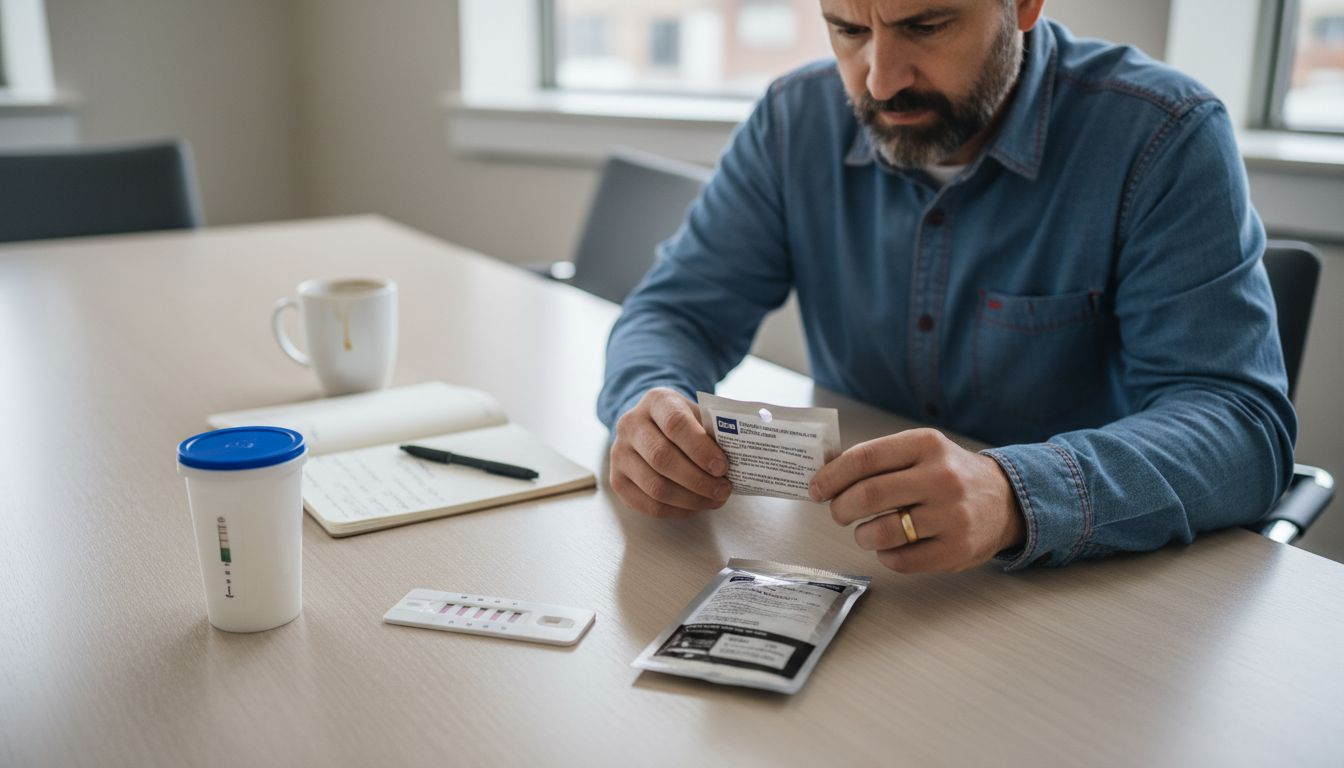
Consider critical evaluation factors when comparing formats like detection sensitivity, cost per test, ease of administration, regulatory compliance, and specimen collection complexity. Multi panel drug tests can streamline screening processes by reducing individual test requirements and providing comprehensive substance detection in a single procedure.
Pro tip: Match your drug test kit format precisely to your specific screening environment and objectives to maximize testing accuracy and operational efficiency.
Here’s how popular drug test kit formats compare:
| Test Kit Type | Detection Window | Specimen Needed | Best For |
|---|---|---|---|
| Urine Test Cup | Days to weeks | Urine | Comprehensive screening |
| Dip Card | Days to weeks | Urine | Onsite quick testing |
| Strip Test | Days to weeks | Urine | Bulk, economical use |
| Oral Fluid Test | Hours to days | Saliva | Recent use detection |
Step 3: Verify regulatory approvals and compliance
Ensuring your drug test kits meet rigorous regulatory standards is critical for maintaining accurate and legally defensible screening processes. FDA regulations govern drug testing kit manufacturing to guarantee consistent quality and safety across testing products.
Key compliance considerations include verifying Food and Drug Administration (FDA) approvals, checking Clinical Laboratory Improvement Amendments (CLIA) waiver status, and confirming the test kit meets current Good Manufacturing Practice (CGMP) requirements. Laboratory developed test regulations are evolving, with increased scrutiny on premarket reviews and documentation. Pay close attention to specific compliance markers such as FDA clearance numbers, intended use declarations, and validation documentation that demonstrate the test kit meets established scientific and safety standards.
When selecting drug test kits, request comprehensive compliance documentation from manufacturers. This should include detailed certificates of analysis, FDA registration documents, and proof of ongoing quality control processes. Understand that compliance is not a one time checklist but an ongoing commitment to maintaining the highest standards of testing accuracy and reliability.
Pro tip: Always request and thoroughly review the complete regulatory documentation for any drug test kit before implementation to protect your organization from potential compliance risks.
Here is a summary of key regulatory compliance checkpoints for drug test kits:
| Compliance Criteria | What to Verify | Business Impact |
|---|---|---|
| FDA Approval | Product clearance number | Legal eligibility for use |
| CLIA Waiver | Waiver status document | Use in non-lab settings |
| CGMP Certification | Production quality proof | Consistent test accuracy |
| Validation Records | Independent lab results | Defense against legal disputes |
Step 4: Evaluate kit accuracy and detection panels
Drug test kit accuracy requires understanding complex screening methodologies that ensure reliable substance detection. Selecting the right detection panel involves careful evaluation of multiple technical and operational factors to guarantee precise results.
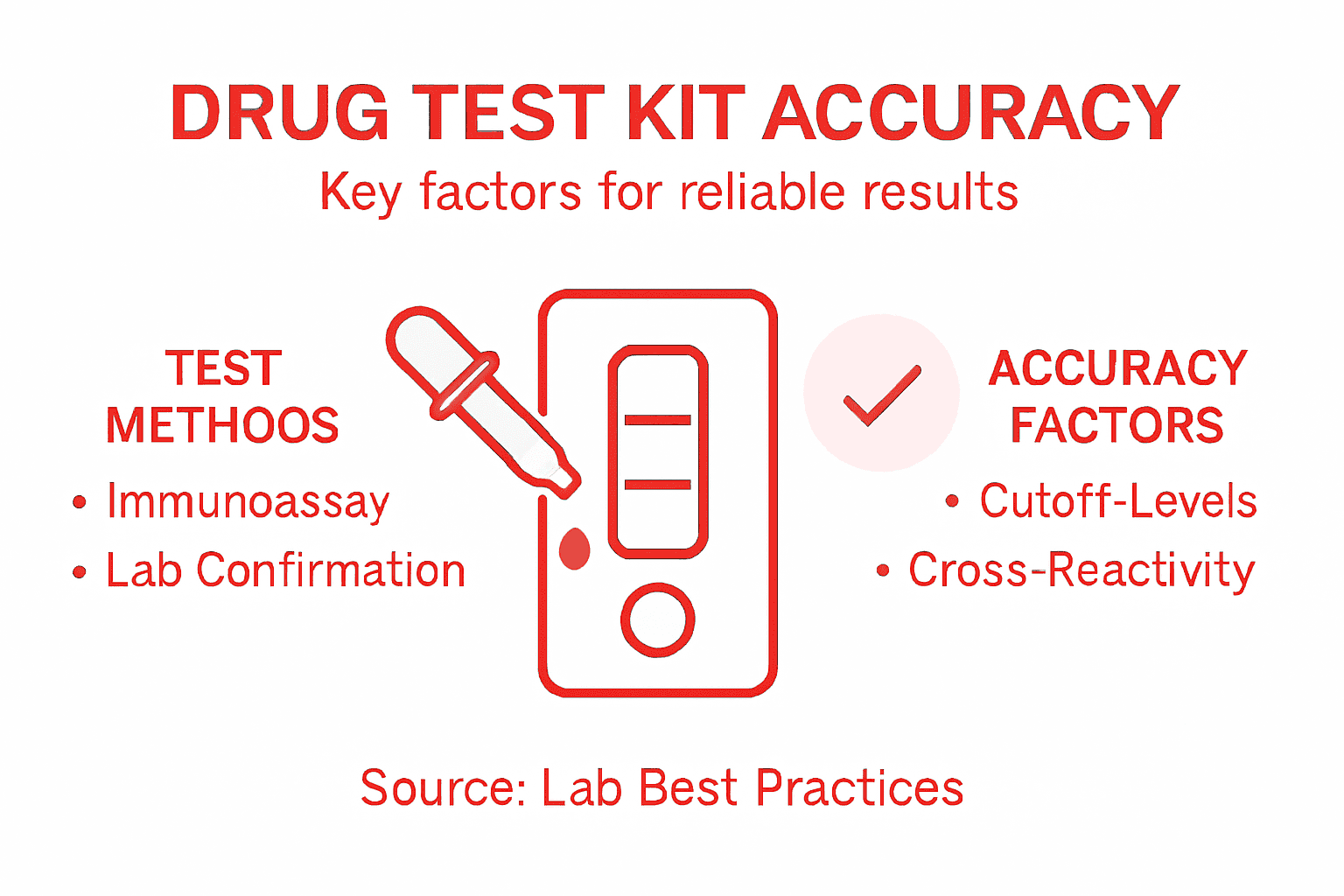
Accuracy depends on several critical components. First, examine the screening method typically an initial immunoassay test followed by confirmatory gas chromatography mass spectrometry (GC/MS) testing. Different panel configurations detect varying substance ranges from basic 5 panel tests covering core substances like marijuana, cocaine, and opiates to comprehensive 10 or 12 panel tests that include additional prescription medications and synthetic drugs. Consider your specific screening requirements such as detection window sensitivity, cross reactivity potential, and the likelihood of encountering specific substance groups in your target population.
When assessing detection panels, pay close attention to technical specifications including cutoff levels, cross reactivity percentages, and the sensitivity of the testing methodology. Types of drug test panels vary significantly in their ability to detect substances accurately, so matching the panel to your precise screening environment is crucial for obtaining reliable results.
Pro tip: Always validate drug test kit accuracy through independent laboratory comparisons and maintain documented performance records to ensure consistent and defensible screening outcomes.
Step 5: Confirm supplier reliability and support
Selecting a drug test kit supplier requires thorough vetting beyond simply comparing product specifications. Global toxicology suppliers demonstrate reliability through comprehensive quality management systems, technical expertise, and responsive customer support.
When evaluating potential suppliers, examine critical factors such as industry certifications like ISO standards, years of operational experience, technical support availability, and documented quality control processes. Look for suppliers offering robust support infrastructure including 24/7 technical assistance, comprehensive training resources, and clear communication channels for troubleshooting and product guidance. Consider their track record in handling complex testing requirements, their commitment to continuous product improvement, and their ability to provide timely documentation and regulatory compliance support.
Dig deeper by requesting detailed vendor portfolios, customer references, and performance histories. Assess their responsiveness to inquiries, flexibility in addressing unique organizational needs, and willingness to provide additional resources such as validation data, scientific documentation, and ongoing product support. A reliable supplier should function as a true partner in your drug screening program, offering more than just transactional product delivery.
Pro tip: Request comprehensive supplier documentation including ISO certifications, technical support protocols, and reference case studies to thoroughly validate their professional capabilities and commitment to quality.
Find the Right Drug Test Kits for Accurate and Compliant Screening
Choosing the perfect drug test kits can be overwhelming with so many options and technical details like FDA approvals, detection panels, and specimen types to consider. This article highlights how important it is to match your screening needs to reliable, CLIA waived, and regulatory-compliant test formats that deliver consistent results without guesswork.
At RapidTestCup, we understand your need for clear accuracy, regulatory compliance, and operational ease. Our extensive collection of drug test cups, dip cards, and urine test strips are FDA-approved and built to fit diverse testing environments including clinical, forensic, and workplace settings. Whether you need comprehensive multi panel tests or fast oral fluid detection kits, our products help you maintain high standards while staying within budget.
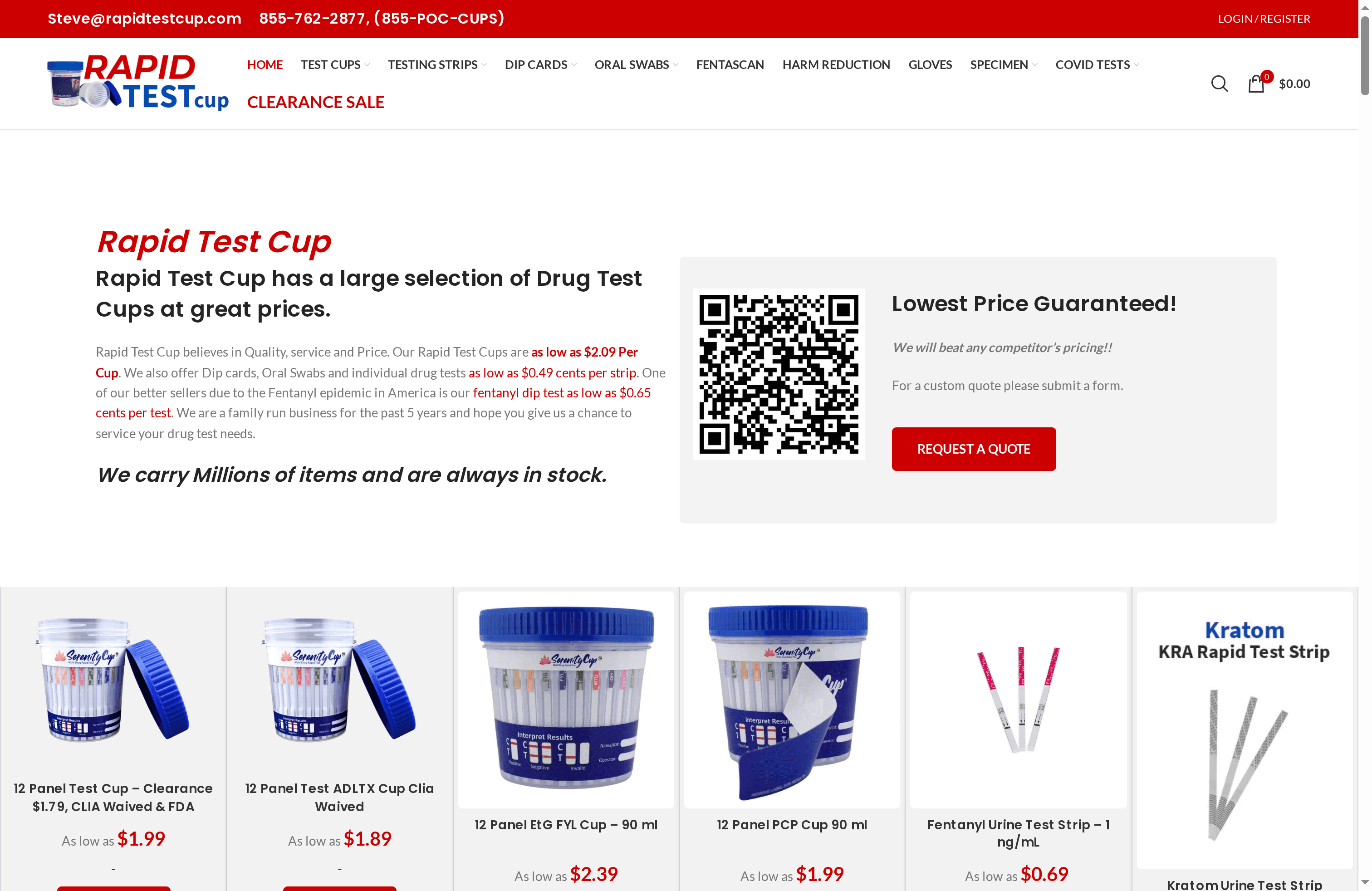
Take control of your drug screening program today with trusted, quality-assured kits from RapidTestCup. Explore our product range, review compliance certifications, and find the exact drug test kits designed to provide accurate, defensible results every time. Don’t settle for uncertainty when compliance and reliability are critical. Visit https://rapidtestcup.com now to get started and secure your testing supplies with fast shipping and expert support.
Frequently Asked Questions
How do I assess my drug screening requirements?
To assess your drug screening requirements, start by identifying the purpose of the screening and who will be tested, such as employees or patients. Then, determine the substances to detect and consider regulatory and safety protocols to shape your drug testing strategy.
What are the different drug test kit formats available?
The available drug test kit formats include urine test cups, dip cards, strip tests, and oral fluid tests. Evaluate each format based on detection sensitivity and operational efficiency to choose one that aligns with your specific screening needs.
How can I ensure that the drug test kits I choose comply with regulations?
To ensure compliance, verify that the drug test kits have FDA approvals, CLIA waiver status, and meet current Good Manufacturing Practice (CGMP) standards. Request and review documentation that supports these compliance markers before implementing the kits.
What factors should I consider when evaluating the accuracy of drug test kits?
When evaluating accuracy, consider the screening method used, such as initial immunoassays followed by confirmatory testing. Pay attention to cutoff levels and the sensitivity of the testing methodology to ensure reliable detection of substances in your population.
How can I confirm the reliability of a drug test kit supplier?
Confirm the reliability of a drug test kit supplier by checking for industry certifications, years of experience, and the quality of their technical support. Additionally, request customer references and assess their responsiveness to inquiries to ensure they can effectively meet your testing needs.
What documentation should I request from drug test kit manufacturers?
Request comprehensive documentation from manufacturers, including FDA registration documents, certification of compliance with safety standards, and quality control records. This will help you evaluate their capabilities and commitment to providing accurate testing products.