

Blog
How Drug Metabolites Are Detected: A Clinical Guide

TL;DR:
- Drug metabolites are byproducts produced when the body breaks down drugs, and detecting them is essential for drug testing. Urine is the most common sample due to its high metabolite concentration and longer detection window, while blood reflects real-time drug presence. Confirmatory testing uses mass spectrometry techniques like LC-MS/MS or LC-HRMS to accurately identify specific metabolites.
Drug metabolites are the chemical byproducts the body produces after breaking down a parent drug, and detecting them is the foundation of both clinical and forensic drug testing. Understanding how drug metabolites are detected requires knowing two things: which biological sample to collect and which analytical method to apply. The standard process runs in two stages. First, an immunoassay screens for likely positives. Then, mass spectrometry confirms and quantifies the specific metabolite. Regulatory bodies including the NIH and SAMHSA have established guidelines that define this two-stage approach as the accepted standard for clinical and forensic drug testing.
How drug metabolites are detected in biological samples
The choice of biological sample shapes every downstream result. Each matrix concentrates metabolites differently, offers a distinct detection window, and carries its own collection challenges.
Urine is the preferred specimen for drug metabolite screening because it is noninvasive, easy to collect in sufficient volume, and concentrates metabolites better than blood or saliva. That concentration advantage means urine often reveals drug use days after the parent compound has cleared the bloodstream. For most substances, urine detection windows range from one to several days, and for cannabis metabolites, they can extend weeks in frequent users.
Blood sampling serves a different purpose. It reflects real-time drug concentration and is most useful in acute clinical settings, such as emergency toxicology or impaired driving investigations. Blood metabolite levels drop quickly as the body clears the drug, so the detection window is narrow. That narrow window is actually an advantage when the clinical question is “Was this person impaired right now?” rather than “Did this person use drugs recently?”
Saliva and hair samples round out the matrix options:
- Oral fluid (saliva): Detects recent use, typically within 24–48 hours. Useful for roadside testing and situations where observed collection is needed.
- Hair: Provides the longest historical window, up to 90 days or more. Hair testing identifies patterns of chronic use but cannot confirm acute intoxication.
- Blood: Best for acute exposure and pharmacokinetic studies. Requires trained phlebotomy and rapid processing.
- Urine: Highest metabolite concentration, longest practical detection window for most drugs, and lowest collection burden.
Proper collection and handling matter as much as matrix choice. Contaminated or degraded samples produce unreliable results regardless of how sophisticated the analytical method is.
How do immunoassay screening tests work?
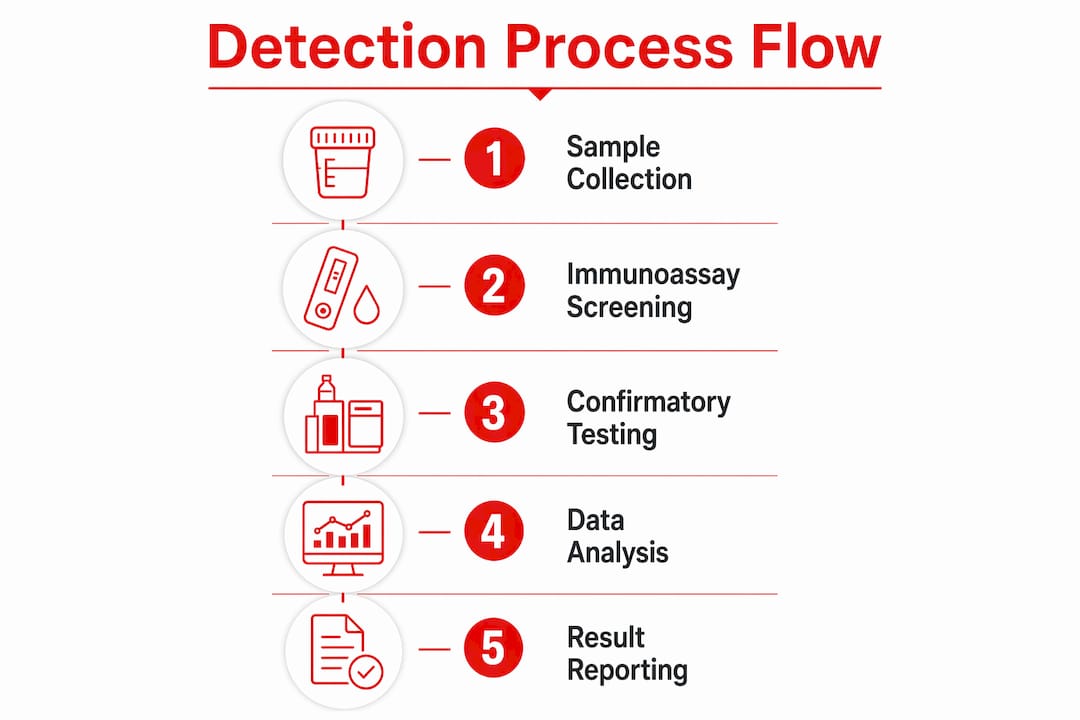
Immunoassays are the first line of detection in most drug testing programs. They use antibodies designed to bind to specific drug metabolites or structurally similar compounds. When the target metabolite is present above a defined cutoff concentration, the test signals a presumptive positive.
The speed and low cost of immunoassays make them practical for high-volume screening in clinics, workplaces, and substance abuse programs. Immunoassay results guide the decision to proceed with confirmatory testing, not the final clinical or legal conclusion. That distinction matters enormously in practice.
The core limitations of immunoassays are specificity and cross-reactivity. Antibodies can bind to structurally similar compounds that are not the target drug, producing false positives. Conversely, novel synthetic analogs may not trigger the antibody at all, producing false negatives. Common drug classes targeted by immunoassay panels include:
- Cannabinoids: Targeting THC-COOH, the primary cannabis metabolite
- Opioids: Broad panels detect morphine, codeine, and semisynthetic opioids, though fentanyl often requires a dedicated strip
- Amphetamines: Panels cover amphetamine and methamphetamine but may miss designer stimulants
- Benzodiazepines: Detect common metabolites but miss many newer agents
- Cocaine metabolites: Primarily benzoylecgonine, a stable and specific marker
Medical guidance is clear that confirmatory LC-MS testing is required whenever clinical, legal, or occupational decisions depend on the result. A presumptive positive from an immunoassay is a reason to test further, not a conclusion.
Pro Tip: Always document the immunoassay cutoff concentration used. Different programs apply different thresholds, and a result that is positive at one cutoff may be negative at another. That context is critical when interpreting borderline cases.
What confirmatory methods identify metabolites definitively?
Mass spectrometry is the gold standard for definitive drug metabolite identification and quantification. It does not rely on antibody binding. Instead, it separates compounds by mass-to-charge ratio, producing a molecular fingerprint that is specific to a single compound.
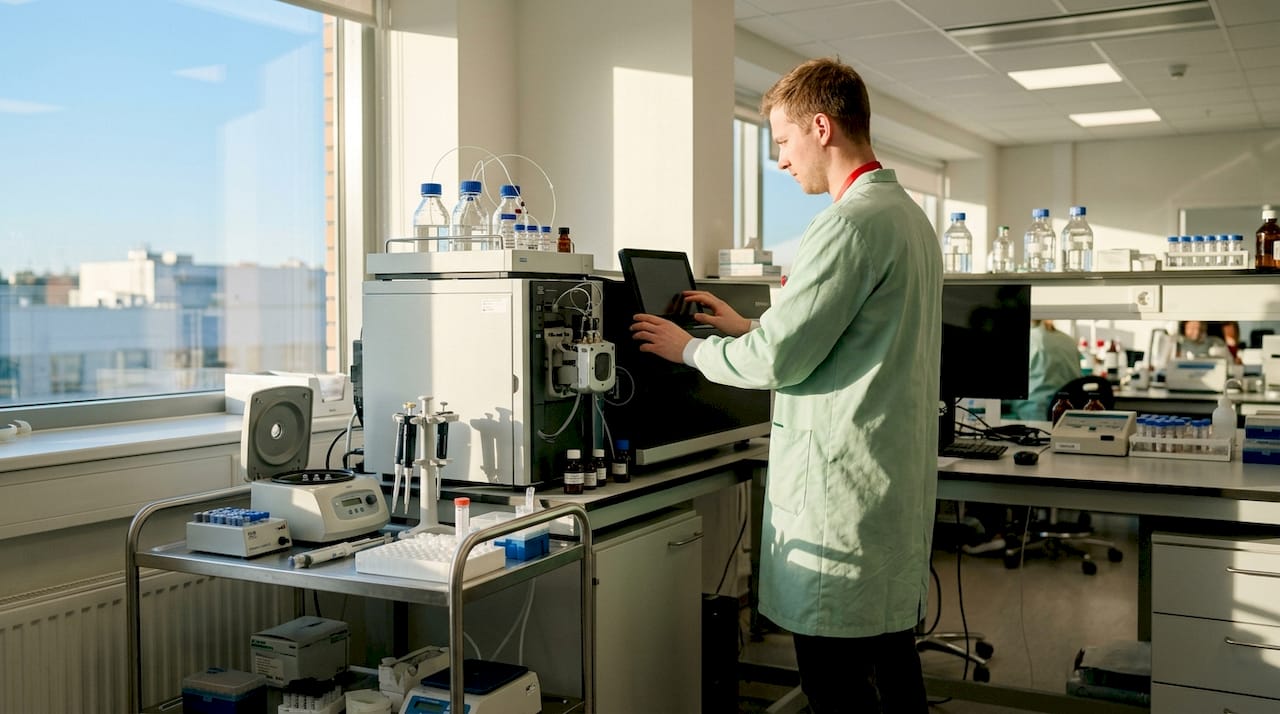
LC-MS/MS is the definitive method for confirmatory drug testing, with limits of detection ranging from 0.08 to 7.50 ng/mL in high-resolution applications. That sensitivity means LC-MS/MS can confirm metabolite presence at concentrations far below what immunoassays can reliably detect. The technique couples liquid chromatography, which separates compounds in a mixture, with tandem mass spectrometry, which identifies and quantifies each separated compound.
| Method | Principle | Key Strength | Limitation |
|---|---|---|---|
| LC-MS/MS | Chromatographic separation + tandem mass detection | High sensitivity and specificity | Requires pre-specified target list |
| LC-HRMS | High-resolution mass accuracy detection | Identifies unknown metabolites | Complex data interpretation |
| HPLC-ICP-MS | Element-specific detection via inductively coupled plasma | No radiolabels needed | Limited to heteroatom-containing drugs |
| Immunoassay | Antibody-antigen binding | Rapid and low cost | Cross-reactivity and false results |
LC-HRMS advances enable identification of unknown or unexpected metabolites through high mass accuracy. This capability is transforming forensic toxicology, where novel psychoactive substances appear faster than targeted panels can be updated.
Stable isotope-labeled internal standards are critical in mass spectrometry for accurate quantitation. These standards are chemically identical to the target metabolite but contain heavier isotopes, so they behave identically during sample preparation while remaining distinguishable by the instrument. They correct for matrix effects and sample loss, two of the most common sources of quantitation error.
HPLC-ICP-MS provides structure-independent quantification without requiring radiolabels. Its element-specific detection decouples measurement from molecular structure, making it a practical alternative when isotopically labeled standards are unavailable.
Pro Tip: When sending samples for confirmatory mass spectrometry, specify every suspected drug or drug class to the laboratory. Targeted mass spectrometry only detects metabolites included in the pre-programmed method. If you do not flag a suspected substance, the lab will not look for it, and the result will be negative by default.
Why do metabolic pathways and sample handling affect detection accuracy?
Understanding metabolic pathways is not just academic. It directly determines whether a test will find what you are looking for. Different drugs produce different metabolite profiles, and knowing which metabolite to target is the difference between a reliable result and a missed detection.
Some drugs are detected primarily through their metabolites rather than the parent compound. Heroin, for example, is rapidly converted to 6-monoacetylmorphine and then to morphine. Testing for heroin itself is rarely useful. Testing for 6-monoacetylmorphine confirms heroin use specifically, while morphine alone could indicate codeine ingestion. That distinction has real clinical and forensic consequences.
Molecular structure also affects detection sensitivity. Metabolites with polar functional groups are more water-soluble and concentrate in urine at higher levels, making them easier to detect. Metabolites that remain lipophilic may distribute into tissue rather than urine, reducing their concentration in the collected sample.
Sample stability is a frequently underestimated variable. Key considerations include:
- Room temperature degradation: Some metabolites degrade fully within 4–9 weeks at 22°C. Samples stored at room temperature before analysis may produce false negatives.
- Refrigeration at 4°C: Preserves most metabolites for three or more months.
- Frozen storage at -20°C: The standard for long-term preservation of reference samples and retesting specimens.
- Freeze-thaw cycles: Repeated freezing and thawing degrades metabolite integrity. Aliquot samples before freezing to avoid this.
Sample degradation varies widely by metabolite chemical stability. Knowing the stability profile for each target compound guides appropriate storage and retesting protocols. A false negative caused by improper storage is indistinguishable from a true negative without documentation of the chain of custody and storage conditions.
My take on where metabolite detection is heading
The shift from targeted immunoassay panels to LC-HRMS-based metabolite profiling is the most significant change I have seen in this field. LC-HRMS does not just confirm what you suspect. It can find what you did not know to look for. That capability is critical in forensic toxicology, where novel synthetic opioids and designer cannabinoids appear constantly. A targeted panel built last year may already be missing substances circulating today.
The adoption of LC-HRMS represents a genuine shift in what is analytically possible. But the technology creates its own challenge: interpreting high-resolution data requires expertise that many clinical labs do not yet have in-house. The gap between instrument capability and interpretive skill is where errors happen.
The bottleneck I see most often is not the instrument. It is the synthesis and availability of isotopically labeled standards. Without them, quantitation in LC-MS/MS is unreliable. For novel metabolites, those standards simply do not exist yet, which means labs can identify a compound but cannot accurately quantify it. That limitation matters when a clinical decision depends on concentration, not just presence.
The most overlooked issue in practice is clinician-lab communication. Effective communication between clinicians and laboratories on suspected drugs is what makes targeted detection work. A toxicology request that says “drug screen” without specifying the clinical concern is asking the lab to guess. Specify the substance class. Specify the clinical context. The result you get back will be far more useful.
— Justin
Rapidtestcup’s urine test kits for preliminary metabolite screening
Accurate drug metabolite detection starts before the sample ever reaches a confirmatory lab. The quality of your initial screening determines which samples get flagged for follow-up and which are cleared.
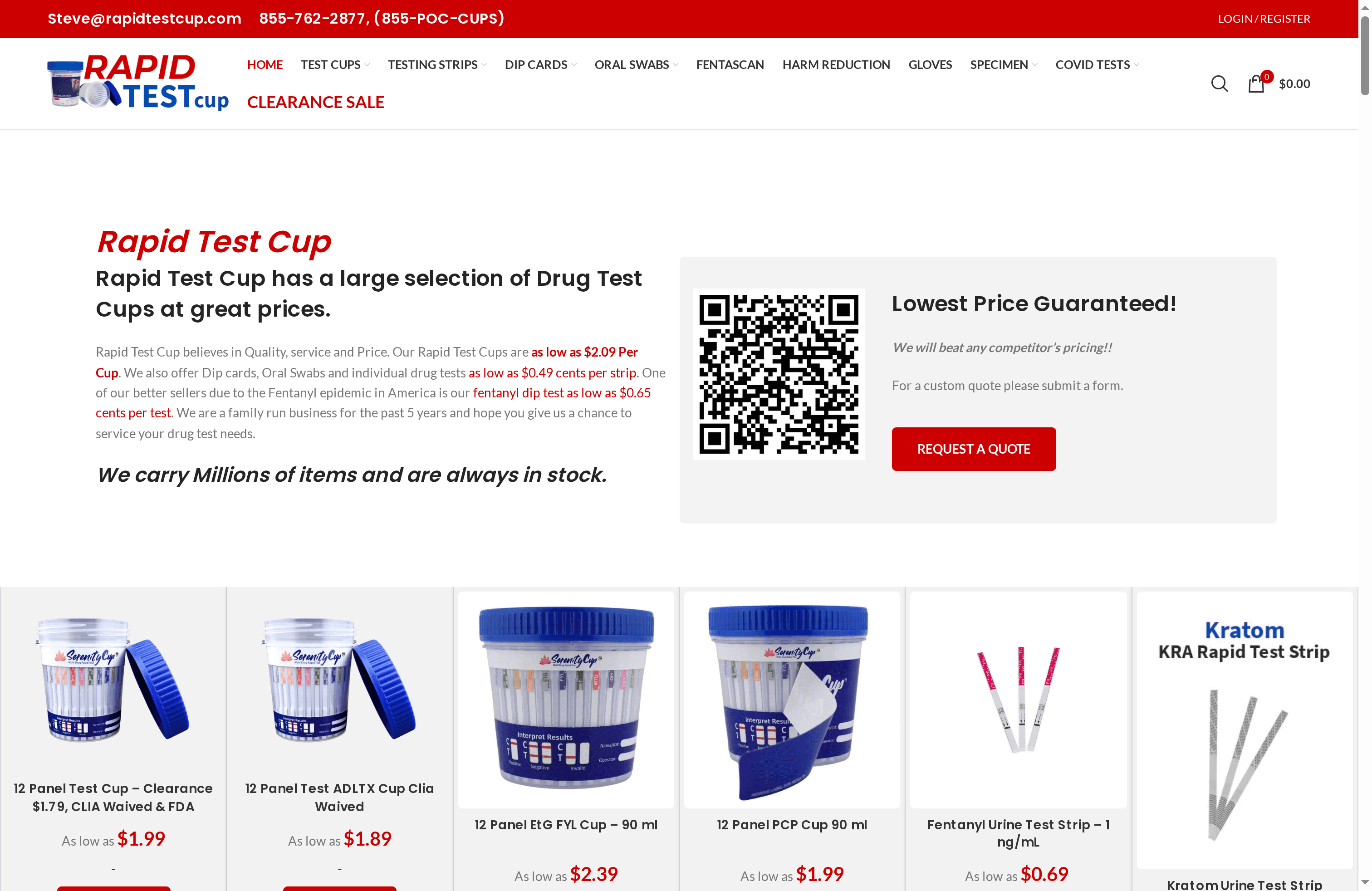
Rapidtestcup offers a full range of CLIA-waived, FDA-cleared urine drug test kits designed for clinical, forensic, and substance abuse program settings. The catalog includes multi-panel test cups that screen for up to 18 drug classes simultaneously, including fentanyl, kratom, and ETG for alcohol metabolites. Each kit is built to flag presumptive positives reliably so that confirmatory mass spectrometry resources are directed where they are needed. For programs that need a practical guide before purchasing, Rapidtestcup’s kit selection guide walks through panel options, cutoff levels, and collection accessories to match your testing protocol.
FAQ
What biological sample is best for detecting drug metabolites?
Urine is the preferred matrix for most drug metabolite screening because it concentrates metabolites at higher levels and offers longer detection windows than blood or saliva. Hair provides the longest historical window but cannot confirm acute intoxication.
What is the difference between immunoassay screening and confirmatory testing?
Immunoassay screening is a rapid, low-cost method that flags presumptive positives using antibody-antigen reactions. Confirmatory testing, typically LC-MS/MS, provides definitive identification and quantification of specific metabolites and is required for any clinical, legal, or occupational decision.
How long are drug metabolites detectable in urine?
Detection windows vary by drug and frequency of use. Most substances are detectable in urine for one to several days. Cannabis metabolites can remain detectable for weeks in chronic users due to their lipophilic nature and slow release from fat tissue.
Why does sample storage temperature affect drug test results?
Some metabolites degrade within weeks at room temperature, producing false negatives. Refrigeration at 4°C preserves most metabolites for three or more months, and frozen storage at -20°C is the standard for long-term specimen retention.
Can mass spectrometry miss a drug metabolite?
Yes. LC-MS/MS is a targeted technology that only detects metabolites included in the pre-programmed method. If a clinician does not notify the lab of a suspected substance, that metabolite will not be included in the analysis and the result will appear negative.
Key takeaways
Accurate drug metabolite detection requires both a well-chosen biological sample and a two-stage analytical process combining immunoassay screening with confirmatory mass spectrometry.
| Point | Details |
|---|---|
| Two-stage testing is standard | Immunoassay screens for presumptive positives; LC-MS/MS confirms and quantifies specific metabolites. |
| Urine is the primary matrix | Urine concentrates metabolites better and offers longer detection windows than blood or saliva. |
| Sample storage affects accuracy | Metabolites degrade at room temperature within weeks; refrigeration or freezing preserves sample integrity. |
| LC-HRMS expands detection scope | High-resolution mass spectrometry identifies unknown metabolites that targeted panels miss. |
| Clinician-lab communication is critical | Specifying suspected substances to the laboratory prevents false negatives from untargeted methods. |