Blog
PPE for Specimen Collection: 5 Checks That Protect Staff and Samples


Routine specimen collection calls for disposable gloves, a lab coat or fluid-resistant gown, eye protection, and a surgical mask, with a site- and task-specific risk assessment deciding what to add, such as a face shield or N95 respirator. OSHA and CDC guidance treat every specimen as potentially infectious. Change gloves between patients and clean your hands each time.
TL;DR:
- Assess splash and aerosol risks, patient behavior, and collection volume for each procedure; high aerosol risk may require a biosafety cabinet or added barriers.
- Don the gown, required respiratory protection, eye protection, and gloves in that order; remove gloves first, then clean your hands before and after finishing doffing.
- After instrument loading, change gloves; disinfect sealed container exteriors, label specimens, and use required secondary containment and trained staff for applicable UN3373 shipments.
- Employers must provide PPE and training, assess risks at each collection site, stock every station, and follow applicable requirements when respirators are used.
- Place needles and other sharps in containers designed to resist punctures, and handle contaminated PPE and regulated waste under facility and local procedures.
Table of Contents
- What belongs on your standard PPE checklist?
- How do you choose PPE with a risk assessment?
- What is the right donning and doffing sequence?
- When do you need respiratory protection?
- How do collection-site controls protect specimen integrity?
- How do you handle specimens after collection?
- How should you dispose of sharps and contaminated PPE?
- What does a sustainable PPE program require?
- What do collection staff most often get wrong?
- Where can you buy specimen collection supplies?
- FAQ
- Sources
What belongs on your standard PPE checklist?
OSHA guidance treats all biological specimens as potentially infectious and lists gloves, lab coats or fluid-resistant gowns, and eye protection as typical PPE. Eye and face protection is required whenever splashes, sprays or spatters may occur. Use this checklist at each station:
- Disposable gloves: wear gloves when hand contact with blood or other potentially infectious material is anticipated, and change them between donors or patients as appropriate.
- Lab coat or fluid-resistant gown: select protection based on the procedure-specific risk assessment.
- Eye protection: goggles or a face shield whenever splashes, sprays or visible body fluid are possible. Choose eye and face protection based on the procedure-specific risk assessment.
- Mask or respirator: select respiratory protection according to the activity and its risk assessment.
- Additional protection: assess whether the task calls for extra PPE. Double gloving may reduce dexterity, so judge its use in a risk assessment, as WHO guidance recommends.
How do you choose PPE with a risk assessment?
OSHA guidance says PPE selection is performance-oriented and based on a site-specific risk assessment. A high-volume phlebotomy line carries different splash risk than a standard urine collection. Walk through these steps:
- Identify the procedure and specimen type: blood draw, urine, oral fluid or swab.
- Estimate the likelihood of splashes, sprays or aerosols at your station.
- Consider patient behavior as part of the exposure risk assessment.
- Consider the collection volume and how it affects the procedure-specific risk assessment.
- Escalate PPE when you see triggers such as aerosol-generating procedures, visible blood or suspected high-consequence pathogens.
Employers carry the responsibility here. Under the Bloodborne Pathogens standard, they must ensure employees use appropriate PPE and provide training where occupational exposure is reasonably anticipated.
What is the right donning and doffing sequence?
Order matters because removal is where most self-contamination happens. The CDC PPE sequence documents the recommended order and stresses hand hygiene and training.
- Put on the gown or lab coat first and fasten it fully.
- Add the respiratory protection required by the risk assessment.
- Put on goggles or a face shield.
- Put on gloves according to the recommended PPE sequence.
- To remove, take off gloves first without touching bare skin, then clean your hands.
- Remove PPE according to the recommended sequence, and clean your hands again.
Pro Tip: Wipe the exterior of every sealed container before it leaves your hands, and keep a clean zone and a dirty zone on the station so nothing contaminated crosses over.
Change gloves when they are contaminated or when required by the task, and perform hand hygiene as appropriate.
When do you need respiratory protection?
Choose respiratory protection according to the activity and its risk assessment. Aerosol-generating specimen tasks, such as vortexing or opening tubes after centrifugation, raise the stakes. CDC biosafety guidance advises doing procedures with high aerosol likelihood in a Class II biosafety cabinet or adding precautions such as face shields, splash shields, centrifuge safety cups or sealed rotors.
Use the respiratory protection indicated by the procedure and risk assessment, and follow applicable requirements for its use. Use engineering controls alongside PPE to reduce percutaneous injury risk.
How do collection-site controls protect specimen integrity?
PPE protects you, but the same habits protect the sample. Collection-site controls depend on the applicable procedures and requirements.
Handle specimens carefully and wipe sealed container exteriors with an appropriate disinfectant to help reduce cross-contamination. Our adulteration prevention checklist walks test administrators through these controls, and our guide to urine specimen validity covers the follow-up checks.
How do you handle specimens after collection?
Post-collection steps protect your colleagues in the lab and preserve the chain of custody:
- Wipe sealed container exteriors with a disinfectant from the EPA list, and change gloves after loading specimens onto instruments, as CDC mpox guidance specifies.
- Follow applicable packaging guidance for specimens, including secondary containment where required.
- Label every specimen clearly so lab staff know the infection risk.
- Ship under UN3373 (Category B) when applicable, and only with staff trained to pack and transport, per CDC specimen guidelines.
Our sample handling procedures cover the lab-side steps in more detail.
How should you dispose of sharps and contaminated PPE?
Disposal is where engineering controls and PPE meet. OSHA’s guidance calls PPE the last line of defense, so needle-safe devices and puncture-resistant sharps containers must work alongside it.
- Dispose of needles and sharps in a puncture-resistant container.
- Handle contaminated PPE and cleaning tasks according to your facility’s procedures and applicable guidance.
- Follow institutional and local procedures for regulated waste.
What does a sustainable PPE program require?
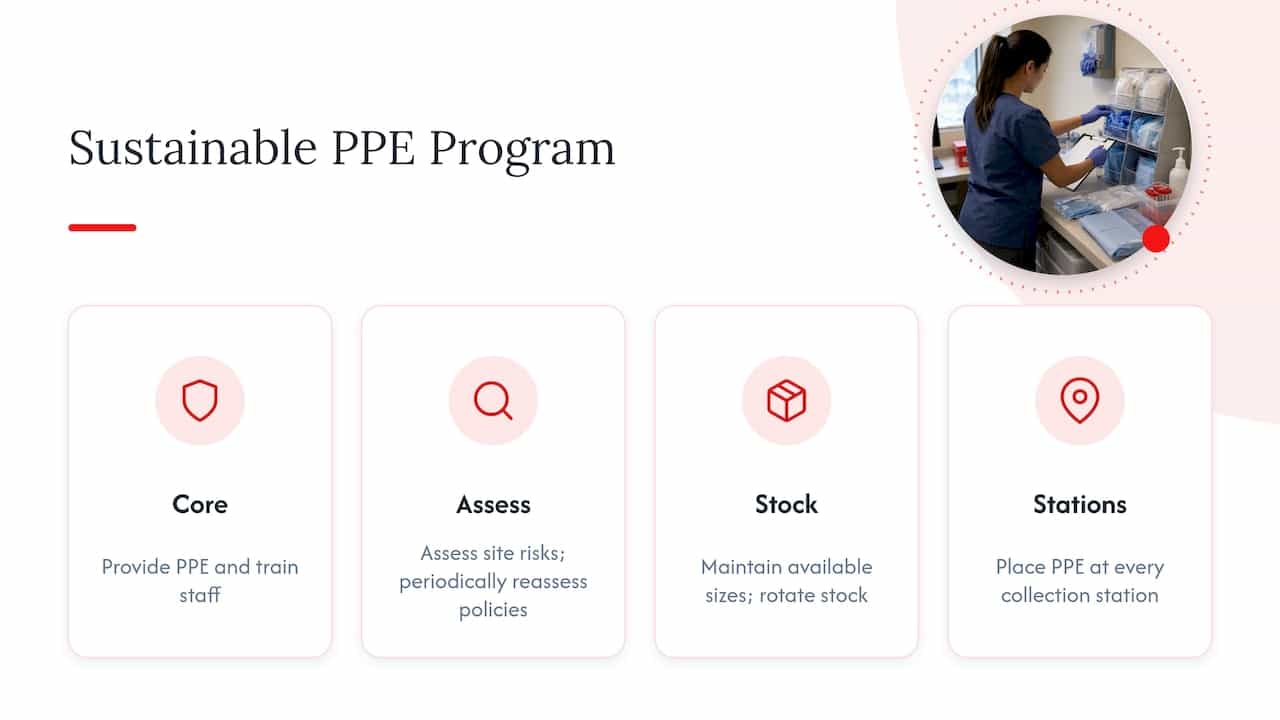
Consistent PPE use depends on program design, not individual willpower. Employers must follow the Bloodborne Pathogens standard: provide PPE and training and run site-specific risk assessments. Where respirators are used, follow applicable requirements for their selection and use. Keep sizes available, rotate stock and place PPE at every collection station. Reassess policies periodically. Our overview of why collection procedure matters supports the training case.
What do collection staff most often get wrong?
Improper doffing can increase contamination risk, so follow the recommended removal sequence and hand hygiene guidance. Staff slip when the line is long: gloves get reused, and clean and dirty zones blur. A checklist at each station and routine audits can help support consistent PPE practices.
— Justin
Where can you buy specimen collection supplies?
We sell the consumables your collection station runs on: test cups, oral swabs, specimen cups and adulterant-detecting cups, with CLIA waived and FDA-approved options, bulk pricing and same day shipping. Browse our available inventory and compare prices. Browse the full range on our shop page and stock your station today.
This article is general information, not a substitute for advice from a qualified doctor. Consult a qualified healthcare professional about your own circumstances before acting on anything here.
FAQ
What are the 5 PPE in the laboratory?
Typical laboratory PPE includes gloves, a lab coat or gown and eye protection. Additional protection, such as respiratory protection, depends on the task and risk assessment. OSHA guidance lists gloves, lab coats or gowns and eye protection as the core items.
What equipment is used for specimen collection?
Specimen collection equipment varies by procedure and may include containers, swabs, labels, disinfectant and PPE. For swab selection, sterile oropharyngeal swabs are one example of single-use collection equipment.
What precautions should be taken when collecting specimens?
Treat every specimen as potentially infectious, clean your hands and change gloves between patients. Wipe container exteriors, label clearly and dispose of sharps at the point of use.
Sources
- Bloodborne Pathogens – Worker protections against occupational exposure to infectious diseases | Occupational Safety and Health Administration
- Interim Guidelines for Biosafety and COVID-19 | CDC
- Cdc