

Blog
Types of Testing Environments: A 2026 Pro Guide


TL;DR:
- Testing environments simulate stages of software development or drug testing workflows to ensure quality before user deployment. They include distinct types like development, QA, staging, and production, each serving specific testing purposes, with specialized environments such as ephemeral, security, and test beds. Effective management relies on defining environments as code, segregating purpose, automating creation, and controlling test data to prevent environment drift.
Testing environments are defined as configured setups that simulate specific stages of software development or drug testing workflows to validate quality before results reach end users. Labs, clinics, and development teams rely on distinct environment types because a single shared setup cannot serve every testing need without introducing errors. Modern software development uses 8 primary testing environments, from local development machines to live production systems. Understanding the types of testing environments your organization uses is the first step toward consistent, defensible results.

What are the main types of testing environments?
The eight core testing environment types each serve a distinct function in the quality assurance pipeline. Collapsing them into fewer categories saves setup time but creates gaps that surface as failures at the worst possible moment. The table below maps each environment to its primary purpose, typical users, and fidelity level relative to production.
-
Development environment: The developer’s local machine or a shared sandbox where code is written and unit tests run. Speed matters more than production fidelity here. Changes happen constantly, so stability is low by design.
-
QA/Testing environment: A shared environment where testers run integration and functional tests. Functional testing environments prioritize speed and testability, often mocking external dependencies to execute quickly. This is where most defects are caught before code advances.
-
Integration environment: A step above QA, this environment connects multiple services or components to verify they work together. Teams use it to catch interface failures that unit tests miss entirely.
-
Staging environment: The closest replica of production in the pipeline. Staging environments must mirror production closely to provide reliable pre-release validation. Configuration, data volumes, and infrastructure should match production as exactly as possible.
-
Production environment: The live system serving real users. Some teams run limited monitoring and canary tests here, but production is not a testing ground. Failures here carry direct consequences.
-
User Acceptance Testing (UAT) environment: A stable space where business stakeholders or end clients validate that software meets requirements. UAT environments provide stable validation spaces for stakeholders and act as a formal gate before release approval.
-
Performance testing environment: A dedicated setup with normalized, consistent infrastructure for load and stress testing. Shared infrastructure produces unreliable metrics because resource contention skews results.
-
Chaos testing environment: A controlled space for fault injection and resilience validation. Teams deliberately break components here to confirm that systems recover gracefully under real failure conditions.
Pro Tip: Never run performance tests in a shared QA environment. Shared resources distort baseline metrics and make it impossible to compare results across test runs.
Emerging and specialized testing environment types
Beyond the eight core categories, three specialized environment types have become standard in Agile and DevOps workflows. Each addresses a gap that traditional environments leave open.
Ephemeral environments
Ephemeral environments are spun up automatically per pull request and torn down after the test completes. Containerization tools like Docker and Kubernetes and Infrastructure as Code practices make this possible at scale. The key benefit is isolation: every pull request gets a clean, identical environment with no leftover state from previous tests. This eliminates environment contention, where two teams testing simultaneously corrupt each other’s results.
Security testing environments
Security testing environments run vulnerability scans, penetration tests, and compliance checks in a fully isolated network. Running these tests in a shared environment risks exposing sensitive data or disrupting active test runs. Isolation is not optional here. For drug testing labs, this maps directly to protecting patient data and maintaining HIPAA compliance during software validation.
Test bed environments
Test bed environments focus on curated test data, hardware devices, or failure simulators rather than server configurations alone. A drug testing lab might use a test bed to validate how its laboratory information system handles edge cases: duplicate specimen IDs, out-of-range values, or network latency spikes. Test beds are purpose-built for a specific validation problem, not general use.
Pro Tip: Treat ephemeral environments as your default for feature development. If your team is still sharing a single QA environment for all active branches, you are paying for contention in the form of debugging time.
Comparing testing environment types: a side-by-side view
The table below compares the five most commonly used environments across four attributes that matter most to lab and development teams: production fidelity, setup complexity, cost, and frequency of use.
| Environment | Production fidelity | Setup complexity | Relative cost | Frequency of use |
|---|---|---|---|---|
| Development | Low | Low | Low | Daily |
| QA/Testing | Medium | Medium | Medium | Continuous |
| Staging | High | High | High | Per release |
| Production | Exact | N/A | Highest | Always live |
| Ephemeral | Medium to high | Automated | Variable | Per pull request |
Maintaining parity between environments is the biggest management challenge. Silent dependencies, such as mismatched environment variables or stale test data, cause failures even when server configurations appear identical. This is called environment drift, and it is the most common cause of regression failures that only appear in staging or production. Teams that invest in Infrastructure as Code tools like Terraform reduce drift by defining environments as versioned, repeatable code rather than manual configurations.
Blue-green deployments maintain twin production environments for smooth rollout and rollback. This strategy reduces downtime during releases by keeping a second production environment ready to receive traffic if the primary fails. It integrates tightly with staging pipelines and is worth considering for any organization running high-availability drug testing software.
Testing environment best practices for 2026
Effective environment management comes down to four principles. Teams that apply all four consistently see fewer release failures and shorter debugging cycles.
-
Use Infrastructure as Code for every environment. Tools like Terraform and Kubernetes define environments as code, making them reproducible and version-controlled. Manual environment setup is the primary source of configuration drift.
-
Segregate environments by purpose. QA, staging, and production must stay separate. Developers should avoid debugging directly in staging because it compromises the production mirror that staging is meant to be. Bug fixes belong in isolated branches or ephemeral environments.
-
Automate environment creation and teardown. Treating environments as disposable infrastructure with automation and containerization reduces maintenance and improves reliability. Ephemeral environments created per pull request and destroyed after merge are the clearest expression of this principle.
-
Manage test data as carefully as code. Consistency across environments requires addressing silent dependencies like environment variables and test data, not just server setup. A staging environment with outdated or incomplete test data will not catch the failures that production data would expose.
-
Build observability into every environment. Logging, alerting, and tracing should exist in QA and staging, not just production. Teams that only instrument production discover problems after users do.
For drug testing labs specifically, maintaining testing accuracy across different workflow stages requires the same discipline. Consistent protocols, calibrated equipment, and validated test data are the lab equivalent of environment parity.
Pro Tip: Add a pre-merge checklist that confirms environment variables, test data snapshots, and dependency versions match staging before any branch merges to main. This single step catches the majority of environment drift failures.
Key takeaways
Testing environments are only as reliable as the discipline used to build and maintain them. The most effective approach to managing different testing environments is to define each one as code, segregate them by purpose, and treat ephemeral environments as the default for active development.
| Point | Details |
|---|---|
| Eight core environment types | Development, QA, Integration, Staging, Production, UAT, Performance, and Chaos each serve a distinct purpose. |
| Staging must mirror production | Any gap between staging and production configuration is a potential source of release failures. |
| Ephemeral environments prevent contention | Automated per-pull-request environments eliminate shared environment conflicts and improve test isolation. |
| Environment drift is the top failure cause | Silent dependencies like mismatched variables and stale test data cause failures even with identical server setups. |
| Infrastructure as Code is non-negotiable | Tools like Terraform and Kubernetes make environments reproducible, versioned, and auditable. |
What I’ve learned from years of watching environments break at the worst moment
The most expensive testing failures I have seen share one trait: the team trusted environment parity they had not verified. A staging environment that looked identical to production but had a six-week-old database snapshot. A QA environment where two teams were running conflicting tests simultaneously. A performance environment sharing compute resources with a CI pipeline, making every load test result meaningless.
The shift that actually fixes this is cultural, not technical. Teams need to stop treating environments as shared infrastructure that someone else maintains and start treating them as owned, disposable, and automated. When a developer can spin up a full environment in three minutes with a single command, the temptation to debug in staging disappears. When environments are defined as code, drift becomes a pull request, not a mystery.
For drug testing labs, the parallel is direct. A quality control workflow that lacks clear stage separation, documented protocols, and consistent test materials will produce results that cannot be defended under audit. The same logic applies to software environments. Reliable results require controlled conditions, and controlled conditions require deliberate design.
My recommendation for 2026: if your team is still manually provisioning any environment, that is the first thing to fix. Automate it, version it, and document it. Everything else improves from there.
— Justin
Drug testing products built for lab-grade reliability
Professional labs need testing products that match the rigor of their workflows. Rapidtestcup supplies CLIA waived, FDA-approved drug testing kits designed for laboratories, clinics, substance abuse programs, and law enforcement teams.
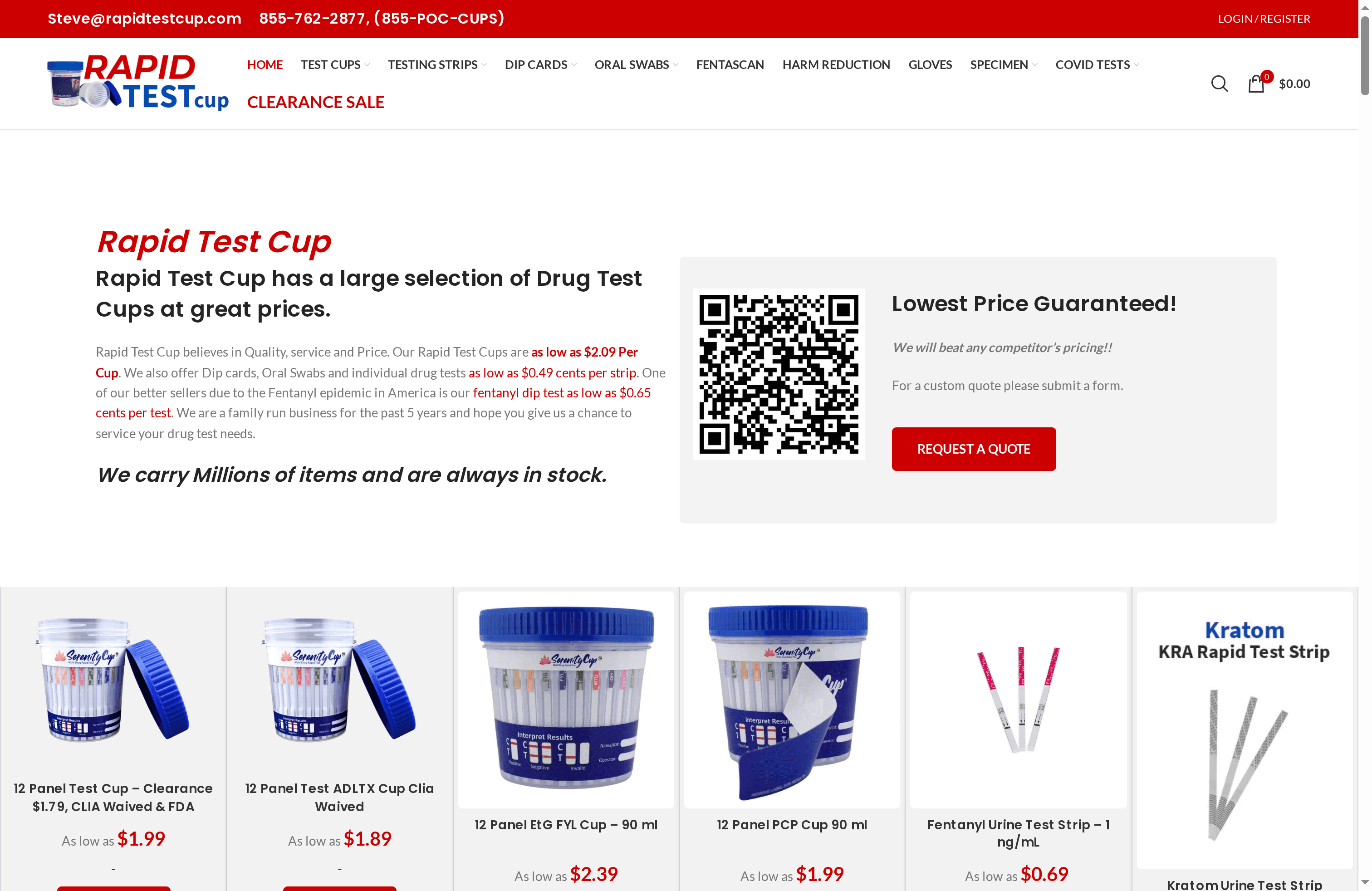
The top drug testing products for labs in 2026 include multi-panel test cups with adulterant detection, high-sensitivity fentanyl strips, and specimen collection supplies built for chain-of-custody compliance. Rapidtestcup offers bulk pricing, fast shipping, and a catalog that covers everything from 12-panel cups to 22-panel tests with Zaza and fentanyl detection. If your lab needs to match testing protocols to specific panels or compliance requirements, Rapidtestcup’s product pages include detailed cutoff levels and panel configurations to support that decision.
FAQ
What are testing environments in software development?
Testing environments are configured setups that replicate specific stages of the software development lifecycle to validate code quality before release. They range from local development machines to production-mirror staging systems.
What is the difference between staging vs production?
Staging is a pre-release environment that mirrors production configuration and data for final validation. Production is the live system serving real users, where failures have direct consequences.
What are ephemeral testing environments?
Ephemeral environments are short-lived, automated setups created per pull request and destroyed after testing completes. They prevent environment contention and ensure every test runs in a clean, isolated state.
How do you prevent environment drift?
Environment drift is prevented by defining environments as Infrastructure as Code using tools like Terraform or Kubernetes, managing test data snapshots consistently, and auditing environment variables before each release cycle.
Why do drug testing labs need isolated testing environments?
Isolated testing environments prevent cross-contamination between test runs and protect sensitive patient data during software validation. They also support testing compliance by maintaining clear separation between development, validation, and production workflows.