
Blog
What Is a Dip Drug Test and Why Accuracy Matters


Nearly eight out of ten American companies now require some form of workplace drug screening, reflecting a growing demand for rapid and reliable testing solutions. With so much riding on accurate results, understanding how dip drug tests work becomes crucial for anyone dealing with employment, clinical, or legal concerns. This guide demystifies the essential features, types, and best practices for using dip drug tests, empowering readers to confidently navigate the facts behind this widely used American screening method.
Table of Contents
- Defining Dip Drug Tests And Core Concepts
- Types Of Dip Drug Tests And Key Differences
- How Dip Drug Tests Function In Practice
- Common Uses In Forensic And Clinical Settings
- Risks Of Inaccurate Results And How To Avoid Them
- Dip Drug Tests Vs. Other Testing Methods
Key Takeaways
| Point | Details |
|---|---|
| Dip Drug Tests Functionality | These tests rely on a urine-based analysis method using competitive binding immunoassay to identify multiple drug substances quickly and accurately. |
| Variety of Test Panels | Dip drug tests range from 5-panel to 13-panel configurations, allowing for varying levels of detection for specific substances. |
| Importance of Accuracy | Accurate results require strict adherence to collection procedures and understanding of testing limitations to minimize false positives and negatives. |
| Applications Across Sectors | Widely used in workplace, clinical, and forensic settings, dip drug tests offer fast, non-invasive screening solutions for potential substance use. |
Defining Dip Drug Tests and Core Concepts
Dip drug tests represent a straightforward screening methodology designed to detect the presence of multiple drug substances through a simple urine-based analysis. These testing devices utilize a quick, cost-effective approach that allows professionals and organizations to rapidly identify potential substance use.
At their core, dip drug tests operate through a competitive binding immunoassay mechanism, where specific antibodies interact with drug molecules in a urine sample. The testing process involves immersing a specialized test strip directly into a urine specimen, which then triggers a chemical reaction that produces visible color indicators representing the presence or absence of targeted substances.
The fundamental components of a dip drug test typically include:
- A disposable plastic strip with multiple test zones
- Reactive chemical panels designed to detect specific drug metabolites
- Color-coded indicators showing test results
- Pre-calibrated sensitivity thresholds for accurate detection
Research from scientific studies, such as the analysis by NDARC, demonstrates that devices like the DipScan™ 6 utilize advanced membrane technology where labeled antibody-dye conjugates migrate across porous surfaces, creating distinct visual signals that indicate drug presence. This technological approach enables rapid, on-site screening with minimal equipment and technical expertise required.
Professional users across various sectors leverage dip drug tests for multiple applications, including workplace screening, clinical assessments, legal compliance, and addiction treatment monitoring. The simplicity and speed of these tests make them an essential tool for quickly identifying potential substance use scenarios with minimal invasiveness.
Types of Dip Drug Tests and Key Differences
Dip drug tests come in various configurations, with the most common types categorized by the number of drug panels they can detect. Multi-panel dip drug tests range from simple 5-panel screenings to comprehensive 13-panel tests, each designed to identify different substances with varying levels of specificity and breadth.
The primary variations in dip drug tests include:
- 5-Panel Tests: Typically screen for core substances like marijuana, cocaine, opiates, amphetamines, and phencyclidine
- 10-Panel Tests: Expand detection to include additional drugs such as benzodiazepines, barbiturates, and methadone
- 12 and 13-Panel Tests: Offer the most comprehensive screening, adding prescription medications and synthetic drugs
Research demonstrates that devices like the DipScan™ 6 utilize advanced immunoassay technologies to create precise detection mechanisms. These tests leverage competitive binding techniques where specific antibodies interact with drug molecules, creating color-coded indicators that reveal the presence or absence of targeted substances.
The key differences between dip drug test types extend beyond panel count. Sensitivity levels, detection windows, and specificity of metabolite identification can vary significantly. Professional users must carefully select test types based on their specific screening requirements, considering factors like workplace regulations, clinical needs, and the particular substances of concern.

Accuracy remains paramount in drug testing, with most professional-grade dip tests offering sensitivity thresholds that balance reliable detection with minimizing false positive results. The complexity of modern drug use patterns means that selecting the right type of dip drug test can mean the difference between comprehensive screening and potentially missing critical substance use indicators.
How Dip Drug Tests Function in Practice
Dip drug tests operate through a precise scientific mechanism that transforms complex chemical interactions into simple, readable results. Workplace drug screening relies on these devices to quickly and efficiently detect potential substance use through an innovative immunoassay testing process.
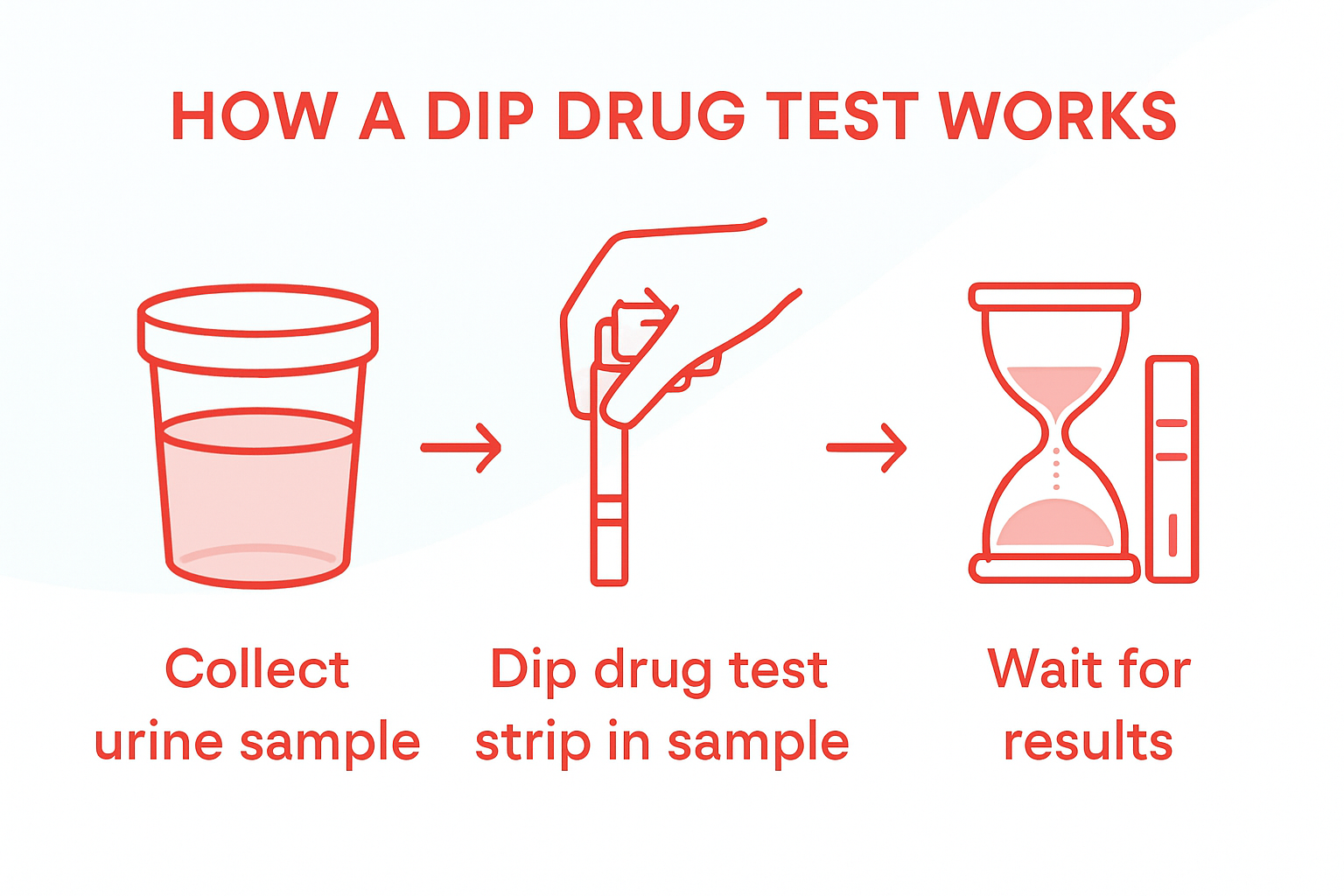
The practical functioning of a dip drug test involves several critical steps:
- Collecting an appropriate urine sample in a clean, standardized collection container
- Immersing the specialized test strip directly into the urine specimen
- Waiting a predetermined time interval (typically 2-5 minutes)
- Observing color-coded indicators that reveal the presence or absence of specific drug metabolites
Research from scientific studies, such as the analysis of the DipScan™ 6, demonstrates the intricate mechanism behind these tests. When the test strip is immersed, the urine sample migrates along a porous membrane, where specific antibodies interact with drug molecules. This process creates distinct colored bands in designated test zones, with a control zone ensuring the test’s overall validity and reliability.
Professional users must understand the nuanced detection capabilities of these tests. Each drug metabolite requires a specific antibody interaction, and the sensitivity of the test determines the minimum concentration required to trigger a positive result. Factors like sample temperature, collection timing, and proper handling can significantly impact the accuracy of the screening process.
The practical application of dip drug tests extends across multiple sectors, including workplace safety, clinical diagnostics, legal compliance, and addiction treatment monitoring. By providing rapid, on-site results with minimal technical expertise required, these tests offer a critical tool for quickly identifying potential substance use scenarios while maintaining a balance between comprehensive screening and individual privacy considerations.
Common Uses in Forensic and Clinical Settings
Dip drug tests play a critical role in numerous professional environments where rapid, accurate substance screening is essential. Forensic drug testing encompasses a wide range of applications, from legal investigations to workplace compliance, providing immediate insights into potential substance use.
The primary forensic and clinical settings where dip drug tests are extensively utilized include:
- Law enforcement screening during investigations
- Probation and parole compliance monitoring
- Workplace drug screening programs
- Rehabilitation and addiction treatment centers
- Emergency medical screening
- Custody and child welfare assessments
- Professional licensing and certification requirements
Research demonstrates that devices like the DipScan™ 6 are particularly valuable in scenarios requiring quick, on-site substance detection. These tests offer professionals a rapid screening method that can provide immediate actionable information, enabling swift decision-making in time-sensitive environments.
Clinical practitioners rely on dip drug tests for comprehensive patient assessments, particularly in scenarios involving potential substance abuse, medication interactions, or treatment monitoring. The tests provide a non-invasive, cost-effective method for initial screening, allowing healthcare providers to quickly identify potential risks and determine whether additional comprehensive testing is necessary.
The versatility of dip drug tests extends beyond traditional settings, supporting critical interventions in public health, legal proceedings, and personal safety. By offering quick, reliable results with minimal technical expertise required, these screening tools have become an indispensable resource for professionals across multiple disciplines seeking to understand and address potential substance use challenges.
Risks of Inaccurate Results and How to Avoid Them
Dip drug tests, while powerful screening tools, are susceptible to various factors that can compromise their accuracy and reliability. Workplace drug testing protocols demand rigorous attention to detail to minimize the potential for false positive or false negative results.
Common sources of inaccuracy in dip drug tests include:
- Improper sample collection techniques
- Insufficient training of test administrators
- Cross-reactivity with prescription medications
- Variations in individual metabolic processing
- Contamination during specimen handling
- Expired or improperly stored testing devices
- Inadequate understanding of detection window limitations
Research indicates that devices like the DipScan™ 6 require precise handling to ensure optimal performance. Potential risks emerge from subtle variations in testing procedures, such as incorrect immersion time, inappropriate sample temperature, or failure to follow manufacturer-specified protocols.
To mitigate these risks, professionals must implement comprehensive strategies that go beyond simple test administration. This includes establishing rigorous quality control measures, providing extensive staff training, maintaining strict chain of custody documentation, and understanding the nuanced limitations of on-site screening methods. Confirmatory laboratory testing remains crucial for verifying initial screening results, especially in high-stakes environments like legal proceedings, workplace compliance, or medical diagnostics.
Ultimately, the effectiveness of dip drug tests hinges on a holistic approach that combines technological precision, professional expertise, and a deep understanding of potential variables that can influence test outcomes. By recognizing and proactively addressing these potential sources of inaccuracy, organizations can develop more reliable and defensible substance screening processes that protect both individual rights and institutional responsibilities.
Dip Drug Tests vs. Other Testing Methods
Drug testing methodologies vary significantly in their approach, accuracy, and application, with each method offering unique advantages and limitations. Drug test technologies range from rapid on-site screening to comprehensive laboratory analysis, providing professionals with multiple options for substance detection.
Key differences between testing methods include:
- Dip Drug Tests: Quick, affordable, on-site screening
- Urine Laboratory Tests: High precision, comprehensive analysis
- Blood Tests: Direct measurement of active substances
- Hair Follicle Tests: Extended detection windows
- Saliva Tests: Non-invasive, recent substance use detection
- Sweat Patch Tests: Continuous monitoring over extended periods
Research indicates that while dip drug tests offer rapid screening, they may lack the specificity of more advanced laboratory methods like gas chromatography-mass spectrometry. These on-site tests provide immediate results but are typically recommended as initial screening tools, with confirmatory laboratory testing necessary for definitive conclusions.
Professional users must carefully evaluate testing methods based on specific requirements. Factors such as detection sensitivity, cost, turnaround time, invasiveness, and legal admissibility play crucial roles in selecting the most appropriate testing approach. Dip drug tests excel in scenarios requiring quick, cost-effective screening, while laboratory methods provide more comprehensive and legally defensible substance use documentation.
Ultimately, the selection of a drug testing method depends on the specific context, balancing practical considerations with the need for accurate, reliable results. Organizations and professionals must understand the strengths and limitations of each testing approach to develop comprehensive substance screening strategies that meet their unique operational and compliance requirements.
Ensure Accurate Results with High-Quality Dip Drug Tests from RapidTestCup
When it comes to dip drug tests, accuracy matters. The challenges of preventing false positives or negatives require professional-grade testing kits that deliver reliable, consistent results every time. Whether you need multi-panel dip cards, urine test strips, or complete specimen collection supplies, choosing the right products is critical to maintain compliance and confidence in your screenings.
Explore our extensive selection of FDA-approved, CLIA-waived dip drug tests and accessories at RapidTestCup. Designed for workplace screening, forensic use, and clinical settings, our affordable and fast-shipping solutions help you avoid costly errors caused by improper handling or subpar devices. Act now to secure dependable drug testing supplies and experience peace of mind knowing your screening process meets the highest professional standards. Start browsing our trusted products today at https://rapidtestcup.com and take control of your testing accuracy.
Frequently Asked Questions
What is a dip drug test?
A dip drug test is a simple urine-based screening method used to detect the presence of multiple drugs through a quick analysis involving a specialized test strip.
How do dip drug tests work?
Dip drug tests function through a competitive binding immunoassay mechanism, where specific antibodies in the test strip interact with drug metabolites in a urine sample, producing color indicators that signify presence or absence of drugs.
What are the types of dip drug tests available?
Dip drug tests come in various panel configurations, including 5-panel, 10-panel, 12-panel, and 13-panel tests, each designed to detect different substances with varying specificity.
Why is accuracy important in dip drug tests?
Accuracy is crucial in dip drug tests to minimize false positive or negative results, ensuring reliable identification of substance use, which is particularly vital in workplace screening and clinical settings.