

Blog
What Is Random Drug Testing and Its Workplace Impact


Over half of all American employers now rely on random drug testing to help safeguard their workplace and shield against costly incidents. Substance abuse remains a leading source of lost productivity and legal risk, making thorough screening a vital tool for large organizations. This article clarifies common misunderstandings and offers practical insights for HR managers navigating compliance, fairness, and privacy when building strong drug testing programs.
Table of Contents
- Random Drug Testing Defined and Debunked
- Key Types and Common Methods Used
- Legal Requirements for U.S. Employers in 2026
- How Random Selection and Testing Work
- Rights, Responsibilities, and Legal Risks
Key Takeaways
| Point | Details |
|---|---|
| Random Drug Testing | This system detects substance use among employees without prior notice, aiming to discourage drug abuse in the workplace. |
| Testing Methods | Urine testing is the most common, but other methods like saliva and hair tests provide different advantages for detecting drug use. |
| Legal Compliance | Employers must navigate both federal and state regulations, ensuring they protect employee privacy while maintaining safety protocols. |
| Rights and Responsibilities | Employees have rights regarding testing procedures, and employers face legal risks if they fail to comply with regulations or maintain transparency. |
Random Drug Testing Defined and Debunked
Random drug testing represents a systematic screening method designed to detect substance use among employees without prior notification. At its core, this approach aims to discourage workplace drug abuse and maintain a safe, productive environment. Unannounced testing procedures have evolved significantly since the 1960s, transforming from predictable scheduled screenings to truly unpredictable checks that minimize the potential for manipulation.
The mechanism of random drug testing relies on an unbiased selection process where each eligible individual has an equal probability of being tested. Safety-sensitive industries like transportation, construction, and healthcare frequently implement these protocols to mitigate risks associated with substance impairment. Legal frameworks at federal and state levels provide critical guidelines that balance employer safety requirements with employee privacy protections.
Key characteristics of effective random drug testing include comprehensive coverage, technological sophistication, and procedural transparency. Modern approaches utilize computer-generated selection algorithms that eliminate human bias, ensuring that no individual can predict or strategically avoid screening. These tests typically analyze biological samples like urine, blood, or hair to detect recent drug use across multiple substance categories including marijuana, cocaine, opioids, amphetamines, and prescription medications.
Pro tip: Develop a clear, written random drug testing policy that outlines specific procedures, consequences, and employee rights to maintain transparency and legal compliance.
Key Types and Common Methods Used
Urine Testing remains the most prevalent method for workplace drug screening, offering a comprehensive approach to detecting recent substance use. Drug testing technologies have advanced significantly to enhance accuracy and provide reliable detection across multiple substance categories. Urine samples can typically reveal drug metabolites for 2-5 days after use, making them an effective tool for identifying recent substance consumption.
Beyond urine testing, employers have access to multiple biological sample screening methods. Contemporary drug testing approaches include saliva tests, blood screenings, hair follicle examinations, and sweat patch analyses. Each method offers unique advantages: saliva tests provide quick results with shorter detection windows, blood tests offer precise measurements, hair follicle tests can detect long-term drug use patterns extending up to 90 days, and sweat patches enable continuous monitoring.
The most commonly screened substances in workplace drug testing include marijuana, cocaine, amphetamines, opioids, and prescription medications. Modern testing panels are sophisticated, capable of detecting multiple substance classes simultaneously and providing nuanced results that help organizations maintain safety standards. Employers typically customize their testing protocols based on industry requirements, job sensitivity, and legal regulations governing drug screening practices.
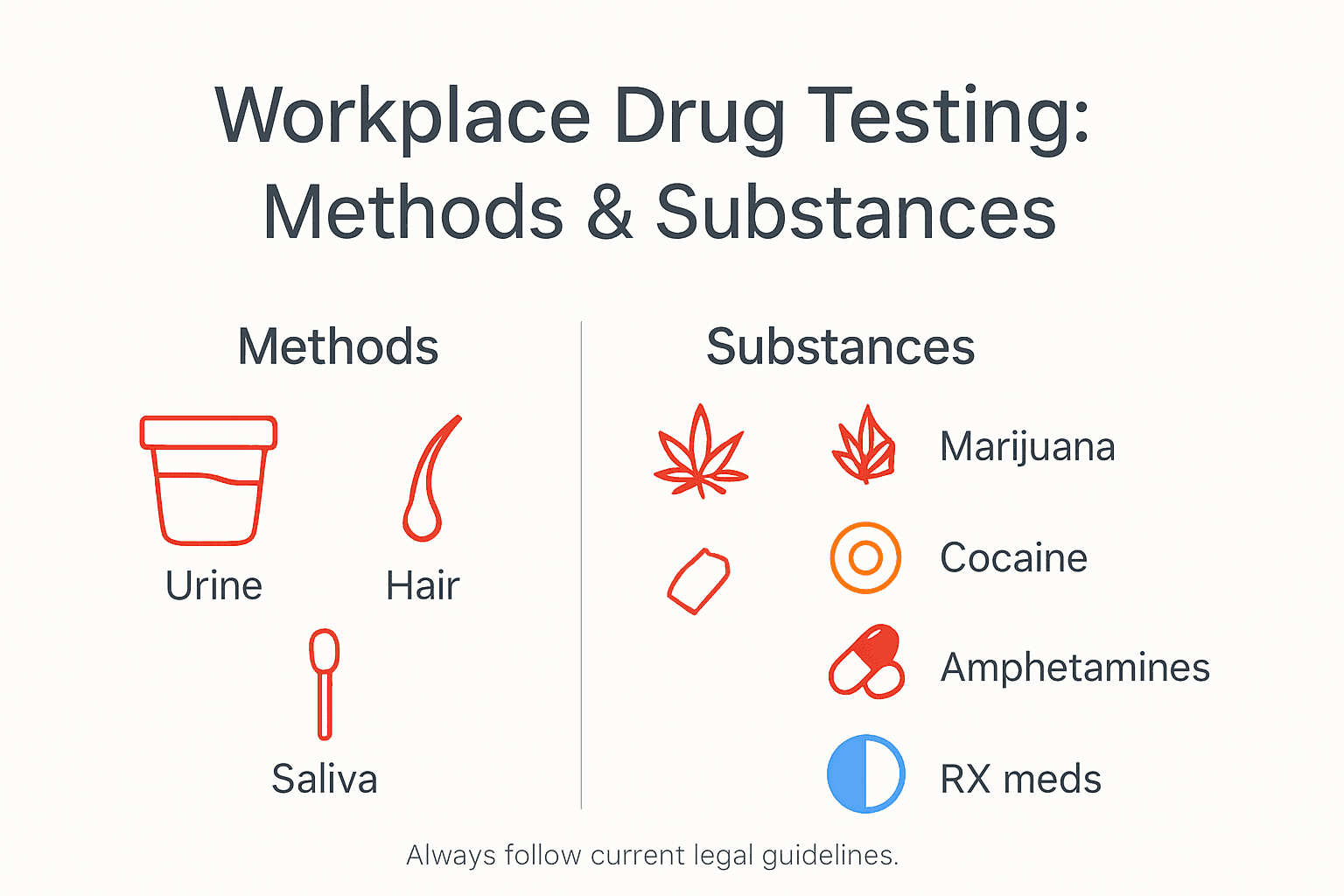
Here is a comparison of common workplace drug testing methods and their unique attributes:
| Method | Detection Window | Key Advantage | Main Limitation |
|---|---|---|---|
| Urine Test | 2-5 days | Broad substance range | Limited recent use detection |
| Saliva Test | 12-24 hours | Fast, non-invasive | Short detection period |
| Hair Follicle Test | Up to 90 days | Long-term use patterns | Cannot detect recent use |
| Blood Test | Hours to 2 days | Highly accurate | Invasive, higher cost |
| Sweat Patch | Up to 14 days | Continuous monitoring | Slower result turnaround |
Pro tip: Consult with a certified occupational health professional to design a drug testing strategy tailored to your specific workplace environment and regulatory requirements.
Legal Requirements for U.S. Employers in 2026
Federal drug testing regulations continue to evolve, presenting complex compliance challenges for U.S. employers in 2026. Safety-sensitive industries remain subject to stringent Department of Transportation (DOT) mandates, which require comprehensive screening protocols for employees in critical roles such as transportation, aviation, and logistics. These regulations mandate specific testing procedures, detection thresholds, and comprehensive documentation to ensure workplace safety and regulatory adherence.
State-level variations add significant complexity to drug testing legal frameworks. While federal guidelines provide a baseline, individual states may impose additional requirements or restrictions that employers must carefully navigate. Some states have implemented more protective employee privacy laws, marijuana legalization statutes, and specific consent requirements that directly impact how drug testing can be conducted. Employers must develop flexible policies that accommodate both federal standards and state-specific nuances to maintain legal compliance.
Key legal considerations for employers include maintaining strict confidentiality of test results, ensuring unbiased testing procedures, and providing clear notification and consent mechanisms. Workplace drug testing policies must balance organizational safety needs with employee privacy rights, requiring sophisticated approaches that minimize potential discrimination claims. Organizations must develop comprehensive written policies that clearly outline testing protocols, consequences of positive results, and employees’ rights to challenge or contest screening outcomes.
Pro tip: Engage a specialized employment law attorney to review and validate your drug testing policy annually to ensure full compliance with evolving federal and state regulations.
How Random Selection and Testing Work
Computer-generated algorithms drive the random selection process for workplace drug testing, ensuring absolute fairness and unpredictability. These sophisticated systems assign each eligible employee an equal probability of being selected, effectively eliminating human bias and manipulation potential. The algorithmic approach means no manager or administrator can influence who gets tested, maintaining the integrity of the screening program.

The actual testing procedure follows a standardized protocol designed to protect both employee privacy and organizational safety. Random drug testing programs operate through multiple precise steps, including unexpected notification, confidential sample collection, and laboratory analysis. Biological samples such as urine, saliva, or blood are collected under controlled conditions by certified professionals who follow strict chain-of-custody procedures to prevent tampering or mishandling.
Modern random testing systems incorporate advanced technologies to enhance accuracy and deterrence. Employers can customize selection frequencies, testing panels, and follow-up protocols based on industry requirements and risk levels. The unpredictable nature of these tests serves a dual purpose: detecting current substance use and creating a powerful psychological deterrent that discourages potential drug use among employees. Sophisticated tracking systems ensure comprehensive documentation and compliance with legal and regulatory standards.
Pro tip: Implement a transparent communication strategy that explains the random selection process to employees, emphasizing fairness and organizational safety goals.
Rights, Responsibilities, and Legal Risks
Employee rights in drug testing environments represent a critical balance between organizational safety and individual privacy protections. Employees are entitled to comprehensive safeguards including confidential sample collection, informed consent procedures, and the right to challenge test results through formal dispute mechanisms. These protections ensure that random drug testing remains a fair and transparent process, preventing potential abuses of employer screening protocols.
Employers shoulder substantial legal responsibilities when implementing drug testing programs. The legal landscape demands meticulous adherence to complex regulatory requirements, with potential consequences ranging from discrimination lawsuits to significant financial penalties for improper implementation. Key employer obligations include maintaining strict confidentiality of test results, ensuring unbiased selection processes, providing clear policy communication, and developing robust procedures for handling positive test outcomes while protecting employee dignity and career prospects.
The potential legal risks for employers are substantial and multifaceted. Missteps in drug testing procedures can trigger expensive litigation, including wrongful termination claims, privacy violation lawsuits, and allegations of discriminatory practices. Organizations must develop comprehensive written policies that clearly outline testing protocols, specify consequences of positive results, and establish transparent appeals processes. Successful programs require ongoing legal consultation, regular policy reviews, and a commitment to balancing workplace safety with respect for individual employee rights.
Below is a summary of major legal risks for employers conducting random drug testing:
| Legal Risk | Potential Cause | Impact on Employer |
|---|---|---|
| Discrimination Lawsuits | Unfair selection process | Legal fees, reputation harm |
| Privacy Violation Claims | Mishandling of test results | Regulatory penalties |
| Wrongful Termination | Unclear policy or false positive | Employee reinstatement, costs |
| Non-Compliance Fines | Failure to meet state/federal rules | Significant monetary penalties |
Pro tip: Conduct annual comprehensive reviews of your drug testing policies with an employment law specialist to ensure ongoing compliance and minimize potential legal vulnerabilities.
Ensure Workplace Safety with Reliable Random Drug Testing Solutions
Maintaining a drug-free workplace is critical, but managing effective and legally compliant random drug testing can be challenging. This article highlights key issues such as unbiased selection algorithms, accurate biological sample screening, and navigating complex federal and state legal requirements. If protecting your organization from risks like discrimination claims and privacy violations is a priority, having the right testing products and supplies is essential
Take control of your workplace drug testing program today with premium drug test kits and collection accessories from RapidTestCup. Our extensive catalog offers FDA-approved, CLIA waived urine test cups, dip cards, and forensic-grade specimen collection supplies designed for accuracy and confidentiality. Don’t wait until compliance issues arise—equip your team with trusted testing solutions that support transparency and safety. Explore our products now at RapidTestCup and ensure your random drug testing protocols are reliable and effective.
Frequently Asked Questions
What is random drug testing?
Random drug testing is a systematic screening method used by employers to detect substance use among employees without prior notification, aiming to discourage workplace drug abuse and enhance safety.
How does the random selection process work for drug testing?
The random selection process uses computer-generated algorithms to ensure that each eligible employee has an equal probability of being selected, thereby eliminating human bias and maintaining fairness in testing.
What types of substances are commonly tested in random drug screenings?
Commonly tested substances include marijuana, cocaine, amphetamines, opioids, and various prescription medications, with testing approaches tailored based on industry requirements and legal regulations.
What are the legal responsibilities of employers conducting random drug testing?
Employers are responsible for maintaining confidentiality of test results, ensuring unbiased selection processes, providing clear communication of policies, and handling positive test outcomes in a respectful manner, all while adhering to complex regulatory requirements.