

Blog
Why Confirmatory Drug Testing Matters in Labs


Nearly one in three Americans is affected by drug testing decisions in healthcare and workplace settings. For medical professionals and laboratory managers, the difference between initial screenings and confirmatory drug tests can mean the line between justice and error. This overview breaks down why confirmatory testing is vital to achieve accurate diagnosis, safeguard legal compliance, and protect reputations in every American medical and laboratory environment.
Table of Contents
- Confirmatory Drug Testing Defined and Debunked
- Screening Versus Confirmatory Tests Explained
- How Confirmatory Methods Ensure Accuracy
- Legal and Regulatory Standards in the US
- Risks of Skipping Confirmatory Testing
Key Takeaways
| Point | Details |
|---|---|
| Importance of Confirmatory Testing | Confirmatory testing is essential to eliminate false positives and ensure accurate drug detection before any serious consequences are imposed. |
| Differences Between Testing Methods | Initial screening tests are quick but lack specificity; confirmatory tests provide a definitive identification of substances, reducing risks significantly. |
| Legal Protections | Federal regulations require rigorous testing standards and privacy protections to safeguard individuals undergoing drug testing. |
| Consequences of Skipping Confirmatory Tests | Ignoring confirmatory tests can lead to severe legal and personal repercussions from false positive results, affecting livelihoods and reputations. |
Confirmatory Drug Testing Defined and Debunked
Confirmatory drug testing represents a critical secondary validation process in laboratory diagnostics, designed to eliminate uncertainty and prevent potential errors from initial screening methods. These advanced analytical procedures serve as a crucial safeguard against false positive results, ensuring accuracy and protecting individuals from unwarranted consequences.
At its core, confirmatory drug testing utilizes sophisticated techniques like gas chromatography and mass spectrometry to definitively identify specific drug metabolites. Unlike preliminary screening tests that might produce unreliable results, these precise methods can detect trace quantities of substances with remarkable sensitivity. Medical professionals rely on these techniques to make informed decisions about patient care, employment screenings, and legal proceedings, knowing that the results carry significant weight and potential implications.
The scientific rigor behind confirmatory testing involves multiple verification stages. Initial screening tests use immunoassay techniques that can sometimes cross-react with legal substances, creating misleading outcomes. Confirmatory tests eliminate this ambiguity by providing molecular-level identification. This multi-stage approach means that a positive initial screening is never considered conclusive until confirmed through more advanced analytical methods, protecting individuals from potential misidentification.
Pro tip: Always request a confirmatory test if an initial drug screening produces unexpected results, as this additional verification can prevent potentially life-altering misunderstandings.
Screening Versus Confirmatory Tests Explained
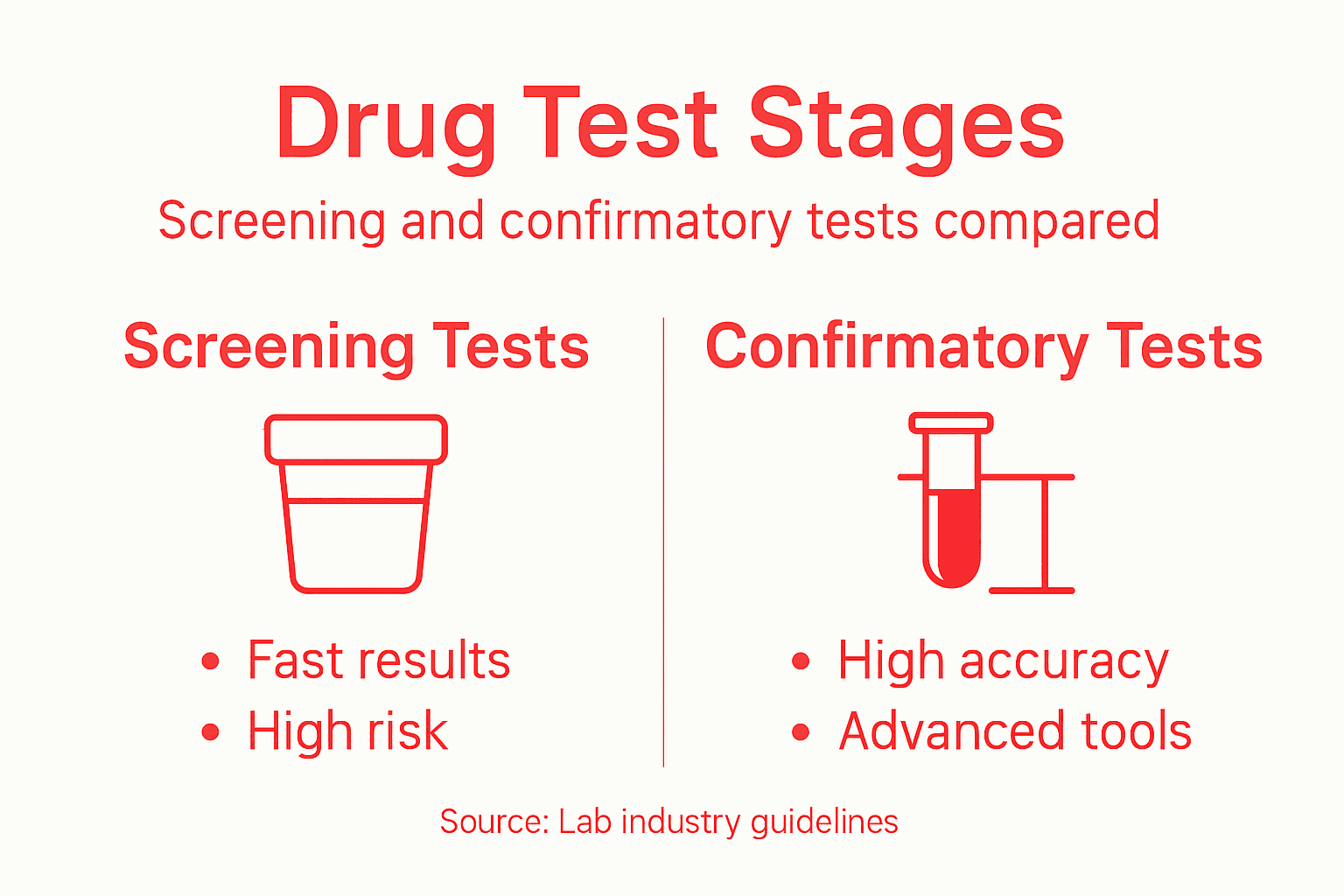
Drug testing involves two critical stages: initial screening and confirmatory testing, each playing a distinct role in identifying potential substance use. Presumptive tests represent the first line of investigation, providing a rapid and cost-effective method to detect the possible presence of drugs in a biological sample. These preliminary screenings use immunoassay techniques that can quickly flag potential positive results but come with inherent limitations in specificity and accuracy.
Confirmatory tests emerge as the gold standard in drug detection, employing sophisticated analytical techniques like gas chromatography and mass spectrometry. Where initial screenings might suggest a positive result, confirmatory tests definitively identify specific drug metabolites with exceptional precision. This two-stage approach ensures that no individual faces serious consequences based on a potentially inaccurate initial screening, protecting both professional and personal reputations from false positive outcomes.
The scientific methodology behind these tests reveals significant differences in their approach and reliability. Screening tests are designed for high-throughput environments, offering quick turnaround times and lower costs. However, they can produce false positives due to cross-reactivity with legal medications or similar molecular structures. Confirmatory tests, in contrast, provide molecular-level identification, analyzing the exact chemical composition of the sample and eliminating any ambiguity present in initial screenings.
Pro tip: Always request a detailed confirmatory test if an initial screening produces unexpected results, as this additional verification can prevent potentially life-altering misunderstandings about drug presence.
Here’s a comparison of initial screening tests and confirmatory drug tests to clarify their roles and reliability:
| Aspect | Initial Screening Tests | Confirmatory Drug Tests |
|---|---|---|
| Main Technique | Immunoassay methods | GC-MS, IR Spectroscopy |
| Specificity | Moderate; prone to cross-reactions | High; molecular structure analysis |
| Turnaround Time | Minutes | Hours to days |
| Risk of False Positives | Elevated due to cross-reactivity | Minimized with advanced analysis |
| Use Cases | Quick workplace checks, field tests | Legal, medical decisions |
How Confirmatory Methods Ensure Accuracy
Confirmatory drug testing represents the pinnacle of scientific precision in substance detection, utilizing advanced methodological approaches to guarantee exceptional accuracy. Laboratory confirmation techniques integrate sophisticated analytical methods that dramatically reduce the potential for erroneous results. These techniques go far beyond simple screening, employing multiple layers of verification to eliminate potential false positives and ensure the highest standards of scientific integrity.
The core strength of confirmatory methods lies in their advanced technological capabilities. Gas chromatography-mass spectrometry (GC-MS) and infrared spectroscopy stand as the gold standard in substance identification, capable of distinguishing between chemically similar compounds with remarkable precision. These techniques analyze the molecular structure of substances at an incredibly granular level, providing forensic and clinical laboratories with unparalleled detection capabilities that can differentiate between prescription medications, legal substances, and illicit drugs.

Quality control represents another critical component of confirmatory testing accuracy. Laboratories implement rigorous protocols that include multiple test replications, strict chain of custody procedures, and comprehensive calibration of analytical instruments. These systematic approaches ensure that every test result meets the highest scientific standards, protecting individuals from potential misidentification and providing reliable evidence for critical decision-making in medical, legal, and professional contexts.
Pro tip: Request comprehensive documentation of the testing methodology and quality control processes when interpreting any confirmatory drug test results to ensure maximum reliability and transparency.
Legal and Regulatory Standards in the US
The landscape of drug testing in the United States is governed by a comprehensive framework of federal regulations designed to protect individual rights and ensure testing accuracy. Federal drug testing guidelines established by agencies like the Substance Abuse and Mental Health Services Administration (SAMHSA) provide a rigorous standard for laboratory practices, specimen handling, and result verification. These regulations create a critical safeguard against arbitrary or unreliable testing procedures, particularly in sensitive contexts such as workplace screenings, federal employment, and legal proceedings.
Specific regulatory requirements mandate multiple layers of protection for individuals undergoing drug testing. Laboratories must obtain specific certifications, follow strict chain of custody protocols, and employ certified medical review officers who can interpret complex test results. These professionals play a crucial role in distinguishing between legitimate medical treatments and potential substance abuse, ensuring that no individual faces unwarranted consequences from a misinterpreted drug test result.
The legal framework surrounding drug testing extends beyond mere procedural guidelines, incorporating robust protections for individual privacy and medical confidentiality. Federal regulations require comprehensive documentation, limit unauthorized disclosure of test results, and establish clear protocols for challenging or reviewing test outcomes. This approach balances the need for accurate substance screening with fundamental principles of personal privacy and due process, recognizing the significant implications that drug test results can have on an individual’s professional and personal life.
Pro tip: Always request a complete copy of the laboratory’s certification and testing protocols when confronting a drug test result, as this documentation can provide critical insights into the testing process and potential avenues for verification.
This summary table highlights the key layers of regulatory protection and quality control in US drug testing laboratories:
| Protection Layer | Purpose | Example Requirement |
|---|---|---|
| Laboratory Certification | Ensure standardized practices | SAMHSA or CLIA certification |
| Chain of Custody | Prevent sample tampering | Documented transfer at all stages |
| Medical Review Officer | Interpret complex results | Certified professionals required |
| Privacy Regulations | Protect patient confidentiality | Controlled access to test records |
| Quality Control Protocols | Maintain result reliability | Instrument calibration |
Risks of Skipping Confirmatory Testing
Skipping confirmatory testing creates a dangerous landscape of potential legal and personal catastrophes that can fundamentally alter an individual’s life trajectory. False positive field drug tests represent a critical risk, with tens of thousands of Americans annually facing wrongful arrests, job losses, and devastating personal consequences based on preliminary screening results that lack scientific verification.
The complex molecular interactions in drug screening can produce misleading results that appear definitive but are scientifically unreliable. Immunoassay screening tests frequently generate false positives due to cross-reactivity with legal medications, dietary supplements, or similar molecular structures. Without rigorous confirmatory testing using advanced techniques like mass spectrometry, these preliminary results can trigger irreversible actions such as criminal prosecution, parole revocation, loss of professional credentials, or termination of employment.
Beyond immediate professional consequences, skipping confirmatory testing undermines fundamental principles of justice and individual rights. Legal and medical systems rely on precise, verifiable evidence to make critical decisions. When preliminary screening results are treated as conclusive, individuals can face unwarranted stigmatization, legal penalties, and long-term reputational damage that can persist far beyond the initial incorrect assessment. The potential for systematic errors becomes especially problematic in high-stakes environments like criminal justice, healthcare, and professional licensing.
Pro tip: Always request independent confirmatory testing and maintain comprehensive documentation of your medical history and medication use to protect yourself against potential false positive drug screening results.
Ensure Accurate Results with Trusted Drug Testing Supplies
Confirmatory drug testing is essential to avoid the devastating consequences of false positives that can impact careers, legal status, and personal lives. This article highlights the critical need to move beyond initial screening tests and rely on advanced, scientifically validated methods. At RapidTestCup, we understand the importance of precision and compliance in drug testing environments, offering a comprehensive range of FDA-approved and CLIA waived drug test cups, dip cards, and specimen collection supplies designed for professional and forensic use.
Take control of your drug testing process today by choosing high-quality products that support accurate confirmatory testing protocols. Explore our extensive catalog to find reliable testing kits and accessories that meet federal regulatory standards and protect individuals from costly errors. Visit RapidTestCup now to browse our selection and experience swift shipping alongside expert customer support.
Frequently Asked Questions
What is confirmatory drug testing?
Confirmatory drug testing is an advanced validation process used in laboratory diagnostics to accurately identify specific drug metabolites and eliminate false positives from initial screening tests.
Why is confirmatory drug testing important?
Confirmatory drug testing is crucial because it ensures the accuracy of drug test results, protecting individuals from incorrect conclusions and potential consequences based on unreliable preliminary screenings.
How do confirmatory tests differ from initial screening tests?
Confirmatory tests utilize sophisticated techniques like gas chromatography and mass spectrometry, providing high specificity and accuracy, while initial screening tests often rely on immunoassay methods that may produce false positives due to cross-reactivity.
What are the risks of not performing a confirmatory drug test?
Skipping confirmatory drug testing can lead to serious implications, including wrongful arrests, job losses, and long-term reputational damage due to misinterpreted preliminary results.