
Blog
Drug Test Accuracy: Best Practices for Reliable Results

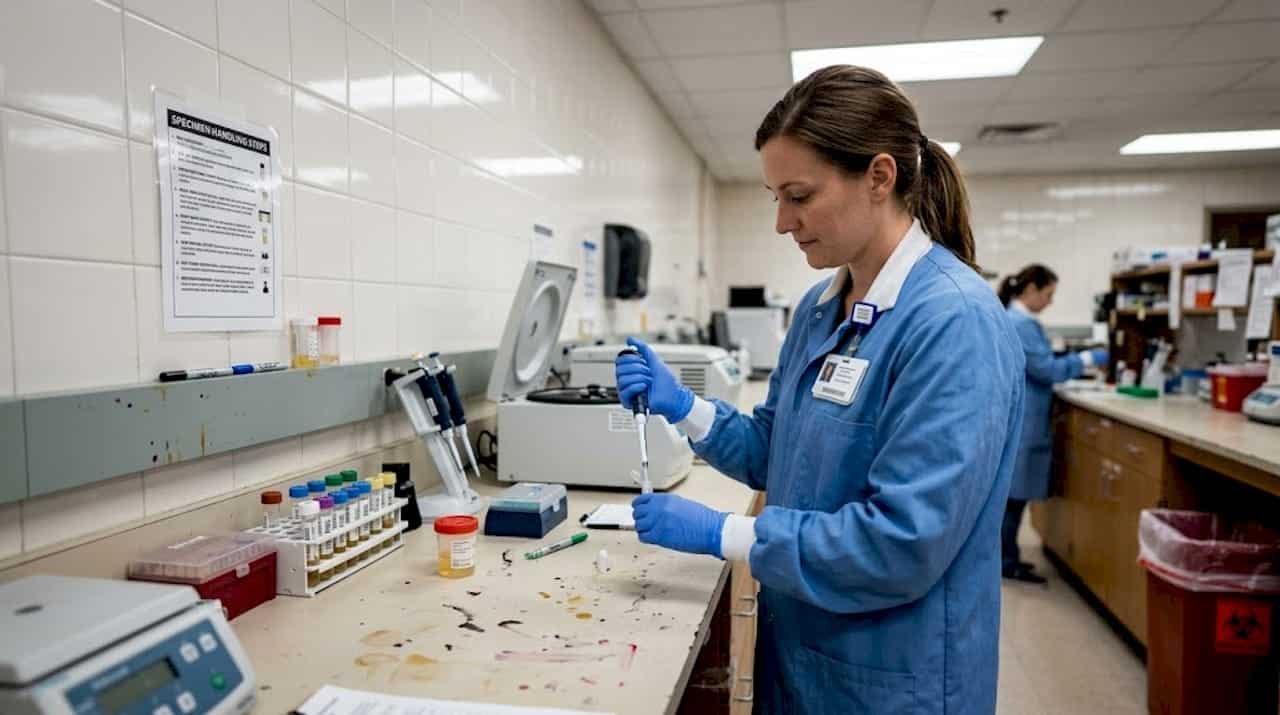
TL;DR:
- Accurate drug testing requires strict protocols for specimen collection, validity checks, and confirmatory analysis.
- Immunoassays provide rapid screening but are prone to cross-reactivity; mass spectrometry offers definitive confirmation.
- Pre-analytical errors like mislabeling and adulteration significantly impact test accuracy and must be addressed through staff training and procedures.
A single inaccurate drug test result can trigger wrongful termination, delay critical patient treatment, or expose your facility to serious legal liability. Laboratory and healthcare professionals carry the weight of that reality every shift. False positives from cross-reactive medications and false negatives from inadequate panels are not rare anomalies; they are predictable risks tied to specific procedural gaps. This guide walks through the proven steps for controlling accuracy at every stage, from specimen collection through confirmatory analysis, so your results hold up clinically, legally, and operationally.
Table of Contents
- Understand test types and regulatory accuracy standards
- Pre-analytical safeguards: Specimen collection and validity checks
- Analytical phase: Screening and confirmation procedures
- Troubleshooting and minimizing sources of inaccuracy
- The overlooked reality: Why accuracy starts before the test
- Ensure accuracy with the right tools and support
- Frequently asked questions
Key Takeaways
| Point | Details |
|---|---|
| Validate every step | Test accuracy depends on rigorous protocols from specimen collection through final reporting. |
| Confirm positive screens | Always follow up immunoassay positives with mass spectrometry confirmation for definitive results. |
| Monitor and improve quality | Continuous QC, staff training, and error tracking are essential for reliable drug testing. |
| Understand regulatory requirements | Follow CAP and SAMHSA guidelines for validation, cutoffs, and documentation to ensure compliance. |
Understand test types and regulatory accuracy standards
To apply the right standards, you first need to understand the types of tests and accuracy benchmarks involved. Drug testing operates in two distinct phases, and conflating them is one of the most common mistakes in laboratory practice.
Immunoassay (IA) screening is the first line of detection. It is fast, cost-effective, and well-suited for high-volume settings. But speed comes with trade-offs. Immunoassays work by detecting antibody-antigen reactions, and structurally similar compounds can trigger a positive signal even when the target drug is absent. This is cross-reactivity, and it is the primary driver of false positives in clinical and occupational testing.
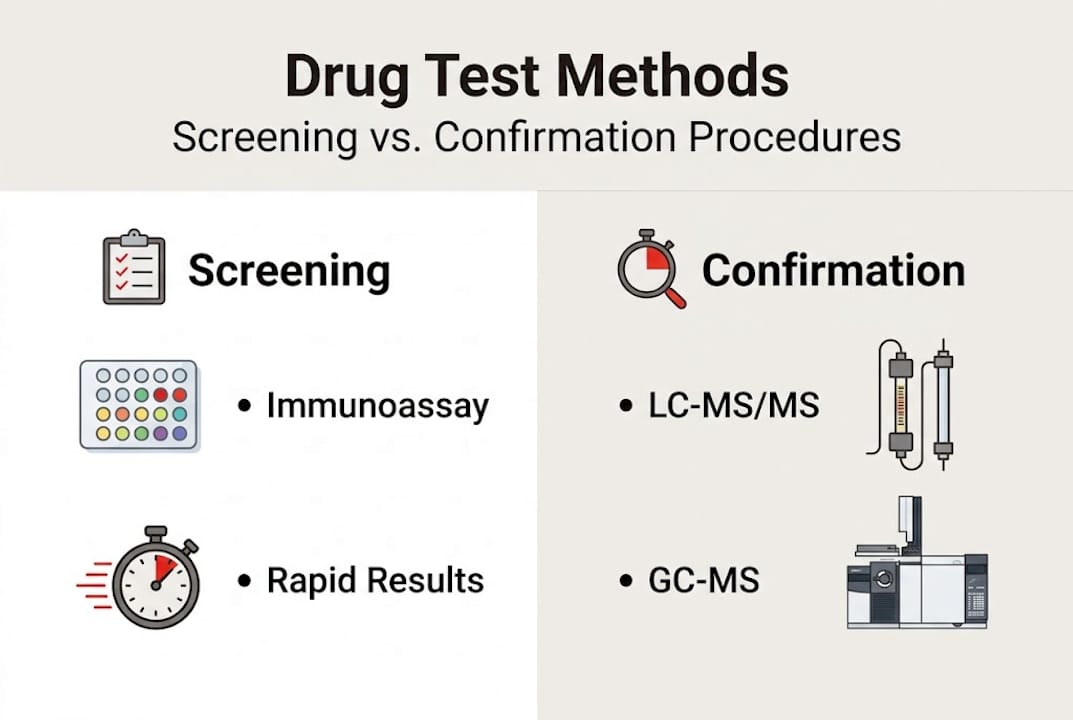
Confirmatory testing using LC-MS/MS (liquid chromatography-tandem mass spectrometry) or GC-MS (gas chromatography-mass spectrometry) eliminates that ambiguity. These methods identify compounds by molecular weight and fragmentation pattern, not by structural similarity. Understanding drug screening methods helps you match the right tool to each phase of your workflow.
Regulatory standards define what “accurate enough” actually means. Regulatory accuracy standards require that CAP-accredited labs verify analytical accuracy, precision, and reportable range for FDA-cleared assays, and conduct full validation for laboratory-developed tests before any patient testing begins. That is not optional documentation. It is a prerequisite for operating.
| Testing method | Speed | Specificity | Best use |
|---|---|---|---|
| Immunoassay | Fast (minutes) | Moderate | Initial screening |
| GC-MS | Moderate | High | Confirmatory testing |
| LC-MS/MS | Moderate | Very high | Confirmatory, synthetic drugs |
Key regulatory requirements every lab must meet:
- Verify cutoff concentrations match SAMHSA or CAP-specified thresholds
- Document measurable reportable range for each analyte
- Maintain ongoing quality control (QC) and proficiency testing programs
- Employ a certified toxicologist or medical review officer for result interpretation
“Ongoing QC, proficiency testing, and toxicologist interpretation are essential for reliable results.”
Federal guidelines specify cutoffs for initial and confirmatory testing and require certified labs and strict chain of custody for all federally mandated workplace programs. Knowing the confirmatory testing importance in this regulatory context is not just academic. It directly determines whether your results are defensible.
Pre-analytical safeguards: Specimen collection and validity checks
With standards in place, it is critical to start with accurate specimen collection and verification. The analytical phase cannot fix what goes wrong before the sample reaches the instrument.
Urine remains the most common matrix for workplace and clinical drug testing, but it is also the most vulnerable to manipulation. Donors may attempt dilution by drinking excessive fluids, substitution with synthetic urine, or chemical adulteration using substances like bleach or vinegar. Your first defense is a structured validity testing protocol.
According to published clinical guidance, urine validity checks require assessing creatinine below 20 mg/dL, pH outside the 4 to 9 range, and temperature outside 90 to 100 degrees Fahrenheit as indicators of possible dilution or adulteration. Specific gravity is also measured; values below 1.001 or above 1.020 fall outside normal physiological limits.
Validity parameters and reference ranges:
| Parameter | Acceptable range | Flag condition |
|---|---|---|
| Creatinine | 20-300 mg/dL | Below 20 mg/dL |
| pH | 4.0-9.0 | Outside range |
| Temperature | 90-100°F | Outside range |
| Specific gravity | 1.001-1.020 | Outside range |
A step-by-step approach to specimen collection:
- Verify donor identity with photo ID before collection begins
- Restrict access to water sources and potential adulterants in the collection area
- Measure specimen temperature within four minutes of collection
- Perform validity tests on-site before logging the sample into chain of custody
- Document all findings, including any out-of-range results, in the collection record
Review your urine collection steps to make sure your facility’s protocol covers each of these checkpoints. Proper specimen validity testing is not just a best practice. It is a documented safeguard against legal challenge.
Pro Tip: When you see a pattern of borderline-low creatinine results from a specific collection site, investigate the environment before assuming donor behavior. Inadequate temperature control or delayed testing can produce the same readings.
For programs with persistent tampering concerns, rotating matrices such as switching between urine and oral fluid collection reduces predictability and deters substitution attempts.
Analytical phase: Screening and confirmation procedures
Once samples are verified, attention shifts to the analytical process for detection and identification. The sequence matters as much as the methods themselves.
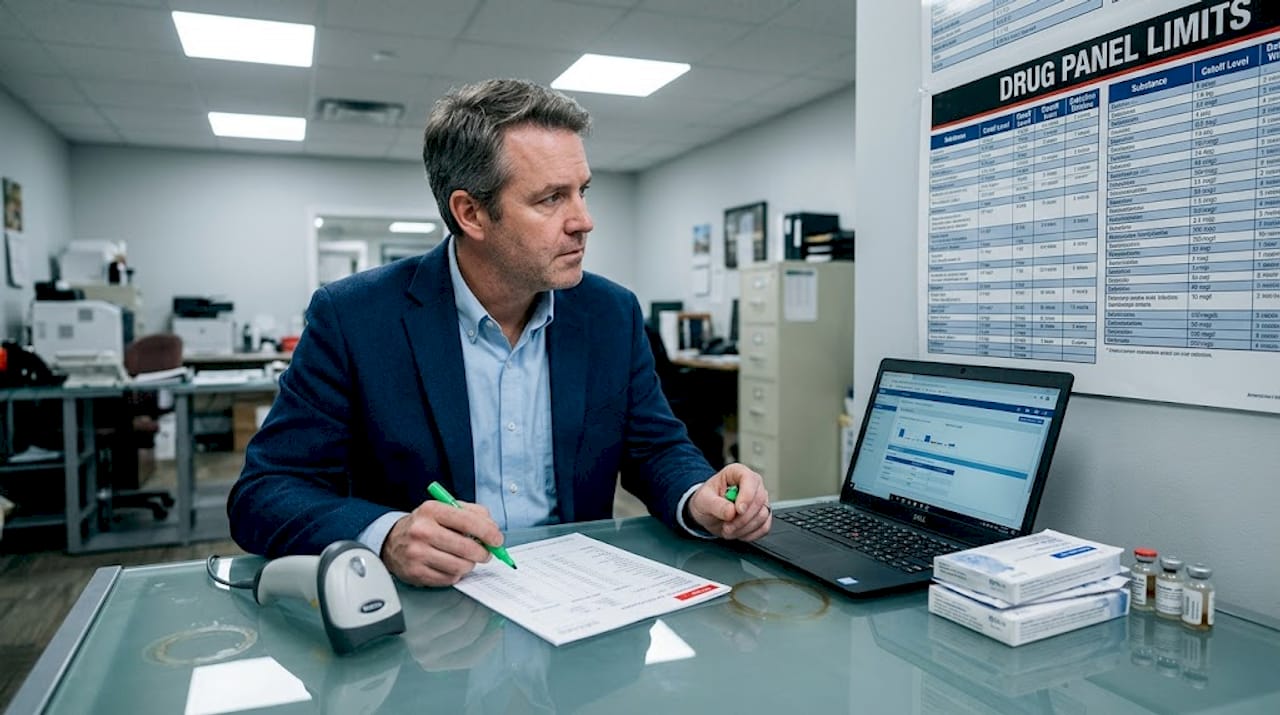
Start with immunoassay screening. Results come back quickly, and for the majority of negative samples, that is the end of the workflow. But a presumptive positive or an equivocal result is not a final answer. It is a signal to investigate further.
The rapid screening explained workflow follows a clear sequence:
- Run immunoassay screen on all specimens
- Flag any result at or above the screening cutoff
- Quarantine the specimen and initiate confirmatory testing
- Run LC-MS/MS or GC-MS on flagged samples
- Apply confirmatory cutoffs (which differ from screening cutoffs) to interpret results
- Route confirmed positives to a medical review officer before reporting
One area where labs consistently underperform is in recognizing the limits of their panels. Immunoassays may miss synthetic opioids and low-dose benzodiazepines; expanded panels or MS confirmation are required for reliable detection. Fentanyl, for example, is not detected by standard opiate immunoassays. If your panel does not include a fentanyl-specific assay, you are operating with a blind spot.
For emergency department settings, emergency drug testing guidance emphasizes that rapid IA results should always be interpreted alongside clinical presentation, not as standalone diagnostic tools.
Pro Tip: Maintain a current reference library of cross-reactive compounds for each immunoassay on your platform. When a clinician questions a positive result, you need to answer quickly and with documented evidence, not assumptions.
Hybrid workflows that use point-of-care IA for speed and send edge cases directly to MS confirmation give you the best of both approaches without sacrificing turnaround time on routine negatives.
Troubleshooting and minimizing sources of inaccuracy
Even with robust procedures, specific errors can undermine results; troubleshooting is integral to sustained accuracy. The most damaging errors are the ones that go unrecognized.
Common sources of inaccuracy and how to address them:
- Cross-reactivity: Ibuprofen, quinolone antibiotics, and even poppy seeds can produce false positives on immunoassay screens. Always confirm before reporting a positive result.
- High cutoff thresholds: A donor who used a substance may test negative if their concentration falls below the cutoff. This is not a test failure. It is a known limitation that must be communicated to ordering clinicians.
- Metabolic variability: Body mass, kidney function, and hydration status all affect drug concentration in urine. Two donors with identical exposure may produce very different results.
- Mislabeling: A specimen labeled with the wrong donor ID can produce a false positive for one person and a missed positive for another. Barcode scanning at collection reduces this risk significantly.
- Reagent degradation: Immunoassay reagents have defined stability windows. Using expired or improperly stored reagents shifts your cutoff and invalidates your QC.
Research shows that 74% of staff overestimate the accuracy of screening tests, which means your most significant quality risk may be overconfidence in the process rather than a flaw in the technology itself.
Managing false positives in drug tests requires a documented escalation path. Every presumptive positive should trigger confirmation before any action is taken. And every confirmed result should go through a medical review officer who can assess the clinical context.
“Prevent false positives from cross-reactivity and minimize false negatives from high cutoff thresholds or metabolic variability.”
Regular proficiency testing, QC review meetings, and updated standard operating procedures are the structural supports that keep individual errors from becoming systemic ones. Review your interpretation of results protocols at least annually, and after any result that generates a complaint or legal challenge.
Pro Tip: When a result is challenged, your documentation is your defense. If the chain of custody, validity data, QC records, and confirmation results are all in order, the result stands. If any link is missing, the result is vulnerable.
The overlooked reality: Why accuracy starts before the test
Having looked at error sources, let us consider what really determines accuracy in practice. Most laboratory professionals focus their quality improvement efforts on the analytical phase. New instruments, updated assays, tighter QC ranges. These are worthwhile investments, but they address the wrong end of the problem.
The data consistently shows that pre-analytical errors, including collection mistakes, labeling failures, improper transport, and inadequate validity testing, account for the majority of laboratory errors across all testing disciplines. Drug testing is no exception. You can run the most precise LC-MS/MS platform available and still report a wrong result because the specimen was mislabeled at collection.
What actually moves the needle is investing in staff education and interdepartmental communication. Collectors need to understand why each validity parameter matters. Clinicians need to understand what a presumptive positive does and does not mean. When those conversations happen proactively, result disputes drop. Maintaining urine integrity in practice is a team effort, not a lab-only responsibility.
Instituting quarterly root cause analysis reviews for any result that was challenged, corrected, or questioned creates a feedback loop that no technology upgrade can replicate. The labs with the fewest accuracy failures are the ones that treat every error as a system problem, not a personnel problem.
Ensure accuracy with the right tools and support
For labs committed to high accuracy, using proven tools and resources makes all the difference.
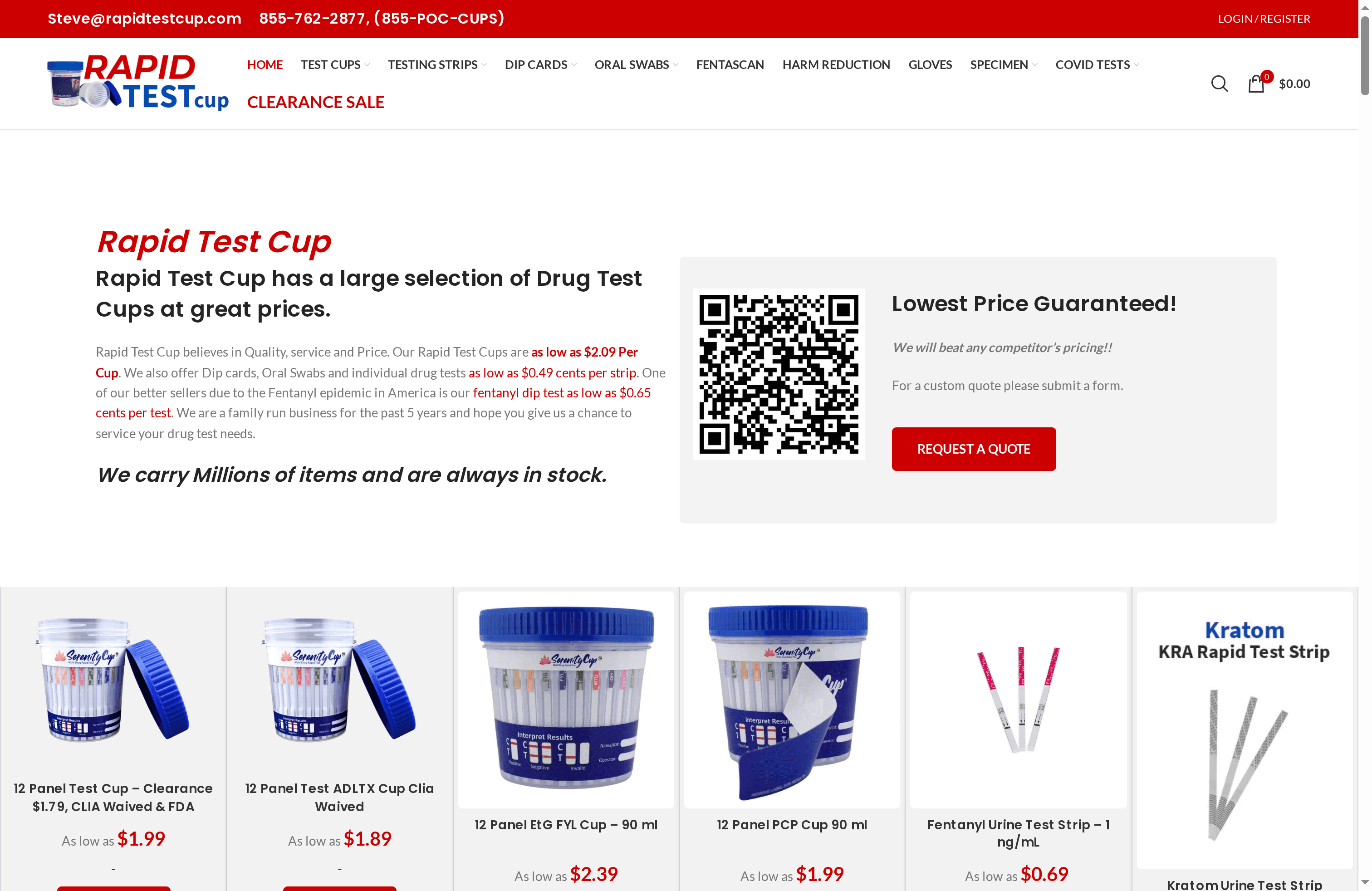
Putting these best practices into action requires more than a solid protocol. It requires test kits that are validated, reliable, and matched to your panel requirements. At rapidtestcup.com, you can compare urine drug test kits across panel sizes, cutoff levels, and adulteration detection features to find the right fit for your program. Our selecting drug test kits guide walks through the decision criteria that matter most for clinical and occupational settings. For programs needing broad-spectrum detection, the 18-panel drug test cup includes adulterant checks and covers fentanyl, K2, and ETG in a single collection. CLIA waived and FDA-approved across the catalog.
Frequently asked questions
What are the most common sources of false positives in drug testing?
Over-the-counter medications and certain foods cause cross-reactivity with immunoassays, making the screening phase the primary source of false positives. Confirmation with mass spectrometry eliminates most of these errors before results are reported.
How do labs check if a sample has been tampered with?
Labs assess creatinine, pH, temperature, and specific gravity against defined reference ranges to detect dilution or adulteration. Any value outside the accepted range triggers a validity flag and may require recollection.
What is the difference between immunoassay and mass spectrometry confirmation?
Immunoassay delivers fast presumptive results but carries cross-reactivity risk, while MS confirmation ensures high specificity by identifying compounds based on molecular structure. Confirmatory testing is required before any positive result is acted upon.
What federal standards guide drug testing accuracy and reporting?
SAMHSA guidelines specify cutoff values for both initial and confirmatory testing, require certified laboratory facilities, and mandate strict chain of custody documentation for all federally regulated workplace drug testing programs.