

Blog
Multi-panel drug tests: 5 key advantages for monitoring


TL;DR:
- Multi-panel tests detect multiple substances simultaneously, reducing detection blind spots.
- They provide rapid, comprehensive screening essential for identifying polysubstance use and emerging drugs.
- Confirmatory testing like LC-MS/MS is necessary due to potential false negatives in immunoassay screens.
Choosing the right drug test panel is one of the toughest calls in clinical practice, especially when new substances appear faster than most screening protocols can keep up. Fentanyl analogs, synthetic cannabinoids, and adulterated samples now appear across patient populations that once looked straightforward to screen. For healthcare professionals and substance abuse counselors, a single-substance test increasingly means a missed diagnosis waiting to happen. Multi-panel tests address that gap directly, giving clinicians the breadth and speed needed to catch polysubstance use at the point of care. This article breaks down the clinical advantages, accuracy realities, and selection strategies that make multi-panel testing a cornerstone of modern substance use monitoring.
Table of Contents
- Understanding multi-panel tests: What makes them different?
- Enhanced detection: More drugs, fewer blind spots
- Accuracy and limitations: What professionals must know
- Panel selection and testing frequency: Optimizing for patient outcomes
- Our perspective: The real-world balance for optimal drug screening
- Explore advanced multi-panel test options for accurate monitoring
- Frequently asked questions
Key Takeaways
| Point | Details |
|---|---|
| Broader detection | Multi-panel tests identify more drugs, reducing missed cases of polysubstance use and new substances. |
| Accuracy requires confirmation | Presumptive tests can miss key drugs; always pair with laboratory confirmation for reliable results. |
| Testing strategies matter | Choose panel size and testing frequency based on patient risk, age, and cost to maximize clinical outcomes. |
| Cost and context | Balance panel breadth and testing frequency to fit your clinic’s budget and patient needs. |
Understanding multi-panel tests: What makes them different?
A multi-panel drug test uses multiple immunoassay strips housed in a single collection device, typically a urine cup or dip card, to screen for several substances simultaneously. Instead of running separate tests for each drug, one specimen produces results across panels in minutes. That structural difference is more significant than it sounds in a busy clinical or counseling setting.
Single-substance tests remain useful for highly specific, targeted scenarios. However, when your patient population carries risk factors for polysubstance use, running individual tests one at a time is slow, resource-intensive, and prone to gaps. Understanding how multi-panel tests work helps you see why their design directly matches the real-world complexity of substance use patterns today.
| Feature | Single-substance test | Multi-panel test |
|---|---|---|
| Substances detected | 1 | 5 to 22+ |
| Time to result | 5 minutes | 5 minutes |
| Cost per substance | Higher | Lower |
| Polysubstance detection | No | Yes |
| Best use case | Targeted follow-up | Routine screening |
The panel range matters most when you consider detecting emerging substances like fentanyl and novel synthetic opioids that conventional single-panel protocols were never built to catch. A test that screens for opiates but not fentanyl specifically will miss one of the most dangerous substances in the current landscape.
Key structural advantages of multi-panel tests include:
- Simultaneous results for multiple drug classes reduce turnaround time per patient
- Single specimen collection lowers the burden on patients and staff
- Standardized cutoff values across panels support consistent clinical documentation
- Scalable panel size from 5 panels to 22+ to match patient risk profiles
You can review drug testing panel examples to see how different configurations map to specific patient populations and clinical settings.
As researchers note, multi-panel tests excel in rapid, comprehensive point-of-care screening for polydrug scenarios. That efficiency becomes a clinical asset when you need answers in the room, not days later from a lab.
Enhanced detection: More drugs, fewer blind spots
Panel breadth translates directly into patient safety. When a patient is using multiple substances, a narrow screen does not just miss a drug. It misses a clinical risk. The shift in substance use patterns over the past decade has made broad detection less of a premium feature and more of a baseline requirement.

Studies show 34% cocaine, 17% fentanyl prevalence among emergency department cases screened with multi-panel tests. Those numbers reflect a patient population that single-substance opioid screens would partially miss. Adding fentanyl-specific panels and cocaine detection to your standard protocol closes that gap meaningfully.
| Substance class | Common panel options | Clinical relevance |
|---|---|---|
| Opioids | Heroin, fentanyl, oxycodone | Overdose risk, dependence monitoring |
| Stimulants | Cocaine, methamphetamine, MDMA | Cardiovascular risk, relapse detection |
| Benzodiazepines | Diazepam, alprazolam | Polydrug sedation risk |
| Cannabinoids | THC, synthetic cannabinoids | Compliance, impairment |
| Emerging substances | Zaza (tianeptine), adulterants | Novel risk, sample integrity |
Zaza, the street name for tianeptine, deserves specific attention. It is increasingly appearing in toxicology screens among patients who present with opioid-like withdrawal but test negative on standard panels. Without targeted detection, it simply does not show up.
A 600% surge in adulterated samples has been observed in clinical settings, underlining why adulteration detection is now part of responsible screening. Adulterant checks built into multi-panel cups catch attempts to mask substance use with oxidizing agents, dilution, or substituted specimens.
Practical reasons to use broader panels in your monitoring program:
- Catch co-occurring stimulant and opioid use, a combination that significantly raises overdose risk
- Identify benzodiazepine use in patients prescribed buprenorphine or methadone
- Flag synthetic cannabinoid use that standard THC panels miss entirely
- Detect adulterants as part of the same collection event, not as a separate step
For counselors and clinicians focused on harm reduction, reducing risk in multi-substance testing is not theoretical. Broader panels mean fewer blind spots, better-informed treatment decisions, and clearer documentation when substances interact dangerously. Review multi-panel drug test accuracy to understand how specific panel configurations perform across substance classes.
Accuracy and limitations: What professionals must know
Multi-panel immunoassay tests are powerful screening tools, but they are presumptive by design. That means a positive result indicates likely presence of a substance, not confirmed presence. Every clinician using these tests needs to understand where the technology is strong and where it needs backup.
Here is how presumptive immunoassay screening works in practice:
- Patient provides a urine specimen in a collection cup
- Immunoassay strips react with antibodies targeting specific drug metabolites
- Color indicators show positive or negative for each panel within 5 minutes
- Results are documented as presumptive positives or negatives
- Clinically significant positives are sent for confirmatory laboratory testing
Immunoassays have false-negative rates up to 40% for key drugs, particularly benzodiazepines and certain amphetamines where structural variation between compounds creates cross-reactivity gaps. A patient taking a newer benzodiazepine formulation may test negative on a panel calibrated for older compounds.
Confirmatory testing using liquid chromatography tandem mass spectrometry (LC-MS/MS) resolves ambiguity by identifying specific drug molecules and their metabolites at precise concentrations. Definitive testing post-multi-panel identifies hidden risks and additional substances that screening alone misses, particularly in cases where clinical presentation does not match screening results.
“Empirical presumptive screening, when used without confirmation, may provide a false sense of security in high-acuity patients. The strength of multi-panel testing lies in its speed, not its finality.”
Pro Tip: Request LC-MS/MS confirmation any time a patient’s clinical presentation contradicts their screening result, when legal or compliance documentation is involved, or when you are monitoring for a substance with known cross-reactivity issues on immunoassay panels.
Selecting test panels for accuracy requires matching your panel configuration to your patient population’s known risk substances and your clinic’s confirmatory testing capacity. Learn more about accuracy and efficiency in drug testing to build a protocol that holds up clinically and documentarily.
Panel selection and testing frequency: Optimizing for patient outcomes
Choosing the right panel is not just about coverage. It is about matching coverage to your patient population, your budget, and your clinical goals. A 22-panel test run weekly on every patient is not automatically better than a targeted 10-panel test run strategically.
Patient demographics shape panel selection significantly. Adolescent populations often require panels covering synthetic cannabinoids, MDMA, and prescription stimulants alongside traditional opioids and alcohol markers. Adult populations in opioid treatment programs may prioritize fentanyl-specific panels, benzodiazepines, and stimulants based on local drug market data. Start with how to select drug test panels as a baseline framework before refining by population.
Testing frequency carries its own evidence base. Weekly testing may modestly improve retention in adolescents (adjusted hazard ratio 0.95 to 0.96) but offers no clear benefit for adults when cost is factored in. That finding matters for resource allocation in community health and outpatient settings where testing budgets are fixed.
Key considerations for frequency and panel decisions:
- Weekly testing for adolescents may improve short-term program retention, though effect sizes are modest
- Biweekly or monthly testing for adults maintains monitoring continuity without disproportionate cost
- Random testing schedules reduce predictability and improve compliance detection
- Panel expansion after a positive allows targeted follow-up without routine broad-panel costs
- Cutoff value selection affects sensitivity; lower cutoffs catch more positives but increase false-positive rates
Pro Tip: For cost-conscious clinics, use a broad panel on intake and after any positive result, then shift to a targeted panel for routine monitoring. That approach captures the diagnostic value of breadth where it matters most without burning budget on routine screens.
Reviewing the best multi-panel tests available at different panel counts helps you match product to protocol rather than defaulting to the widest or cheapest option available.
Our perspective: The real-world balance for optimal drug screening
Here is something the clinical literature does not always say plainly: panel breadth without clinical context creates noise, not clarity. We have seen programs add panels to their cups every time a new substance appears in the news, ending up with results that staff are not trained to interpret and that patients do not understand. More panels on a cup does not automatically mean better outcomes.
The real work is in the protocol around the test. Weekly testing for adults in stable recovery is often more about institutional anxiety than clinical necessity. The evidence shows modest benefits at best for that population, and the cost compounds quickly across a caseload.
What actually moves outcomes is matching panel selection to your specific patient population, using confirmatory testing at the right decision points, and setting cutoff values that reflect real clinical risk rather than generic defaults. The programs that use these tools most effectively treat the test result as one input among several, not as a verdict.
For a grounded view of what actually reduces risk in practice, the discussion around reducing risk and enhancing recovery is worth revisiting alongside your current protocol.
Explore advanced multi-panel test options for accurate monitoring
Now that you understand how panel breadth, accuracy, and frequency intersect in clinical practice, the next step is matching those insights to the right testing products for your setting.
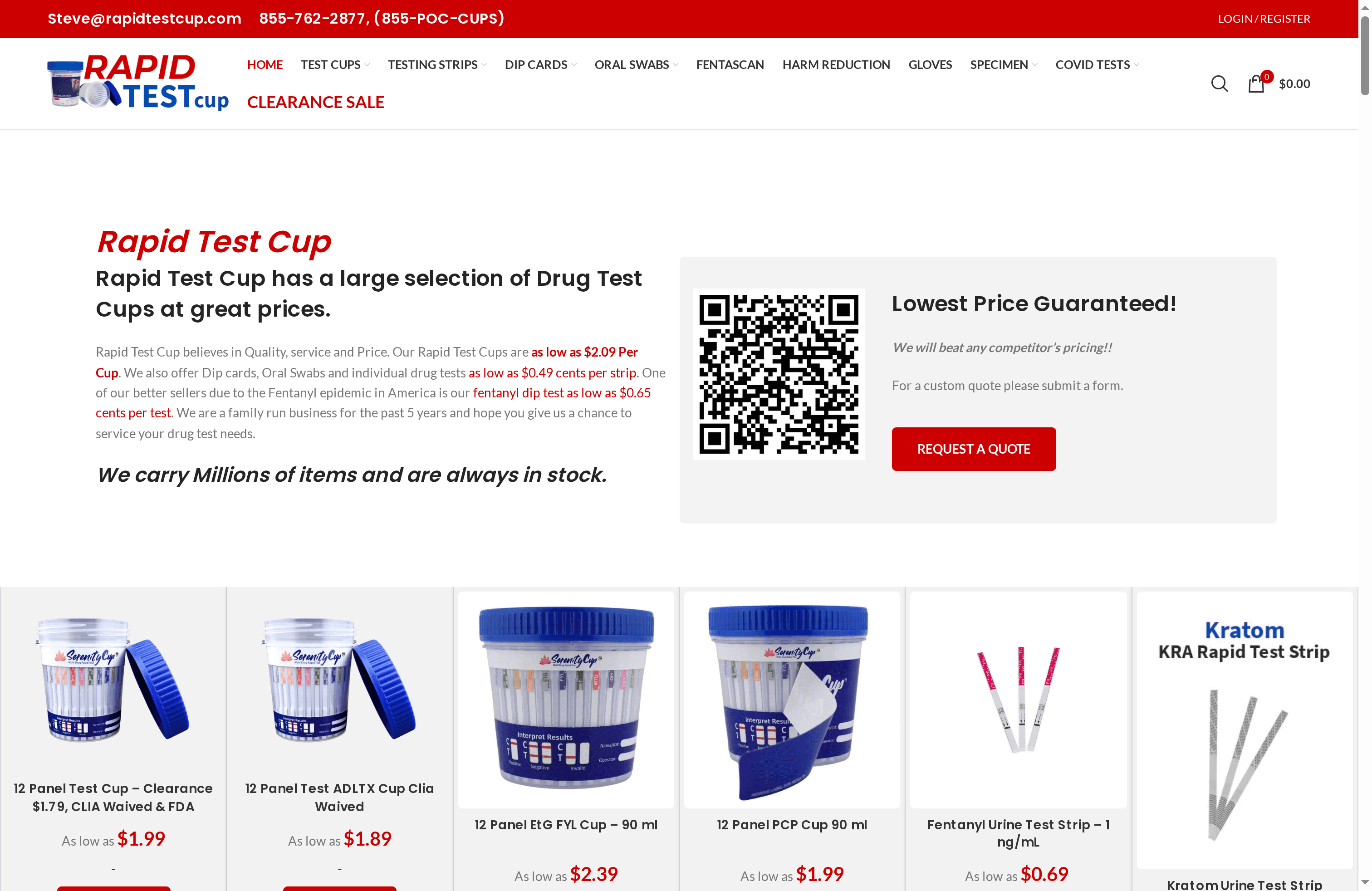
RapidTestCup offers solutions calibrated for exactly these decisions. The 12 panel ADLTX cup covers the most clinically relevant substances for adult outpatient programs. For settings where adulterants and emerging substances like Zaza are a concern, the 22 panel cup with adulterants provides the broadest available coverage in one collection event. Clinics working with tighter budgets or focused populations can start with the 8 panel urine test cup and scale from there. All products are CLIA waived and FDA approved, with bulk pricing available for high-volume programs.
Frequently asked questions
How do multi-panel tests improve substance detection compared to single tests?
Multi-panel tests detect a broader range of substances simultaneously, reducing the chance of missing polysubstance use or emerging drugs in a single screening event. Single tests address one drug class at a time, which creates systematic blind spots for patients using multiple substances.
What is the risk of false negatives with multi-panel immunoassay tests?
Immunoassay false-negative rates can reach 16 to 40% for certain drugs, particularly newer benzodiazepine formulations and atypical amphetamines. Confirmatory LC-MS/MS testing is essential whenever results will influence clinical decisions or legal documentation.
Should weekly drug testing be used for all patients in recovery?
Weekly testing improves adolescent retention moderately but does not show clear cost-effective benefit for adults in stable recovery programs. Testing frequency should be calibrated to patient age, risk level, and program resources.
How can clinical professionals choose the right test panel?
Balancing panel breadth with cutoffs and confirmation protocols is essential for accurate, clinically useful results. Start with your patient population’s known substance risks, then layer in cost and confirmatory capacity to finalize your panel configuration.