Blog
Drug Test Shelf Life Explained: What You Must Know


TL;DR:
- Drug test shelf life depends on proper storage conditions and chemical stability, lasting typically 18 to 24 months. Improper environmental factors and timing errors during reading can compromise test accuracy, making careful inventory management essential. Using expired kits or misreading results increases the risk of false positives, negatives, or invalid outcomes, emphasizing the importance of adherence to protocols.
Drug test shelf life is defined as the period during which a test kit produces accurate, reliable results before its chemical components degrade beyond acceptable performance thresholds. Most urine-based rapid drug test kits carry a shelf life of 18–24 months under manufacturer-recommended storage conditions. That printed expiration date is not a guarantee. It is a promise that holds only when storage conditions match the controlled environment used during stability testing. Understanding the difference between the printed date and the real-world drug test validity period is what separates a reliable testing program from one that produces questionable results.
How is drug test shelf life determined by manufacturers?
Manufacturers establish drug test shelf life through formal stability testing. This process exposes test kits to controlled temperature and humidity conditions over a defined period, then measures whether the reagent chemistry and membrane integrity hold up.
Standard stability testing conditions are typically 68–77°F with 40–60% relative humidity. Kits that pass stability testing under those parameters receive a printed expiration date reflecting that performance window. The moment a kit experiences conditions outside that range, the clock on its real-world shelf life accelerates.
Urine rapid drug test kits and saliva-based kits do not age at the same rate. Urine test kits generally maintain stability for 18–24 months under recommended storage, while saliva kits tend to have shorter manufacturer-specified shelf lives. This matters for clinics and labs that stock both formats, because a single storage protocol may not serve both kit types equally.
Key factors manufacturers evaluate during stability testing include:
- Temperature range tolerance: How the kit performs across the full recommended storage band
- Humidity sensitivity: Whether the lateral-flow membrane absorbs moisture and degrades
- Light exposure effects: Whether UV or fluorescent light breaks down reagent chemistry
- Packaging integrity: Whether sealed foil pouches maintain an inert internal environment
Pro Tip: Always check whether the expiration date on your kit lot reflects the original manufacturer testing or a revised date from a distributor. Some distributors relabel kits, and that relabeled date may not reflect actual stability data.
What affects drug test results in real-world storage?
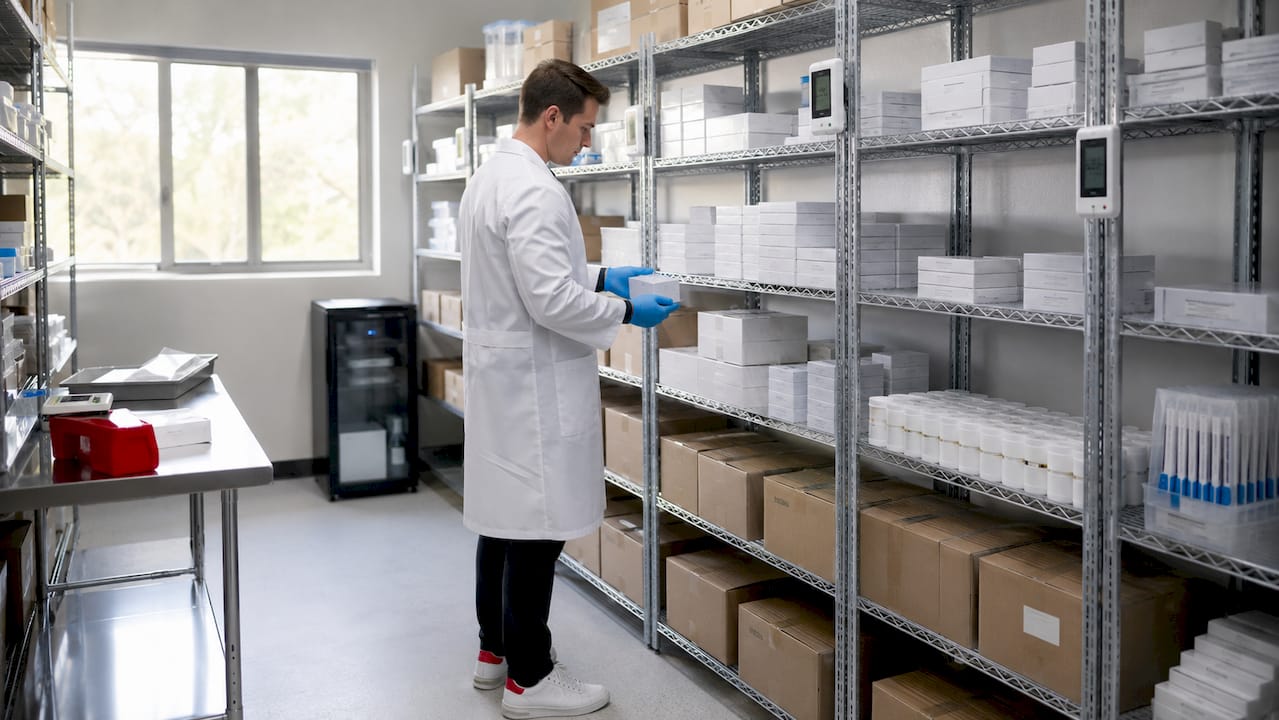
The printed expiration date assumes ideal conditions. Real-world storage rarely matches the lab. Temperature and humidity fluctuations cause chemical degradation that compromises test accuracy well before the printed date arrives.
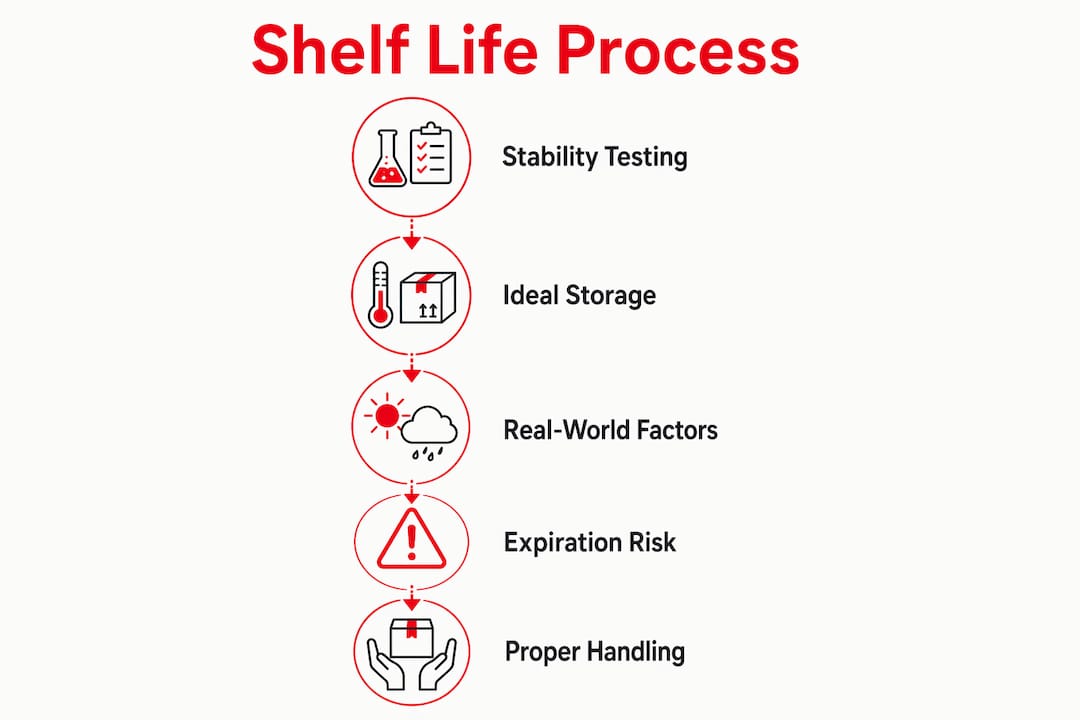
A kit tested for 24 months at 68–77°F may only last 18 months if stored at 50–85°F with wider temperature swings. That six-month gap represents a real risk in any facility that stores kits in a supply closet, near a loading dock, or in a vehicle. Reagent chemistry is sensitive. Membranes that absorb ambient moisture lose their ability to wick sample fluid correctly, producing faint or absent control lines.
Three environmental factors consistently shorten effective test life:
- Heat: Accelerates chemical breakdown in the nitrocellulose membrane and conjugate pad
- Humidity: Causes premature activation of the lateral-flow chemistry before the test is even used
- Light: Degrades the antibody-antigen conjugates that drive the immunoassay reaction
Inventory management is the operational fix. Lot tracking allows you to identify which batches are approaching expiration. Stock rotation using a first-expired-first-out (FEFO) system prevents older kits from sitting behind newer stock. Healthcare clinics that maintain controlled storage and systematic lot tracking consistently avoid the compliance failures that come from using compromised kits.
Pro Tip: Use a min-max thermometer in your storage area. It records the highest and lowest temperatures reached over time, giving you documented evidence that storage conditions stayed within the manufacturer’s specified range.
Why does reading timing affect drug test validity?
Reading timing is a separate variable from shelf life, but it produces identical consequences when mishandled. Urine rapid drug tests must be read within the manufacturer-specified window, typically 5–10 minutes after the sample contacts the test strip. Reading outside that window introduces errors that look exactly like a compromised kit.
Here is what happens at each timing failure point:
- Reading too early: The lateral-flow reaction has not completed. Lines may be absent or faint, producing a false positive or an unreadable result.
- Reading at the correct window: The control line (C line) and test line (T line) have fully developed. Results are valid and interpretable.
- Reading too late: Valid negative lines can disappear or false positives can appear as the strip dries and chemical shifts occur.
- Missing the control line entirely: The test is invalid regardless of what the T line shows. A missing C line means the test did not function correctly.
The control line is the single most important indicator on any lateral-flow immunoassay. Its presence confirms the test ran correctly. Its absence voids the result, whether the kit is brand new or approaching its expiration date.
Incorrect timing is the most common misuse issue with lateral-flow immunoassay tests. Many professionals misread tests outside the valid window and attribute the error to a bad kit rather than a timing failure. Understanding how to read drug test results correctly eliminates a significant source of false conclusions.
Pro Tip: Set a phone timer the moment the sample contacts the strip. Do not rely on visual estimation. A 30-second error at the end of a 5-minute window is enough to distort a result.
What are the risks of using expired drug tests?
Expired drug tests do not fail instantly. Shelf life expiration is a risk gradient, not a hard cutoff. A kit one day past its expiration date carries slightly more risk than one within date. A kit six months past expiration carries substantially more risk. The problem is that the degradation is invisible. You cannot see a compromised reagent.
The practical risks of using expired kits fall into two categories:
| Risk Type | What It Looks Like | Consequence |
|---|---|---|
| False negative | Drug present, but test shows negative | Missed detection in clinical or workplace setting |
| False positive | No drug present, but test shows positive | Unjust adverse action against the tested individual |
| Invalid result | Control line absent | Test must be repeated; delay in decision-making |
| Reagent drift | Faint or ambiguous lines | Misinterpretation, especially by untrained readers |
Immunoassay drug screens are presumptive by nature. They are less specific than confirmatory lab tests. That inherent limitation becomes more pronounced when the kit’s chemistry has degraded. For any presumptive positive, confirmatory testing using GC-MS or LC-MS/MS is the professional standard. ARUP Consult confirms that presumptive positives require confirmatory testing in professional or legal contexts to avoid false positives.
Expired kits also create compliance exposure. Facilities subject to CLIA waiver requirements or workplace drug testing regulations must document that kits used were within their valid period. Using expired kits without documentation is an audit liability.
Best practices for storing drug test kits to maximize shelf life
Maintaining shelf life is an operational discipline, not a one-time setup. The following practices apply whether you manage a single clinic drawer or a warehouse of bulk test cups.
Storage conditions to maintain:
- Keep kits at 59–77°F (15–25°C) in a climate-controlled space away from direct sunlight
- Maintain relative humidity between 40–60% using dehumidifiers or climate controls in humid climates
- Store kits in their original sealed foil pouches until the moment of use
- Never refrigerate kits unless the manufacturer specifically instructs it, as condensation on removal can damage the membrane
Inventory management protocols:
- Assign lot numbers to every incoming shipment and log receipt dates
- Apply FEFO rotation so the oldest stock is always used first
- Conduct monthly audits to pull and dispose of kits within 30 days of expiration
- Document disposal of expired kits for compliance records
Environmental monitoring:
- Use a calibrated min-max thermometer or a data logger in the storage area
- Review temperature logs weekly and flag any excursions outside the 59–77°F range
- For high-volume facilities, consider a continuous monitoring system with alerts
Staff training:
- Train every person who administers tests on the correct read window for each kit type
- Post the read window time prominently at the testing station
- Include drug testing in clinics protocols in onboarding for new staff
Adherence to manufacturer instructions is not optional. Proper inventory management including lot tracking, stock rotation, and environmental monitoring is the documented standard for maintaining product efficacy and compliance.
Key takeaways
Drug test shelf life is only as reliable as the storage conditions and handling practices that support it from the moment a kit leaves the manufacturer.
| Point | Details |
|---|---|
| Shelf life is condition-dependent | Printed expiration dates assume controlled storage at 68–77°F and 40–60% humidity. |
| Urine kits outlast saliva kits | Urine rapid tests typically last 18–24 months; saliva kits have shorter manufacturer-specified shelf lives. |
| Timing errors mimic expired kits | Reading outside the 5–10 minute window produces the same errors as using a degraded kit. |
| Expiration is a risk gradient | Risk increases gradually after expiration; replace expired kits rather than interpret borderline results. |
| Confirmatory testing is non-negotiable | Any presumptive positive from an immunoassay requires GC-MS or LC-MS/MS confirmation in professional contexts. |
What i’ve learned about shelf life that most guides skip
I have reviewed a lot of drug testing programs, and the most consistent failure point is not the kits. It is the assumption that a printed date is a guarantee. Facilities buy in bulk, store kits in a back room with no climate control, and then wonder why they are getting ambiguous results six months before the expiration date. The printed date is a ceiling, not a floor.
The second thing I see constantly is professionals blaming expired kits for what is actually a timing error. A faint T line at minute twelve looks exactly like a degraded reagent. It is not. It is a read-window violation. Those two problems have completely different fixes, and conflating them leads to wasted kits and wasted money.
My honest recommendation for any professional program: audit your storage conditions before you audit your kits. Get a data logger, review the temperature history, and then decide whether your expiration dates are still meaningful. If your storage room hit 90°F last August, your 24-month kits may effectively be 18-month kits now.
The presumptive vs. confirmatory distinction also matters more than most programs acknowledge. Rapid immunoassay screens are a first filter. They are not a final answer. Build confirmatory testing into your workflow for any positive result, and you eliminate the downstream consequences of both shelf life degradation and timing errors in one step.
— Justin
Reliable drug testing products built for professional use
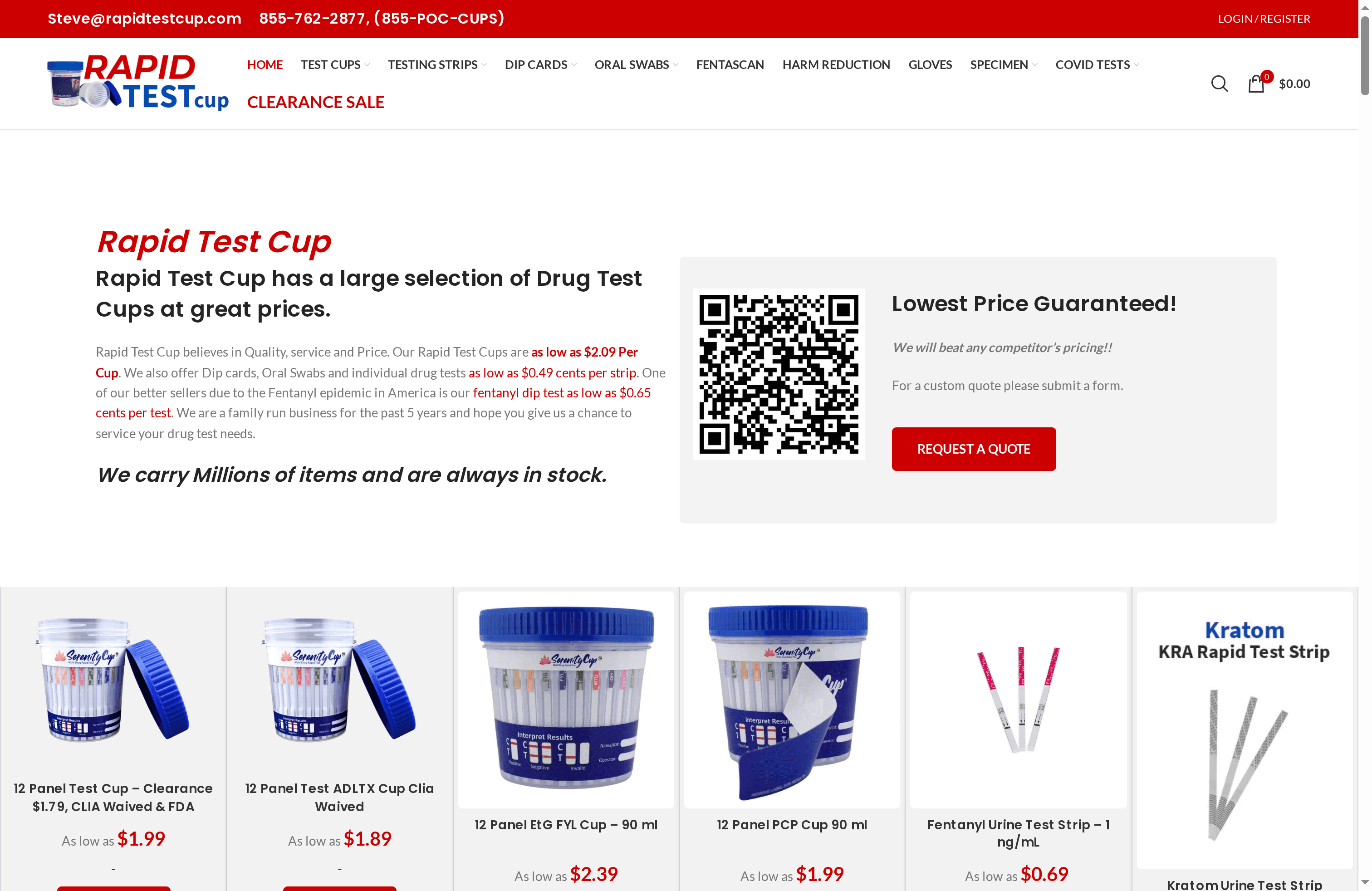
If you are managing a clinic, lab, or workplace testing program, the kits you stock need to meet the same standards you hold your protocols to. Rapidtestcup carries CLIA waived, FDA-approved drug test cups, dip cards, and urine test strips designed for professional use, with documented shelf lives and stable reagent chemistry. Every product ships with full lot information so your inventory management starts on solid ground. Browse the top drug testing products for labs to find multi-panel options built for compliance and accuracy. For high-volume programs, bulk pricing and custom quotes are available directly through the site.
FAQ
How long do drug tests last before expiring?
Most urine rapid drug test kits have a shelf life of 18–24 months under recommended storage conditions of 68–77°F and 40–60% humidity. Saliva-based kits generally have shorter manufacturer-specified shelf lives.
Does an expired drug test still work?
An expired kit may still produce a result, but its accuracy is not guaranteed. Shelf life expiration is a gradual risk increase, not an instant failure, so expired kits should be replaced rather than used for any consequential decision.
What is the correct window for reading a drug test result?
Manufacturers specify a read window of typically 5–10 minutes after sample contact. Reading before or after this window can produce false positives, false negatives, or disappearing lines that invalidate the result.
What does a missing control line mean on a drug test?
A missing control line (C line) means the test is invalid, regardless of what the test line shows. The control line confirms the lateral-flow reaction ran correctly. Any result without a visible C line must be discarded and the test repeated.
When should confirmatory testing follow a rapid drug screen?
Confirmatory testing using GC-MS or LC-MS/MS is required for any presumptive positive in a professional or legal context. It is also recommended when storage conditions or kit handling raise concerns about result reliability.