Blog
What Is a Cutoff Level in Drug Tests: 2026 Guide


TL;DR:
- A cutoff level in drug testing is the minimum drug concentration required for a positive result, helping prevent false positives from incidental exposure. These thresholds vary by substance and testing method, with confirmatory tests using lower cutoffs for greater accuracy. Understanding cutoff levels ensures accurate interpretation of results, avoiding misjudgments regarding drug use or exposure.
A cutoff level in drug testing is the minimum concentration of a drug or its metabolite that must be present in a biological sample for the test to report a positive result. Anything below that threshold is reported as negative, even if trace amounts of the substance exist. This standard protects individuals from unfair positives caused by incidental exposure, dietary factors, or environmental contact. Understanding what is a cutoff level in drug tests matters whether you are preparing for a workplace screen, navigating a legal requirement, or simply trying to make sense of a result you received.
What is a cutoff level in drug tests and how is it measured?
A cutoff level is the specific concentration threshold that separates a negative result from a non-negative one. Labs do not report a test as positive simply because a drug is detectable. The concentration must meet or exceed the established cutoff. This distinction matters enormously in practice, because the human body can retain trace metabolites from passive exposure, secondhand smoke, or even certain foods.
Measurement units differ depending on the biological sample being tested:
- Urine and oral fluid: Concentrations are measured in nanograms per milliliter (ng/mL)
- Hair: Concentrations are measured in picograms per milligram (pg/mg)
- Blood: Concentrations are typically expressed in micrograms per liter (µg/L)
These different measurement units reflect the biology of each sample matrix and the sensitivity of the technology used to analyze it. A hair test, for example, captures a longer detection window than urine, which is why its unit of measurement accounts for the drug embedded within the hair shaft itself.
Drug testing follows a two-stage process that most people are unaware of:
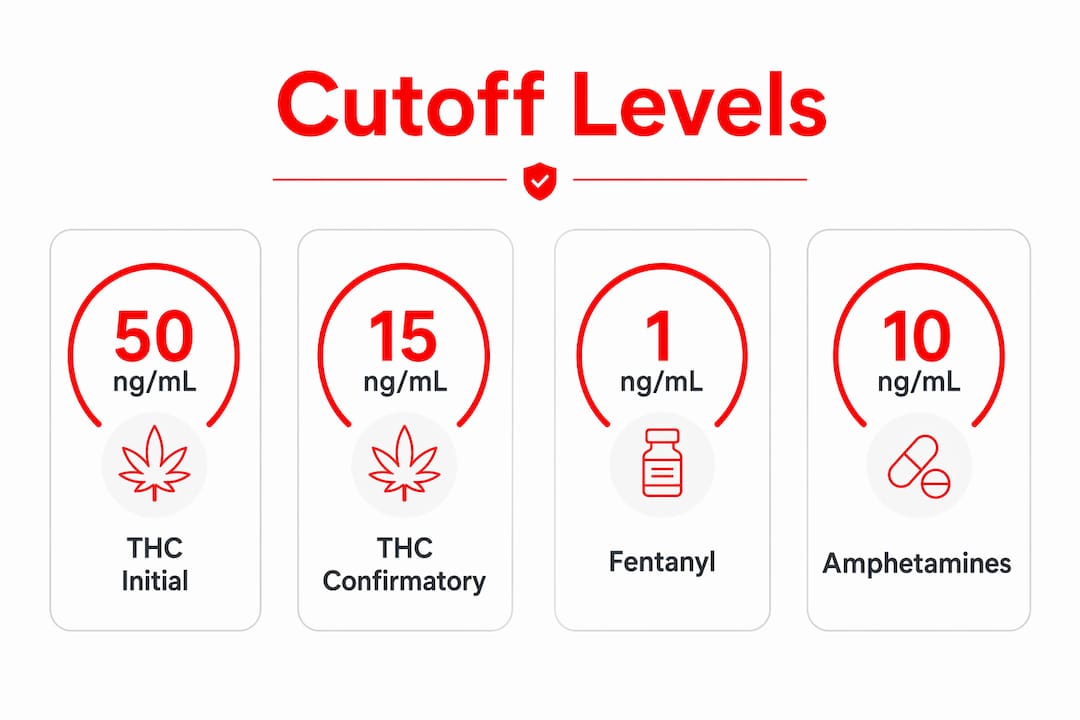
- Initial screening: An immunoassay test checks whether the sample exceeds the screening cutoff. For THC, the standard initial cutoff is 50 ng/mL in urine.
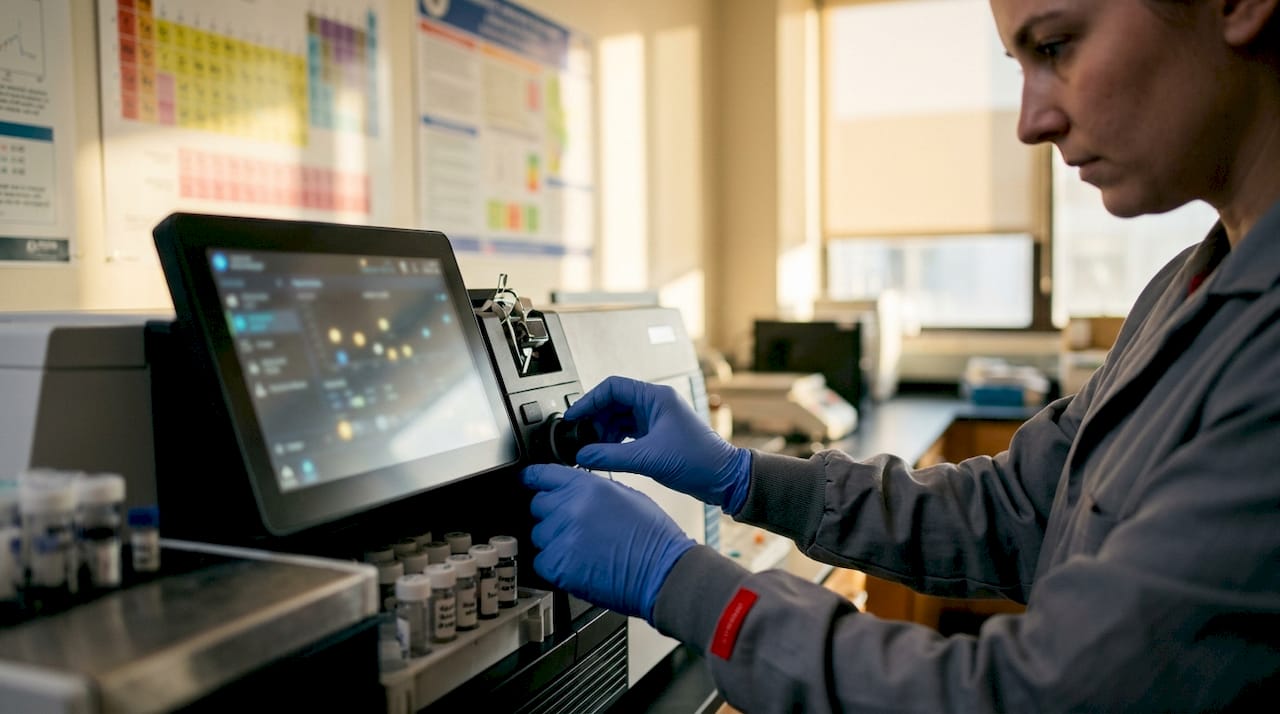
- Confirmatory testing: If the screen is non-negative, a second test using liquid chromatography-mass spectrometry (LC-MS) or gas chromatography-mass spectrometry (GC-MS) confirms the result at a lower cutoff. For THC, the confirmatory cutoff drops to 15 ng/mL.
The confirmatory cutoff is intentionally lower because LC-MS and GC-MS are far more precise than immunoassay screens. A result must clear both thresholds before it is ever reported as confirmed positive.
Pro Tip: If you receive a non-negative initial screen, do not panic. The confirmatory test at a lower cutoff will either confirm or rule out the result with much greater accuracy.
Why cutoff levels vary by drug and test type
Cutoff levels are not uniform across all substances. They differ based on the pharmacology of each drug, the testing method used, and the regulatory or clinical context of the screen.
Here is how cutoff variability breaks down across common substances:
- THC (cannabis): Initial urine screen at 50 ng/mL, confirmatory at 15 ng/mL
- Amphetamines: Initial screen at 500 ng/mL, confirmatory at 250 ng/mL
- Fentanyl: Both initial and confirmatory cutoffs set at 1 ng/mL per 2026 federal standards
- Cocaine metabolites: Initial screen at 150 ng/mL, confirmatory at 100 ng/mL
- Opiates: Initial screen at 2,000 ng/mL, confirmatory at 2,000 ng/mL
Fentanyl’s cutoff of 1 ng/mL reflects its extreme potency. Even a tiny concentration in the body signals meaningful exposure. Amphetamines, by contrast, have a much higher cutoff because the body metabolizes them quickly and because certain legal medications like Adderall can produce amphetamine metabolites.
The testing methodology also drives cutoff decisions. Immunoassay screens are fast and affordable but prone to cross-reactivity, meaning a structurally similar compound can trigger a false positive. Laboratory immunoassay tests must demonstrate at least 80% cross-reactivity for grouped analytes. If they cannot, specific assays are required. This is why cutoffs for immunoassay screens are set higher than those for confirmatory tests.
Federal standards from the Substance Abuse and Mental Health Services Administration (SAMHSA) govern cutoffs for federally mandated workplace testing programs, including those covering Department of Transportation (DOT) employees. Private employers and clinical programs may set their own cutoffs, which can be stricter or more lenient depending on their safety requirements.
Why cutoff levels protect you from unfair results
The core purpose of a cutoff level is to balance sensitivity and specificity in drug screening. Sensitivity refers to a test’s ability to detect true drug use. Specificity refers to its ability to avoid flagging people who have not used drugs. Without a defined cutoff, every test would be a guessing game.
Consider two well-known examples of how cutoffs prevent injustice. Passive cannabis smoke can deposit trace THC metabolites in a non-smoker’s urine. Poppy seeds, found in bagels and muffins, contain naturally occurring morphine and codeine. Without a cutoff threshold set above these background levels, a person who never used drugs could test positive for opiates after breakfast.
“Cutoff thresholds are purposely set above noise and environmental background levels to avoid false positives due to passive exposure, lab contamination, or dietary factors.” — Biology Insights
Cutoff levels also provide legal defensibility. A confirmed positive result that clears both the screening and confirmatory cutoffs is far more difficult to challenge in court than a bare immunoassay result. This is why confirmatory testing by LC-MS is the gold standard for legal proceedings, employment disputes, and probation monitoring.
Cross-reactivity is another challenge cutoffs address. Some over-the-counter medications, including certain antihistamines and decongestants, share structural similarities with controlled substances. A cutoff set at the right level filters out the low concentrations these medications produce, so a person taking cold medicine does not lose their job over a false positive. You can read more about how labs manage this in this guide to false positives in drug tests.
Pro Tip: Always disclose any prescription medications or supplements to the Medical Review Officer (MRO) before your test. An MRO can review your result in context and prevent a legitimate medication from being misreported.
Interpreting drug test results: what the cutoff actually tells you
A positive result means the drug concentration in your sample met or exceeded the cutoff at both the screening and confirmatory stages. It does not necessarily mean you are impaired or that you used the drug recently. Detection windows vary widely by substance and by the individual’s metabolism, body composition, and frequency of use.
A negative result carries an equally important nuance. A negative test result means the drug concentration was below the cutoff, not that the drug is entirely absent from your system. This distinction matters for people who assume a negative result means they are completely clean. The drug may still be present at a concentration too low to trigger the threshold.
The table below summarizes common urine drug test cutoffs and what each result means in practice:
| Substance | Initial cutoff (ng/mL) | Confirmatory cutoff (ng/mL) | What a negative means |
|---|---|---|---|
| THC | 50 | 15 | Below 50 ng/mL at screen; below 15 ng/mL at confirmation |
| Amphetamines | 500 | 250 | Below 500 ng/mL at screen; below 250 ng/mL at confirmation |
| Fentanyl | 1 | 1 | Below 1 ng/mL at both stages |
| Cocaine metabolites | 150 | 100 | Below 150 ng/mL at screen; below 100 ng/mL at confirmation |
| Opiates | 2,000 | 2,000 | Below 2,000 ng/mL at both stages |
Detection windows also affect interpretation. THC can remain detectable in urine for up to 30 days in heavy users, while cocaine metabolites typically clear within 3 to 5 days. A test taken on day 6 after cocaine use might return negative not because the drug was absent, but because the concentration fell below the cutoff. Understanding how to interpret lab results accurately prevents misreading a negative as proof of no prior use.
Selective metabolite targeting adds another layer of complexity. Tests do not detect the drug itself in most cases. They detect specific metabolites the body produces while breaking down the drug. If a test targets only one metabolite and the body has already cleared it, the result may be negative even if other metabolites remain present. This is why test sensitivity and specificity matter so much in choosing the right panel for your purpose.
Key takeaways
Cutoff levels in drug testing define the exact concentration boundary between a negative and a non-negative result, and understanding them prevents misinterpretation of both positive and negative outcomes.
| Point | Details |
|---|---|
| Cutoff defines positive vs. negative | A result is only positive when drug concentration meets or exceeds the established threshold. |
| Two-stage testing applies | Screening uses higher cutoffs; confirmatory LC-MS uses lower cutoffs for legal accuracy. |
| Cutoffs vary by substance | Fentanyl is set at 1 ng/mL while amphetamines screen at 500 ng/mL, reflecting potency differences. |
| Negative does not mean absent | Drug may still be present below the cutoff, especially within detection windows. |
| Cutoffs prevent false positives | Thresholds filter out passive exposure, dietary factors, and cross-reactive medications. |
Why most people misread their drug test results
Most people I encounter treat a drug test result as binary: positive means guilty, negative means clean. That framing misses almost everything that actually matters about how these tests work.
The cutoff is the most consequential number in the entire process, and it is almost never communicated to the person being tested. You receive a result sheet that says “negative” or “non-negative,” but you rarely see the concentration that was detected or how close it came to the threshold. That opacity creates unnecessary anxiety and, in some cases, false confidence.
What I find most underappreciated is the gap between the screening cutoff and the confirmatory cutoff. A sample that reads non-negative at 50 ng/mL for THC still has to clear the 15 ng/mL confirmatory bar. Many initial non-negatives never become confirmed positives because the concentration falls between those two thresholds. That is the system working exactly as intended, and it is a protection most people do not know they have.
The other thing worth saying plainly: cutoff standards are not static. The 2026 federal update that set fentanyl’s cutoff at 1 ng/mL reflects how seriously regulators now treat synthetic opioid exposure. As new substances emerge and testing technology improves, cutoffs will continue to be recalibrated. Staying informed about current standards is not just for lab professionals. It matters for anyone who may face a drug screen.
— Justin
Test with confidence using Rapidtestcup’s calibrated panels
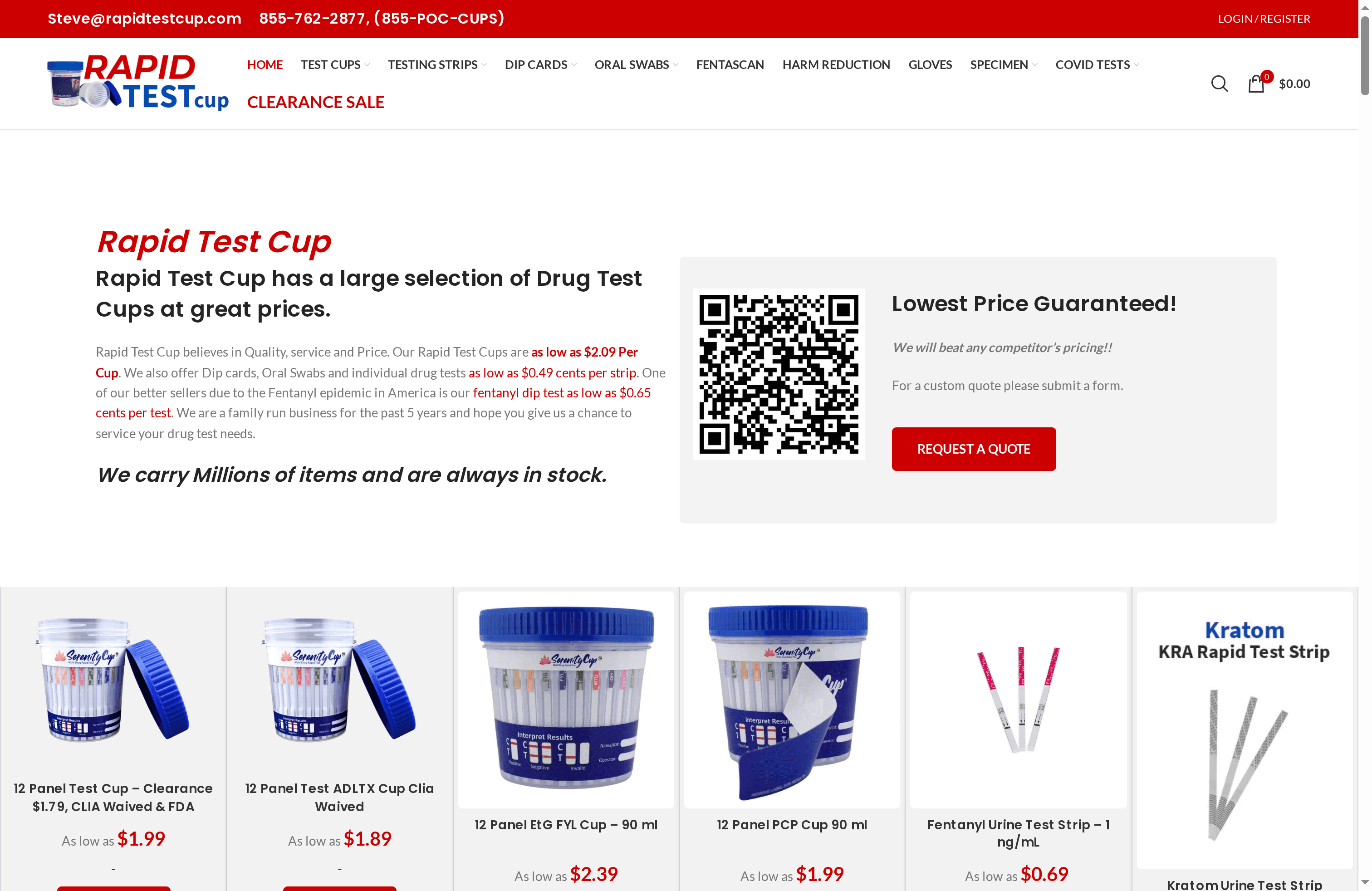
Rapidtestcup carries drug test products built to meet and exceed the federal cutoff standards described in this article. Whether you need a straightforward screen or a multi-panel solution with adulterant detection, the catalog covers both. The 12-panel drug test cup is calibrated to SAMHSA cutoff levels and delivers results in minutes, making it a practical choice for workplace programs, clinics, and personal use. For broader coverage, the 18-panel cup with adulterant detection screens for fentanyl at the 20 ng/mL threshold alongside kratom, K2, ETG, and tramadol. All products are CLIA waived and FDA approved, with bulk pricing available for high-volume programs.
FAQ
What is the standard THC cutoff level for urine drug tests?
The standard initial screening cutoff for THC in urine is 50 ng/mL, with a confirmatory cutoff of 15 ng/mL. A sample must exceed both thresholds at their respective stages to be reported as a confirmed positive.
Can you fail a drug test from secondhand smoke?
Passive cannabis smoke can deposit trace THC metabolites in urine, but cutoff thresholds are set specifically to filter out these incidental exposure levels. A person would need sustained, heavy secondhand exposure in an enclosed space to approach the 50 ng/mL screening cutoff.
Why does a confirmatory test use a lower cutoff than the initial screen?
Confirmatory tests using LC-MS or GC-MS are far more precise than immunoassay screens, so they can reliably detect lower concentrations without false positives. The lower cutoff at confirmation adds a second layer of accuracy before a result is ever reported as positive.
Does a negative drug test mean no drugs are in your system?
A negative result means the drug concentration was below the cutoff threshold, not that the substance is entirely absent. Metabolites may still be present at concentrations too low to trigger the established threshold.
Who sets the cutoff levels used in workplace drug tests?
SAMHSA sets the cutoff standards for all federally mandated workplace drug testing programs, including those governed by the DOT. Private employers and clinical programs may adopt these standards or establish their own, provided they meet applicable regulatory requirements.