
Blog
GC-MS Confirmation: Why Labs Trust It for Final Results


GC-MS confirmation is accepted across forensic and clinical toxicology as the method that turns a presumptive drug screen into a legally defensible result. When an immunoassay flags a specimen as positive, gas chromatography-mass spectrometry separates and identifies the actual molecules present, matching retention time and spectral fingerprint against a known reference standard. That two-step model, screen first, confirm second, is the backbone of virtually every defensible drug testing program.
You need a GC-MS confirmation whenever a result has to hold up to scrutiny. That includes:
- A workplace immunoassay screen returns positive and the result affects employment
- Specimens are collected as forensic evidence in a criminal or civil case
- A clinical team needs a confirmed identification before making a treatment decision on a suspected overdose
Key Takeaways
GC-MS confirmation works because it pairs an independent retention-time match with a reproducible spectral fingerprint, converting a presumptive screen into a legally defensible identification.
| Point | Details |
|---|---|
| Two-step model is standard | An immunoassay screen flags a presumptive positive; GC-MS confirmation identifies the specific compound before any action is taken. |
| Both match criteria are required | Retention time and mass spectral pattern must both align with the reference standard, not just one. |
| Derivatization prevents false negatives | Polar or heat-sensitive analytes often need chemical derivatization to survive the GC injector intact. |
| GC-MS and LC-MS/MS are complementary | GC-MS suits volatile, stable compounds; LC-MS/MS handles polar or thermolabile molecules the other method misses. |
| Specimen integrity starts before the lab | Rapidtestcup’s adulteration-checking panel cups and high-sensitivity fentanyl strips reduce compromised specimens reaching costly confirmatory testing. |
Table of Contents
- What Is GC-MS Confirmation and How Does It Work?
- When Does a Result Need GC-MS Confirmation?
- What Sample Preparation Does GC-MS Confirmation Require?
- How Do Labs Interpret and Report a GC-MS Confirmation?
- GC-MS vs LC-MS/MS: Which Confirms Which Drugs Best?
- What Quality Controls Make a GC-MS Confirmation Defensible?
- Which Drug Classes Get Confirmed by GC-MS?
- What Regulations Govern GC-MS Confirmation Testing?
- How Do You Troubleshoot Common GC-MS Confirmation Problems?
- What New GC-MS Technology Improves Confirmation Accuracy?
- A Lab Manager’s Honest Take on Confirmatory Testing Tradeoffs
- Where RapidTestCup Fits in a Confirmation-Ready Workflow
- Frequently Asked Questions About GC-MS Confirmation
- Sources
What Is GC-MS Confirmation and How Does It Work?
GC-MS confirmation works by pairing two separate identification steps that rarely fail in the same way at once. The gas chromatograph pushes a vaporized sample through a coated column, and each compound exits at a characteristic retention time based on its size and polarity. That retention time is the first independent clue to identity, and it has to match a reference standard run under the same conditions.
Once separated, molecules enter the mass spectrometer, where electron ionization breaks them into charged fragments with a reproducible pattern. That fragmentation pattern, or spectrum, gets checked against a verified library entry for the suspected drug. The IUPAC Gold Book treats this pairing of retention time and spectral match as the technical definition of a confirmed GC-MS identification, not either one alone.
Analysts choose between two acquisition modes depending on the goal:
- Full scan captures the entire mass range, useful for unknowns or broad screening of unexpected compounds.
- Selected ion monitoring (SIM) tracks only a few diagnostic ions, which boosts sensitivity for trace-level detection but demands tight ion-ratio checks to avoid misidentification.
Pro Tip: If a lab runs SIM for sensitivity, cross-check ion ratios against the reference standard every single batch. A ratio drift of even a few percentage points can turn a real positive into a rejected result.
Reproducibility is the whole point. Electron ionization spectra look nearly identical across different instruments and years, which is why integrated spectral libraries now cover well over a million reference compounds. That consistency is what lets a lab in one state match a spectrum against a library built somewhere else entirely.
When Does a Result Need GC-MS Confirmation?
Not every positive screen needs to go further, but certain situations leave no other option.
- A presumptive positive on an immunoassay screen. These tests are fast and cheap but prone to cross-reactivity with structurally similar compounds, so a positive result on its own rarely settles the matter.
- Any specimen entering the legal system. Courts and administrative hearings expect an unambiguous identification method, not a screening test with known cross-reactivity risks.
- Clinical decisions tied to overdose or poisoning. A treatment team acting on a wrong identification can choose the wrong antidote or miss a co-ingestant entirely.
Confirmation testing exists because immunoassays trade specificity for speed. GC-MS closes that gap: it identifies the exact molecule, and when the method is validated for quantitation, it reports how much is present, giving employers, courts, and physicians a result they can actually act on.
What Sample Preparation Does GC-MS Confirmation Require?
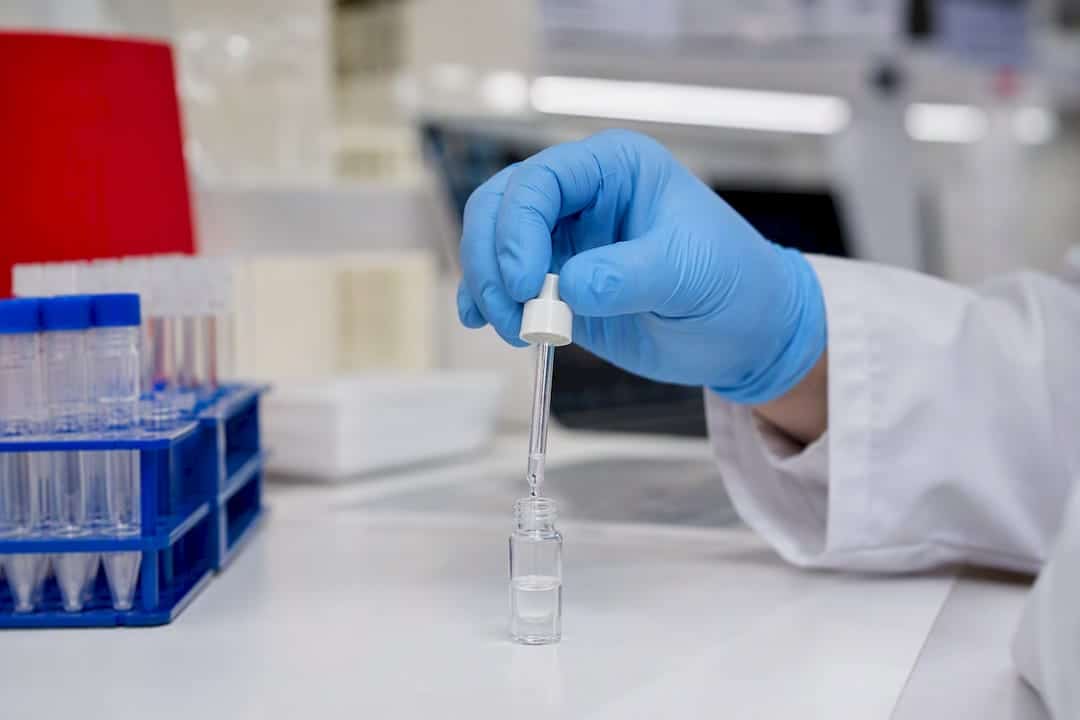
Getting a specimen ready for the gas chromatograph takes more work than most people outside the lab realize. Urine samples typically go through solid-phase extraction (SPE) or liquid-liquid extraction to pull the target drug out of a complex biological matrix, while blood and tissue samples often need additional cleanup to strip out proteins and lipids that would otherwise clog the column or mask the target peak.
Many drugs and metabolites are simply too polar or heat-sensitive to survive the gas chromatograph’s heated injection port in their natural form. Derivatization chemically modifies these molecules, usually through silylation or acylation reagents, so they volatize cleanly without breaking apart.
- Incomplete derivatization is one of the most common causes of a missed confirmation, since an unreacted molecule may not produce a recognizable peak at all.
- Thermal degradation in the injector or column can destroy a fragile analyte before it ever reaches the detector.
- Carryover from a prior high-concentration sample can contaminate the next run and produce a false positive.
Pro Tip: Run a solvent blank immediately after any known high-concentration specimen. It is the cheapest insurance against carryover contaminating your next case sample.
How Do Labs Interpret and Report a GC-MS Confirmation?
A confirmed result requires two things to line up at once: retention time within an accepted window of the reference standard, typically a fraction of a percent, and a spectral match meeting predefined ion-ratio tolerances. Neither one alone counts as a confirmation.
- Retention time must fall inside the lab’s validated acceptance window for that analyte.
- Relative abundances of diagnostic ions must stay within the tolerance set during method validation, not just resemble the library spectrum loosely.
- SIM mode sharpens sensitivity for low-level detection, while full scan gives more confidence when an unusual or unexpected compound shows up.
Calibrators establish the limit of detection (LOD) and limit of quantitation (LOQ) for each analyte, and a result below the LOQ typically gets reported as detected but not quantifiable rather than given a specific number. Reporting language should state the analyte, the specimen type, whether the finding is qualitative or quantitative, and which method produced it, alongside a documented chain of custody.
GC-MS vs LC-MS/MS: Which Confirms Which Drugs Best?
GC-MS earns its reputation on volatile, thermally stable compounds, but it has real limits. Nonvolatile, highly polar, or heat-sensitive molecules either resist derivatization entirely or degrade before detection, and some biological matrices introduce interferences that mimic or mask the target compound.
This is exactly where LC-MS/MS steps in. Liquid chromatography-tandem mass spectrometry separates compounds in solution rather than as a vapor, which makes it far better suited to large, polar, or fragile molecules that would never survive a GC injector. Toxicology reviews describe the two techniques as complementary rather than competing: GC-MS for volatile, stable analytes, LC-MS/MS for everything that GC-MS handles poorly.
- Use GC-MS for volatiles, drugs of abuse metabolites, and compounds amenable to derivatization.
- Use LC-MS/MS for polar drugs, large molecules, and heat-sensitive compounds.
- For genuinely difficult or borderline analytes, running both platforms as orthogonal confirmation is standard practice in well-resourced labs.
What Quality Controls Make a GC-MS Confirmation Defensible?
A result only holds up in court or an employment hearing if the method behind it was properly validated. That means establishing LOD and LOQ for every analyte, then confirming precision, accuracy, linearity, and recovery through repeated testing before the method ever touches a case sample.
- Run negative and positive controls in every batch, not occasionally.
- Bracket case specimens with controls so no run of unknowns sits unchecked between them.
- Insert a mid-run positive control when batch sizes grow large enough that instrument drift becomes a real risk.
- Maintain instrument maintenance logs and written SOPs that an auditor or opposing attorney could review line by line.
A forensic lab’s SOP typically spells out exact control percentages, bracketing requirements, and reporting units, because a confirmation result without that documentation trail is far easier to challenge in court.
Accreditation under CLIA or ISO standards, combined with an unbroken chain of custody, is what separates a scientifically sound result from one that survives cross-examination.
Which Drug Classes Get Confirmed by GC-MS?
Certain drug classes show up in GC-MS confirmation workflows more often than others, largely because their chemistry suits gas-phase separation once properly derivatized. Cannabinoids, including THC metabolites, are a staple of workplace and forensic panels and confirm reliably by GC-MS after extraction and derivatization. Amphetamines and methamphetamine confirm well too, since their relatively small, volatile structures move cleanly through the column.
Opioids present a mixed picture. Morphine, codeine, and several semi-synthetic opioids confirm reliably on GC-MS, though some newer synthetic opioids and their metabolites are polar enough that labs increasingly lean on LC-MS/MS instead. Cocaine and its primary metabolite, benzoylecgonine, are classic GC-MS confirmation targets and have been for decades.
Barbiturates and several benzodiazepines also confirm well by GC-MS, though benzodiazepine metabolism produces a wide range of compounds with varying polarity, so some labs split panels between GC-MS and LC-MS/MS depending on the specific drug. PCP and several volatile inhalants round out the list of classic GC-MS analytes, since their chemical stability under heat makes them almost ideal candidates for this method.
The common thread across all these classes is chemical stability under the heat of a GC injector and a chemistry amenable to derivatization when needed. Analytes that fail either test tend to migrate toward LC-MS/MS panels instead, which is why most comprehensive toxicology programs run both platforms rather than picking one.
What Regulations Govern GC-MS Confirmation Testing?
Federal workplace testing programs, most notably those following SAMHSA guidelines for federally mandated drug testing, require GC-MS or an equivalent mass spectrometry method to confirm any initial positive immunoassay result before it can be reported as positive. That requirement exists specifically because immunoassays alone aren’t considered specific enough to support an employment action.
Forensic laboratories operate under a separate but related layer of oversight. Accreditation bodies require documented method validation, participation in proficiency testing, and adherence to written SOPs covering everything from specimen receipt to final report. State forensic lab manuals, like toxicology SOPs published by state patrol crime labs, typically spell out exact acceptance criteria: how many control percentages are allowed to deviate, how specimens get bracketed with controls, and what units go on the final report.
Clinical laboratories fall under CLIA regulations, which set requirements for personnel qualifications, quality control frequency, and proficiency testing regardless of whether the lab focuses on toxicology or other testing. ISO 17025 accreditation, common among forensic and reference labs, adds an additional layer focused specifically on testing competence and measurement traceability.
None of these frameworks treat GC-MS as optional once a specimen enters a legal or safety-sensitive pathway, as detailed in the Insights | SignalPGx resource for clinical laboratory services. The common requirement across SAMHSA, CLIA, and ISO frameworks is the same: an initial screen cannot stand alone as a final reportable result. Something with mass-spectrometry-level specificity has to back it up, and the documentation trail proving that confirmation happened correctly matters almost as much as the result itself.
How Do You Troubleshoot Common GC-MS Confirmation Problems?
Peak tailing or a shifting retention time is one of the most frequent headaches in a busy lab, and it usually traces back to a degraded column, a leaking injector septum, or a buildup of nonvolatile residue near the injection port. Regular septum changes and periodic column trimming solve most of these issues before they affect a case result.
Ion ratio failures, where a sample’s fragment ratios drift outside the validated tolerance, often point to co-eluting interferences from the specimen matrix rather than a true identification problem. Improving extraction cleanup or adjusting the column temperature program to better separate the target peak from its neighbors usually resolves it.
Carryover contamination shows up as unexpected low-level signal in a blank run immediately following a high-concentration specimen. Running a solvent blank after any suspected high-positive sample, and inspecting the injector liner for residue buildup, catches this before it compromises the next case.
Incomplete derivatization produces weak or absent peaks for analytes that should be present, and it’s often mistaken for a true negative if the analyst doesn’t know to check reagent freshness and reaction time first. Sensitivity drift over time, meanwhile, often comes down to a dirty ion source or an aging electron multiplier, both of which respond well to a scheduled maintenance program rather than reactive troubleshooting after a batch fails.
What New GC-MS Technology Improves Confirmation Accuracy?
High-resolution mass spectrometry variants are increasingly paired with gas chromatography to sharpen selectivity beyond what standard quadrupole instruments deliver, cutting down on false identifications caused by co-eluting interferences in complex matrices. Tandem GC-MS/MS instruments add a second stage of fragmentation, which improves selectivity and reduces background noise in ways that make trace-level confirmations more reliable than they were even a decade ago.
Automated sample-prep platforms are cutting down the manual extraction and derivatization steps that used to introduce the most variability between analysts. Faster column technology and optimized temperature ramping have shortened run times without sacrificing separation quality, which matters directly for laboratory turnaround.
Expanded and continually updated spectral libraries, now covering well over a million reference compounds, mean fewer unknowns go unidentified simply because a match wasn’t available. None of these advances replace the fundamentals, though. Method validation and preanalytic specimen quality remain the real bottleneck limiting how fast confirmation testing can move, no matter how sophisticated the instrument sitting on the bench.
A Lab Manager’s Honest Take on Confirmatory Testing Tradeoffs
Speed and rigor pull in opposite directions, and pretending otherwise sets a lab up for a result it can’t defend later. The labs that hold up under scrutiny are the ones that write validated SOPs before pressure hits, not after a subpoena arrives. If in-house GC-MS confirmation isn’t feasible for your volume, sending specimens to an accredited reference lab beats cutting corners on your own bench every time.
Where RapidTestCup Fits in a Confirmation-Ready Workflow
A confirmation is only as good as the specimen that reaches the instrument. If a urine sample has been diluted, substituted, or adulterated before it ever reaches the lab, no amount of GC-MS precision fixes that problem, it just delivers a clean, confident answer to the wrong question.
That’s where upstream collection quality earns its keep. Rapidtestcup’s multi-panel test cups build integrated adulterant checks (pH, specific gravity, oxidants) directly into the collection cup, so a compromised specimen gets flagged before it wastes a confirmatory run downstream. High-sensitivity fentanyl test strips catch trace-level positives on the initial screen, giving your lab a clearer picture of which specimens genuinely warrant the cost and turnaround time of GC-MS confirmation. For clinics and employers ordering in volume, Rapidtestcup’s bulk pricing on panel cups keeps procurement costs predictable without sacrificing the CLIA-waived, FDA-approved status your program depends on.
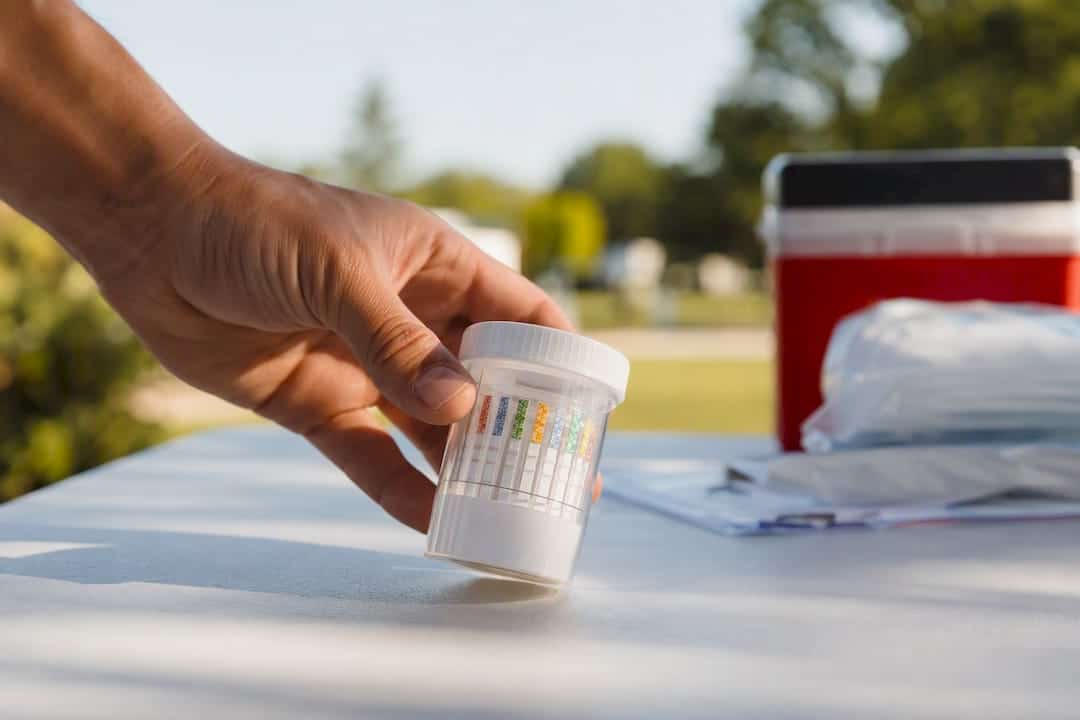
If your screening protocol needs an upgrade before specimens ever reach the confirmatory bench, start with the 18-panel drug test cup or reach out for a custom quote on bulk collection supplies.
Frequently Asked Questions About GC-MS Confirmation
What is the difference between GC-MS and a standard drug screen?
A standard drug screen, usually an immunoassay, gives a fast presumptive result but can cross-react with unrelated compounds. GC-MS confirmation identifies the exact molecule present, which is why it’s required before a positive result becomes actionable in employment or legal settings.
What does “gc ms confirmation” actually mean in a lab report?
It means a specimen’s presumptive positive result has been verified through gas chromatography-mass spectrometry, with both retention time and spectral match confirmed against a reference standard, producing a defensible, specific identification rather than just a presumptive flag.
Is LC-MS/MS better than GC-MS?
Neither is universally better. GC-MS suits volatile, thermally stable compounds, while LC-MS/MS handles polar or heat-sensitive molecules that GC-MS struggles to volatilize. Many comprehensive toxicology programs run both.
Why would a GC-MS confirmation come back negative after a positive screen?
Immunoassay screens can cross-react with structurally similar compounds, legal medications, or metabolites, producing a positive result that GC-MS confirmation, being far more specific, correctly identifies as not containing the targeted drug.
How long does GC-MS confirmation typically take compared to a screen?
A presumptive screen delivers results in minutes. GC-MS confirmation requires sample extraction, possible derivatization, and instrument runtime, which typically adds one to several days depending on lab volume and whether the sample is sent to an outside reference lab.
This article is general information, not a substitute for advice from a qualified doctor. Consult a qualified healthcare professional about your own circumstances before acting on anything here.
Sources
- Drug confirmation by mass spectrometry
- Review: complementary use of GC‑MS and LC‑MS in toxicology
- Derivatization in GC‑MS methods (example study)
These sources are useful starting points when drafting or validating a lab’s own SOPs for confirmatory testing.