Blog
Employers: One Retest Only under DOT for Dilute Urine Drug Tests


A dilute urine drug test means the sample’s concentration is too low, usually a creatinine reading under 20 mg/dL or a specific gravity below the lab’s cutoff, so a negative result may not be fully reliable. Labs still report the finding two ways: negative-dilute, which often triggers a Medical Review Officer review or a retest, or positive-dilute, which stays positive no matter how watered down the sample is. If a medical condition or heavy fluid intake caused it, documentation usually resolves the issue.
TL;DR:
- Drinking large amounts of water just before a test can reduce creatinine levels below 20 mg/dL, but it often triggers retests or review procedures.
- Medical conditions, diuretic use, or natural kidney issues can cause dilution without any intentional wrongdoing, and documentation improves review outcomes.
- Labs verify specimen integrity through multiple markers, including creatinine, specific gravity, pH levels, and adulterant detection, making tampering easily detectable.
- Using first-morning urine and avoiding excessive fluids or caffeine on testing day significantly reduces the risk of a dilute result, especially without medical reasons.
- Chugging water excessively to beat a drug test risks hyponatremia, a dangerous condition, and often results in more scrutiny from validity testing than a clean sample.
Table of Contents
- What Makes a Urine Sample “Dilute” in Lab Terms
- Why Urine Samples Come Back Dilute
- How Employers and Regulators Handle a Dilute Result
- How to Avoid a Dilute Result Without Overdoing It
- The Real Danger of Chugging Water to Beat a Test
- Your Result Came Back Dilute. Here’s What to Do Next
- How Labs Verify Specimen Integrity Behind the Scenes
- What Most People Get Wrong About Dilute Results
- Specimen Validity Supplies for Administrators and Clinics
- Sources
What Makes a Urine Sample “Dilute” in Lab Terms
Labs don’t guess at dilution. They measure it, using creatinine and specific gravity as the two primary markers, backed up by pH and adulterant screening.
Creatinine is a waste product from muscle metabolism that shows up in urine at a fairly steady rate. When someone drinks a large volume of fluid before a test, creatinine gets diluted along with everything else, and the concentration drops. A reading below 20 mg/dL is the widely used threshold for flagging a sample dilute, paired with a specific gravity reading under roughly 1.0030.
Here’s what a validity panel typically checks:
- Creatinine concentration: the primary marker for dilution, tested on every sample rather than relying on visual color.
- Specific gravity: measures how concentrated the urine is relative to water; low readings support a dilute call.
- pH level: flags samples that are unusually acidic or alkaline, a sign of possible tampering.
- Oxidants and adulterant screens: catch bleach, nitrites, or other substances added after collection.
Results come back labeled negative-dilute or positive-dilute, and that label matters more than most people realize once it reaches an employer or a Medical Review Officer.
Why Urine Samples Come Back Dilute
Most dilute results have nothing to do with cheating. Fluid intake, medication, and biology all play a role, and understanding each one helps you separate a manageable accident from an actual red flag.
- Rapid, heavy fluid intake. Drinking 2 to 4 quarts of water in a short window can push creatinine below the dilute threshold within 60 to 90 minutes, whether someone did it on purpose or just showed up thirsty after a workout.
- Diuretics and caffeine. Coffee, energy drinks, and prescription diuretics all increase urine output, thinning out whatever else is in the sample.
- Kidney function issues. Some medical conditions reduce the kidneys’ ability to concentrate urine normally, producing naturally dilute samples even without excess fluid intake.
- Post-collection tampering. Adding water to a cup after collection is the most obvious form of dilution, and it’s also the easiest for a lab to catch through temperature strips and validity testing.
The line between an honest hydration habit and an intentional dodge isn’t always visible from the outside, which is exactly why labs rely on numbers instead of assumptions.
How Employers and Regulators Handle a Dilute Result
Every dilute result passes through a Medical Review Officer before it becomes final. The MRO reviews the lab’s findings, considers any medical explanation the donor provides, and decides whether the result stands as reported or needs follow-up.
For DOT-regulated testing, the rules are specific and limited:
- Under 49 CFR §40.197, an employer may request one immediate retest if the first result comes back negative-dilute.
- If the retest also comes back negative-dilute, the employer generally cannot demand further testing based on dilution alone.
- The MRO can still direct a directly observed recollection when creatinine falls into a particularly low range.
- Non-DOT, private-employer policies vary widely and aren’t bound by these federal limits, so it’s worth asking HR directly what your specific program requires.
Bring documentation for any prescription or condition that affects urination. It rarely changes a lab result, but it gives the MRO real context to work with.
How to Avoid a Dilute Result Without Overdoing It
Most accidental dilutions come from simple bad timing, not sabotage. A few adjustments in the hours before your appointment lower the risk considerably.
- Use first-morning urine when possible. It’s naturally more concentrated after hours without fluid intake, which works in your favor.
- Skip large fluid loads right before testing. Normal hydration is fine. Chugging bottles of water in the waiting room is not.
- Cut caffeine and diuretics for the day. Both increase urine output and push you closer to the dilute threshold.
- Bring documentation for any medication or condition that affects kidney function or urine output, in case a question comes up later.
- If you can’t produce a sample on the spot, ask the collector about their wait period and hydration policy. Most sites allow reasonable time and a small amount of water.
Pro Tip: Drink normally throughout your day rather than saving it all for one big glass right before your appointment. Steady hydration keeps your creatinine in a normal range without the last-minute risk of overdoing it.
The Real Danger of Chugging Water to Beat a Test
Drinking water faster than your kidneys can process it can cause hyponatremia, a dangerous drop in blood sodium that can bring on nausea, headaches, confusion, and in severe cases, seizures or death. It’s also a poor strategy: layered validity panels catch dilution attempts far more often than people expect, often triggering more scrutiny rather than a clean pass. If you’re worried about a test, talk to the collector or your doctor instead of gambling with your sodium levels.

Your Result Came Back Dilute. Here’s What to Do Next
Stay calm and act on documentation, not guesswork.
- Tell the collector or MRO about any prescriptions, medical conditions, or recent illness that affected your fluid intake.
- Ask what retest options your specific program allows and how quickly you need to act.
- Request medical records or a clinician’s note if a health condition is the likely explanation.
- Keep copies of everything you submit, and follow up with your employer or program administrator in writing.
How Labs Verify Specimen Integrity Behind the Scenes
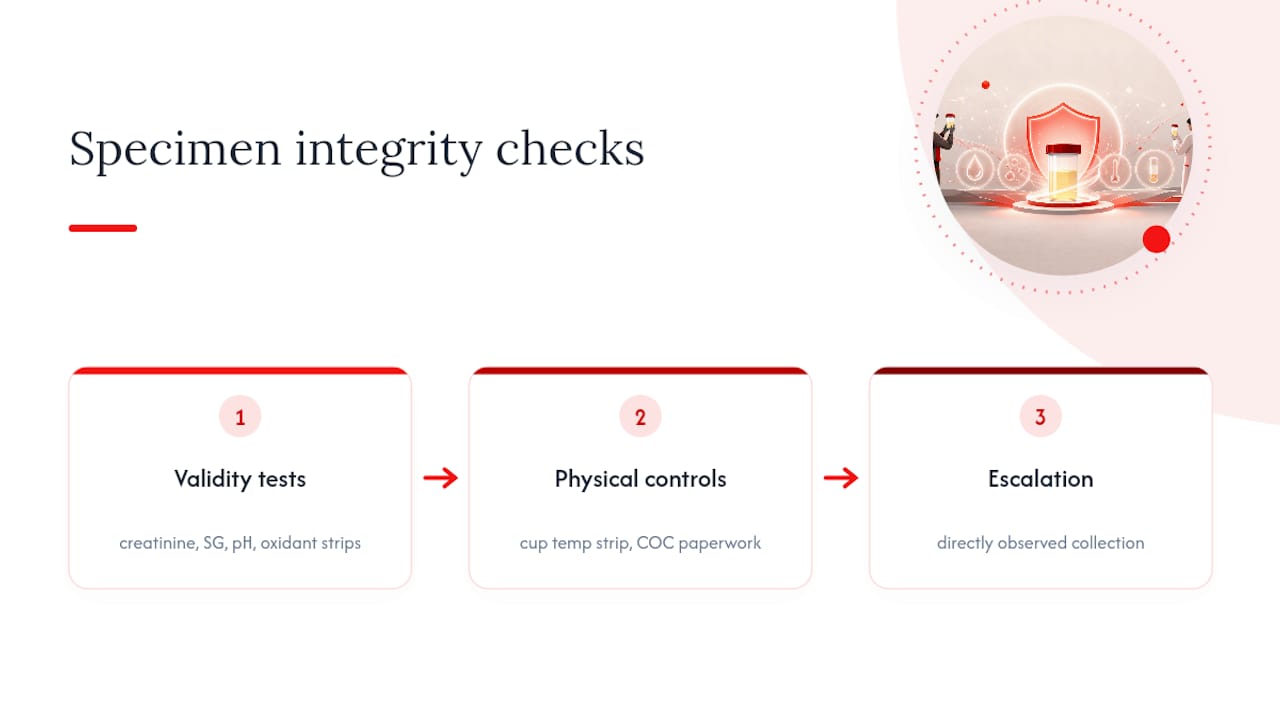
Beyond creatinine and specific gravity, labs run a full validity panel: pH testing, oxidant and adulterant strips, and visual checks for unusual color or temperature. Many collection sites pair this with physical controls like temperature strips on the cup and strict chain-of-custody paperwork, escalating to directly observed collection when a prior sample raised concerns.
What Most People Get Wrong About Dilute Results
Most people treat a dilute result like an accusation, but understanding the strengths and weaknesses of alternative specimen types can provide better context for urine testing, as discussed in this hair follicle vs. urine drug testing comparison. It isn’t. It’s a lab measurement, and in a lot of cases it just means someone drank a lot of water before their appointment or takes a diuretic for blood pressure.
Three things worth remembering: don’t chug water hoping to beat a test, use a first-morning sample when you have the choice, and always document medications ahead of time rather than after the fact. Programs built around 49 CFR §40.197 and MRO review exist precisely because dilution has so many innocent explanations.
— Justin
Specimen Validity Supplies for Administrators and Clinics
Running a testing program means catching dilution and tampering before it becomes a dispute, and that starts with the right supplies on hand. Rapidtestcup stocks multi-panel test cups with built-in adulterant strips, standalone validity and adulterant test strips, and specimen collection accessories built for clinical and forensic settings, all at CLIA waived, FDA-approved standards with bulk pricing for higher volume needs.
For programs that need creatinine, pH, and oxidant checks built directly into the collection cup, the 18 Panel Drug Test Cup with adulterant detection covers both drug panels and validity testing in a single step, cutting down on follow-up requests and second collections. Clinics and labs ordering in volume can request a custom quote directly through Rapidtestcup for bulk pricing on cups, strips, and collection supplies.
Sources
- § 40.197 What happens when an employer receives a report of a dilute urine specimen? | U.S. Department of Transportation
- Paul Cary — Urine creatinine concentration and dilute specimen guidance (treatment court context)
- How Much Water Before a Drug Test: Dilution Risks – LegalClarity
- Hyponatremia — Mayo Clinic
This article is general information, not a substitute for advice from a qualified doctor. Consult a qualified healthcare professional about your own circumstances before acting on anything here.