Blog
2,000 vs 1,000 ng/mL: Gabapentin Urine Test Gaps for Clinicians


Gabapentin does not show up on a standard 5, 10, or 12 panel urine drug screen because those immunoassay panels are not built to detect it. A specialized urine test can catch gabapentin, usually within about 2 to 4 days of the last dose, though heavy kidney impairment or high chronic doses can stretch that window. Laboratories confirm and quantify it using LC-MS/MS, the mass spectrometry method that separates gabapentin from other compounds with precision immunoassays cannot match.
TL;DR:
- Standard urine drug tests do not detect gabapentin unless a specialized immunoassay or confirmatory LC-MS/MS test is used, with mass spectrometry being the most precise method.
- Gabapentin typically stays detectable in urine for 2 to 4 days after the last dose, but this window can extend significantly with high doses or impaired kidney function.
- Cutoff levels differ between rapid dip tests and lab assays, meaning low-level use may go undetected on quick screens but show up on more sensitive laboratory tests.
- Many standard panels exclude gabapentin entirely, so clinicians must specifically request gabapentin testing if misuse or clinical suspicion exists.
- Proper sample collection and shipping protocols are essential to ensure accurate results, especially in forensic or legal settings.
Table of Contents
- How Is Gabapentin Detected: Screening vs. Lab Confirmation?
- How Long Does Gabapentin Stay in Urine?
- What Cutoff Levels Do Gabapentin Tests Use?
- How Should You Interpret a Gabapentin Test Result?
- What Are the Specimen Requirements for Gabapentin Urine Testing?
- Why Do Some Programs Add Gabapentin to Their Drug Panels?
- Where Testing Programs Get Gabapentin Screening Wrong
- Get Gabapentin Screening Supplies That Actually Test for It
- Sources
- FAQ
How Is Gabapentin Detected: Screening vs. Lab Confirmation?
Rapid immunoassay screening works by flagging a chemical class, not a specific drug. Since gabapentin is not an opioid, benzodiazepine, or amphetamine, it slips past antibody based cups and dip cards that were designed to catch those categories. You need a test built specifically to target gabapentin, whether that’s a dedicated dip test or a lab order that names the drug.
Liquid chromatography tandem mass spectrometry, or LC-MS/MS, is a different animal entirely. It separates compounds by mass and charge, then confirms identity with a level of specificity that immunoassays cannot touch. Quest Diagnostics runs its quantitative gabapentin urine assay this way under test code 39407.
- Point-of-care immunoassay: fast, cheap, good for general screening, but blind to gabapentin unless the panel is specifically built for it.
- LC-MS/MS confirmation: slower and pricier, but it’s the standard for therapeutic monitoring, legal disputes, and forensic casework.
Turnaround for a rapid dip test is minutes. Lab-based LC-MS/MS typically takes one to three business days, and it costs more per sample. That gap in speed and price is exactly why most testing programs use immunoassays for triage and reserve mass spectrometry for cases that need an answer that holds up.
How Long Does Gabapentin Stay in Urine?
The commonly cited window is 2 to 4 days after the last dose, and it tracks with gabapentin’s half-life of roughly 5 to 7 hours in people with normal kidney function. A drug with a short half-life generally clears the body faster, but “faster” still means a few days of detectability in urine, not hours.
Several factors push that window wider or narrower:
- Dose and frequency. Someone on a high daily dose for chronic nerve pain will have detectable levels longer than someone who took one 100mg tablet.
- Kidney function. Gabapentin is cleared almost entirely by the kidneys, so reduced renal function extends the detection window substantially.
- Age and hydration. Older adults and dehydrated patients often clear the drug more slowly.
- Test sensitivity. A lab assay with a low limit of detection will pick up trace amounts a rapid dip test would miss entirely.
For comparison, blood testing catches gabapentin for a much shorter stretch, often less than a day, since it reflects active circulating drug rather than accumulated metabolites. Hair testing can theoretically reach back months, but it’s rarely used for gabapentin outside of niche forensic cases. You can see how these windows stack up against other substances in this breakdown of detection windows by specimen type.
What Cutoff Levels Do Gabapentin Tests Use?
Rapid dip tests and laboratory assays are calibrated to different sensitivity levels, and that gap matters more than most buyers realize.
- Dip cards and single-panel dips: designed for quick on-site checks in clinics, treatment programs, or corrections settings.
- Multi-panel cups with a GAB position: combine gabapentin screening with other targets like fentanyl or ETG in one cup, useful when a program needs broad coverage without running separate tests.
- Lab confirmatory panels: ordered when a result needs to hold up clinically or legally.
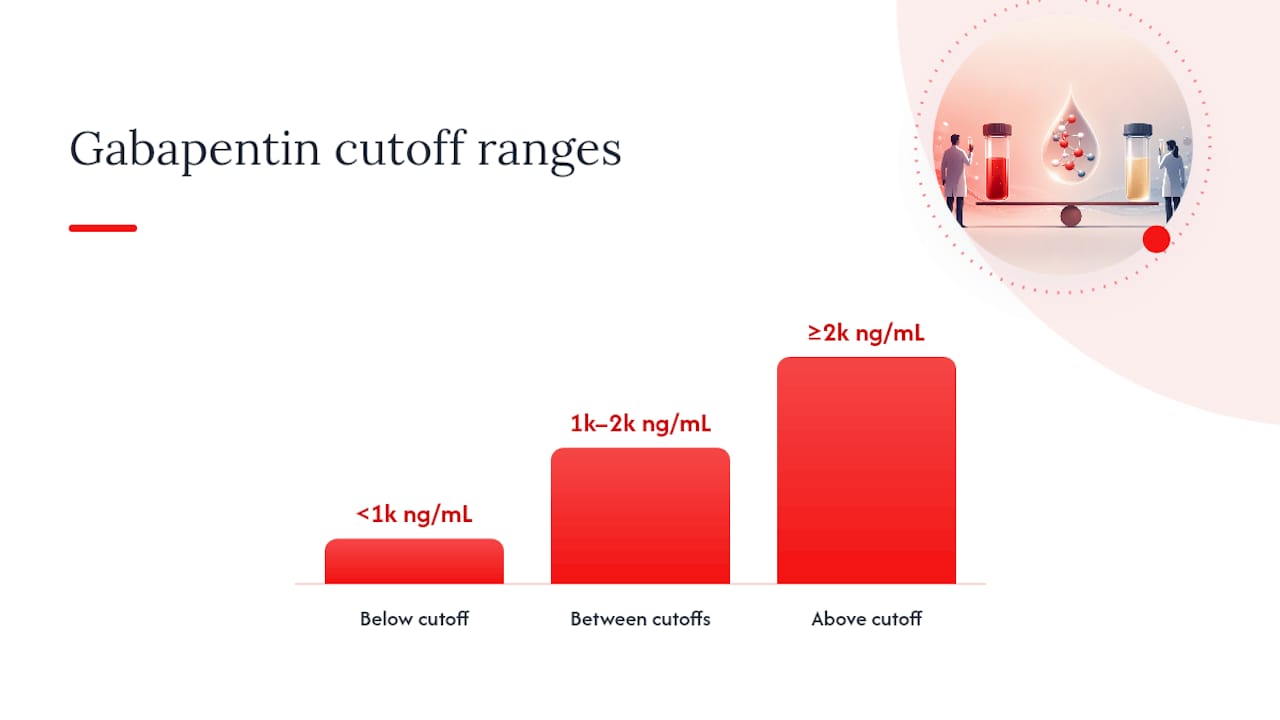
Marketed cutoff example: commercial dip tests for gabapentin commonly advertise a cutoff around 2,000 ng/mL, while laboratory assays like Quest’s quantitative urine test report limits of detection under 1,000 ng/mL.
That difference is not trivial for low-level users. A patient tapering off gabapentin, or someone who took a smaller dose several days earlier, might sit below a 2,000 ng/mL cutoff on a dip test but still register on a lab assay with a sub-1,000 ng/mL threshold. Manufacturers set cutoffs based on intended use, and a product built for quick workplace or treatment-program screening is not calibrated the same way as one built for forensic defensibility. If your program needs a lower detection floor, check the cutoff specifications before assuming a rapid test and a lab test will agree.
How Should You Interpret a Gabapentin Test Result?
A negative result on a standard panel almost always means gabapentin was never on that panel’s target list, not that the person tested negative for gabapentin specifically. That distinction trips up a lot of people reviewing lab paperwork for the first time.
When results don’t match the clinical picture, or when the stakes are legal or safety related, confirmatory quantitative LC-MS/MS is the next step. Here’s a practical sequence to follow:
- Check what the panel actually screens for. Most standard 5 to 12 panel immunoassays exclude gabapentin entirely.
- Order a gabapentin-specific assay if there’s clinical suspicion of use, a compliance question in pain management, or a legal dispute.
- Request quantitative LC-MS/MS confirmation for anything forensic, court-related, or tied to employment consequences.
- Rule out cross-reactivity concerns. Gabapentin does not typically trigger a positive for benzodiazepines or opioids on standard immunoassays, since it doesn’t share the molecular structure those assays target.
- Document the assay method used so anyone reviewing the result later understands its limits.
What Are the Specimen Requirements for Gabapentin Urine Testing?
Reliable results start with proper collection. Quantitative gabapentin assays typically call for roughly 2 to 3 mL of urine in a standard specimen container, though labs may request more if repeat testing is anticipated.
- Storage: samples are generally stable at room temperature for a short period, longer under refrigeration, and can be frozen for extended stability, per specimen guidance from Mayo Clinic Laboratories.
- Transport: samples should be shipped promptly and kept cold to preserve analyte integrity, consistent with handling notes from Labcorp’s gabapentin urine test page.
- Chain of custody: forensic and employment testing requires documented collection, sealed containers, and adulteration checks to keep results defensible.
Using proper specimen cups with tamper-evident seals from the start avoids rejected samples and repeat collections down the line.
Why Do Some Programs Add Gabapentin to Their Drug Panels?
Gabapentin has become a fixture of polydrug use, and the evidence is not subtle. A clinical and forensic study out of St. Louis found gabapentin frequently present in both clinical and postmortem urine samples, often alongside opioids. That co-detection pattern is exactly why standard immunoassay-only screening creates a blind spot: a technically “clean” opioid panel can miss a patient combining gabapentin with opioids in a way that raises overdose risk.
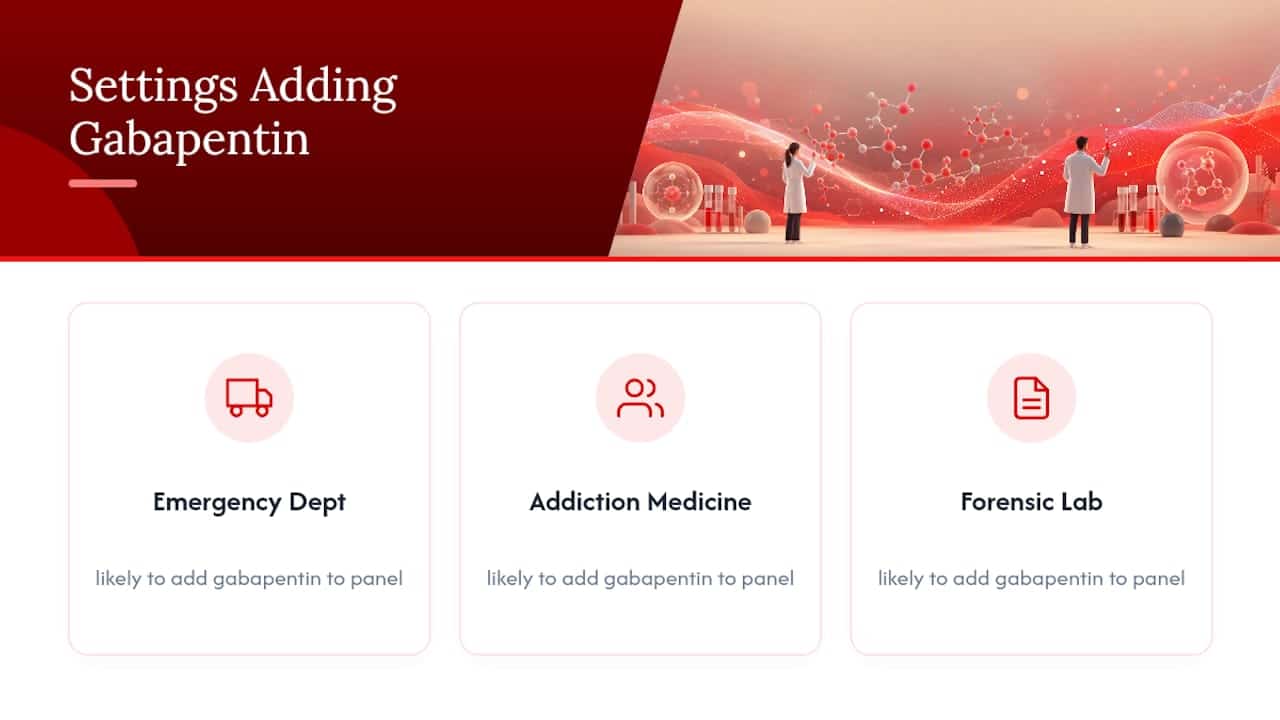
Emergency departments, addiction medicine practices, and forensic toxicology labs are the settings most likely to add gabapentin specifically. Any clinician managing a patient on chronic opioid therapy who also suspects gabapentin misuse should request the drug by name.
Pro Tip: If a patient is on opioids and you’re ordering a urine drug screen, ask the lab directly whether gabapentin is included. Most panels won’t mention it unless you request it, and that omission is where the real risk hides.
Where Testing Programs Get Gabapentin Screening Wrong
Most testing gaps come down to one bad assumption: that a clean standard panel means a clean patient. It usually just means gabapentin was never checked for.
Three moves fix that for most programs. Clinicians and testing coordinators should specifically request gabapentin assays whenever opioid co-use is plausible. Anyone facing a legal, employment, or clinical dispute over a result should insist on LC-MS/MS confirmation rather than accepting a rapid screen at face value. And individuals buying their own supplies should pick gabapentin-specific dip tests rather than assuming a generic panel has them covered.
Screening tools are a starting point, never a final verdict, particularly where legal or clinical decisions ride on the outcome.
— Justin
Get Gabapentin Screening Supplies That Actually Test for It
Since most standard panels skip gabapentin entirely, you need a product built to catch it, not a generic cup that happens to have extra lines. Rapidtestcup stocks gabapentin dip tests built to screen for the drug directly, plus multi-panel options like the 15 panel cup with GAB, FEN, and EtG for programs that need broad coverage in a single collection.
The company offers a range of drug testing products with same-day shipping and competitive bulk order pricing. For forensic or high-volume clinical needs, request a custom quote directly. Keep in mind that a rapid dip result is a screening tool, not a courtroom-ready answer. When stakes are high, pair your screening supply order with a lab-based LC-MS/MS confirmation. Browse the full drug testing shop to compare formats and place an order today.
This article is general information, not a substitute for advice from a qualified doctor. Consult a qualified healthcare professional about your own circumstances before acting on anything here.
Sources
- Gabapentin prevalence: clinical and forensic experience in St. Louis, Missouri, USA | PMC
- Drug Monitoring, Gabapentin, Quantitative, Urine | Quest Diagnostics
- FGABA – Overview: Gabapentin, Urine | Mayo Clinic Laboratories
- 790394: Gabapentin, Urine | Labcorp
- How Long Does Gabapentin Stay in Your System? | First Step Behavioral Health
FAQ
Can Gabapentin Cause a False Positive on a Drug Test?
Gabapentin is not chemically related to benzodiazepines, opioids, or amphetamines, so it does not typically trigger a false positive on those immunoassay categories. False positives are more often caused by unrelated medications cross-reacting with a specific antibody test, which is why unexpected results should go to LC-MS/MS confirmation rather than being taken at face value.
What Drugs Are on a 12 Panel Drug Test?
A standard 12 panel urine test typically screens for substances like amphetamines, cocaine, opioids, THC, PCP, barbiturates, and benzodiazepines, depending on the manufacturer’s configuration. Gabapentin is not part of that standard lineup, which is why programs that need to catch it order a gabapentin-specific dip test or a multi-panel cup with a dedicated GAB position.
Does Gabapentin Show Up as a Benzo?
No. Gabapentin has a different mechanism and molecular structure than benzodiazepines, so it does not cross-react with benzodiazepine immunoassay antibodies. A positive benzodiazepine result points to an actual benzodiazepine, not gabapentin use.
Does Gabapentin Show Up as an Opioid?
No, gabapentin is not an opioid and does not register on opioid immunoassay panels. That’s part of why co-detection with opioids matters clinically: a patient can test negative for anything unusual on a standard opioid panel while still combining opioids with gabapentin, a pattern documented in clinical and forensic urine samples.