Blog
Collectors: 90–100°F Rule to Prevent Heat Damage in Urine Drug Tests


A urine sample within the federal window of 90°F to 100°F is presumed valid and gets tested normally. Sustained or extreme heat is a different story: lab data show it degrades several drug metabolites and can wreck immunoassay reagents in test cups and dip cards. If a specimen reads outside that range or has visibly been overheated, document it immediately, flag it, and move to an observed recollection rather than guessing at the result.
TL;DR:
- Urine samples exceeding 100°F or falling outside the 90°F to 100°F range within 4 minutes are flagged for potential tampering or improper storage.
- Prolonged or high-temperature exposure degrades drug metabolites, especially cannabinoids, potentially leading to false negatives in drug screening.
- Heat can damage test cups and dip cards by destabilizing reagents, causing invalid or ambiguous results, especially if stored in hot environments.
- Combining temperature checks with validity testing for creatinine, pH, and specific gravity improves detection of sample manipulation or substitution attempts.
- Proper storage, insulated transport, and immediate documentation prevent heat-related invalid results, reducing the need for repeat testing.
Table of Contents
- What Counts as Heat Damage in Drug Testing?
- What Do Lab Studies Say About Heat and Drug Metabolites?
- Can Heat Damage Test Cups and Dip Cards Too?
- How Do Collectors and Labs Catch Heat-Related Tampering?
- How Should Collection Sites Handle Warm or Overheated Samples?
- What Storage Practices Protect Test Kit Integrity?
- When Anomalies Happen, Fairness Matters as Much as Accuracy
- Where to Find Compliant Test Cups and Storage Supplies
- Sources
- FAQ
What Counts as Heat Damage in Drug Testing?
Federal collection rules give you a hard number to work from. 49 CFR § 40.65 requires that a collector check a specimen’s temperature within 4 minutes of the donor handing it over, and the reading has to fall between 90°F and 100°F (32.2°C to 37.8°C). That window exists because urine leaves the body close to normal body temperature. A reading outside it usually means one of two things: the donor substituted someone else’s sample, or the specimen sat somewhere hot or cold long enough to drift.
The 4-minute rule matters as much as the temperature range itself. Wait too long and a legitimate sample cools toward room temperature, triggering a false flag. Check too fast and you might catch residual heat from a substituted sample before it stabilizes.
When a reading falls outside the window, a certified collector generally has to:
- Note the actual temperature and time of the reading on the chain-of-custody form
- Ask the donor about any explanation (medication, recent activity) though this doesn’t override the requirement
- Begin an immediate, observed recollection under a same-gender collector
- Document the out-of-range reading as a reason for the follow-up collection, not as a presumptive positive
What Do Lab Studies Say About Heat and Drug Metabolites?
Peer-reviewed research draws a clear line between mild warming, which does nothing meaningful to a sample, and prolonged high heat, which chemically breaks metabolites down. A study on heat treating urine for safer sample handling found that cooking a specimen at 100°C for an hour significantly cut recovery of several drugs of abuse, including methadone, amphetamines, and cocaine metabolites, and found cannabinoids especially fragile under heat.
Heating urine to boiling temperatures for extended periods measurably reduces the amount of several drug analytes recoverable by screening assays, with cannabinoid metabolites among the most heat sensitive.
That finding comes from the PubMed study on heat treating urine samples, which looked at heat treatment as an infection-control measure for handling potentially infectious specimens, not tampering. The distinction matters. A donor microwaving a sample and a lab boiling one for safety reasons are doing the same chemistry, just for different reasons, and both can cost you a detectable result.
A broader systematic review of pre-analytical stability backs this up from another angle.
- Refrigerated or frozen samples keep most drug classes stable for months
- Room-temperature storage shows limited stability for several classes, including cannabinoids, cocaine, morphine, and codeine
- Degradation accelerates with both time and temperature, not heat alone
The takeaway for anyone handling specimens: a few minutes of warmth from a donor’s body is expected and harmless. Hours at high heat, whether from a hot car or a deliberate attempt to “cook” a sample, is where the pre-analytical stability review shows real analyte loss.
Can Heat Damage Test Cups and Dip Cards Too?
Heat doesn’t just threaten the urine itself. It threatens the device reading it. Rapid test cups and dip cards rely on antibody and enzyme reagents that behave predictably only within a narrow temperature band. Sustained exposure above roughly 30°C (86°F) starts to destabilize those reagents, and once that happens, the chemistry printed on the strip stops behaving the way the manufacturer validated it.
The practical failure modes show up in a handful of predictable ways:
- Weak or missing control lines, which usually means the device itself has failed rather than the result being genuinely negative
- Color changes that are hard to read clearly, sitting in a gray zone between positive and negative
- Shifts in specific gravity or creatinine readings caused by evaporation concentrating the sample
- Faster bacterial growth in a warm specimen, which can further distort validity markers
The most common real-world culprits are boring and preventable: a box of test cups left in a hot vehicle overnight, kits stored near a sunny window at a job site, or dip cards sitting in a warm stockroom for weeks before use.
Pro Tip: Never assume a device that looks fine on the outside performed fine chemically. If a kit sat in a hot car or storage room for hours before use, treat any borderline or invalid result with suspicion and recollect rather than trust it.
How Do Collectors and Labs Catch Heat-Related Tampering?
Temperature is only the first checkpoint. Detecting heat-related tampering or damage relies on a layered system, and each layer catches something the others miss.
- Temperature strip on the collection cup. Read within 4 minutes, this catches obvious substitution or a sample that’s been artificially heated above 100°F, flagging it as out-of-range immediately.
- Specimen validity testing. Creatinine, pH, and specific gravity measurements catch dilution and some forms of chemical tampering that temperature alone wouldn’t reveal, since a substituted sample can sometimes land in the right temperature range by accident.
- Adulterant screens. Nitrite and oxidant test strips catch chemical additives, some of which donors use specifically to mask drug metabolites, a different problem from heat but often checked at the same time.
- Confirmatory testing. When a screen is positive or a validity test is borderline, labs run GC-MS or LC-MS confirmation, though heavily oxidized or heat degraded samples can still complicate extraction and quantification at this stage.
What ties these together is speed versus depth. Temperature and adulterant strips are fast, cheap, and hard for a donor to defeat on the spot. Creatinine, pH, and specific gravity add a second layer that catches substitution attempts sophisticated enough to fool a thermometer. The Mayo Clinic Proceedings review on urine drug testing integrity makes the case plainly: no single check catches everything, but temperature remains the fastest and hardest metric to fake convincingly.
Combining these checks is also how specimen validity testing protocols catch problems that a single test would miss entirely.
How Should Collection Sites Handle Warm or Overheated Samples?
Most heat problems trace back to storage and transport, not the collection moment itself. Fixing that end of the process prevents far more invalid results than trying to catch problems after the fact.
Before collection even starts:
- Store kits within the manufacturer’s stated temperature range, not just “somewhere in the office”
- Use insulated coolers or padded transport boxes for samples heading to an off-site lab, especially in summer months
- Never leave a box of collection cups or dip cards in a parked vehicle, even for a short errand
At the moment of collection:
- Record ambient temperature and any relevant context (a hot waiting room, a broken air conditioner) on the chain-of-custody form
- Perform the 4-minute temperature strip check without exception
- Move straight to observed recollection if the reading falls outside 90°F to 100°F, rather than debating it with the donor
Industry data on seasonal testing patterns backs up why this matters operationally. One analysis of summer transport effects on invalid pH results found that warmer months drive up invalid rates industry wide, prompting some labs to adjust internal handling protocols even though federal thresholds stay fixed.
Pro Tip: Tell donors plainly: never try to warm, microwave, or otherwise “fix” a sample’s temperature. Microwaving creates uneven hotspots that can partially cook the urine while leaving other parts cool, and it’s one of the most detectable tampering signatures a lab sees.
What Storage Practices Protect Test Kit Integrity?
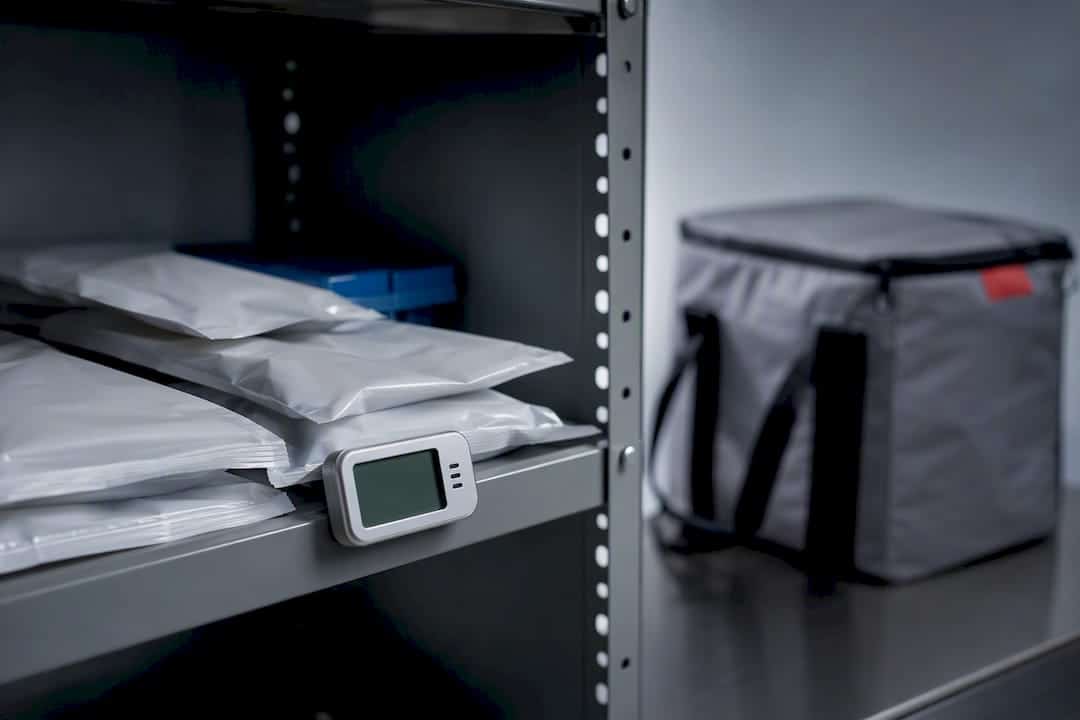
Preventing heat damage starts long before a donor ever walks into the room. It starts with how test cups, dip cards, and strips sit on a shelf or in a delivery van.
Rapidtestcup’s catalog includes several product types built with this in mind, including temperature strip equipped test cups that give collectors an instant visual read without extra equipment, sterile urine specimen cups for observed collections, and adulterant screening options that catch chemical tampering attempts alongside temperature checks.
Storage discipline matters just as much as the device itself. A few habits go a long way:
- Keep kits away from direct sunlight, HVAC vents, and vehicle interiors
- Rotate stock so older inventory gets used before shelf-life or temperature exposure becomes a question
- Follow the professional storage guide for specific temperature ranges by product type
- Pair temperature checks with broader specimen temperature monitoring practices at high-volume collection sites
When Anomalies Happen, Fairness Matters as Much as Accuracy
A borderline temperature reading isn’t proof of guilt. It’s a data point that deserves a documented, observed recollection, not an assumption. Note the ambient conditions, follow the protocol, and let confirmatory testing settle it. Donors and employers both deserve that discipline.
*— Justin
Where to Find Compliant Test Cups and Storage Supplies
Rapidtestcup exists for exactly the scenario this article covers: collection sites and employers who can’t afford a heat-related invalid result throwing off a workplace testing program. Unlike generic testing supply resellers who treat every cup the same, some suppliers stock temperature-strip equipped cups and sterile specimen containers built specifically for the validity checks described above, backed by shipping policies and bulk pricing for programs that test regularly.
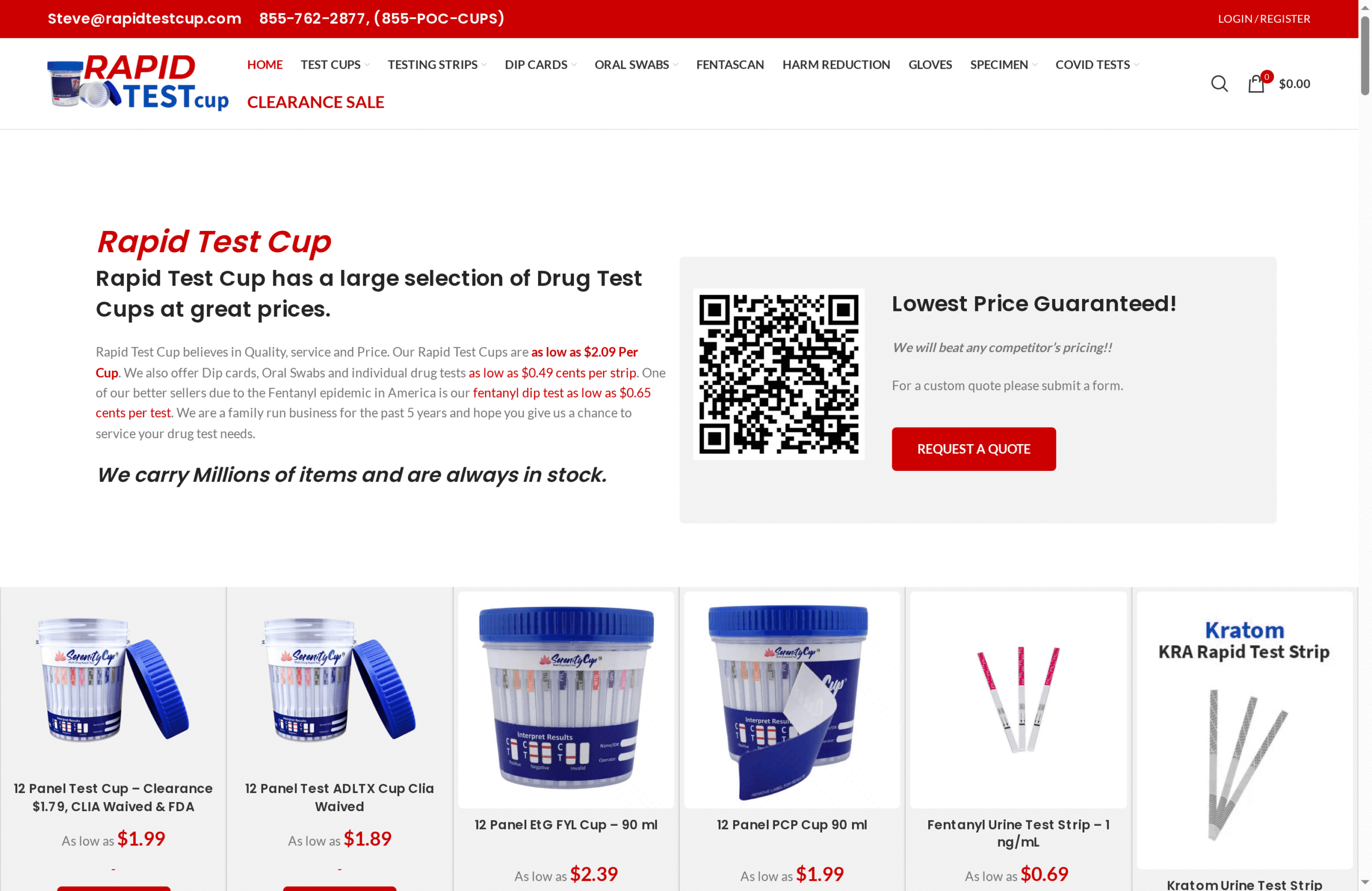
If you’re setting up or restocking a collection site, start at the shop page for the full range of test cups, dip cards, and specimen supplies. Sites with high-volume or seasonal testing needs, particularly through summer months when heat-related invalids spike, can request a bulk quote directly for workplace or clinical programs. Getting storage and collection procedures right the first time costs far less than repeating a test.
Sources
- 49 CFR § 40.65 — Specimen collection procedures; assessment of specimen temperature
- Screening for drugs of abuse: effect of heat-treating urine for safe handling of samples (PubMed)
- Pre-analytical stability of drugs of abuse in urine for confirmatory testing: a systematic review (Journal of Analytical Toxicology)
- Bringing back the integrity of urine drug testing in the workplace (Mayo Clinic Proceedings material)
FAQ
What Temperature Is Too Hot for a Drug Test?
Anything above 100°F (37.8°C) when read within 4 minutes of collection falls outside the federally required 90°F to 100°F window and gets flagged as out of range. That doesn’t automatically mean tampering, but it does trigger an observed recollection under standard protocol.
Can a 5 Panel Drug Test Detect Fake Urine?
A standard drug screen itself doesn’t detect substitution directly. Detection comes from pairing it with specimen validity testing, temperature strips, creatinine, and pH checks, which together catch most synthetic or substituted samples before the drug screen even runs.
What Is the Best Way to Handle a Sample Before Testing?
Keep the sample at a stable temperature between collection and testing, ideally refrigerated if there’s any delay, since stability research shows cold storage preserves most drug classes far longer than room temperature. Never attempt to warm, cool, or otherwise alter a sample manually. Doing so is a common tampering signature that collectors and labs are trained to catch.
What Temperature Is Too High for Urine to Be Considered Valid?
A reading above 100°F (37.8°C) at the 4-minute mark is too high under federal collection standards and gets treated as out of range, the same as a reading below 90°F. Both trigger the same response: document it and move to an observed recollection rather than accepting the result as-is.