Blog
Don’t Buy a 7 Panel Drug Test Until You Check These 7 Analytes


A 7 panel drug test screens for seven drug classes in a single specimen, most often amphetamines, cocaine, opiates, PCP, THC, barbiturates, and benzodiazepines. That list is not fixed by law or science. It is shorthand, and one product’s “opiates” channel can miss oxycodone or fentanyl entirely while another’s catches both. Therefore, the analyte table on the box matters more than the number in its name.
TL;DR:
- Most 7 panel drug tests do not universally include fentanyl or all opioids unless specifically added, so always review the analyte table before purchasing.
- Detection windows vary significantly, with heavy THC use detectable for up to 11 weeks and single-use opioids typically clearing within a few days.
- Rapid urine or dip tests provide quick results suitable for onsite screening, while hair testing offers a longer detection period but requires lab analysis.
- Confirmatory testing with GC-MS or LC-MS/MS is essential after a positive screening to verify the specific drug and rule out cross-reactivity.
- Federal regulations like DOT rules have stricter cutoff levels and procedures, and privacy laws require clear consent and result handling policies.
Table of Contents
- Typical Analytes in a 7 Panel Urine Test and Why the List Shifts
- Choosing Between Urine Cups, Dip Cards, Oral Swabs, and Hair Tests
- How Long Drugs Stay Detectable in Urine
- Reading Results the Right Way: Screening, Confirmation, and Validity Checks
- Picking the Right 7 Panel Product or Lab Service
- Product Families That Cover Common Screening Needs
- What the Law Says About Drug Testing and Your Results
- Why Prescriptions and Medical Conditions Can Skew Results
- The Analyte-First Mindset Beats the Panel-Name Habit
- Where to Order the Right Test for Your Situation
- Primary Sources on Cutoffs, Analytes, and Detection Windows
- Sources
- FAQ
Typical Analytes in a 7 Panel Urine Test and Why the List Shifts
The most commonly documented configuration, listed by ARUP Laboratories in its Panel 7 urine screen, covers seven drug classes with specific cutoffs for each:
- Amphetamines (including methamphetamine)
- Cocaine, detected as its metabolite benzoylecgonine
- Opiates (typically morphine and codeine)
- PCP (phencyclidine)
- THC and other cannabinoid metabolites
- Barbiturates
- Benzodiazepines
That “opiates” line is where most confusion starts. A standard opiate immunoassay is built around morphine and codeine, and it frequently misses oxycodone, methadone, buprenorphine, and fentanyl unless the manufacturer adds a separate antibody for each one. Two cups can both say “7 panel” and test for completely different opioids. Before you order anything, pull up the actual analyte table and cutoff concentrations rather than trusting the panel name. A breakdown of common drug testing panel configurations shows just how much variation exists even among products marketed for the same use case.
Choosing Between Urine Cups, Dip Cards, Oral Swabs, and Hair Tests
Specimen type drives everything from detection window to how defensible the result is later. A rapid urine cup or dip card test gives results in minutes and works well for onsite screening at a job site or treatment intake. Oral fluid swabs detect more recent use, generally the past 24 to 48 hours, and they are harder to adulterate because collection happens under direct observation. Hair testing extends the detection window to months but takes lab processing time and costs more.
- Urine cups and dip cards: fastest turnaround, CLIA-waived for point-of-care use, ideal for onsite pre-employment or program compliance screening
- Oral swabs: short detection window, low risk of specimen tampering, good for recent-use questions
- Hair testing: long lookback period, lab-based only, suited to pattern-of-use investigations rather than quick screening
CLIA-waived status means a test is simple enough to run outside a certified laboratory, which is why cups and dip cards dominate workplace and personal use. Regulated federal testing programs, though, generally require lab-based confirmation regardless of how the initial screen was collected.
How Long Drugs Stay Detectable in Urine
Detection windows vary by drug class, dose, and how often someone uses. MedlinePlus puts typical urine windows at roughly 24 to 48 hours for amphetamines, 2 to 4 days for cocaine, and 1 to 8 days for PCP. Barbiturates and benzodiazepines can run up to about 6 weeks with heavy, repeated use, and THC can stretch even further, up to 6 to 11 weeks in chronic heavy users.
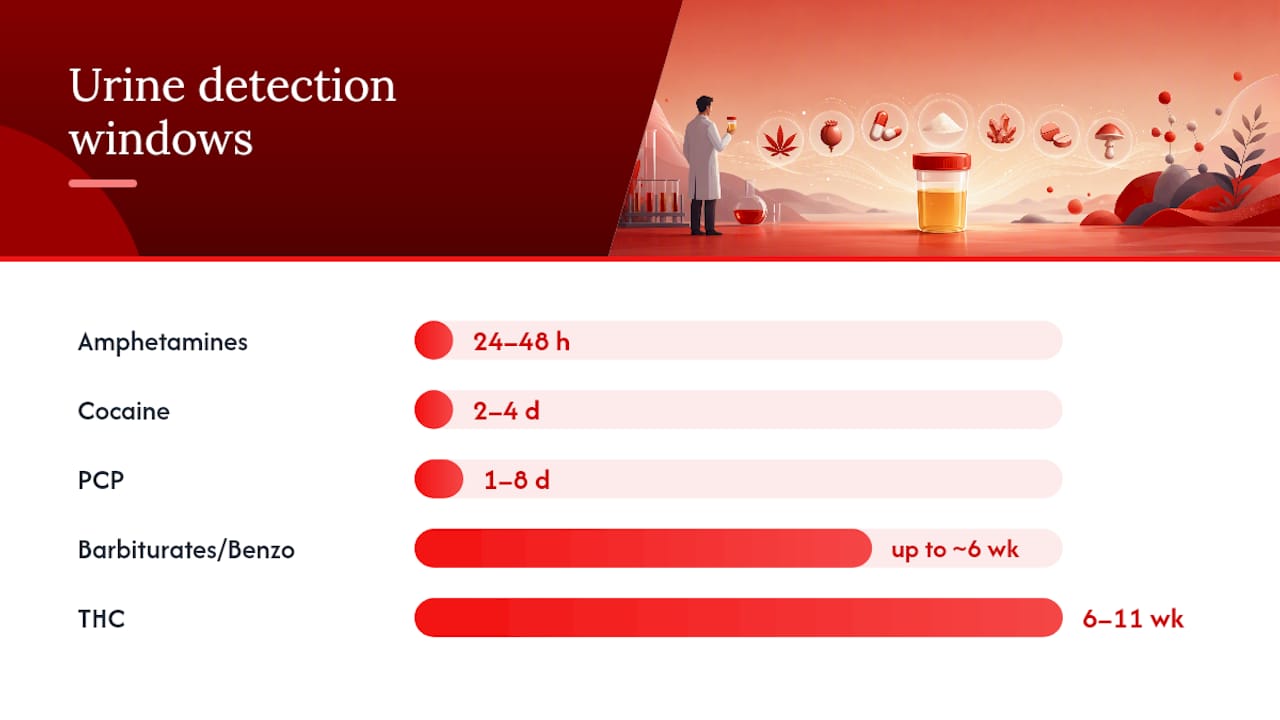
Statistic Callout: Heavy, frequent use of THC or benzodiazepines can push detection windows to 6 weeks or longer, according to MedlinePlus, while single-use cocaine or amphetamine exposure typically clears within a few days.
Those numbers are estimates, not guarantees. The cutoff concentration set by the manufacturer or program determines the exact line between positive and negative, and a lower cutoff catches lighter use for longer. Metabolism, body fat percentage, hydration level, and how concentrated the urine sample happens to be at collection all shift the real-world window in either direction. Two people who used the same amount on the same day can get different results.
Reading Results the Right Way: Screening, Confirmation, and Validity Checks
A non-negative result on a rapid cup or dip card is a screening result, not a diagnosis. It means an immunoassay detected a substance above the cutoff, and it needs confirmation before anyone treats it as fact. MedlinePlus notes that a positive screen only shows a substance was present above threshold, not when it was used or whether the person was impaired. Confirmatory testing, using gas chromatography-mass spectrometry (GC-MS) or liquid chromatography-tandem mass spectrometry (LC-MS/MS), identifies the exact compound and rules out cross-reactivity from unrelated substances.
Regulated workplace programs add another layer: the Medical Review Officer, or MRO, a licensed physician who reviews every non-negative confirmed result, contacts the individual, and checks for a legitimate medical explanation before anything gets reported to an employer. DOT rules under 49 CFR Part 40 set specific initial and confirmatory cutoff concentrations for each analyte, and those federal cutoffs often differ from what a retail cup uses. That is one reason a consumer-grade 7 panel cup and a DOT-regulated laboratory panel can behave differently even when they claim to test the same drugs.
Specimen validity checks matter just as much as the drug panel itself:
- Temperature strip reading within range (typically 90 to 100°F) within four minutes of collection
- Creatinine and specific gravity levels, which flag an overly dilute sample
- pH level, which flags substituted or adulterated specimens
- Collection volume, generally 30 to 60 mL per MedlinePlus collection guidance
Labs and regulated programs can report a specimen as dilute, substituted, or invalid rather than simply negative, and excessive water loading before a test is a common cause. There is no reliable way to flush drugs out of your system faster than your body’s own clearance rate, and DOT’s own rules on dilute specimens exist precisely because programs see this attempted so often.
Pro Tip: If a result seems wrong, ask specifically whether it was a screening result or a lab-confirmed result. Those two words change everything about how much weight the finding should carry.
Picking the Right 7 Panel Product or Lab Service
- Pull the analyte table first. Match the specific drugs and cutoff concentrations against what you actually need to detect, not just the panel number on the label.
- Decide screening versus regulated testing. A quick onsite check has different requirements than a DOT-regulated program that needs chain-of-custody documentation, MRO review, and split-specimen options.
- Check for specimen validity features. If the result needs to hold up to a challenge, temperature strips and adulterant checks are not optional.
- Add fentanyl or expanded opioid coverage separately if it matters to you. Most standard opiate channels do not catch it, so order a dedicated fentanyl test strip or a panel that lists FEN explicitly. A drug test selection checklist built for compliance programs walks through this in more detail if your use case is regulated.
Product Families That Cover Common Screening Needs
Rapidtestcup stocks CLIA-waived test cups, dip cards, oral swabs, and dedicated strips for fentanyl and alcohol metabolites (ETG), along with adulteration checks for specimen validity. Onsite screening for a job site or intake program usually calls for a cup or dip card with the analytes you need already built in, like this 7 panel cup with COC, OPI, MTD, and OXY coverage. Programs worried about fentanyl specifically should add a dedicated strip rather than assume a standard opiate channel will catch it. Expanded lab testing, with confirmation and MRO review, fits regulated workplace programs where a screening result alone will not satisfy compliance requirements.
What the Law Says About Drug Testing and Your Results
Drug testing law in the United States varies by state and by context, so what applies to a federally regulated trucking company does not automatically apply to a private employer in another industry. Federal transportation workers fall under DOT rules with strict chain-of-custody and MRO review built in. Many other employers set their own policies, and state law can add consent requirements, notice periods, or restrictions on how results get used in hiring or termination decisions.
Privacy matters just as much as legality. A drug test result is medical information, and how it gets stored, who can see it, and how long it stays on file should be spelled out in writing before a sample is ever collected. Employers using workplace testing programs typically route results through the MRO first specifically to add a layer of medical review and confidentiality before a supervisor or HR department ever sees a raw lab report. Individuals testing for personal reasons, custody matters, or probation compliance should ask upfront exactly who receives the result and in what form.
If you are unsure what a specific state requires for consent, notice, or result retention, that is a question for an employment attorney or your state labor department, not a testing product’s packaging. Testing companies can tell you what a kit detects. They cannot tell you what your state’s disclosure law requires, and treating a product FAQ as legal guidance is a common and avoidable mistake.
Why Prescriptions and Medical Conditions Can Skew Results
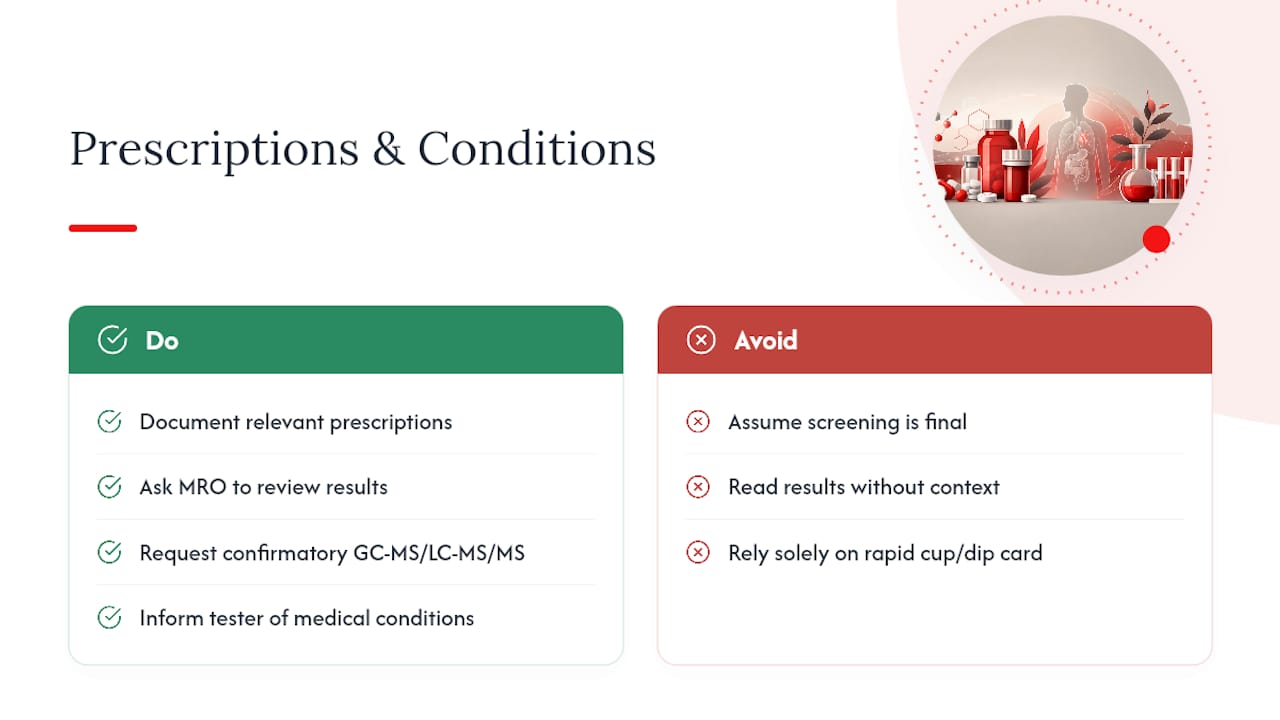
Plenty of common prescriptions can trigger a non-negative screen on a standard immunoassay. Prescribed amphetamine-based ADHD medications will flag the amphetamine channel. Poppy seed consumption, in rare cases, has caused low-level opiate flags. Certain antidepressants and even some over-the-counter cold medications have been documented to cross-react with specific immunoassay antibodies, producing a presumptive positive that confirmatory GC-MS or LC-MS/MS testing later clears.
This is exactly why the screening result is never the final word. Someone with a legitimate prescription for a benzodiazepine or an opioid pain medication should expect a non-negative screen. The role of the Medical Review Officer, when one is part of the program, is to review that exact situation, verify the prescription, and determine whether the result reflects legitimate medical use rather than misuse. Individuals testing on their own without MRO access should keep documentation of any relevant prescriptions on hand, since a rapid cup or dip card has no built-in way to distinguish “prescribed” from “not prescribed.”
Medical conditions can matter too. Kidney function affects how quickly metabolites clear the body, and certain metabolic conditions can affect urine concentration in ways that interact with specific gravity and creatinine validity checks. None of this means results are unreliable. It means a single screening result, read without context, tells you less than most people assume.
The Analyte-First Mindset Beats the Panel-Name Habit
Most confusion around 7 panel testing comes from treating “7 panel” as a brand name instead of a category. It is not one product. It is a number that tells you how many drug classes get checked, and nothing about which specific drugs, at which cutoffs, using which methodology. The overlooked nuance here: two people can buy a “7 panel” test for the exact same reason, get different analyte coverage, and never know it because neither one checked the spec sheet.
The conventional advice, “get a 7 panel test,” undersells the real decision, which is choosing the right seven analytes for your situation. A construction company worried about opioid misuse on a job site needs a very different opiate channel than a treatment program tracking recovery from benzodiazepine dependence. Fentanyl deserves particular attention because it is often left out entirely, and its absence from a standard panel is not a flaw in the product. It is simply not what “7 panel” was ever built to promise.
If there is one habit worth building, it is reading the analyte table before the price tag. The cutoff numbers and the specific drug names on that table tell you more about whether a test fits your need than any marketing description ever will.
— Justin
Where to Order the Right Test for Your Situation
Once you know which seven analytes you actually need, ordering should be the easy part. There are suppliers offering a large inventory of CLIA-waived, FDA-approved test cups, dip cards, oral swabs, and strips with same-day shipping, so you are not stuck waiting on backordered panels while a screening decision sits unresolved.
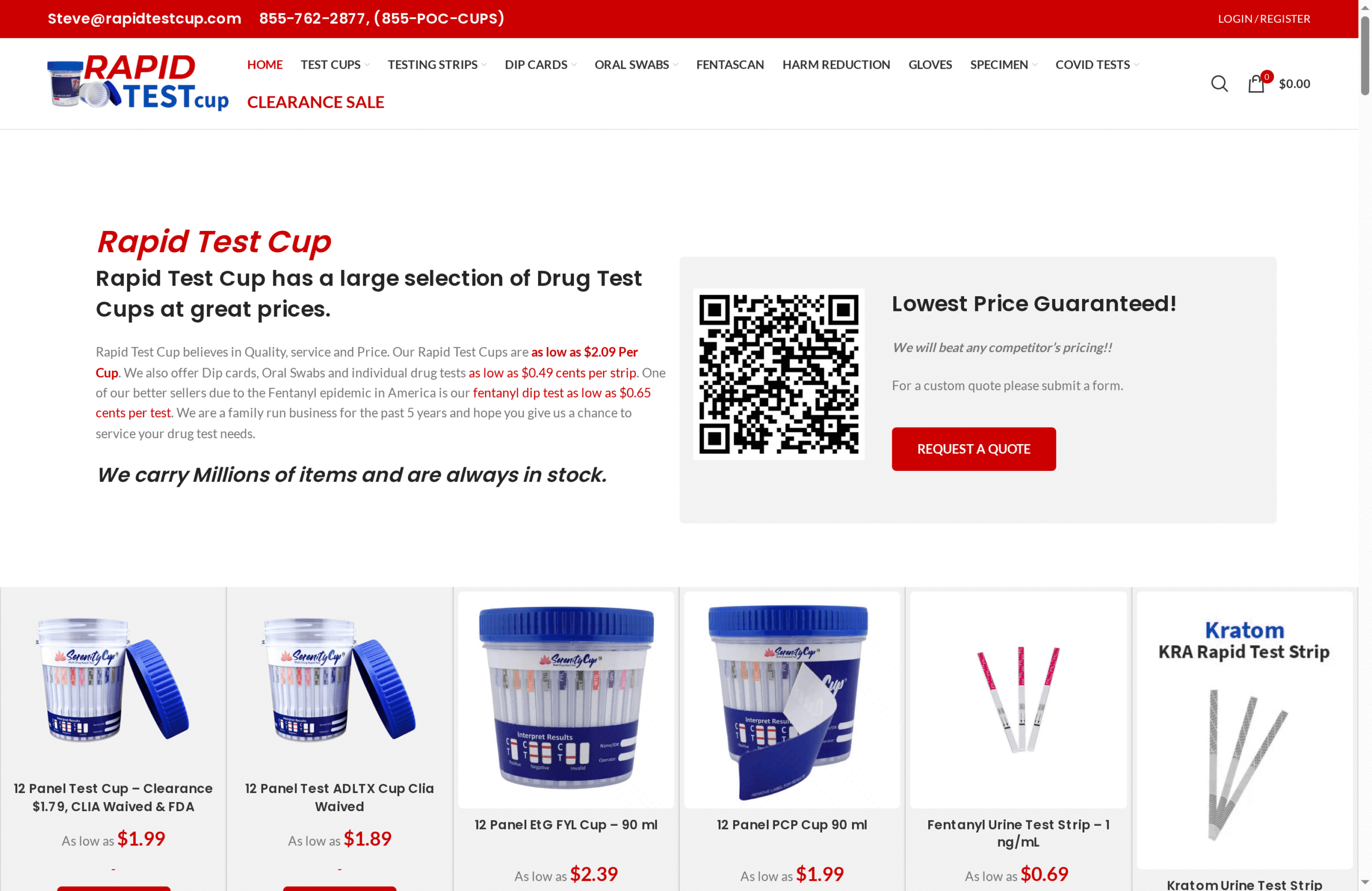
For general browsing across panel configurations, start at the full shop catalog, where you can filter by analyte and specimen type. If fentanyl detection matters for your program, order a dedicated fentanyl test strip alongside your standard panel rather than assuming it is already covered. Laboratories, clinics, and employers placing bulk or regulated-use orders can request custom quotes directly, and Rapidtestcup states it will beat any competitor’s price on comparable products. Check the analyte table on any product page, confirm it matches what your program requires, and place the order today rather than guessing your way through a screening decision.
Primary Sources on Cutoffs, Analytes, and Detection Windows
Federal cutoff rules and MRO procedures come from DOT 49 CFR Part 40. For an example analyte table with specific cutoffs, see ARUP’s Panel 7 listing. Detection-window guidance is drawn from MedlinePlus, and evolving analyte-table policy appears in SAMHSA’s proposed change process.
This article is general information, not a substitute for advice from a qualified doctor. Consult a qualified healthcare professional about your own circumstances before acting on anything here.
Sources
- ARUP Laboratories: Drug Panel 7, Urine – Screen with Reflex to Confirmation/Quantitation
- DOT | 49 CFR Part 40 §40.85: Cutoff concentrations for urine drug tests
- MedlinePlus: Toxicology screen (detection windows)
- SAMHSA: Proposed analyte table change process (workplace drug testing)
FAQ
What Drugs Does a 7 Panel Test For?
Most 7 panel urine tests check for amphetamines, cocaine, opiates, PCP, THC, barbiturates, and benzodiazepines, based on ARUP Laboratories’ documented Panel 7. The exact opiate coverage and cutoff concentrations vary by manufacturer, so always confirm the analyte table before ordering.
How Far Back Does a 7 Panel Urine Drug Test Go?
Detection windows depend on the drug class and how often someone uses. MedlinePlus data puts amphetamines at 24 to 48 hours, cocaine at 2 to 4 days, and THC at up to 6 to 11 weeks with heavy chronic use.
What Is the Fastest Way to Clean Out Your System for a Drug Test?
There is no reliable medical shortcut to clear drugs from your system faster than your body’s own metabolism allows. Drinking excess fluids before a test often just produces a dilute specimen, which DOT rules require programs to flag or retest rather than accept as a clean negative.
What’s in an 8 Panel Drug Test?
An 8 panel test typically adds one more drug class to the standard seven, commonly methadone or an expanded opioid category, though the exact addition varies by manufacturer. As with any panel size, check the specific analyte list rather than assuming based on the number alone.